Explanatory inference is the creation and evaluation of hypotheses that provide explanations, and is sometimes known as abduction or abductive inference. Generative AI is a new set of artificial intelligence models based on novel algorithms for generating text, images, and sounds. This paper proposes a set of benchmarks for assessing the ability of AI programs to perform explanatory inference, and uses them to determine the extent to which ChatGPT, a leading generative AI model, is capable of making explanatory inferences. Tests on the benchmarks reveal that ChatGPT performs creative and evaluative inferences in many domains, although it is limited to verbal and visual modalities. Claims that ChatGPT and similar models are incapable of explanation, understanding, causal reasoning, meaning, and creativity are rebutted.
Substrate independence and mind-body functionalism claim that thinking does not depend on any particular kind of physical implementation. But real-world information processing depends on energy, and energy depends on material substrates. Biological evidence for these claims comes from ecology and neuroscience, while computational evidence comes from neuromorphic computing and deep learning. Attention to energy requirements undermines the use of substrate independence to support claims about the feasibility of artificial intelligence, the moral standing of robots, the possibility that we may be living in a computer simulation, the plausibility of transferring minds into computers, and the autonomy of psychology from neuroscience.
Darwin claimed that human and animal minds differ in degree but not in kind, and that ethical principles such as the Golden Rule are just an extension of thinking found in animals. Both claims are false. The best way to distinguish differences in degree from differences in kind is by identifying mechanisms that have emergent properties. Recursive thinking is an emergent capability found in humans but not in other animals. The Golden Rule and some other ethical principles such as Kant’s categorical imperative require recursion, so they constitute ethical thinking that is restricted to humans. Changes in kind have tipping points resulting from mechanisms with emergent properties.
Abstract One can distinguish three answers to the question of whether neuroscience is relevant to meaning in life. Neuro-neutral: Neuroscience is irrelevant to questions about meaning in life so it can be safely ignored. Neuro-negative: Neuroscience is relevant to meaning in life only as a warning about how meaning can be distorted or destroyed by excessive attention to scientific findings about the mind. Neuro-positive: Neuroscience has findings that contribute to philosophical understanding of meaning in life and to guiding people about how to have meaningful lives. This chapter defends the neuro-positive view after critiquing the two alternatives. It shows how neuroscience helps to answer questions about the meaning of meaningfulness, the characteristics of meaningful lives, the objectivity of life’s meaning, strategies for obtaining meaning, and changes in life’s meaning that occur with aging.
An expert on the mind considers how animals and smart machines measure up to human intelligence. Octopuses can open jars to get food, and chimpanzees can plan for the future. An IBM computer named Watson won on Jeopardy! and Alexa knows our favorite songs. But do animals and smart machines really have intelligence comparable to that of humans? In Bots and Beasts, Paul Thagard looks at how computers (“bots”) and animals measure up to the minds of people, offering the first systematic comparison of intelligence across machines, animals, and humans. Thagard explains that human intelligence is more than IQ and encompasses such features as problem solving, decision making, and creativity. He uses a checklist of twenty characteristics of human intelligence to evaluate the smartest machines—including Watson, AlphaZero, virtual assistants, and self-driving cars—and the most intelligent animals—including octopuses, dogs, dolphins, bees, and chimpanzees. Neither a romantic enthusiast for nonhuman intelligence nor a skeptical killjoy, Thagard offers a clear assessment. He discusses hotly debated issues about animal intelligence concerning bacterial consciousness, fish pain, and dog jealousy. He evaluates the plausibility of achieving human-level artificial intelligence and considers ethical and policy issues. A full appreciation of human minds reveals that current bots and beasts fall far short of human capabilities.
This paper naturalizes inductive inference by showing how scientific knowledge of real mechanisms provides large benefits to it. I show how knowledge about mechanisms contributes to generalization, inference to the best explanation, causal inference, and reasoning with probabilities. Generalization from some A are B to all A are B is more plausible when a mechanism connects A to B. Inference to the best explanation is strengthened when the explanations are mechanistic and when explanatory hypotheses are themselves mechanistically explained. Causal inference in medical explanation, counterfactual reasoning, and analogy also benefit from mechanistic connections. Mechanisms also help with problems concerning the interpretation, availability, and computation of probabilities.
Because the spread of pandemics depends heavily on human choices and behaviors, dealing with COVID-19 requires insights from cognitive science which integrates psychology, neuroscience, computer modeling, philosophy, anthropology, and linguistics. Cognitive models can explain why scientists adopt hypotheses about the causes and treatments of disease based on explanatory coherence. Irrational deviations from good reasoning are explained by motivated inference in which conclusions are influenced by personal goals that contribute to emotional coherence. Decisions about COVID-19 can also be distorted by well-known psychological and neural mechanisms. Cognitive science provides advice about how to improve human behavior in pandemics by changing beliefs and by improving behaviors that result from intention-action gaps.
Emotional change includes generation of new emotions, switching from one emotion to another, and alteration of the frequency and intensity of emotions. Psychotherapists help clients to reduce negative emotions such as sadness and anxiety and increase positive emotions such as happiness and hope. We explain such emotional shifts by the semantic pointer theory of emotions, which views them as brain processes that integrate neural representations of situations, appraisals of the goal-relevance of those situations, and physiological reactions to the situations. This theory can explain many kinds of emotional change, including the generation and shifting of mixed, nested, and dispositional emotions. (PsycInfo Database Record (c) 2023 APA, all rights reserved).
Evidence from psychology and behavioral economics shows that people often fall short of rational standards. Irrationality can be characterized by an analysis that specifies standard examples, such as deductive fallacies, typical features, such as violating inference rules, and explanations, such as why people acquire dumb beliefs. More than 50 error tendencies (fallacies, biases) lead to mental mistakes. Most of these mistakes can be explained by the limitations of the brain with respect to size, speed, cognitive-emotional functioning, and capacity of consciousness. With more neurons and faster processing, people would be able to do a better job of deductive and inductive reasoning. The brain efficiently integrates cognition and emotion, but this integration often leads to confusions of probability and utility, with resulting errors, such as motivated inference and rationalization. Consciousness limits rationality because the brain is only capable of awareness of a small number of items. Brain-derived bounded rationality could be enhanced by informing people about how error tendencies lead to irrationality and how the tendencies arise from brain limitations.
Analogies contribute to many kinds of human thinking, including problem solving, decision making, explanation, persuasion, and entertainment. An analogy is a systematic comparison between a source analog and a target analog, where information about the source is used to generate inferences about the target. The major stages of analogical thinking are (a) obtaining a source analog by memory retrieval or other means, (b) mapping the source to the target, (c) adapting the source to inform the target, and (d) learning by generalizing source and target into a schema. Most theories of analogy have used verbal representations, but a much broader appreciation of analogical thinking can be gained with semantic pointers. Analogies often use words, but they can also operate with visual, auditory, and other sensory modalities, all of which can contribute to all stages of analogy.
The main mental and social functions of art are the expression and transmission of emotions, in relationships among creative artists and their appreciators. Artistic emotions are semantic pointers in brains that integrate sensory representations with combinations of physiological changes and cognitive appraisals. The central emotional response to art is beauty, resulting from pleasurable emotional coherence through unity in diversity of sensory representations. Art generates other important emotional responses, including interest, shock, sadness, fear, anger, and disgust. Art is good or bad depending on the intensity and quality of the emotions that it generates. Art can offer valuable contributions to the needs-related emotions of its producers and appreciators. Art occurs at the social intersection of mind and world when creators and appreciators use their brains to generate and perceive works that stimulate emotions.
 Abninder Litt合作论文数21
 Dov Gabbay合作论文数Department of Informatics, Faculty of Natural, Mathematical & Engineering Sciences, King’s College London;Department of Computer Science, King's College London;Bar-Ilan University18
 Terry Stewart合作论文数Department of Cognitive Science, Carleton University17
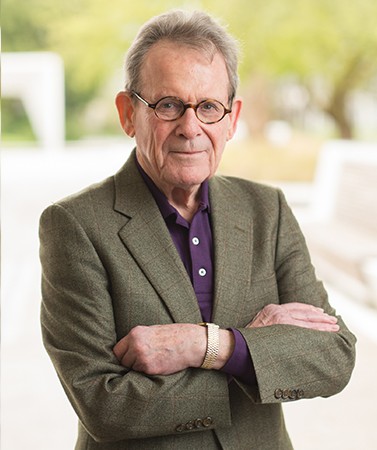 John Woods合作论文数The University of British Columbia16C. Scott Findlay合作论文数16Daniel Saunders合作论文数15
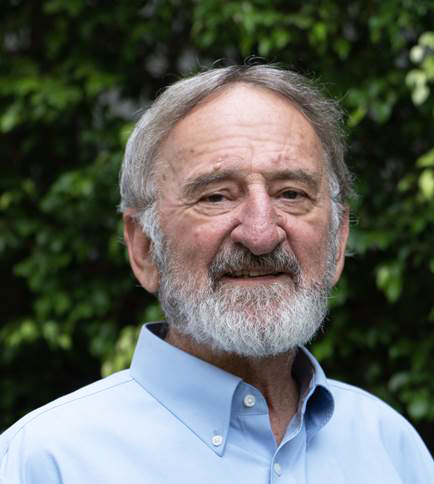 Keith Holyoak合作论文数Reasoning Lab, Department of Psychology, College of Life Sciences, University of California13
 Chris Eliasmith合作论文数Department of Philosophy, Cheriton School of Computer Science, University of Waterloo;Department of Systems Design Engineering, Cheriton School of Computer Science, University of Waterloo;Centre for Theoretical Neuroscience, University of Waterloo10Jing Zhu合作论文数9
 Tobias Schroder合作论文数Cluster of Excellence “Languages of Emotion,” and;Institute for Urban Futures, University of Applied Sciences Potsdam;Cluster of Excellence “Languages of Emotion,” and;Institute for Urban Futures, University of Applied Sciences Potsdam7DM Gabbay合作论文数5
 Richard Nisbett合作论文数Department of Psychology, College of Literature, Science, and the Arts, The University of Michigan;Institute for Social Research, The University of Michigan4arthur donovan合作论文数3Harold Brown合作论文数3Peter Barker合作论文数3
 Larry Laudan合作论文数Department of Philosophy, University of Hawaii at Manoa3Steve Wykstra合作论文数3
 Rachel Laudan合作论文数Department of History, Virginia Polytechnic Institute and State University3
 Thomas F. Homer Dixon合作论文数Faculty of Environment, University of Waterloo/Cascade Institute, Royal Roads University3Jarrett Leplin合作论文数3
 Jeremy Butterfield合作论文数Trinity College, University of Cambridge3Stephen Quilley合作论文数2BM Wagar合作论文数2tracy finn合作论文数2Manjana Milkoreit合作论文数2
 Denis Walsh合作论文数Department of Philosophy, Faculty of Arts and Science, University of Toronto2
 Jonathan Leader Maynard合作论文数Department of Political Economy, School of Politics & Economics, Faculty of Social Science & Public Policy, King’s College London2
 Joanne V. Wood合作论文数Department of Psychology, University of Waterloo2
 Kim Sterelny合作论文数College of Arts and Social Sciences, Australian National University2
 Ivana Kajic合作论文数School of Computing and Mathematics, Plymouth University2Claire O'Loughlin合作论文数2Elijah Millgram合作论文数2Lorenzo Magnani合作论文数Department of Philosophy,
University of Pavia2
Ivana Kajic合作论文数School of Computing and Mathematics, Plymouth University2Claire O'Loughlin合作论文数2Elijah Millgram合作论文数2Lorenzo Magnani合作论文数Department of Philosophy,
University of Pavia2 Matto Mildenberger合作论文数Department of Political Science, University of California, Santa Barbara2
 Orly Shenker合作论文数Department of Philosophy, Faculty of Humanities, Hebrew University of Jerusalem2Paul Rusnock合作论文数2
 Cameron Shelley合作论文数Department of Philosophy, University of Waterloo2
 Marcel Joseph Boumans合作论文数Antenna Research Center2
 Meir Hemmo合作论文数Department of Philosophy, University of Haifa Haifa2
 Baljinder Sahdra合作论文数UC Davis Center for Mind and Brain2Z Kunda合作论文数1John Earman合作论文数1Martin D. Ringle合作论文数1robin findlay hendry合作论文数1SO Nuallain合作论文数1miriam giro合作论文数1Craig Beam合作论文数1Ray Jackendoff合作论文数1
 Stephen Stich合作论文数Department of Philosophy, Rutgers University;University of Sheffield1




