Ambient temperature significantly influences the safety performance of lithium-ion batteries (LIBs), particularly their thermal runaway (TR) behaviors. Yet, the complexities of multidimensional signal dynamics in overcharged LIBs under different ambient temperatures are not well understood. In this study, we performed comprehensive overcharging abuse tests under cold (-10 degrees C and 0 degrees C), normal (20 degrees C), and high ambient temperatures (60 degrees C), to investigate the evolution of multidimensional signals of expansion force, gas concentration, surface temperature, and voltage. Results show that TR events are not triggered at ambient temperatures of -10 degrees C and 0 degrees C, with the maximum temperatures and corresponding rise rate reaching only 125 degrees C and 0.5 degrees C/s, respectively. In contrast, for batteries undergoing TR, the maximum temperatures and rates of temperature increase peaked at 410.3 degrees C and 20.6 degrees C/s, respectively. The ambient temperature has a minimal impact on the venting force of the battery, which varies from approximately 9500 N to 10000 N, primarily driven by an increase in internal gas pressure during overcharging-a factor relatively unaffected by temperature changes. After safety valve activation during overcharging, Hydrogen (H2) is consistently the first gas detected immediately across all ambient temperature scenarios. Additionally, an increase in ambient temperature results in earlier detection of abnormal expansion and venting behaviors, characterized by lower venting voltages and higher venting temperatures. This study contributes to a deeper understanding of battery failure mechanisms under various ambient temperatures and informs the development of early safety warning strategies for LIBs during the charging process.
Solid oxide electrolysis cells (SOECs) have received widespread attention due to their high efficiency, greenness and flexibility. SOECs produce value-added chemicals by electrocatalytically reducing CO2, which is of great significance for achieving CO2 reduction and renewable energy storage. This review first comprehensively explains the mechanism of SOEC electrolysis of CO2, followed by a detailed introduction to the classification and synthesis strategies of electrolyte, cathode and anode materials, including the microstructure design of electrodes. The reasons for SOEC performance degradation and countermeasures are discussed next. The related economic benefits of SOEC are also introduced. Finally, the challenges and prospects that SOEC needs to face for further technological utilization and commercialization are summarized.
为研究环氧沥青的高温性能,制备了环氧树脂掺量不同的改性沥青进行动态剪切流变试验并探究了固化时间对环氧沥青流变性能的影响.结果表明,随着环氧树脂含量的增加及固化时间的延长,沥青的复数剪切模量G*和车辙因子G*/sinδ增大,相位角δ和蠕变变形量减小,这表明环氧树脂改性使沥青的刚性明显增强,有利于提高其抗车辙性能.基于分子动力学模拟了环氧沥青的流变行为,通过对内聚能密度(CED)、自由体积分数(FFV)和均方位移(MSD)的分析,揭示了环氧树脂改善沥青高温稳定性的内在机理.从宏观和分子尺度研究了环氧沥青的高温性能,为丰富环氧沥青材料的研究方法和评价手段提供了新的思路.
制备用于凝胶注模成形的SiC/炭黑浆料,采用旋转黏度计和Zeta电位测量仪表征浆料的黏度及稳定性,研究聚乙烯吡咯烷酮(PVP)和浆料制备工艺参数对炭黑浆料分散性的影响,分析影响SiC/炭黑凝胶注模浆料黏度的主要因素.结果表明:PVP在炭黑颗粒表面的吸附可增大炭黑在水中的Zeta电位绝对值,同时提高炭黑颗粒之间的空间位阻斥力,从而改善炭黑颗粒在水中的分散.PVP在炭黑浆料中的最佳添加量为2.25 mg/m2,浆料的最佳球磨时间为9 h.在SiC粗细颗粒级配为2:1,炭黑质量分数为6%,单体质量分数为15%的优化工艺条件下,得到黏度适中的高固相含量浆料,适应于凝胶注模成形.
全固态锂电池具有安全可靠性高、能量密度大、循环寿命长、电化学窗口宽、高温适应性强等优点,制约其实际应用的主要瓶颈在于电极与固态电解质之间的界面问题,包括负极界面区的锂枝晶、体积膨胀,正极界面区的结构变化、空间电荷层、界面反应等.石墨烯因其特殊的二维结构,优良的导电、导热及力学性能而广泛应用于电化学储能领域.综述了石墨烯在电极/固态电解质界面改性方面的研究进展,并对石墨烯在固态电池领域的应用前景进行了展望.
针对立德树人背景下对研究生导师指导能力的新要求,剖析当下研究生导师队伍建设存在的问题,分析研究生培养过程中师生关系、导师业绩评价、研究生学业评价和导师指导能力评价体系方面的不足。综述研究生导师指导能力的内涵和评价体系研究的进展,指出目前研究生导师指导能力提升的具体实践中的不足,探讨提升研究生导师指导能力的途径,给出研究生导师指导能力提升的具体措施。
以石蜡为芯材,聚砜为壳材,纳米石墨为改性剂,采用溶剂挥发法制备了纳米石墨改性石蜡相变微胶囊.通过SEM、FT-IR、DSC、TGA等对相变微胶囊进行表征,研究添加不同剂量纳米石墨对相变微胶囊的表面形貌、化学结构、相变特性、热稳定性以及包裹率的影响.结果表明,当纳米石墨添加量为1.5%时,微胶囊的整体性能最好,平均粒径为326.6μm,熔化温度和熔化焓为29.87℃和94.00 J/g,结晶温度和结晶焓为23.61℃和92.95 J/g,微胶囊的包裹率为61.46%,具有良好的热稳定性.
固体氧化物电池(SOCs)作为一种绿色、高效的全固态能量转换装置,既能在燃料电池模式下将氢、碳、烃、醇等燃料的化学能转化为电能,又能在电解池模式下分解水制氢,在缓解全球能源危机、实现碳中和等方面具有重要意义.然而,SOCs常用的Y2 O3稳定的ZrO2(YSZ)电解质材料在1000℃以上才具有较高的离子电导率,但过高的工作温度会提高运行成本,限制材料选择,并降低系统稳定性.因此,降低工作温度一直是SOCs发展的核心问题之一,开发高电导率电解质材料和降低电解质膜厚度是实现SOCs中低温化应用的主要路径.本文从材料开发和薄膜制造两方面对中低温SOCs各类氧离子电解质的研究进展进行梳理,针对ZrO2、CeO2、Bi2 O3及LaGaO3基固体电解质,系统阐述了异价离子掺杂对提升氧离子电导率和稳定相结构的作用机制,介绍了电解质薄膜的制备技术和导电性能,为发展高性能固体氧化物电池电解质材料提供参考依据.
为切实构建全员育人、全程育人、全方位育人的"三全育人"体系,积极推进、落实课程德育教育教学改革,进一步提高专业教师"课程德育教育"的意识和能力,实现对学生知识传授、价值引领、能力培养的有机统一,笔者以长沙理工大学新能源材料与器件专业"电化学原理与应用"课程为例,探讨德育教育育人的方法.
The highly active electrodes for the oxygen evolution reaction (OER) are vital for boosting the overall efficiency of electrocatalytic water splitting to produce hydrogen fuel. Here we demonstrate a facile in-situ sulfurization strategy to construct an additive-free electrode with low-crystalline Co9S8-Ni3S2 nanohybrid under the joint effects of fast sulfurization and lattice-mismatched growth. The Co9S8-Ni3S2 nanohybrid exhibits semi-spherical architecture constructed with interconnected nanoflakes, and contains mesopores with an average pore size of 12.66 nm. The crystalline degrees of Ni3S2 and Co9S8 in the nanohybrid are estimated to be as low as 18.66% and 5.46%, respectively. For OER in 1 M KOH, the electrode attains a benchmark of 10 mA cm(-2) at a very low overpotential (eta(10)) of 220 mV and impressively demonstrates the outstanding OER stability lasting for 900 h at about 50 mA cm(-2), which highlights its great potential applications in water splitting devices. More importantly, this work discloses the crucial contribution from low-crystalline Co9S8-Ni3S2 nanohybrid to the high-efficiency OER, the key role of dynamic balance related to electroctatalytic activity in sustaining the ultralong-term stability, and the mechanisms behind the matter evolutions from Co9S8-Ni3S2 into CoOOH-NiOOH species. (C) 2021 Elsevier Ltd. All rights reserved.
Dense Si3N4 ceramics were prepared by fused deposition molding method accompanied by gas pressure sintering. In this study, the surface steps, inter layer bonding and microstructure evolution were characterized and dense Si3N4 ceramics without obvious defects were obtained. It was verified that layer thickness and nozzle diameter have little impact on the density and flexural strength of both green and sintered parts. As to the filling strategy, contour offset path was more effective to obtain sintered part with higher flexural strength than parallel lines and grid path, which was due to the possible voids appeared at the intersection of print paths with different di-rections. The highest flexure strength 824.74 +/- 85 MPa was obtained with layer thickness 0.15 mm, nozzle size 0.6 mm and contour offset path. The reliability of the obtained Si3N4 ceramics was also investigated and complex shaped Si3N4 ceramic parts with good shape keeping was prepared successfully.
Asphalt, as an indispensable binder in road paving, plays an important role in transportation development. However, the mechanism of action between the modifier and asphalt cannot be fully explained by the existing test methods. This paper combines molecular simulations with experiments to provide a research and analysis tool to evaluate the “structure−performance” relationship of asphalt. From the trend of experimental results, the optimal content of Nano-Fe2O3 is 1% to 3%. The AFM micrograph of the asphalt material shows that at 3%, the Nano-Fe2O3 can be effectively dispersed in the asphalt and the unique “ bee structures “ of the asphalt can be adsorbed around the modifier. Molecular dynamics studies and results show that when Nano-Fe2O3 are incorporated into the asphalt and have a strong adsorption force on the colloidal structure of asphalt, the “ bee structures “ can be adsorbed around the Nano-Fe2O3. In the range of 208–543 K, the sol-gel structure of asphalt in the Nano-Fe2O3/asphalt composite system is gradually disrupted.
The cycling stability and rate performance of anode materials should be increased to meet the demands for automotive power batteries with a long-life and fast charging capability. In this study, a silica/graphite anode material was synthesized in situ via a hydrolysis-calcination route using ethyl orthosilicate as the silicon source. The morphology and structure of silica/graphite anode materials were examined by SEM, XRD, and XPS techniques. The electrochemical properties of silica/graphite materials were investigated by galvanostatic charge–discharge, cyclic voltammetry and electrochemical impedance spectroscopy techniques. The results showed that amorphous silica microspheres were embedded in the graphite matrix. This structure not only strengthened the bonding of Si–O–C but also improved the composition of the solid-electrolyte interphase. The specific capacity of the silica/graphite anode material could be stabilized at approximately 450 mAh g−1 after 300 cycles at a current density of 100 mA g−1, resulting in stable lithium storage due to the synergistic effect between the silica and graphite.
相变微胶囊在能源节约方面可以起到重要作用.以石蜡为芯材,三聚氰胺树脂为壳材,并使用纳米SiO2作为改性剂,采用原位聚合法制备相变微胶囊.研究了纳米SiO2用量对微胶囊性能的影响.通过差示扫描量热仪(DSC)、扫描电子显微镜(SEM)以及同步热分析仪(TGA)等对相变微胶囊的相变特性、表面形貌、热稳定性以及包裹率等进行了测试表征.结果表明:纳米SiO2用量为5%的改性相变微胶囊有最大的相变潜热和包裹率,分别为145.7 kJ/kg和81.8%,微胶囊的相变温度为29.1℃,粒径约60μm.将改性相变微胶囊作为添加剂加入涂料中,随着添加量的增加,复合涂料的储放热性能依次增强.相变微胶囊用量为30%的复合涂料与未添加微胶囊的涂料相比较,当温度从15℃左右升温至31℃所需时间增加了12 min左右,温度从38℃左右降温至20℃所需时间增加了6 min左右.
以清洁生产导论课程为例,对课程中蕴含的思政教育资源进行挖掘与分析,将思政元素融入教学.探索课程思政的思路与方法,以期为高等学校课程思政教学提供参考和借鉴.
硅颗粒的低负载量及其与石墨基体的弱相互作用严重制约了硅/石墨负极材料的商业化应用.本研究通过浓硫酸和高锰酸钾的氧化处理增大石墨基体的比表面积,利用十二烷基苯磺酸钠作为表面活性剂,改善纳米硅与氧化石墨湿法混合的均匀性,采用柠檬酸催化蔗糖碳源的水解,以便热解后在复合材料表面形成完整的炭包覆层.XRD与SEM分析表明,改进的炭包覆工艺可促进氧化石墨的还原,获得高石墨化度的碳硅复合材料,并实现硅颗粒在石墨基体中的均匀分散.上述协同效应使炭包覆的纳米硅/石墨负极材料在100 mA·g-1的电流密度下循环100圈后比容量仍能稳定在400 mAh·g-1左右,在提升比容量的基础上,有效抑制了硅在循环过程中的体积膨胀.
为提高熔融沉积成型(FDM)碳化硅(SiC)陶瓷的质量,本文主要研究工艺参数(料筒温度、喷嘴直径和打印层厚)对SiC陶瓷表面形貌、微观结构和力学性能的影响.结果表明:在料筒温度180℃、喷嘴直径0.8 mm和打印层厚0.2 mm时可获得稳定可控的挤出流量,SiC生坯和烧结体微观结构致密,层间结合效果好.SiC烧结体密度为3.18 g/cm3,达到理论密度的99%,抗弯强度为302 MPa左右.成功制备了具有复杂几何形状和可控尺寸精度的SiC生坯,研究结果为3D打印SiC陶瓷工艺参数的制定提供了参考依据.
该文针对地方院校大学生创新性学习与实践能力培养中存在的问题,系统分析了实践课程内容过于陈旧、实践平台较少、教师参与积极性不高等问题产生的原因.结合实际情况提出了具体的改革实践措施,并给出具体的创新性学习与实践能力培养方案,通过该方案可有效提高教师与学生积极性,并解决地方院校资源限制.总之,通过改革探索旨在提高工科学生解决复杂工程问题的能力.
通过实验研究四氧化三铁(Fe3O4)纳米流体重力热管的传热性能.在不同输入功率、不同充液率、不同纳米流体质量分数的工况下测试重力热管的外壁温度,再理论计算其等效对流传热系数、热阻.结果表明:当充液率为50%、输入功率为40 W时,水基液重力热管和纳米流体重力热管都有最高的等效对流传热系数,并且纳米流体质量分数为1.0%时,重力热管具有最高的等效对流传热系数5 455.4 W/(m2·K),较水基液重力热管最多可增大79.10%.四氧化三铁纳米流体运用于重力热管可以有效减小其热阻、强化其传热性能.
In this work, resonant structures (RSs) are embedded in the resin matrix to form the micro-scale artificial composite materials to mitigate the blast wave with a very wide frequency range (BWR). The propagation of stress waves in the resin and composite materials is described, and the composite materials exhibit stronger blast wave attenuation characteristic compared with the pure resin material. The attenuation mechanism of the composite materials is explained in detail through the absorption, storage and conversion of impact energy. In addition, the influences of materials of the RSs on the performances of the composite materials are analyzed, and the RS is redesigned to further improve the attenuation effect of the composite material. Equivalent model of the composite material is first proposed and established based on the weakly nonlinear lattice system (WNLS). At the same time, artificial tree algorithm is applied to design its spring stiffness parameters. Based on the WNLS, a three-dimensional composite material plate structure is built to mitigate the overpressure of blast wave at the macro-scale. Compared with traditional materials, the composite material exhibits superior attenuation effect and greater lightweight.
 Xianfeng Yang合作论文数14Shuguang Chen合作论文数7Haibin Li合作论文数5
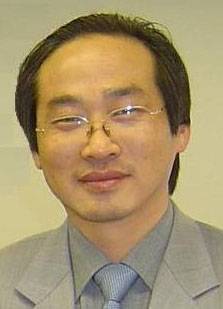 Qicheng Liu (刘其城)合作论文数School of Physics & Electronic Science, Changsha University of Science & Technology;School of Materials Science and Engineering, Changsha University of Science & Technology5GUO Jinyu (郭金玉)合作论文数3Chang Ye (叶昌)合作论文数3
 Zhe Zhou合作论文数Peking University, Peking University3Fujin Li (李富进)合作论文数3Yang Xiaole合作论文数2Furong Niu (牛富荣)合作论文数2
 Yuanbing Li (李远兵)合作论文数National-Provincial Joint Engineering Research Center of High Temperature Materials and Lining Technology, Wuhan University of Science and Technology2Zhenghong Xu合作论文数2
 Shangze Yang合作论文数School of Engineering, University of Edinburgh2FENG Bin (冯斌)合作论文数2ZHANG Lu (张璐)合作论文数2Yuqin Zeng合作论文数2Yuhao He合作论文数2LAN Zhixing (兰志兴)合作论文数2Qing Zeng合作论文数2Yaru Liu合作论文数2Guo-qiang ZHANG (张国强)合作论文数2Qing Tang (唐青)合作论文数2
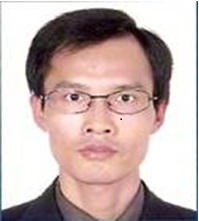 Zhaoyong Chen (陈召勇)合作论文数长沙理工大学物理与电子科学学院2
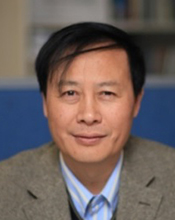 Zhipeng Xie (谢志鹏)合作论文数School of Materials Science and Engineering, Tsinghua University2
 Weixiong Wu (吴伟雄)合作论文数1Shijian Peng合作论文数1Yongqian Du合作论文数1Zhongwu Nie合作论文数1Kuijie Li (李奎杰)合作论文数1Yi-Fei Chen合作论文数1Han Jiang合作论文数1ZHANG Yi-qiong (张怡琼)合作论文数1Hao He合作论文数1
 Lingjun Li (李灵均)合作论文数1Jie JIANG (蒋洁)合作论文数1
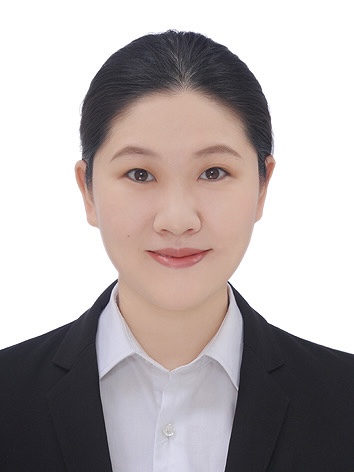 Feifei Zhang (张霏霏)合作论文数School of Materials Science and Engineering, Jilin University1
 X. Y. Lin合作论文数1WU Chun (吴春)合作论文数1Xu ZHANG (张旭)合作论文数1
 Zijia Xiong合作论文数1Jincheng Fan合作论文数1zheqiong fan合作论文数1
 Xinlei Gao合作论文数Sch Transportat Sci & Engn, Beihang Univ1
 Yi Wu (吴奕)合作论文数1Shu GONG (龚树)合作论文数1Zhentao Ni合作论文数1
 Qiqi Li合作论文数1
 Yiqiong Zhang合作论文数1Xiaolu Li合作论文数1




