The origin of the academic study of information and computing at Georgia Tech is a story of intuitive visions and the hard work of actualizing them. This included fortunate hires and timing, good responses to changing conditions, a spirit of innovation, and, of course, lots of hard, routine work. The visions were held by multiple people, a creative, productive faculty that formed a mini think-tank in the early years, a World War II refugee with an eclectic education, a librarian who knew nothing about computers, and a WW II research director with amazing foresight. Georgia Tech benefited from its location, three strategic and forward-looking leaders in this period, early benign neglect of computing by most of the campus, and a rich technological environment from which a world-class academic unit eventually grew.
The first 6 years of the College of Computing was one of envisioning, designing, and building a foundation, but included only a very modest expansion in faculty size and new programs. This chapter describes what happened in the next 6 years and provides some elaboration of how and why we did certain things.
This book recounts how application of vision, simple strategic planning, and a set of broad principles yielded excellent results at Georgia Tech.
The emergence of “big research” has given rise to a variety of organizational environments (e.g. powerful research labs, projects and centres) that complement and transcend the traditional departmental structures of universities. Success in building and sustaining these “organized research units” and in reconciling their competing interests is central to the mission of a research university. In this preliminary study, we focus on individual experiences of working in cross-disciplinary research projects and centres within a large research university. Through interviewing key individuals (project leaders, academic and non-academic staff) engaged in running large research projects and/or centres, we aim to unpack the diversity and dynamics of different institutional logics at work at different stages of the organized research unit (ORU) life cycle. We seek to draw general conclusions in terms of managing and reconciling the research missions of ORUs, the university, and its external stakeholders (government, industry and society in general). This paper was submitted to the 35th European Group for Organizational Studies colloquium (EGOS2019). A longer version of this paper, which interprets our results from the perspective of Mode 2 knowledge production, is available at SocArXiv ("Nurturing Project Organizations: A Mode 2 Mission for the University?").
Recent changes in UK research funding priorities have led to the emergence of large challenge-led, societally embedded research opportunities. We used semi-structured interviews with 27 academic, management and professional staff at the University of Edinburgh to explore the life cycles of selected projects and centres from planning and preparation through to decommissioning. We observed the degree to which pursuit of challenge-led opportunities induced the emergence of new project-level organizational forms or changed academics’ modus operandi from “Mode 1” research to “Mode2” knowledge production. We further explored the levels of management input and administrative support expected and received by the project organization from its host academic schools, colleges the university. We found that the size, complexity and disciplinary, interdisciplinary or transdisciplinary scope of the initiatives influenced their emergence as autonomous project organisations. “Role strain” affected many respondents as they sought to balance Mode 1 academic and Mode 2 leadership and management roles in their project organizations. Further exploration of the distribution of leadership management and professional support functions among project organizations and the support structures of academic schools, colleges and the university is warranted. We suggest that the university might usefully act as a boundary organization and adopt a Mode 2 knowledge exchange mission in support of multi-stakeholder projects. This paper was submitted to the 35th European Group for Organizational Studies colloquium (EGOS2019). A shorter version of this paper, which focuses on the institutional logics observed among the university staff, is also available at SocArXiv ("Nurturing cross-disciplinary research: Institutional logics, hybrid Spaces and meta-organization at a research university").
This talk will explore some aspects of and relationships between science, computational science, and computer science. Broadly speaking, scientific research is the systematic development of information about a subject and the formation of explanations that permit generalizations and predictions. For almost fifty years, computer simulation techniques have extended the impact of computer science on research and tools for computation based on computer science - languages, computers, systems, and so on - have contributed extensively to scientific research for even longer. The focus in computational science today is often only on simulation; a mistake in this speaker's view. Further, the essence of computer science is much deeper and broader just providing tools. On the theory formation side, when one looks at the nature of some of the most important and challenging problems in science, it is easy to see how the essence of computer science provides intellectual tools that will be essential to dealing with them. In short, we have only begun to understand the impact of computer science on the conduct of science (and, of course, engineering).
The thinking of Professors Newell, Perlis, and Simon on the subject of “What is Computer Science?” was clarified In their famous Letter in Science [2]: their statement that “computer science is the study of computers” should be read in the context of the discussion that asserts that “Phenomena breed sciences” and their reference to “the varied, rich, complex phenomena surrounding computers.” The subsequent history of computer science and computing more generally at CMU to this day, strongly supports the continued viability of this definition.
This volume combines the proceedings of the 1987 SEI Conference on Software Engineering Education with the set of papers that formed the basis for that conference. The purpose of the book is to improve the state of software engineering education by collecting together current thinking and practical experience in software engineering education. The volume contains 23 refereed papers, summaries of discussions, three invited presentations, and two panel sessions. The papers cover undergraduate issues in undergraduate software engineering education, teaching software engineering project courses, graduate level software engineering education, and industrially-oriented education and training for software engineers. The two panel sessions are concerned with four models of industrial/academic interfaces and the role of Ada in software engineering education. The intended audience for this text include all those who are interested in or involved in developing computer science and software engineering curricula, not only in universities, but also in industry. This text should provide a starting point for additional work in the development of coherent software engineering curricula.
Editor's Introduction In this fifteenth piece to the Ubiquity symposium discussing What is computation? Peter A. Freeman considers the theoretical and practical aspects of the question. Peter J. Denning - Editor
The Tropical Dance Orchestra, Queensland’s prestige Latin and swing ensemble, features some of the finest young local talent and experienced jazz performers. Be entranced by the elegant and luxurious sounds of the five-piece string section and groove to the dynamic and captivating rhythms of this unique thirteen-piece band playing some of the greatest jazz swing classics and the best of Brazil’s exhilarating music. Samba is the music of Brazil’s Carnival - the joyful, energetic and rhythmically powerful music played by samba schools or bateria in the colourful street parades of Rio de Janeiro. Its rhythms can be heard in bossanova, a smooth distillation of samba and jazz-like harmonies—a sound that captured the world in the 1960s and and is heard in songs such as Girl from Ipanema, Corcovado and One-note samba. As well as bossa-nova, the Tropical Dance Orchestra will be performing some of the greatest swing standards from the American songbook - the songs you know and love. Duration - 60 minutes Date first performed - 10/02/2009 Distribution medium - Tuesday Lunchtime Concert Brisbane City Hall Main Auditorium Name of Distributor - Brisbane City Council Programme: Lamento no morro (Jobim) Wave (Jobim) Surfboard (Jobim) Estrada branca (Jobim) It don't mean a thing (Ellington) So danco samba (Jobim) Carinhoso (Pixinguinha) Um a zero (Pixinguinha) If I had you (King) Swing 42 (Reinhardt) You don't know me (Walker) Triste (Jobim) Lovin you (Jazzamor) Garota de Ipanema (Jobim) Pretty World (Mendes)
A US-Japan Workshop on Future Networks was held in Palo Alto, CA on October 31 - November 1, 2008. This workshop brought together leading US and Japanese network researchers and network research infrastructure developers who are interested in future networks. The focus was on research issues and experimental infrastructure to support research on future generation networks. The goal was to foster cooperation and communication between peers in the two countries. Through this workshop, a number of research challenges were identified. The workshop also made recommendations to: create a new funding mechanism to foster special collaborations in networking and experimentation, extend current national testbeds with international connectivity; and urge the respective governments to exert strong leadership to ensure that collaborative research for creating future networks is carried out.
Trying to categorize computing as engineering, science, or math is fruitless; we have our own paradigm.
 Anthony I. Wasserman合作论文数Carnegie Mellon University Silicon Valley14
 R.E. Fairley合作论文数4
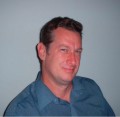 Ira Baxter合作论文数Semantic Designs, Inc., Austin, TX3
 elaine seeto合作论文数2tropical dance orchestra合作论文数2
 Arndt Von Staa合作论文数Pontifical Catholic University of Rio de Janeiro2Arango, G.合作论文数2
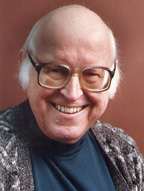 Allen Newell合作论文数Department of Computer Science, Carnegie Mellon University2
 Fumi Kitagawa合作论文数Graduate School of Education, University of Bristol2Gillermo Arango合作论文数2
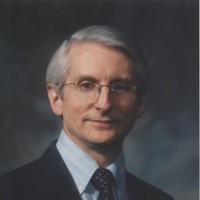 Peter J. Denning合作论文数Cebrowski Institute, Naval Postgraduate School;Computer Science Department, Naval Postgraduate School2
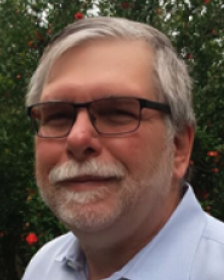 William Aspray合作论文数Charles Babbage Institute, College of Science and Engineering & University Libraries, University of Minnesota2
 Gordon Bell合作论文数Microsoft Research Silicon Valley Laboratory2M. Porcella合作论文数2Ahmed S. Khan合作论文数1Vicky W. L. Lam合作论文数1Andreea L. Cojocaru合作论文数1José María Da Rocha合作论文数1
 Eyiwunmi Falaye合作论文数1frank meere合作论文数1SJ ANDRIOLE合作论文数1Omu Kakujaha-Matundu合作论文数1Margaret Spring合作论文数1Virginie Bornarel合作论文数1
 Nathan J. Bennett合作论文数IUCN1
 Francis Emile Asuquo合作论文数1
 Megan Bailey合作论文数1
 S. Kim Juniper合作论文数1Allison Cutting合作论文数1Dacotah-Victoria Splichalova合作论文数1Ray Houghton合作论文数1Annie Mejaes合作论文数1Polina Orlov合作论文数1Valérie Le Brenne合作论文数1
 Nicolas Talloni合作论文数1
 Romola Vasantha Thumbadoo合作论文数1e k arizi合作论文数1
 Meaghan Efford合作论文数1
 Karly McMullen合作论文数1
 Tu Nguyen合作论文数1Andrew Forrest合作论文数1Rodrigue Orobiyi Edeya Pelebe合作论文数1
 Steve Polasky合作论文数Department of Applied Economics, University of Minnesota;Department of Ecology, Evolution, and Behavior, University of Minnesota1
 Olaf Jensen合作论文数Department of Integrative Biology, College of Letters & Science, University of Wisconsin-Madison1Tessa Owens合作论文数1
 Isigi Kadagi合作论文数World Wildlife Fund1
 Umi Muawanah合作论文数National Research and Innovation Agency1




