BACKGROUND People with intellectual disabilities (ID) have a higher risk of sleep disorders. Polysomnography (PSG) remains the diagnostic gold standard in sleep medicine. However, PSG in people with ID can be challenging, as sensors can be burdensome and have a negative influence on sleep. Alternative methods of assessing sleep have been proposed that could potentially transfer to less obtrusive monitoring devices. The goal of this study was to investigate whether analysis of heart rate variability and respiration variability is suitable for the automatic scoring of sleep stages in sleep-disordered people with ID. METHODS Manually scored sleep stages in PSGs of 73 people with ID (borderline to profound) were compared with the scoring of sleep stages by the CardioRespiratory Sleep Staging (CReSS) algorithm. CReSS uses cardiac and/or respiratory input to score the different sleep stages. Performance of the algorithm was analysed using input from electrocardiogram (ECG), respiratory effort and a combination of both. Agreement was determined by means of epoch-per-epoch Cohen's kappa coefficient. The influence of demographics, comorbidities and potential manual scoring difficulties (based on comments in the PSG report) was explored. RESULTS The use of CReSS with combination of both ECG and respiratory effort provided the best agreement in scoring sleep and wake when compared with manually scored PSG (PSG versus ECG = kappa 0.56, PSG versus respiratory effort = kappa 0.53 and PSG versus both = kappa 0.62). Presence of epilepsy or difficulties in manually scoring sleep stages negatively influenced agreement significantly, but nevertheless, performance remained acceptable. In people with ID without epilepsy, the average kappa approximated that of the general population with sleep disorders. CONCLUSIONS Using analysis of heart rate and respiration variability, sleep stages can be estimated in people with ID. This could in the future lead to less obtrusive measurements of sleep using, for example, wearables, more suitable to this population.
ObjectiveThe maturation of neural network-based techniques in combination with the availability of large sleep datasets has increased the interest in alternative methods of sleep monitoring. For unobtrusive sleep staging, the most promising algorithms are based on heart rate variability computed from inter-beat intervals (IBIs) derived from ECG-data. The practical application of these algorithms is even more promising when alternative ways of obtaining IBIs, such as wrist-worn photoplethysmography (PPG) can be used. However, studies validating sleep staging algorithms directly on PPG-based data are limited.ResultsWe applied an automatic sleep staging algorithm trained and validated on ECG-data directly on inter-beat intervals derived from a wrist-worn PPG sensor, in 389 polysomnographic recordings of patients with a variety of sleep disorders. While the algorithm reached moderate agreement with gold standard polysomnography, the performance was significantly lower when applied on PPG- versus ECG-derived heart rate variability data (kappa 0.56 versus 0.60, p<0.001; accuracy 73.0% versus 75.9% p<0.001). These results show that direct application of an algorithm on a different source of data may negatively affect performance. Algorithms need to be validated using each data source and re-training should be considered whenever possible.
Abstract Introduction Typically, neurological signals are not recorded in home sleep apnea testing (HSAT) and thus standard sleep scoring is not applicable. The respiratory event index is calculated using total recording time rather than total sleep time (TST) resulting in a risk of underestimating sleep apnea severity. The objective of the study was to evaluate if artificial intelligence approaches can provide sleep scoring based on cardiorespiratory signals (CReSS) with reasonable accuracy. Methods Supervised deep learning for scoring sleep was trained with 472 and tested in 116 polysomnographies (PSG), scored independently by two experts and by a consensus scorer. The resulting bidirectional long short-term memory recurrent neural network (RNN) was integrated in the Somnolyzer system and validated in 97 PSGs of patients with obstructive sleep apnea (OSA) which had been scored independently by four human experts. Cohen’s kappa agreement for four stages (W, L: N1+N2, D: N3, R) was determined as compared to a consensus scoring. Results Epoch-by-epoch comparison between CReSS autoscoring and manual consensus scoring resulted in Cohen’s kappa of 0.68 (W: 0.74, L: 0.63, D: 0.54, R: 0.79). The intra-class correlation coefficient (ICC) between TST derived from CReSS and from neurological scoring was 0.86 (95%-CI: 0.79-0.90), while the ICC between subjective TST from sleep questionnaire and the objective TST was only 0.65 (95%-CI: 0.45-0.77). REM-related OSA had a prevalence of 16% and was detected with an accuracy of 95%. Conclusion With a kappa of 0.68, the cardiorespiratory-based RNN classifier is far above previously published values and reflects a substantial agreement with the manual consensus scoring in patients with sleep-disordered breathing. Thus, applying CReSS allows a more accurate determination of the OSA-severity and even a detection of REM related OSA in HSAT studies. Support All authors are employees of Philips
Abstract Introduction Manual scoring of polysomnographic (PSG) data is a time-consuming and tedious process with noticeable inter-rater variability. Autoscoring may overcome these limitations if it delivers valid results. The goal of this study was to validate a comprehensive autoscoring system in a clinically representative population. Methods The validation data consisted of 97 PSGs in patients with sleep-related breathing disorder, scored manually by a reference scorer and three further experts. The Somnolyzer autoscoring system combined pattern recognition for events such as spindles, k-complexes, slow-waves, eye-movements, apneas, hypopneas, desaturations and leg movements with an artificial intelligence classifier consisting of a bidirectional long short-term memory recurrent neural network (RNN) architecture. Intra-class correlation coefficients (ICC) for absolute agreement were determined for the commonly used metrics in sleep medicine to compare both, the three human expert scorings and the autoscoring versus the reference scoring. Results ICC coefficients for autoscoring and the three manual scorings versus the reference scoring were for sleep efficiency: .95, .83, .91, .93; N1(%): .71, .44, .39, .56; N2(%): .87, .63, .55, .45; N3(%): .80, .62, .44, .32; R(%): .92, .89, .91, .88; arousal index: .88, .81, .22, .78; PLMI: .97, .88, .86, .91; AHI: .91, .89, .87, .78; OA: .94, .89, .91, .90; CA: .96, .96, .96, .82; MA: .93, .77, .43, .41. Thus, the ICCs between autoscoring and the reference scoring were equal or higher than the ICCs between any of the three manual scorings and the reference scoring for all endpoints. Conclusion Autoscoring of PSGs based on artificial intelligence outperformed even the best of three human expert scorers. Since the autoscoring performs pattern recognition in real-time, the final autoscoring results are available immediately after the end of the recording. Support All authors are employees of Philips
While there are well-established sleep scoring rules, the interpretation of the rules may vary substantially between scorers. Independent multiple human expert scorings are required to specify the problem of equivocal epochs and to examine possible solutions. The aim of the study was to evaluate whether artificial intelligence approaches can offer such a solution. Supervised deep learning for sleep scoring was trained with 472 and tested in 116 polysomnographies (PSGs), all scored independently by 2 experts and by a consensus scorer. In total, 556.797 soft targets were available to predict sleep stage probabilities. The resulting recurrent neural network (RNN) was integrated in the Somnolyzer sleep scoring system. The validation data consisted of 10 PSGs scored independently by 12 human experts and 87 PSGs scored by 4 experts. Cohen’s kappa based on epoch-by-epoch comparisons was determined to measure agreement to a “reference scoring”, i.e. the human scoring with the highest agreement to all other human scorings. The highest kappa coefficient between any human scoring and the “reference scoring” for the 87 validation PSGs was 0.73 (W:0.81, N1:0.35, N2:0.74, N3:0.63, R: 0.90). The kappa between autoscoring and the “reference scoring” was 0.74 (W:0.87, N1:0.44, N2:0.73, N3:0.51, R:0.90). By exploiting available options to vary sensitivity settings, the kappa values for autoscoring with maximum slow-wave precision increased to 0.80 (W:0.87, N1:0.45, N2:0.82, N3:0.70, R:0.90). Interestingly, the probabilities at the RNN outputs were quite similar to the probabilities derived from the 12 human scorings, indicating that the network has learned to estimate the variability between human scorings accurately. Autoscoring based on a RNN classifier is equal to the best pair of two human expert scorers and even outperforms all human expert scorers after adjusting the sensitivity settings, an option which had precisely been developed to imitate the different interpretations of manual scorers. Support (If Any):
Numerous studies point to the involvement of sleep spindles and slow waves in memory processes, particularly in hippocampus-dependent declarative memory. We have shown previously that the overnight change in recall performance in a declarative word pair association task correlates significantly with increased spindle activity during the night after learning compared to a control night. The current study re-evaluates this relationship in detail and explores whether the observed positive correlation of two spindle parameters measured during stage 2 (S2) sleep with overnight stabilization depend on the time of night (early vs. late) and spindle type (fast vs. slow).
The purpose of the present study was to analyse gender- and age-specific variations in microstructures of rapid eye movement (REM) sleep and to provide reference values for microstructures.
Numerous studies indicate that K-complexes (KC), like slow waves, appear to be homeostatically regulated. In comparison to healthy controls, patients suffering from obstructive sleep apnea syndrome (OSAS) show a different time course of slow wave activity (SWA), enhanced sleep pressure, and impaired restorative sleep function.
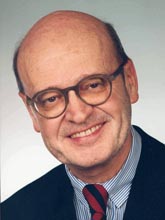 B. Saletu合作论文数Sleep Laboratory Rudolfinerhaus;Department of Psychiatry and Psychotherapy, Medical University of Vienna212
 J Grünberger合作论文数53H. V. Semlitsch合作论文数51G. Gruber合作论文数50
 Josef Zeitlhofer合作论文数44Gerda Maria Saletuzyhlarz合作论文数37Silvia Parapatics合作论文数30Leopold Linzmayer合作论文数30G. Saletu-Zyhlarz合作论文数27Gerhard Klösch合作论文数24
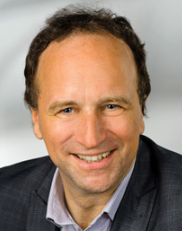 Georg Dorffner (格奥尔格杜夫纳)合作论文数Institute of Artificial Intelligence, Center for Medical Statistics, Informatics and Intelligent Systems, Medical University of Vienna;The Siesta Group Schlafanalyse GmbH22
 Manuel Schabus合作论文数Department of Psychology, University of Salzburg19M. Mandl合作论文数18Wolfgang Klimesch合作论文数16Cornelia Sauter合作论文数16Markus Metka合作论文数15Ross Marco合作论文数14
 Roberto D. Pascual-Marqui合作论文数The KEY Institute for Brain-Mind Research, University of Zurich14
 Manel J. Barbanoj合作论文数14A Cerny合作论文数13N. Brandstätter合作论文数12G. Kloesch合作论文数11Moreau Arnaud合作论文数11
 Heidi Danker-Hopfe合作论文数11Richard Frey合作论文数11M. Woertz合作论文数10Wolfgang Prause合作论文数10A. Saletu合作论文数10Johannes C Huber合作论文数9
 Doris Moser合作论文数9M Saletu合作论文数8D Gruber合作论文数8
 Christoph Hauer合作论文数8
 Kerstin Hoedlmoser合作论文数Div Physiol Psychol, Salzburg Univ8A. Assandri合作论文数7
 Alois Schlögl合作论文数Institute of Science and Technology Austria7Karl Dantendorfer合作论文数Department of Psychiatry, University of Vienna7S. Rosales-Rodriguez合作论文数7R. Popovic合作论文数7R. Dittrich合作论文数6
 Brigitte Holzinger合作论文数6
 Reinhold Kerbl合作论文数6J. Neumark合作论文数6Kathrin Decker合作论文数6W. Petricek合作论文数6Bernd Kufferle合作论文数6K. Kinsperger合作论文数6
 Stefan Oberndorfer合作论文数Department of Neurology and LBI for Neurooncology, Kaiser Franz Josef Hospital6G. Zyhlarz合作论文数6




