Evaluating text-to-image models is notoriously difficult. A strong recent approach for assessing text-image faithfulness is based on QG/A (question generation and answering), which uses pre-trained foundational models to automatically generate a set of questions and answers from the prompt, and output images are scored based on whether these answers extracted with a visual question answering model are consistent with the prompt-based answers. This kind of evaluation is naturally dependent on the quality of the underlying QG and VQA models. We identify and address several reliability challenges in existing QG/A work: (a) QG questions should respect the prompt (avoiding hallucinations, duplications, and omissions) and (b) VQA answers should be consistent (not asserting that there is no motorcycle in an image while also claiming the motorcycle is blue). We address these issues with Davidsonian Scene Graph (DSG), an empirically grounded evaluation framework inspired by formal semantics, which is adaptable to any QG/A frameworks. DSG produces atomic and unique questions organized in dependency graphs, which (i) ensure appropriate semantic coverage and (ii) sidestep inconsistent answers. With extensive experimentation and human evaluation on a range of model configurations (LLM, VQA, and T2I), we empirically demonstrate that DSG addresses the challenges noted above. Finally, we present DSG-1k, an open-sourced evaluation benchmark that includes 1,060 prompts, covering a wide range of fine-grained semantic categories with a balanced distribution. We release the DSG-1k prompts and the corresponding DSG questions.
Text-to-image generation models are powerful but difficult to use. Users craft specific prompts to get better images, though the images can be repetitive. This paper proposes a Prompt Expansion framework that helps users generate high-quality, diverse images with less effort. The Prompt Expansion model takes a text query as input and outputs a set of expanded text prompts that are optimized such that when passed to a text-to-image model, generates a wider variety of appealing images. We conduct a human evaluation study that shows that images generated through Prompt Expansion are more aesthetically pleasing and diverse than those generated by baseline methods. Overall, this paper presents a novel and effective approach to improving the text-to-image generation experience.
We present Iterative Vision-and-Language Navigation (IVLN), a paradigm for evaluating language-guided agents navigating in a persistent environment over time. Existing Vision-and-Language Navigation (VLN) benchmarks erase the agent's memory at the beginning of every episode, testing the ability to perform cold-start navigation with no prior information. However, deployed robots occupy the same environment for long periods of time. The IVLN paradigm addresses this disparity by training and evaluating VLN agents that maintain memory across tours of scenes that consist of up to 100 ordered instruction-following Room-to-Room (R2R) episodes, each defined by an individual language instruction and a target path. We present discrete and continuous Iterative Room-to-Room (IR2R) benchmarks comprising about 400 tours each in 80 indoor scenes. We find that extending the implicit memory of high-performing transformer VLN agents is not sufficient for IVLN, but agents that build maps can benefit from environment persistence, motivating a renewed focus on map-building agents in VLN.
We study the problem of synthesizing immersive 3D indoor scenes from one or a few images. Our aim is to generate high-resolution images and videos from novel viewpoints, including viewpoints that extrapolate far beyond the input images while maintaining 3D consistency. Existing approaches are highly complex, with many separately trained stages and components. We propose a simple alternative: an image-to-image GAN that maps directly from reprojections of incomplete point clouds to full high-resolution RGB-D images. On the Matterport3D and RealEstate10K datasets, our approach significantly outperforms prior work when evaluated by humans, as well as on FID scores. Further, we show that our model is useful for generative data augmentation. A vision-and-language navigation (VLN) agent trained with trajectories spatially-perturbed by our model improves success rate by up to 1.5% over a state of the art baseline on the mature R2R benchmark. Our code will be made available to facilitate generative data augmentation and applications to downstream robotics and embodied AI tasks.
Text-guided image editing can have a transformative impact in supporting creative applications. A key challenge is to generate edits that are faithful to input text prompts, while consistent with input images. We present Imagen Editor, a cascaded diffusion model built, by fine-tuning Imagen [36] on text-guided image inpainting. Imagen Editor's edits are faithful to the text prompts, which is accomplished by using object detectors to propose inpainting masks during training. In addition, Imagen Editor captures fine details in the input image by conditioning the cascaded pipeline on the original high resolution image. To improve qualitative and quantitative evaluation, we introduce EditBench, a systematic benchmark for text-guided image inpainting. EditBench evaluates inpainting edits on natural and generated images exploring objects, attributes, and scenes. Through extensive human evaluation on EditBench, we find that object-masking during training leads to across-the-board improvements in text-image alignment – such that Imagen Editor is preferred over DALL-E 2 [31] and Stable Diffusion [33] – and, as a cohort, these models are better at object-rendering than text-rendering, and handle material/color/size attributes better than count/shape attributes.
Recent studies in Vision-and-Language Navigation (VLN) train RL agents to execute natural-language navigation instructions in photorealistic environments, as a step towards robots that can follow human instructions. However, given the scarcity of human instruction data and limited diversity in the training environments, these agents still struggle with complex language grounding and spatial language understanding. Pretraining on large text and image-text datasets from the web has been extensively explored but the improvements are limited. We investigate large-scale augmentation with synthetic instructions. We take 500+ indoor environments captured in densely-sampled 360 degree panoramas, construct navigation trajectories through these panoramas, and generate a visually-grounded instruction for each trajectory using Marky, a high-quality multilingual navigation instruction generator. We also synthesize image observations from novel viewpoints using an image-to-image GAN. The resulting dataset of 4.2M instruction-trajectory pairs is two orders of magnitude larger than existing human-annotated datasets, and contains a wider variety of environments and viewpoints. To efficiently leverage data at this scale, we train a simple transformer agent with imitation learning. On the challenging RxR dataset, our approach outperforms all existing RL agents, improving the state-of-the-art NDTW from 71.1 to 79.1 in seen environments, and from 64.6 to 66.8 in unseen test environments. Our work points to a new path to improving instruction-following agents, emphasizing large-scale imitation learning and the development of synthetic instruction generation capabilities.
We study the automatic generation of navigation instructions from 360° images captured on indoor routes. Existing generators suffer from poor visual grounding, causing them to rely on language priors and hallucinate objects. Our Marky-mt5 system addresses this by focusing on visual landmarks; it comprises a first stage landmark detector and a second stage generator-a multimodal, multilingual, multi-task encoder-decoder. To train it, we bootstrap grounded landmark annotations on top of the Room-across-Room (RxR) dataset. Using text parsers, weak supervision from RxR's pose traces, and a multilingual image-text encoder trained on 1.8b images, we identify 971k English, Hindi and Telugu landmark descriptions and ground them to specific regions in panoramas. On Room-to-Room, human wayfind-ers obtain success rates (SR) of 71% following Marky-mt5's instructions, just shy of their 75% SR following human instructions-and well above SRs with other genera-tors. Evaluations on RxR's longer, diverse paths obtain 61-64% SRs on three languages. Generating such high-quality navigation instructions in novel environments is a step to-wards conversational navigation tools and could facilitate larger-scale training of instruction-following agents.
We investigate the problem of generating utter-001 ances from pairs of images showing a before 002 and an after state of a change in a visual scene. 003 We present a transformer model with differ-004 ence attention heads that learns to attend to vi-005 sual changes in consecutive images via a differ-006 ence key. We test our approach in instruction 007 generation, change captioning and difference 008 spotting and compare these tasks in terms of 009 their linguistic phenomena and reasoning abil-010 ities. Our model outperforms the state-of-the-011 art for instruction generation on the BLOCKS 012 and difference spotting on the Spot-the-diff 013 dataset and generates accurate referential and 014 compositional spatial expressions. Finally, we 015 identify linguistic phenomena that pose chal-016 lenges for generation in changing scenes. 017
People navigating in unfamiliar buildings take advantage of myriad visual, spatial and semantic cues to efficiently achieve their navigation goals. Towards equipping computational agents with similar capabilities, we introduce Pathdreamer, a visual world model for agents navigating in novel indoor environments. Given one or more previous visual observations, Pathdreamer generates plausible high-resolution 360 visual observations (RGB, semantic segmentation and depth) for viewpoints that have not been visited, in buildings not seen during training. In regions of high uncertainty (e.g. predicting around corners, imagining the contents of an unseen room), Pathdreamer can predict diverse scenes, allowing an agent to sample multiple realistic outcomes for a given trajectory. We demonstrate that Pathdreamer encodes useful and accessible visual, spatial and semantic knowledge about human environments by using it in the downstream task of Vision-and-Language Navigation (VLN). Specifically, we show that planning ahead with Pathdreamer brings about half the benefit of looking ahead at actual observations from unobserved parts of the environment. We hope that Pathdreamer will help unlock model-based approaches to challenging embodied navigation tasks such as navigating to specified objects and VLN.
PanGEA, the Panoramic Graph Environment Annotation toolkit, is a lightweight toolkit for collecting speech and text annotations in photo-realistic 3D environments. PanGEA immerses annotators in a web-based simulation and allows them to move around easily as they speak and/or listen. It includes database and cloud storage integration, plus utilities for automatically aligning recorded speech with manual transcriptions and the virtual pose of the annotators. Out of the box, PanGEA supports two tasks – collecting navigation instructions and navigation instruction following – and it could be easily adapted for annotating walking tours, finding and labeling landmarks or objects, and similar tasks. We share best practices learned from using PanGEA in a 20,000 hour annotation effort to collect the Room-Across-Room dataset. We hope that our open-source annotation toolkit and insights will both expedite future data collection efforts and spur innovation on the kinds of grounded language tasks such environments can support.
Contextualized image captioning is a task that 001 extends beyond generating a purely visual de-002 scription of the image content and aims to pro-003 duce a caption that is influenced by the con-004 text and informed by the real world knowl-005 edge. In this paper, we present an approach 006 to knowledge-aware image captioning, with a 007 specific focus on the temporal domain. We 008 propose a way to identify relevant information 009 in external data sources, such as geographic 010 databases and common knowledge bases, and 011 then encode it in a way that is most useful for 012 the captioning network. We develop an end-013 to-end caption generation system that incorpo-014 rates external knowledge into the captioning 015 process at several stages. The system is trained 016 and tested on our novel temporal knowledge-017 aware captioning dataset, achieving significant 018 improvements over multiple baselines across 019 standardly used metrics. We demonstrate that 020 our approach is effective for generating highly 021 contextualized captions with both relevant and 022 accurate temporal facts. 023
In today’s digital world, it is increasingly com-001 mon for information to be multimodal: images 002 or videos often accompany text. Sophisticated 003 multimodal architectures such as ViLBERT, 004 VisualBERT, and LXMERT have achieved 005 state-of-the-art performance in vision-and-006 language tasks. However, existing vision 007 models cannot represent contextual informa-008 tion and semantics like transformer-based lan-009 guage models can. Fusing the semantic-rich 010 information coming from text becomes a chal-011 lenge. In this work, we study the alternative of 012 first transforming images into text using image 013 captioning. We then use transformer-based 014 methods to combine the two modalities in a 015 simple but effective way. We perform an em-016 pirical analysis on different multimodal tasks, 017 describing the benefits, limitations, and situa-018 tions where this simple approach can replace 019 large and expensive handcrafted multimodal 020 models. 021
Vision-and-Language Navigation wayfinding agents can be enhanced by exploiting automatically generated navigation instructions. However, existing instruction generators have not been comprehensively evaluated, and the automatic evaluation metrics used to develop them have not been validated. Using human wayfinders, we show that these generators perform on par with or only slightly better than a template-based generator and far worse than human instructors. Furthermore, we discover that BLEU, ROUGE, METEOR and CIDEr are ineffective for evaluating grounded navigation instructions. To improve instruction evaluation, we propose an instruction-trajectory compatibility model that operates without reference instructions. Our model shows the highest correlation with human wayfinding outcomes when scoring individual instructions. For ranking instruction generation systems, if reference instructions are available we recommend using SPICE.
Yuankai Qi Qi Wu1∗ Peter Anderson3† Xin Wang William Yang Wang Chunhua Shen Anton van den Hengel 1Australia Centre for Robotic Vision, The University of Adelaide 2Harbin Institute of Technology, Weihai 3Georgia Institute of Technology 4University of California, Santa Barbara qykshr@gmail.com {qi.wu01, chunhua.shen, anton.vandenhengel}@adelaide.edu.au peter.anderson@gatech.edu {xwang, william}@cs.ucsb.edu
We study the challenging problem of releasing a robot in a previously unseen environment, and having it follow unconstrained natural language navigation instructions. Recent work on the task of Vision-and-Language Navigation (VLN) has achieved significant progress in simulation. To assess the implications of this work for robotics, we transfer a VLN agent trained in simulation to a physical robot. To bridge the gap between the high-level discrete action space learned by the VLN agent, and the robot's low-level continuous action space, we propose a subgoal model to identify nearby waypoints, and use domain randomization to mitigate visual domain differences. For accurate sim and real comparisons in parallel environments, we annotate a 325m2 office space with 1.3km of navigation instructions, and create a digitized replica in simulation. We find that sim-to-real transfer to an environment not seen in training is successful if an occupancy map and navigation graph can be collected and annotated in advance (success rate of 46.8% vs. 55.9% in sim), but much more challenging in the hardest setting with no prior mapping at all (success rate of 22.5%).
We present Where Are You? (WAY), a dataset of ~6k dialogs in which two humans -- an Observer and a Locator -- complete a cooperative localization task. The Observer is spawned at random in a 3D environment and can navigate from first-person views while answering questions from the Locator. The Locator must localize the Observer in a detailed top-down map by asking questions and giving instructions. Based on this dataset, we define three challenging tasks: Localization from Embodied Dialog or LED (localizing the Observer from dialog history), Embodied Visual Dialog (modeling the Observer), and Cooperative Localization (modeling both agents). In this paper, we focus on the LED task -- providing a strong baseline model with detailed ablations characterizing both dataset biases and the importance of various modeling choices. Our best model achieves 32.7% success at identifying the Observer's location within 3m in unseen buildings, vs. 70.4% for human Locators.
We introduce Room-Across-Room (RxR), a new Vision-and-Language Navigation (VLN) dataset. RxR is multilingual (English, Hindi, and Telugu) and larger (more paths and instructions) than other VLN datasets. It emphasizes the role of language in VLN by addressing known biases in paths and eliciting more references to visible entities. Furthermore, each word in an instruction is time-aligned to the virtual poses of instruction creators and validators. We establish baseline scores for monolingual and multilingual settings and multitask learning when including Room-to-Room annotations. We also provide results for a model that learns from synchronized pose traces by focusing only on portions of the panorama attended to in human demonstrations. The size, scope and detail of RxR dramatically expands the frontier for research on embodied language agents in simulated, photo-realistic environments.
Following a navigation instruction such as ‘Walk down the stairs and stop at the brown sofa’ requires embodied AI agents to ground referenced scene elements referenced (e.g. ‘stairs’) to visual content in the environment (pixels corresponding to ‘stairs’). We ask the following question – can we leverage abundant ‘disembodied’ web-scraped vision-and-language corpora (e.g. Conceptual Captions) to learn the visual groundings that improve performance on a relatively data-starved embodied perception task (Vision-and-Language Navigation)? Specifically, we develop VLN-BERT, a visiolinguistic transformer-based model for scoring the compatibility between an instruction (‘...stop at the brown sofa’) and a trajectory of panoramic RGB images captured by the agent. We demonstrate that pretraining VLN-BERT on image-text pairs from the web before fine-tuning on embodied path-instruction data significantly improves performance on VLN – outperforming prior state-of-the-art in the fully-observed setting by 4 absolute percentage points on success rate. Ablations of our pretraining curriculum show each stage to be impactful – with their combination resulting in further gains.
Textual cues are essential for everyday tasks like buying groceries and using public transport. To develop this assistive technology, we study the TextVQA task, i.e., reasoning about text in images to answer a question. Existing approaches are limited in their use of spatial relations and rely on fully-connected transformer-like architectures to implicitly learn the spatial structure of a scene. In contrast, we propose a novel spatially aware self-attention layer such that each visual entity only looks at neighboring entities defined by a spatial graph. Further, each head in our multi-head self-attention layer focuses on a different subset of relations. Our approach has two advantages: (1) each head considers local context instead of dispersing the attention amongst all visual entities; (2) we avoid learning redundant features. We show that our model improves the absolute accuracy of current state-of-the-art methods on TextVQA by 2.2% overall over an improved baseline, and 4.62% on questions that involve spatial reasoning and can be answered correctly using OCR tokens. Similarly on ST-VQA, we improve the absolute accuracy by 4.2%. We further show that spatially aware self-attention improves visual grounding.
One of the long-term challenges of robotics is to enable robots to interact with humans in the visual world via natural language, as humans are visual animals that communicate through language. Overcoming this challenge requires the ability to perform a wide variety of complex tasks in response to multifarious instructions from humans. In the hope that it might drive progress towards more flexible and powerful human interactions with robots, we propose a dataset of varied and complex robot tasks, described in natural language, in terms of objects visible in a large set of real images. Given an instruction, success requires navigating through a previously-unseen environment to identify an object. This represents a practical challenge, but one that closely reflects one of the core visual problems in robotics. Several state-of-the-art vision-and-language navigation, and referring-expression models are tested to verify the difficulty of this new task, but none of them show promising results because there are many fundamental differences between our task and previous ones. A novel Interactive Navigator-Pointer model is also proposed that provides a strong baseline on the task. The proposed model especially achieves the best performance on the unseen test split, but still leaves substantial room for improvement compared to the human performance. Repository: https://github.com/YuankaiQi/REVERIE.
 Dhruv Batra合作论文数Yutori13
 Stefan Lee合作论文数School of Electrical Engineering and Computer Science, College of Engineering, Oregon State University10
 Devi Parikh合作论文数Yutori10
 Jason Baldridge合作论文数Google Research9
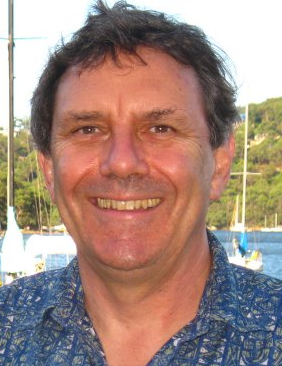 Mark Johnson合作论文数Department of Computing, School of Computing, Faculty of Science, Macquarie University;Oracle Corporation8
 Stephen Gould合作论文数School of Computing, Australian National University8
 Bernhard Hengst合作论文数School of Computer Science and Engineering, UNSW Sydney6
 Alexander Ku合作论文数Princeton University;Google DeepMind5
 Xiaodong He (何晓冬)合作论文数JD.COM Group;Department of Electrical & Computer Engineering, University of Washington5
 Anton Van Den Hengel合作论文数School of Computer Science, The University of Adelaide4
 Su Wang (Jacob)合作论文数Department of Linguistics, University of Texas, Austin4
 Basura Fernando合作论文数Institute of High-Performance Computing, Agency for Science, Technology and Research;Centre for Frontier AI Research4
 Austin Waters合作论文数Google Research3
 Qi Wu (吴琦)合作论文数Australian Centre for Robotic Vision, School of Computer Science, The University of Adelaide;School of Computer and Mathematical Sciences, Faculty of Sciences, Engineering and Technology, The University of Adelaide3
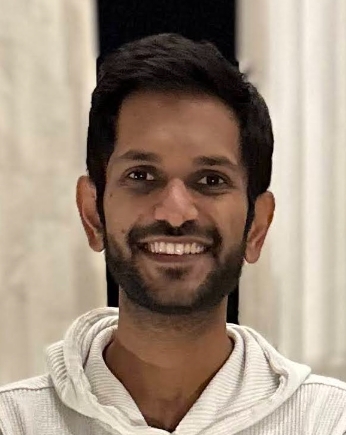 Ayush Shrivastava合作论文数University of Michigan3
 Jing Yu Koh (许靖宇)合作论文数Machine Learning Department, School of Computer Science, Carnegie Mellon University;Meta3
 Harsh Agrawal合作论文数Vercept3
 Yinfei Yang (杨寅飞)合作论文数Apple3
 Jordi Pont-Tuset合作论文数Google DeepMind3
 Chris Buehler合作论文数MIT Laboratory for Computer Science
Michael Bosse MIT Laboratory for Computer Science
Leonard McMillan MIT Laboratory for Computer Science
Steven Gortler Harvard University3
Chris Buehler合作论文数MIT Laboratory for Computer Science
Michael Bosse MIT Laboratory for Computer Science
Leonard McMillan MIT Laboratory for Computer Science
Steven Gortler Harvard University3 Damien Teney合作论文数Machine Learning Group, Idiap Research Institute;Australian Institute for Machine Learning, University of Adelaide3Yongki Yusmanthia合作论文数2Sanyam Agarwal合作论文数Department of Computer Science & Engineering, IIT Kharagpur2Ceslee Montgomery合作论文数Google Research2
 Ashwin Kalyan合作论文数Allen Institute for AI (AI2)2
 Jiasen Lu合作论文数Apple2Hunter, Y.合作论文数2Snell Broughton J合作论文数2
 Arjun Majumdar合作论文数Georgia Institute of Technology2
 Jacob Krantz合作论文数Oregon State University2
 Abhishek Das合作论文数Fundamental AI Research, Meta2David J. David合作论文数2
 Mark Dras合作论文数Macquarie University, Sydney, Australia2
 Honglak Lee合作论文数Electrical Engineering and Computer Science Department, College of Engineering, University of Michigan;LG AI Research2
 Saurabh Gupta合作论文数Department of Computer Science, The Grainger College of Engineering, University of Illinois at Urbana-Champaign;Department of Electrical and Computer Engineering, The Grainger College of Engineering, University of Illinois at Urbana-Champaign2
 Marcus Hutter合作论文数DeepMind;School of Computing, Australian National University2
 Xinlei Chen (陈鑫磊)合作论文数XAI2
 Anoop Cherian合作论文数Mitsubishi Electric Research Labs2Eugene Le合作论文数1Su Wang合作论文数1
 Siddhartha Datta合作论文数Department of Computer Science, University of Oxford1
 Jake Bruce合作论文数DeepMind1Roopal Garg合作论文数1Sarah Laszlo合作论文数1Roger Liu合作论文数1Stefano Pellegrini合作论文数1Joohyun Kim合作论文数1Chunhua Shen合作论文数1Shai Noy合作论文数1