Congenital heart defects (CHDs) are among the most common birth defects in humans (incidence 8-10 per 1,000 live births). Although their etiology is often poorly understood, most are considered to arise from multifactorial influences, including environmental and genetic components, as well as from less common syndromic forms. We hypothesized that disturbances in left-right patterning could contribute to the pathogenesis of selected cardiac defects by interfering with the extrinsic cues leading to the proper looping and vessel remodeling of the normally asymmetrically developed heart and vessels. Here, we show that heterozygous loss-of-function mutations in the human GDF1 gene contribute to cardiac defects ranging from tetralogy of Fallot to transposition of the great arteries and that decreased TGF- beta signaling provides a framework for understanding their pathogenesis. These findings implicate perturbations of the TGF- beta signaling pathway in the causation of a major subclass of human CHDs.
Thyroid scans performed with both 99mTc pertechnetate (99mTcO4) and (131I) were compared in 46 patients with palpable thyroid nodules to determine whether 131I scanning is any longer a necessary procedure. A discrepancy between the two types of scan existed in only three cases, in one of which the thyroid nodule showed uptake of 99mTcO4 but not of 131I. Subsequent surgery revealed a thyroid malignancy in this patient. In each of the other two discrepancies a nodule "cold" on 99mTcO4 scanning was apparently functioning on 131I scanning, and was found to be benign at surgery. As the convenience and lower radiation absorbed dose of 99mTcO4 patients compared with 131I make it a better scanning agent, it is recommended that 99mTcO4 scans of the thyroid be first nodules. If these nodules prove to be functioning equally with paranodular tissue, a 131I scan should also be performed to help exclude a possible thyroid malignancy.
Thyroid scans performed with both 99mTc pertechnetate (99mTcO4) and (131I) were compared in 46 patients with palpable thyroid nodules to determine whether 131I scanning is any longer a necessary procedure. A discrepancy between the two types of scan existed in only three cases, in one of which the thyroid nodule showed uptake of 99mTcO4 but not of 131I. Subsequent surgery revealed a thyroid malignancy in this patient. In each of the other two discrepancies a nodule ‘cold’ on 99mTcO4 scanning was apparently functioning on 131I scanning, and was found to be benign at surgery. As the convenience and lower radiation absorbed dose of 99mTcO4 compared with 131I make it a better scanning agent, it is recommended that 99mTcO4 scans of the thyroid be first performed in the assessment of patients with thyroid nodules. If these nodules prove to be functioning equally with paranodular tissue, a 131I scan should also be performed to help exclude a possible thyroid malignancy.
 M Muenke合作论文数6Erich Roessler合作论文数6JD Karkera合作论文数5
 Jeffrey Towbin合作论文数University of Tennessee Health Science Center;Le Bonheur Children's Hospital;St. Jude Children's Research Hospital5
 John W Belmont合作论文数Dan L Duncan Comprehensive Cancer Center, Baylor College of Medicine4
 Elizabeth Goldmuntz合作论文数Pediatrics, Children's Hospital of Philadelphia;Abramson Research Center, Division of Cardiology, The Children's Hospital of Philadelphia;Department of Pediatrics, Perelman School of Medicine, University of Pennsylvania4MV Ouspenskaia合作论文数3
 Alexander F. Schier合作论文数The Center for Molecular Life Sciences, University of Basel3J dela Cruz合作论文数3Michael M. Shen合作论文数3I Hales合作论文数2J Wiseman合作论文数2G Szonyi合作论文数2Graham Ellis合作论文数2Steven Allwright合作论文数2RN Bamford合作论文数2
 Rebecca D. Burdine合作论文数Department of Molecular Biology, Princeton University2Cooper R合作论文数2B Marino合作论文数1JA Towbin合作论文数1JB Mez合作论文数1AK Kantipong合作论文数1M Splitt合作论文数1U Saplakoglu合作论文数1
 Jesse Mez合作论文数1
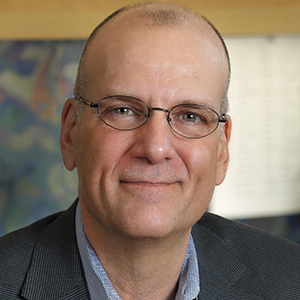 Andy Baxevanis合作论文数Center for Genomics and Data Science Research, National Human Genome Research Institute, National Institutes of Health;Computational Genomics Unit, National Human Genome Research Institute, National Institutes of Health;Office of Intramural Research, National Institutes of Health1
 J.S. Lee合作论文数Harvard Stem Cell Institute, Harvard University1
 Sharmila Banerjee-Basu合作论文数Genome;National Human Genome Research Institute;National Institutes of Health;National Human Genome Research Institute, National Institutes of Health1Brett Casey合作论文数1
 Giovanni Battista Ferrero合作论文数Department of Clinical and Biological Sciences, University of Torino;Dipartimento di Scienze della Sanità Pubblica e Pediatriche, University of Turin1




