It is high time for journalism researchers to reconsider their roles and responsibilities. While scholarly output continues to grow - becoming increasingly sophisticated in theoretical, conceptual, methodological, and empirical terms - too little of it contributes meaningfully to the development of journalistic practice. This article, part of the Provocations in Journalism Studies series, advocates a more constructive approach to research. It argues that there is a productive middle ground between passivist research, which remains indifferent to the real-world implications of its findings, and activist research, which is driven by narrow national, organizational, political, or personal interests. To chart this middle ground, the article draws inspiration from the constructive journalism movement. Here, journalists increasingly aim not only to identify problems but also to report on solutions and prompt action in ways that foster societal progress. The article begins by reviewing the prevailing roles and responsibilities of researchers in general, and journalism scholars in particular. It then introduces a typology that outlines how constructive researchers can contribute more meaningfully to both scholarship and practice. Finally, it explores how internal and external forces shape our work, and considers how we might navigate these influences to ensure that our research achieves greater societal relevance.
This article responds to Andrea Wenzel and Claire Wardle's commentaries on the provocation "Constructive Research: Making Journalism Research Matter." Engaging with their critiques, the reply revisits the constructive research continuum and reflects on three interconnected issues raised by the respondents: the historical precedents of constructive research, the institutional and structural conditions shaping journalism researchers' role conceptions, and the normative questions surrounding neutrality and objectivity in more engaged forms of scholarship. Drawing on traditions within journalism studies-including research on professional roles and influencing factors-the article argues that the field already possesses conceptual resources for further theorizing the roles of journalism researchers. Building on James W. Carey's distinction between models "of" and "for" communication, the article suggests that models developed to study journalism may also serve as tools for reflecting on scholarly practice itself. The reply concludes by proposing a process of "reflexive mirroring," in which journalism research is turned inward to critically examine the norms, practices, and roles of journalism researchers.
Constructive journalism has gained ground worldwide, but despite its growing influence in newsrooms and classrooms, it remains contested and ill-defined concept. Proponents of constructive journalism have not agreed on a single definition, and even supporters diverge in their understanding of its core principles. This lack of conceptual clarity has fueled myths, misunderstandings, and even derogatory labeling. While some degree of conceptual flexibility may have helped the movement gain traction, it has also become a hindrance-prompting some journalists, editors, and executives to coin alternative concepts and develop their own approaches. This article seeks to advance conceptual clarity by relating constructive journalism to the roles and responsibilities its founders have emphasized from the outset. It begins with a review of existing research on journalistic roles and then-based on a close reading of key works by the main proponents of the movement-proposes a new typology: the constructive continuum. This typology delineates similarities and differences between various forms of constructive journalism and more traditional approaches. The article concludes with a discussion of how constructive roles-and their embedded responsibilities-intersect with evolving understandings of objectivity among both practitioners and researchers.
News values and newsworthiness have been central concepts of Journalism Studies since they were first introduced to the public over a hundred years ago. Seminal studies of 20(th)-century media examining news values and the intricately connected concept of gatekeeping have been cited, added to, and rigorously criticized. In the digital age, news travels effortlessly across the Internet, permeating the once exclusive and closed-off platforms of legacy news organizations. Audiences increasingly rely on alternative platforms for news consumption. This complicates our previous understandings of the flow of news, and it invites new gatekeepers to the table, simultaneously shaping and deciding what is considered newsworthy. This article recontextualizes the classical concept of news values by reviewing news value research of 21(st)-century digital legacy media resulting in three archetypical platform types through which legacy media news travels: intra-media, inter-media, and extra-media platforms. Inspired by social psychologist Kurt Lewin's gatekeeping theory and the concept of platformization, this article presents a new conceptual framework that delineates the forces and factors that affect news flow in a digital era.
Within journalism studies, gatekeeping theory—and the notion of gatekeepers—has enjoyed a success that few other concepts can rival. It has resulted in hundreds of studies, papers, subsequent publications, and academic conferences. It has even transcended the realms of research to become a household name among practicing journalists, their news sources and audiences. This entry traces the origin of the concept, delineates how the concept has evolved, and describes the current state of gatekeeping in a time where the production, publication, and distribution of news have undergone profound changes since the inception of the concept in the 1950s.
Constructive journalism has become a popular term in recent years, and has been the basis of a number of seminars, conferences, courses at journalism schools, fellowship programs, and research projects. This article traces the origins of constructive journalism by describing and discussing the proponents, precedents, and principles of the movement. The article shows that constructive journalism is no new term and that its inherent principles share similarities with other well-known movements in the history of journalism. These include action journalism that was popular on both sides of the Atlantic at the turn of last century and public journalism that flourished at the turn of this century. Common for most of these movement are, however, their lack of conceptual clarity. The differences and similarities between constructive journalism, past movements, and more classical conceptions of journalism are analyzed through the framework of the Journalistic Compass that delineates four classical roles within journalism. The article concludes by describing the opportunities–and difficulties – that this recent movement faces as still more persons and organizations lay claim to practicing constructive journalism and it discusses how the proponents might learn from former movements that have gained popularity for a period but whose importance has since diminished.
This chapter concludes the book. The chapter starts by describing the background for the new model of the influencing factors of journalism, including some of its shortcomings, and then discusses the ways in which this and other new models that have been presented in this book can assist researchers, lecturers and practitioners – both those in newsrooms and those in classrooms. Ultimately, this new model of the influencing factors of journalism is not only a reminder to researchers, educators and the daily practitioners of journalism of the forces that can restrict and enable journalists but also an inspiration for us to think more concretely about what journalism is, and who journalists are, here in the 21st century, where new technologies have made it easier for other professions and organizations to produce, publish and distribute something that resembles journalism. These are questions related to identity and …
 Morten Skovsgaard合作论文数Forskningsgruppen journalistik5ralf andersson合作论文数3
 Erik Albæk合作论文数Institute of Political Science, Aarhus University3
 Kenneth Reinecke Hansen合作论文数3filip wallberg合作论文数2
 Claes de Vreese合作论文数The Amsterdam School of Communication Research, University of Amsterdam;Digital Democracy Centre, University of Southern Denmark2James W Carey合作论文数1christopher d karadjov合作论文数1Richard Ericson合作论文数1james p curran合作论文数1Kee Wang Yuen合作论文数1Dani Vardiansyah Noor合作论文数1Peter G. Mwesige合作论文数1deirdre oneill合作论文数1Ulrik Haagerup合作论文数1Lisa Merete Kristensen合作论文数1Joel H. Wiener合作论文数1Basyouni Ibrahim Hamada合作论文数1frank esser合作论文数1
 Charles Thomas Salmon合作论文数Wee Kim Wee School of Communication and Information, College of Humanities, Arts, and Social Sciences, Nanyang Technological University1
 Matthew Powers合作论文数Department of Communication, University of Washington1
 Thomas Hanitzsch合作论文数Department of Media and Communication, Faculty of Social Sciences, Ludwig-Maximilians-Universität München/Institut für Kommunikationswissenschaft und Medienforschung, Ludwig-Maximilians-Universität München1Michael Gurevitch合作论文数1John Nerone合作论文数1
 Sonia Virginia Moreira合作论文数1Timothy E. Cook合作论文数Cambridge University Press1
 Mihai Coman合作论文数University of Bucharest1
 Patrick Lee Plaisance合作论文数Department of Journalism and Technical Communication;Colorado State University;Department of Journalism and Technical Communication, Colorado State University1
 Elena Vartanova合作论文数1
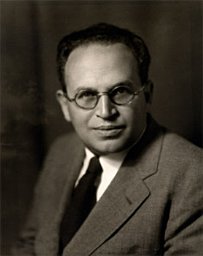 Paul F. Lazarsfeld合作论文数Columbia University1Tony Harcup合作论文数1Ronald Farrar合作论文数1
 Rosa Berganza合作论文数1Clay Shirky合作论文数1
 Zvi Reich合作论文数University of the Negev1
 Thomas E. Patterson合作论文数Department of Molecular Biology;Lerner Research Institute;Cleveland Clinic Foundation;Department of Molecular Biology, Lerner Research Institute1
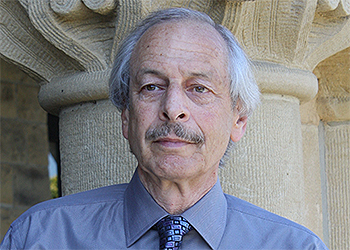 Theodore L. Glasser合作论文数Communication Department, Stanford University1
 Kevin G. Barnhurst合作论文数1
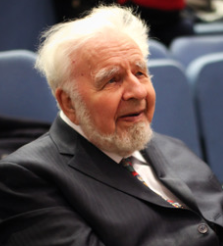 Jay G. Blumler合作论文数University of Leeds1
 Robert Mathew Entman合作论文数Elliott School of International Affairs, The George Washington University1Josef Seethaler合作论文数1
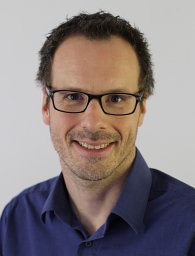 Folker Hanusch合作论文数School of Communication;University of the Sunshine Coast;School of Communication, University of the Sunshine Coast1Cole C. Campbell合作论文数1




