This chapter concludes the book. The chapter starts by describing the background for the new model of the influencing factors of journalism, including some of its shortcomings, and then discusses the ways in which this and other new models that have been presented in this book can assist researchers, lecturers and practitioners – both those in newsrooms and those in classrooms. Ultimately, this new model of the influencing factors of journalism is not only a reminder to researchers, educators and the daily practitioners of journalism of the forces that can restrict and enable journalists but also an inspiration for us to think more concretely about what journalism is, and who journalists are, here in the 21st century, where new technologies have made it easier for other professions and organizations to produce, publish and distribute something that resembles journalism. These are questions related to identity and …
Neste texto, Timothy Cook analisa o jornalismo político a partir de uma visão da mídia como instituição social singular. A produção da notícia é entendida como um processo coletivo definido pelas rotinas do jornalismo como instituição e pelas escolhas implícitas nessas rotinas, que são aceitas e reproduzidas no cotidiano de produção da notícia. A independência parcial do jornalismo em relação à política não impede, no entanto, que ele atue como instituição política e governamental. Além de disseminar as informações políticas, definindo o que é importante e o que é interessante, os jornalistas dão relevância aos atores políticos e certificam sua autoridade. O noticiário é o resultado de negociações conflituosas entre jornalistas e fontes, nas quais ganham peso, simultaneamente, as fontes oficiais e os valores inerentes às rotinas jornalísticas.
American Government and Politics in the Information Age by Paletz, Owen, and Cook, is a comprehensive introduction to the vital subject of American government and politics.It is a comprehensive introduction to American politics and government; it covers all the basics. The text: • introduces the intricacies of the Constitution, the complexities of federalism, the meanings of civil liberties, and the conflicts over civil rights; • explains how people are socialized to politics, acquire and express opinions, and participate in political life; • describes interest groups, political parties, and elections—the intermediaries that link people to government and politics; • details the branches of government and how they operate; • shows how policies are made and affect people’s lives.However, American Government and Politics in the Information Age goes beyond the basics of American politics and government to explain how and why, in this information age, government and politics are most commonly depicted in the media.Appreciating and learning these subjects can be a challenge. Inspired by students’ familiarity with mass media and their fluent use of new communication technologies, such as YouTube, Facebook, Twitter, live streaming, and the Ipad, The authors have chosen an approach that connects our subject matter with these media and technologies.Many students acquire political information from the dramatic and dynamic news cycle with its twenty-four-hours-a-day, seven-days-a-week coverage of events. More and more students obtain news online, including from the websites of mainstream news organizations such as the New York Times and CNN. But the web also provides them with information that repeats, amplifies, challenges, or even contradicts the news they get from the mainstream media.Many students connect with government and politics through media entertainment. They watch The Daily Show with Jon Stewart, The Colbert Report, and the late-night television talk shows of Jay Leno, David Letterman, and Conan O’Brien. They tune in to television and radio commentators such as Glenn Beck, Bill O’Reilly, Rachel Maddow, and Rush Limbaugh. They watch television competitions, reality shows, dramas, and comedies, most of which have political aspects. They may have seen one or more of Michael Moore’s polemical documentaries (e.g., Fahrenheit 9/11), or a movie about social issues, such as Crash. They may have listened to music with political messages, for example Lee Greenwood’s Proud to be an American and Bruce Springsteen’s Born in the USA. They may read the satirical newspaper The Onion.Although most political information still originates in the mainstream media—newspapers, magazines, television, radio, and movies—even these media are being transformed by new forms of communication. Information can now be transmitted much more quickly and subjected to far more individual control, initiative, and choice than ever before. Digital technologies support new media formats, such as weblogs, podcasts, and wikis, which blend interpersonal with mass communication, through e-mail and instant messaging.Yet, students are often unfamiliar with the origins of the media’s contents, especially the importance of ownership, profits, and professionalism. They may not fully grasp the influence on the media of outside forces, such as interest groups, political parties and candidates, and policymakers, most of whom are media savvy and use the new technologies to try to maximize their positive and minimize their negative coverage.Paletz, Owen, and Cook have, therefore, organized our text to connect students’ media-saturated daily lives to the world of politics and government. They want students to learn how the media interact with and depict the American political system; to recognize the similarities and differences between these media depictions and the real world of government and politics; and to understand the consequences these interactions and depictions can have for the public, politics, government, and public policies. They also want students to learn how the media, including new media, can help them intervene productively in politics and get things done.Each chapter contains a comparison of the reality of American government and politics with the media’s most common depictions (acknowledging that there are differences between and among the media and in their political content). The authors show that the depictions range from accurate and revealing to inaccurate and misleading, and distinguish the telling accounts and insights from partial truths, false impressions, and distortions. The online version of our text includes links to the media we discuss for the student to experience and react to first hand.The authors do not inflate the importance of the media. We recognize that much of politics and government occurs under the media’s radar screen and that the consequences of the media’s coverage vary widely. They avoid the temptation of “gee whiz” utopian celebrations of new technologies. Rather, the text offers discussions of both their possibilities, their limitations, and their dangers: they can and do lower the costs of political activity and organization but do not necessarily turn people into thoughtful, full-fledged activists.Finally, the text was written with recognition of the fact that people variously accept, ignore, reject, or rework the media’s contents. Above all, in today’s information age, they are able to hash and rehash the meaning and impact of what is covered and not covered in the media.As an example of how the authors integrate media influences into American Government and Politics in the Information Age, chapter 1 is devoted to detailing the system of communication, the organization of media, and the transmission of information in the United States. Then the authors integrate relevant mass media and new-media material throughout every chapter.Each chapter opens with an anecdote that ties media to the particular institution, process, or policy area under study. For example, Chapter 4 (Civil Liberties) starts by showing how the television “reality” show Cops depicts the police as working effectively to stop crime but downplays the civil liberties of individuals, including the rights of the accused.Each chapter presents the most common media depictions of its subject. In some chapters, a few depictions dominate: most news coverage portrays the US Supreme Court and its decisions as above politics (except when the president has nominated a new member); and the entertainment media depict the judicial system unrealistically. In other chapters, depictions are split. For example, in Chapter 4, students see that journalists’ diligent defense of the civil liberties that are central to their job does not carry through to their stories about crime or war.One of Paletz, Owen, and Cook’s goals in writing American Government and Politics in the Information Age is to encourage students to participate in civic life. In appropriate chapters, they add a “Civic Education” box showing how young people have become involved in politics, government, and the making of public policies, as well as how the media, old and new, can help and hinder civic work.The ultimate goal of this text is to help you teach your students so they will come to understand, appreciate, question, and criticize the realities of American politics and government and the media depictions of these realities, and possibly come to use the media to intervene effectively in the American political system on their own terms. Request a desk copy or read the book online to see if this fresh approach to American Government is one that would fit with your course goals.
After spending two decades studying the news media as an institution, Tim Cook turned his attention to public attitudes about the press, a topic that lurked behind much of his work, most prominently Governing with the News, but one that he had never addressed directly in print. As was typically the case with Tim's voracious intellectual appetite, the project grew into a larger study of public trust and confidence in institutions. This piece represents the first fruits of this collaboration, addressing what began our inquiry: what was the cause of the long known, but seldom explained, decline in pubic confidence in the press? Was it because they had become, in Cook's words, just another "governing" institution? Or was there something distinct about the press as an institution in the array of public attitudes about the social and political world? In this piece, we demonstrate how confidence in the press is distinct from generalized confidence in other social and political institutions. In particular, we find that the same political indicators that lead to higher confidence in institutions in general drive down confidence in the press. We close by speculating on likely future trends given the adversarial tenor of press coverage.
This article presents a new institutionalism approach to news grounded in sociological and historical approaches to new institutionalism and argues that this approach to news production has several advantages. Among them are that it encourages analysts to see the news as an outcome of interaction between journalists and other political actors, that it allows for variance in news coverage around a general tendency toward homogeneity in the news, and, finally, that it encourages scholars to examine the full range of news outlets in the media universe rather than to concentrate their attention on the narrow world of mainstream elite media. This approach is compared and contrasted with that offered by Sparrow elsewhere in this issue, and future directions for research are offered.
An abstract is not available for this content so a preview has been provided. Please use the Get access link above for information on how to access this content.
An abstract is not available for this content so a preview has been provided. As you have access to this content, a full PDF is available via the ‘Save PDF’ action button.
An abstract is not available for this content so a preview has been provided. As you have access to this content, a full PDF is available via the ‘Save PDF’ action button.
Previous articleNext article No AccessBook ReviewsCongress as Public Enemy: Public Attitudes toward American Political Institutions. John R. Hibbing , Elizabeth Theiss-Morse In Contempt of Congress: Postwar Press Coverage on Capitol Hill. Mark J. Rozell Timothy E. CookTimothy E. Cook Search for more articles by this author PDFPDF PLUS Add to favoritesDownload CitationTrack CitationsPermissionsReprints Share onFacebookTwitterLinkedInRedditEmail SectionsMoreDetailsFiguresReferencesCited by The Journal of Politics Volume 60, Number 1Feb., 1998 Sponsored by the Southern Political Science Association Article DOIhttps://doi.org/10.2307/2648012 Views: 7Total views on this site Copyright 1998 University of Texas PressPDF download Crossref reports no articles citing this article.
An abstract is not available for this content so a preview has been provided. As you have access to this content, a full PDF is available via the ‘Save PDF’ action button.
Other| April 01 1994 Playing It Safe Jonathan Demme, director. And the Band Played On: Politics, People, and the AlDS Epidemic. HBO Pictures, 1993. Timothy E. Cook; Timothy E. Cook Search for other works by this author on: This Site Google David A. Hansell; David A. Hansell Search for other works by this author on: This Site Google John D. Piette; John D. Piette Search for other works by this author on: This Site Google Paula A. Treichler; Paula A. Treichler Search for other works by this author on: This Site Google Thomas H. Murray; Thomas H. Murray Search for other works by this author on: This Site Google Elizabeth Fee Elizabeth Fee Search for other works by this author on: This Site Google J Health Polit Policy Law (1994) 19 (2): 449–463. https://doi.org/10.1215/03616878-19-2-449 Views Icon Views Article contents Figures & tables Video Audio Supplementary Data Peer Review Share Icon Share Facebook Twitter LinkedIn Email Tools Icon Tools Permissions Cite Icon Cite Search Site Citation Timothy E. Cook, David A. Hansell, John D. Piette, Paula A. Treichler, Thomas H. Murray, Elizabeth Fee; Playing It Safe. J Health Polit Policy Law 1 April 1994; 19 (2): 449–463. doi: https://doi.org/10.1215/03616878-19-2-449 Download citation file: Zotero Reference Manager EasyBib Bookends Mendeley Papers EndNote RefWorks BibTex toolbar search Search Dropdown Menu toolbar search search input Search input auto suggest filter your search Books & JournalsAll JournalsJournal of Health Politics, Policy and Law Search Advanced Search The text of this article is only available as a PDF. Copyright © 1994 by Duke University Press1994 Article PDF first page preview Close Modal You do not currently have access to this content.
 Paul Gronke合作论文数Department of Political Science;Duke University;Department of Political Science, Duke University6
 David L. Paletz合作论文数3
 Robert Mathew Entman合作论文数Elliott School of International Affairs, The George Washington University2James W Carey合作论文数1christopher d karadjov合作论文数1Richard Ericson合作论文数1james p curran合作论文数1Jane Bayes合作论文数1Kee Wang Yuen合作论文数1Dani Vardiansyah Noor合作论文数1Peter G. Mwesige合作论文数1lyn ragsdale合作论文数1deirdre oneill合作论文数1Ulrik Haagerup合作论文数1Joel H. Wiener合作论文数1Basyouni Ibrahim Hamada合作论文数1frank esser合作论文数1
 Charles Thomas Salmon合作论文数Wee Kim Wee School of Communication and Information, College of Humanities, Arts, and Social Sciences, Nanyang Technological University1
 Matthew Powers合作论文数Department of Communication, University of Washington1
 Thomas Hanitzsch合作论文数Department of Media and Communication, Faculty of Social Sciences, Ludwig-Maximilians-Universität München/Institut für Kommunikationswissenschaft und Medienforschung, Ludwig-Maximilians-Universität München1
 Pippa Norris合作论文数John F. Kennedy School of Government, Harvard University;Department of Government, Harvard University1Michael Gurevitch合作论文数1John Nerone合作论文数1Peter Bro合作论文数1
 Sonia Virginia Moreira合作论文数1
 Erik Albæk合作论文数Institute of Political Science, Aarhus University1
 Mihai Coman合作论文数University of Bucharest1
 Patrick Lee Plaisance合作论文数Department of Journalism and Technical Communication;Colorado State University;Department of Journalism and Technical Communication, Colorado State University1
 Elena Vartanova合作论文数1
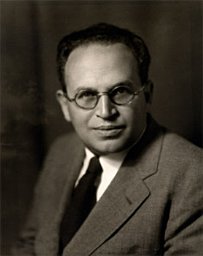 Paul F. Lazarsfeld合作论文数Columbia University1Tony Harcup合作论文数1Ronald Farrar合作论文数1
 Rosa Berganza合作论文数1Clay Shirky合作论文数1
 Zvi Reich合作论文数University of the Negev1
 Robert D. Putnam合作论文数Department of Public Policy, Kennedy School of Government, Harvard University1
 Thomas E. Patterson合作论文数Department of Molecular Biology;Lerner Research Institute;Cleveland Clinic Foundation;Department of Molecular Biology, Lerner Research Institute1Michael Wallerstein合作论文数1
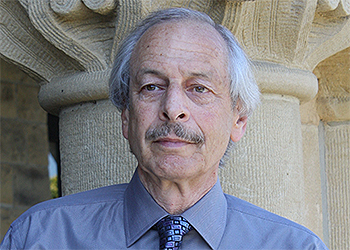 Theodore L. Glasser合作论文数Communication Department, Stanford University1
 Kevin G. Barnhurst合作论文数1D. C. Colby合作论文数1
 Jay G. Blumler合作论文数University of Leeds1Josef Seethaler合作论文数1
 Folker Hanusch合作论文数School of Communication;University of the Sunshine Coast;School of Communication, University of the Sunshine Coast1Cole C. Campbell合作论文数1




