Tropylidenes 16 and 17 were prepared from [2.2]paracyclophane (10). On treatment with the corresponding trityl salts they were converted into tropyliophanes 26a (tetrafluoroborate) and 26b (perchlorate). With acetone, 26a furnished trapping product 27, which underwent a homo-Diels-Alder addition with tetracyano ethylene to afford adduct 29. All new compounds were characterized by their spectroscopic and analytical data and for most - including 17 and 2 6b - the structures were also determined by X-ray diffraction. ((c) Wiley-VCH Verlag GmbH & Co. KGaA, 69451 Weinheim, Germany, 2008).
In the title compound, C 11 H 10 N 2 , the six-membered ring is planar (r.m.s.d. 0.013 Å). Molecules are linked by weak C—H...N interactions into chains parallel to [201], which lie in planes parallel to (02).
In the title compound, C 11 H 10 N 2 , the six-membered ring is planar (r.m.s.d. 0.013 Å). Molecules are linked by weak C—H...N interactions into chains parallel to [201], which lie in planes parallel to (\overline{1}02).
Alpha,omega-dibromo derivatives in which the two terminal carbon atom are separated by an unsaturated spacer unit ("pi spacer") undergo 1,x-elimination reactions (with x=6, 8, 10, and 14), using Mori's reagent (nBu3SnSiMe3/CsF). The resulting cumulenic intermediates cyclodimerize in a subsequent step yielding novel macrocyclic acetylenic and bridged aromatic compounds (cyclophanes). Thus 1,6-eliminations were carried out with dibromide 17 to yield 1,3,7,9-cyclododecatetrayne (20) and with benzylbromide 24 to provide cyclophanes 26 and 27. By 1,8-eliminations the 16-membered macrocycle 33 could be prepared from enediyne 31, the benzannelated 1,5-cyclooctadiyne 41 from dibromide 38, and a mixture of cyclophanes 45 and 46 from the precursor 43. 1,10-Eliminations were carried out successfully with dibromides 47, 50, and 53 yielding the corresponding unsaturated cyclophanes ("cyclophynes") 49, 52, and 55. The influence of the solvent on the cyclodimerization 47-->49 was investigated, with acetonitrile providing the highest yields. The heterophanes 59 a and b were obtained by 1,10-elimination of the precursor dibromides 57 a and b, and in an elimination experiment involving a 1:1 mixture of the dibromides 50 and 57 b the "mixed dimer" 60 was isolated, besides the homodimers 52 and 59 b. The method reached its limits with the 1,14-elimination of 68, 70, and 74 providing the cyclophanes 69, 71, and 75 in varying amounts. Two final debrominations with 76 and 77, which in principle could undergo 1,16- and 1,20-eliminations reactions, respectively, failed. The structures of the new cyclophanes 49, 50, 59 a, and 59 b were established by X-ray structural analysis; all other structure assignments rest on the usual spectroscopic and analytical data.
The title compound, C 12 H 22 Br 2 , displays crystallographic inversion symmetry. Bond lengths C=C = 1.352 (4) Å and C sp 2 —C sp 3 = 1.574 (3) Å are interpreted as symptoms of steric overcrowding. Molecules are linked into chains parallel to [101] by Br⋯Br interactions of 3.4275 (9) Å.
The title 1,2-diol derivative, C 10 H 12 O 2 , crystallizes with two independent but closely similar molecules in the asymmetric unit. Only two of the four OH groups are involved in classical hydrogen bonding; the molecules thereby associate to form chains parallel to the short c axis. The other two OH groups are involved in O—H⋯(C[triple-bond]C) systems. Additionally, three of the four C[triple-bond]C—H groups act as donors in C—H⋯O interactions. The 1,4-diol derivative crystallizes with two independent half-molecules of the diol (each associated with an inversion centre) and one water molecule in the asymmetric unit, C 12 H 16 O 2 ·H 2 O. Both OH groups and one water H atom act as classical hydrogen-bond donors, leading to layers parallel to the ac plane. The second water H atom is involved in a three-centre contact to two C[triple-bond]C bonds. One acetylenic H atom makes a very short `weak' hydrogen bond to a hydroxy O atom, and the other is part of a three-centre system in which the acceptors are a hydroxy O atom and a C[triple-bond]C bond.
In the title compound, C22H34Si2, the two independent molecules are closely similar. The reduced rings show a flattened twist conformation. Several features of [2.2]paracyclophane strain (e.g. lengthened bridge bonds) are apparent; an exception is furnished by the normal sp2 values of the angles at the bridgehead atoms of the reduced rings.
The title compound, C28H52Si4, crystallizes in the uncommon space group I4122 with 222 symmetry. Despite the reduction of the rings, several features of [2.2]paracyclophane strain are still apparent.
In the title compound, C 19 H 30 Si, the double bonds are essentially localized. The central ring and its substituents, including the triple-bond system, are coplanar, with the Si atom lying 0.148 (2) Å out of the plane. The packing involves herring-bone layers parallel to the ab plane.
The title compound, C 11 H 20 O, shows a wide Me 3 C—C=C angle of 129.60 (14)°. Molecules associate into zigzag chains parallel to [101] via a hydrogen bond H methyl ⋯O ketone .
In the title compound, 2C 30 H 18 ·3C 12 H 4 N 4 , the asymmetric unit consists of half a formula unit (one quinodimethane molecule displays inversion symmetry). There is no ring stacking; instead, the residues associate by weak C—H·N contacts in planes parallel to (2).
In the title compound, C 30 H 18 , the fluorene moiety displays normal dimensions, such as a narrow ring angle of 105.3 (3)° at the 9-position, the atom bearing the exocyclic double bond. The phenyl rings subtend angles of 14.8 (2) and 3.9 (2)° to the fluorene plane. Molecules are stacked parallel to the short c axis of 4.001 (1) Å.
In the title compound [systematic name: 9-(1,3-diphenylprop-2-ynylidene)fluorene], C 28 H 18 , the two halves of the fluorene moiety subtend an angle of 7.84 (9)°; the interplanar angle about the exocyclic double bond is 12.3 (1)°. The packing involves three C—H⋯π contacts.
In the title compound [systematic name: 1,3-di- tert -butyl-5-(3-phenylprop-2-ynylidene)cyclopenta-1,3-diene], C 22 H 26 , the rings subtend an interplanar angle of 15.7 (1)°. The triple bond length is 1.205 (3) Å.
The title compound {systematic name: 9-[bis(trimethylsilylethynyl)methylene]fluorene–tetracyano- para -quinodimethane (2/1)}, 2 C 24 H 26 Si 2 ·C 12 H 4 N 4 , consists of sandwich-like fluorene–TCNQ–fluorene units with inversion symmetry. The ring systems of the sandwich are parallel; the interplanar separation is 3.3–3.4 Å. The packing of the sandwich units is a herringbone pattern.
In the title compound, C 24 H 28 Si 2 , the interplanar angle between the groups on the ends of the central double bond is 7.3 (4)° and the length of this bond is 1.361 (3) Å. The molecules form layers parallel to (12).
In the title compound, C 16 H 14 O 3 , the furan ring makes an angle of 22.0 (1)° with the plane of the four non-bridgehead C atoms of the six-membered ring. The molecules are linked by a short C—H⋯O interaction to form helical chains parallel to the b axis.
In the title compound, C 18 H 14 N 2 O, the O atom of the oxepine ring lies above the six-membered ring [3.008 (4) Å from the plane of the non-bridgehead atoms], but the rest of the oxepine ring is bent away from that plane and thus away from the molecule. Three C—H⋯N contacts connect the molecules to form layers parallel to the ac plane.
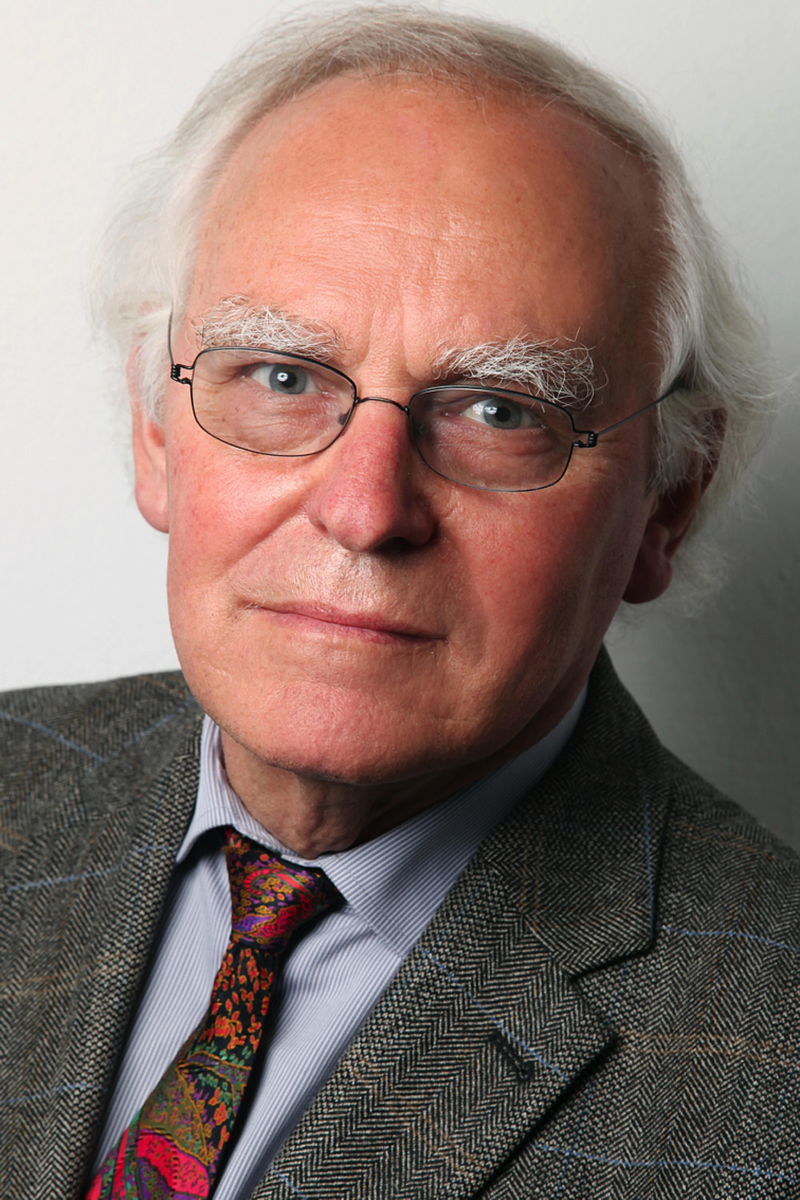 Henning Hopf合作论文数Institut für Organische Chemie, Technische Universität Braunschweig14
 P. G. Jones合作论文数Institut fur Anorganische und Analytische Chemie, Technische Universitat Braunschweig13
 Gerald Dyker合作论文数Fakultät Chemie, Fakultät Für Chemie Und Biochemie, Ruhr-Universität Bochum4
 Jutta Körning合作论文数4
 B. König合作论文数Institut für Organische Chemie, Fakultät für Chemie und Pharmazie, Universität Regensburg3Christian Werner合作论文数3Ralf Hänel合作论文数3Henri Bouas-Laurent合作论文数2Ina Dix合作论文数2Jean-Pierre Desvergne合作论文数2Peter G. Jones合作论文数2helmut greiving合作论文数1Peter G. Jones合作论文数1Pg Jones合作论文数1philip jones合作论文数1
 Bernhard Witulski合作论文数Institute für Organische Chemie, Technische Universität Berlin1
 Peter Jones合作论文数School of Physics and Astronomy, University of Birmingham1Harald Berger合作论文数1Claus Vogel合作论文数1Jan Kämpen合作论文数1Birte Ahrens合作论文数1Martin Rödel合作论文数1Cornelia Mlynek合作论文数1
 Ludger Ernst合作论文数Institute of Inorganic and Analytical Chemistry, Technische Universität Braunschweig1M. Wirts合作论文数1Sonja Margaretha Ramm合作论文数1Marcus Theurig合作论文数1R. Utermöhlen合作论文数1Bernd Schnippenkötter合作论文数1




