In response to innovations in machine learning (ML) models, production workloads changed radically and rapidly. TPU v4 is the fifth Google domain specific architecture (DSA) and its third supercomputer for such ML models. Optical circuit switches (OCSes) dynamically reconfigure its interconnect topology to improve scale, availability, utilization, modularity, deployment, security, power, and performance; users can pick a twisted 3D torus topology if desired. Much cheaper, lower power, and faster than Infiniband, OCSes and underlying optical components are <5% of system cost and <3% of system power. Each TPU v4 includes SparseCores, dataflow processors that accelerate models that rely on embeddings by 5x--7x yet use only 5% of die area and power. Deployed since 2020, TPU v4 outperforms TPU v3 by 2.1x and improves performance/Watt by 2.7x. The TPU v4 supercomputer is 4x larger at 4096 chips and thus nearly 10x faster overall, which along with OCS flexibility and availability allows a large language model to train at an average of ~60% of peak FLOPS/second. For similar sized systems, it is ~4.3x--4.5x faster than the Graphcore IPU Bow and is 1.2x--1.7x faster and uses 1.3x--1.9x less power than the Nvidia A100. TPU v4s inside the energy-optimized warehouse scale computers of Google Cloud use ~2--6x less energy and produce ~20x less CO2e than contemporary DSAs in typical on-premise data centers.
Google deployed several TPU generations since 2015, teaching us lessons that changed our views: semi-conductor technology advances unequally; compiler compatibility trumps binary compatibility, especially for VLIW domain-specific architectures (DSA); target total cost of ownership vs initial cost; support multi-tenancy; deep neural networks (DNN) grow 1.5X annually; DNN advances evolve workloads; some inference tasks require floating point; inference DSAs need air-cooling; apps limit latency, not batch size; and backwards ML compatibility helps deploy DNNs quickly. These lessons molded TPUv4i, an inference DSA deployed since 2020.
Runtime and scalability of large neural networks can be significantly affected by the placement of operations in their dataflow graphs on suitable devices. With increasingly complex neural network architectures and heterogeneous device characteristics, finding a reasonable placement is extremely challenging even for domain experts. Most existing automated device placement approaches are impractical due to the significant amount of compute required and their inability to generalize to new, previously held-out graphs. To address both limitations, we propose an efficient end-to-end method based on a scalable sequential attention mechanism over a graph neural network that is transferable to new graphs. On a diverse set of representative deep learning models, including Inception-v3, AmoebaNet, Transformer-XL, and WaveNet, our method on average achieves 16% improvement over human experts and 9.2% improvement over the prior art with 15 times faster convergence. To further reduce the computation cost, we pre-train the policy network on a set of dataflow graphs and use a superposition network to fine-tune it on each individual graph, achieving state-of-the-art performance on large hold-out graphs with over 50k nodes, such as an 8-layer GNMT.
Most compilers for machine learning (ML) frameworks need to solve many correlated optimization problems to generate efficient machine code. Current ML compilers rely on heuristics based algorithms to solve these optimization problems one at a time. However, this approach is not only hard to maintain but often leads to sub-optimal solutions especially for newer model architectures. Existing learning based approaches in the literature are sample inefficient, tackle a single optimization problem, and do not generalize to unseen graphs making them infeasible to be deployed in practice. To address these limitations, we propose an end-to-end, transferable deep reinforcement learning method for computational graph optimization (GO), based on a scalable sequential attention mechanism over an inductive graph neural network. GO generates decisions on the entire graph rather than on each individual node autoregressively, drastically speeding up the search compared to prior methods. Moreover, we propose recurrent attention layers to jointly optimize dependent graph optimization tasks and demonstrate 33%-60% speedup on three graph optimization tasks compared to TensorFlow default optimization. On a diverse set of representative graphs consisting of up to 80,000 nodes, including Inception-v3, Transformer-XL, and WaveNet, GO achieves on average 21% improvement over human experts and 18% improvement over the prior state of the art with 15x faster convergence, on a device placement task evaluated in real systems.
 James Laudon合作论文数Anthropic3
 Qiumin Xu合作论文数2
 Azalia Mirhoseini合作论文数Computer Science Department, Stanford University;DeepMind2
 Yanqi Zhou合作论文数Google Deepmind2
 AmirAli Abdolrashidi合作论文数UC Riverside2
 Sheng Li合作论文数Google2George Kurian合作论文数Massachusetts Institute of Technology2
 David A. Patterson合作论文数Department of Electrical Engineering and Computer Sciences, University of California, Berkeley;Google2
 Nishant Patil合作论文数Google2
 Norm Jouppi合作论文数Google2
 Daniel Wong合作论文数Department of Electrical and Engineering, University of California, Riverside;Department of Computer Science and Engineering, University of California, Riverside2
 Sudip Roy合作论文数Cohere2
 Zongwei Zhou合作论文数Meta2
 Cliff Young合作论文数Google2Sushma Prasad合作论文数1
 Andy Swing合作论文数Apple1Xiaoyu Ma合作论文数1
 Anna Goldie合作论文数Google DeepMind;Stanford University1
 Rahul Nagarajan合作论文数OpenAI1
 Thomas Norrie合作论文数OpenAI1Lifeng Nai合作论文数Sch Elect & Comp Engn, Georgia Inst Technol1
 Hanxiao Liu (刘寒骁)合作论文数1
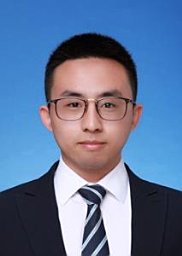 Shen Wang (王珅)合作论文数Media Lab, Shanghai Jiao Tong University1
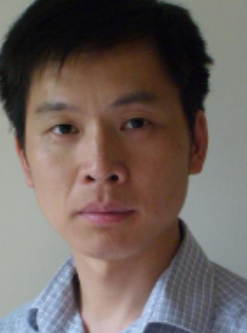 Xiang Zhou合作论文数Google1
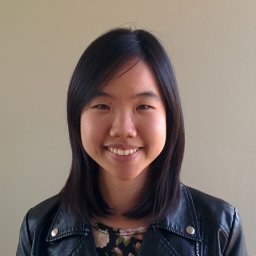 Phitchaya Mangpo Phothilimthana合作论文数University of California1
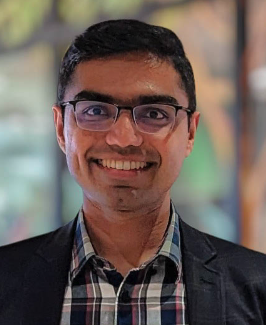 Suvinay Subramanian合作论文数Massachusettes Institute of Technology1
 Brian Towles合作论文数Google;Department of Electrical and Computer Engineering, Pratt School of Engineering, Duke University1Thomas B. Jablin合作论文数Waymo;Department of Computer Science, Princeton University1
 Mark Gottscho合作论文数UCLA1
 Doe Hyun Yoon合作论文数Meta1




