Background and Aims Rare Earth Elements (REE) are essential for the development of clean technologies. Hyperaccumulator plants are metal-loving organisms that can be used to remove metals from contaminated soils. This study aimed to discover new REE hyperaccumulators in the Australasian region among the Blechnaceae and Gleicheniaceae families using specimens stored at the Queensland Herbarium. Methods A handheld X-ray fluorescence (XRF) instrument was harnessed to scan herbarium specimens, and this data was analysed with Dynamic Analysis in GeoPIXE. Selected specimens were further analysed to validate the XRF results: elemental analysis was conducted with inductively coupled plasma optical emission spectroscopy (ICP-OES), an elemental distribution map through micro-X-ray fluorescence (µXRF) and scanning electron microscopy (SEM) to rule out airborne contamination of plant samples. Results From the 3256 specimens analysed with the portable XRF, 73 specimens met the criteria to be considered REE hyperaccumulators (yttrium >50 µg g-1 on XRF analysis). Among this group, 11 new hyperaccumulator taxa were discovered, and the elemental analysis reported a total REE concentration around 1000 µg g-1, i.e. Diploblechnum neglectum (978 µg g-1), Sticherus flabellatus (1130 µg g-1), Sticheropsis milnei (1290 µg g-1). We validated the strong REE hyperaccumulating capacity of the previously reported ferns Blechnopsis orientalis (3850 µg g-1 total REEs) and Dicranopteris linearis (1280 µg g-1 total REEs). Conclusions The use of non-destructive portable XRF to scan herbaria collections is a tool to discover hyperaccumulator plants and this information could also be used as a bioprospecting tool to find REE deposits for potential REE phytomining.
We present updated type information on the Tasmanian species of ferns and lycophytes described by Labillardi & egrave;re in his Novae Hollandiae plantarum specimen of 1806. Among the 13 names introduced, we list a total of 80 specimens with type status (13 lectotypes and 67 isolectotypes), mainly from FI, which houses Labillardi & egrave;re's herbarium (and the main set of plants) in FI-W, but also from B (including B-W), BM, F, G, GH, K, L, LE, MEL, P (including P-JU), PRC, RB, and WAG. Another nine specimens are cited as probable isolectotypes, since they lack confident label data. Four lectotypifications and one second-step lectotypification are newly proposed. Some specimens previously regarded as "holotypes" are better referred to as inadvertently chosen lectotypes. We show evidence that Lindsaea lanceolata Labill. (= L. ensifolia Sw. subsp. ensifolia), although originally described from Tasmania, was probably mislabeled, and the specimen was actually from Amboyna (= Ambon), Indonesia. We provide an Appendix with links to online images of nearly all type specimens.
(108) Lycopodium filicaule Hook. f. (1844) [Pteridoph.] Lycopodium filicaulon Copel. (1936) [Pteridoph.] Lycopodium filicaule Hook. f. was described in 1844 (or very early in 1845) in a footnote to J.D. Hooker's Flora Antarctica: The botany of the Antarctic voyage (Hooker, Bot. Antarct. Voy. 1: 112. ante 4 Jan 1845) based upon Griffiths material from Khasi Hills, India. The specific epithet filicaule was derived from a Latin Group B Adjective (Stearn, Bot. Latin, ed. 4: 92–95. 1992): caulis (masculine, feminine), caule (neuter). Although caulis is Latin, it is derived from the Greek kaulos (καυλός) (Lewis & Short, New Latin Dict.: 303. 1879). Lycopodium filicaule Hook. f. has been a synonym of L. casuarinoides Spring (in Bull. Acad. Roy. Sci. Bruxelles 8: 521. 1841) or Lycopodiastrum casuarinoides (Spring) Holub ex R.D. Dixit (in J. Bombay Nat. Hist. Soc. 77: 541. 1981) since 1849 (Spring in Mém. Acad. Roy. Sci. Belgique 24: 45. 1849). It now belongs to a different genus to our second case species, and there are no combinations using it as a basionym. Lycopodium filicaulon Copel. was described by E.B. Copeland (in Philipp. J. Sci. 60: 100, t. 2. 1936) based upon the specimen Kajewski 2096 from Koniguru, Solomon Islands. It is a distinct species found in the Solomon Islands and New Guinea now recognised as Phlegmariurus filicaulos (Copel.) A.R. Field & Testo (in Molec. Phylogen. Evol. 94(B): 645. 2015; ‘filicaulon’). It now belongs to a different genus to our first case species, and there are no other combinations using it as a basionym. The epithet filicaulon was derived from the Greek: caulos (masculine, feminine) or caulon (neuter) and is therefore not a homonym of L. filicaule Hook. f. as per the wording of Art. 53.1: “if it is spelled exactly like a name based on a different type” (Turland & al. in Regnum Veg. 159. 2018). Following Proposals 385–388 (Wiersema & Gandhi in Taxon 65: 1195–1196. 2016; accepted in the Shenzhen Code), Latin endings are to be retained for Latin epithets, and original Greek endings for transcribed Greek epithets (see Art. 32.2, 23.5 Ex. 5, 6, 8 & 9). We interpret this that filicaule (n) or filicaulis (m & f) and filicaulon (n) or filicaulos (m & f) are not correctable or interchangeable, and, even when declined, will not be spelled exactly the same. Notwithstanding, both names have four syllables, three of which are pronounced the same and they may be perceived as sufficiently confusable to be treated as such per Art. 53.2, and a request is submitted in accordance with Art. 53.4 seeking a resolution. Furthermore, Herter published the replacement name Urostachys copelandii Herter (Index Lycopod.: 57. 1949) under the perception that L. filicaule Hook. f. and L. filicaulon Copel. were homonyms. Urostachys copelandii has not been transferred to Phlegmariurus, although it was included in Huperzia by Holub (in Folia Geobot. Phytotax. 26: 92. 1991). A sympatric species also honouring E.B. Copeland—P. copelandianus (R.C.Y. Chou & Bartlett) A.R. Field—is already present in Phlegmariurus, which may present some confusion if “P. copelandii (Herter) comb. ined.” needs to be adopted as a replacement for P. filicaulon (Copel.) A.R. Field & Testo. No directly comparable example of a ruled homonym involving similar Latin and Greek epithet endings is available in Appendix VII of the Shenzhen Code (Wiersema & al., ICN Appendices I–VII. 2018+, https://naturalhistory2.si.edu/botany/codes-proposals/). We, therefore, request a binding decision on whether the names Lycopodium filicaule Hook. f. and L. filicaulon Copel. are sufficiently alike to be confused. In the event that this decision regards Lycopodium filicaule Hook. f. and L. filicaulon Copel. sufficiently confusable, we consider a proposal to conserve the name L. filicaulon Copel. would be warranted to best serve nomenclatural clarity, making it available as the basionym for a distinct species in the genus Phlegmariurus. ARF, https://orcid.org/0000-0002-0139-7914; PDB, https://orcid.org/0000-0002-8092-5972 We thank Kanchi Gandhi and John McNeill for discussing this case and John McNeill for reviewing the manuscript.
Tree ferns are a remarkable group among the lycophytes and ferns. Geographical isolation is suggested as one of the main reasons for local endemism of tree ferns and the island of Sri Lanka has been identified as one of the best demonstration sites to observe this phenomenon. Despite its small size, Sri Lanka has a rich diversity and one of the highest levels of endemism of tree ferns in Asia. Their diversity here is considered as an unique and important gene pool in the world. The present eco-spatial survey is to study the diversity and ecology of tree ferns in Sri Lanka. The study identified nine tree fern species including one new record of an adventive species. The species are Cyathea hookeri , C. sinuata , C. sledgei , C. srilankensis , C. walkerae , C. crinita , C. gigantea , C. australis and Dicksonia antarctica . Of these, the first five species are endemic to Sri Lanka . Dicksonia antarctica and Cyathea australis are exotic and naturalised in forest clearings in Piduruthalagala forest. Cyathea hookeri , C. sinuata , C. sledgei and C. srilankensis are confined to limited populations in lowland rainforests (62-550 m). Cyathea walkerae is distributed in a wide elevational range throughout the wet zone (30-2,300 m), whereas C. crinita shows a restricted distribution pattern at a high altitude range (1,800-2,400 m). In this study C. gigantea was recorded additionally from lowland rain forests, though it was previously reported to be confined to submontane and montane ecosystems. The results of this study provide baseline information on the distributional ecology of Sri Lankan Cyathea species. It will be useful to assess their current conservation status and to formulate conservation guidelines for these remarkable and spectacular ferns so characteristic to Sri Lanka.
The generic classification of huperzioid Lycopodiaceae was tested using Bayesian inference and Maximum likelihood phylogenetic analyses of DNA sequences from four chloroplast loci for 119 taxa and optimisation of 29 morphological characteristics onto the phylogeny. Consistent with previous studies, the subfamilies Lycopodioideae and Huperzioideae are monophyletic and diagnosable by synapomorphies that correlate with differences in their life-histories. Within the Huperzioideae, the monophyly of the widely adopted genus Huperzia (excl. Phylloglossum) is poorly supported. Three clades of huperzioid Lycopodiaceae were recovered in all analyses of molecular data: Phylloglossum drummondii, Huperzia sensu stricto and Phlegmariurus sensu lato. These clades are strongly supported by morphological characters, including differences in spores, gametophytes, sporophyte macro-morphology, as well as growth habit and life-histories. Our findings indicate that either a one-genus (Huperzia s.l.) or a three-genus (Phylloglossum, Huperzia s.s. and Phlegmariurus s.l.) classification of huperzioid Lycopods are equally supported by molecular evidence, but a two-genus system (Huperzia s.l.+Phylloglossum) is not. We recommend recognising three genera in the huperzioid Lycopodiaceae, as this classification best reflects evolutionary, ecological, and morphological divergence within the lineage.
Dicksonia antartica Labill. is a species native to Australia. In Sri Lanka, until recently, the only known record of D. antarctica was at the Fernery in Hakgala Botanic Gardens, Nuwara Eliya, where the species was planted in 1863. An eco-geographic survey on Sri Lankan tree ferns conducted from 2006–2013 identified a substantial population from Pidurutalagala Mountain Forest Reserve and adjacent Eucalyptus plantation. The detailed observation of population in natural forest and forest plantation fringe revealed natural regeneration with substantial number of immature and mature individuals. Hence, it is proposed that D. antarctica is naturalized in some areas of Pidurutalagala Mountain Forest Reserve and adjacent Eucalyptus plantation after escaping from the Fernery in the Hakgala Botanic Gardens. The substantial amount of population was observed about 30 km away from the Fernery. Further studies on population and reproductive biology are continuing.
The genus Phlegmariurus Holub is recognised more widely than originally proposed and is circumscribed to include both Neotropic and Palaeotropic epiphytic and terrestrial species of Huperzioid Lycopodiaceae that have isotomous shoots, lack bulbils in their sporophyllous shoots and have spores with convex lateral margins and foveolate-fossulate sculpture restricted to their distal surfaces. New combinations with Phlegmariurus are proposed for 81 species and existing combinations identified for 33 species originating from the Palaeotropics. This installs a generic circumscription that is consistent between the Neotropics and Palaeotropics. A lectotype is designated for the type species of the genus, Phlegmariurus phlegmaria (L.) T.Sen & U.Sen.
An Australian endemic species of tassel fern Huperzia fetrastichoides A.R.Field and Bostock is described as new. This species was previously confused with the non-Australian species Huperzia prolifera (Blume) Trevis. The new species is restricted to upland Queensland rainforests from the Windsor Tableland south to the Clarke Range west of Mackay. It is listed as Vulnerable under the Qneensland Nature Conservation Act 1992. A dichotomous identification key to the Australian species of Huperzia is provided.
Kokubugata, G., Bostock, P.D. & Forster, P.I. (2006). Chromosome records for four species of Pellaea section Platyloma (J.Sm.) Hook & Baker (Adiantaceae) from Australia. Austrobaileya 7(2) : 341 - 345
Microtrichomanes, a controversial genus created originally to accommodate "intermediates" between Hymenophyllum and Trichomanes, was reassessed using molecular data in order to clarify the systematic position of the species assigned to it. The results strongly suggest a polyphyletic origin for Microtrichomanes, with most of the species being placed in Hymenophyllum s.l., in spite of their having the cup-shaped involucre which is the primary taxonomic character of Trichomanes s.l. Based on this result, some new combinations are made herein for the species formerly attributed to Microtrichomanes; and an updated dichotomous key and synonymic lists are provided.
Two surveys of bracken fern for the concentration of the carcinogen ptaquiloside (PT) have been carried out, one of bracken fern from the eastern side of Australia and the other from a worldwide collection of bracken clones held in Sydney Australia. Bracken from eastern Australia contained concentrations of ptaquiloside ranging from 0 to 12,945 micrograms PT/g. From 91 samples 15% contained greater than 5,000 micrograms PT/g and 57% of samples contained more than 1,000 micrograms PT/g bracken on the dry weight basis. Ptaquiloside concentrations were highest in Pteridium revolutum and from P. esculentum from areas where bovine enzootic haematuria was known to occur. Bracken from the cultivated bracken clone collection from world-wide sources tended to have lower concentrations of ptaquiloside ranging from 0 to 9,776 micrograms PT/g. From 77 samples, 8% contained more than 5,000 micrograms PT/g and 35% contained more than 1,000 micrograms PT/g bracken. Samples from both the eastern Australia survey and the Australian representatives in the worldwide collection showed significantly higher concentrations of PT in the P. esculentum collected from the more southern states. In samples from the worldwide collection there were no statistical differences in the concentrations of PT in bracken between taxa.
The circumscription of Adiantum diaphanum Blume with respect to A. setulosum J, Smith is discussed.It is concluded that the two are conspecific and that the earlier name A. diaphanum should be retained.The applicability of frond hairs to the taxonomy of Adiantum is reviewed and the conclusion reached that hair morphology is a reliable taxonomic character but that, with few exceptions, lecation and density of occurrence of hairs on the various frond surfaces are characters of dubious value.
Cyathea exilis Holttum (Pteridophyta: Cyatheaceae) Cyathea exilis is a slender treefern discovered on Cape York Peninsula in 1983 by members of an Australian Orchid Foundation-sponsored expedition (Lavarack 1984), and described by R.E.Holttum in 1986.Neither the original publication nor the reference to the species in Appendix 2 of Andrews' Ferns of Queensland (1990) was accompanied by an illustration.This plant profile is intended to remedy that omission, and it also is dedicated to the memory of Prof. Holttum, who contributed so much to the taxonomy of the ferns, and to our knowledge of Cyathea in particular.Richard Eric Holttum died on 18 September 1990 at the age of 95.In the description which follows, measurements enclosed in square brackets are those of the type description, where they differ from those of specimens examined by me.The discrepancies are considered to originate from the small number of specimens which have been collected.
Adiantum whitei Bailey (Adiantaceae), formerly recorded from a few localities in south-eastern Queensland, is now known to haye a wider range in north-eastern Australia.The receptacle of this taxon bears thick-walled trichomes, a condition not previously reported for the genus.4. whiter is reduced to varietal status under 4. hispidulum Sw.
 Ashley Field合作论文数School of Marine and Tropical Biology, James Cook University6
 Atsushi Ebihara合作论文数3Ja Thomson合作论文数2Bl Smith合作论文数2A T Hertle合作论文数2
 DKNG (Gamini) Pushpakumara合作论文数2
 Rhg Ranil合作论文数2Chiara Nepi合作论文数1Aa Seawright合作论文数1Barbara S. Parris合作论文数1
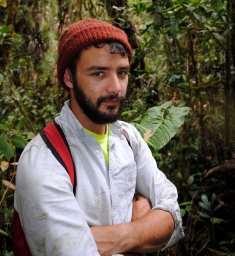 Weston Testo合作论文数Department of Plant Biology, University of Vermont1
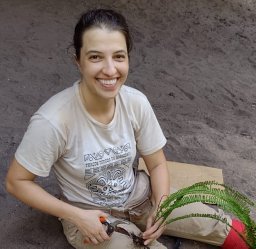 Thais Elias Almeida合作论文数Universidade Federal do Oeste do Pará1
 Alan E. Smith合作论文数Genzyme Corporation1Goro Kokubugata合作论文数1Kunio Iwatsuki合作论文数1C. R. Fraser-Jenkins合作论文数1
 Sadamu Matsumoto合作论文数1Motomi Ito合作论文数1
 Pedro Bond Schwartsburd合作论文数Curso de Pós-Graduação em Botânica, Universidade Federal do Paraná1Patrick J. Brownsey合作论文数Museum of New Zealand1
 D. Siril. A. Wijesundara合作论文数1
 Michelle Waycott合作论文数School of Marine and Tropical Biology, James Cook University1
 Joe Holtum合作论文数College of Science and Engineering, James Cook University;Smithsonian Tropical Research Institute1Jean-Yves Dubuisson合作论文数1Sabine Hennequin合作论文数1




