Outdated copyright laws around the world hinder research.
As an area that is not clearly defined nor protected in the intellectual property (IP) realm, the ‘old arts’ (folklore, traditional music, etc) and tradition provide scholars with a wide array of research opportunities. While defining their appropriate protection can be difficult, many different strategies exist achieving protection for old culture, assuring reasonable levels of public access, and meaningful representation for traditional communities. To better serve these ends, this chapter reviews some history and theory relating to the topic, and highlights new initiatives and approaches.
Submission to the World Intellectual Property Organization's Conversation on Intellectual Property (IP) and Artificial Intelligence (AI), second session, on behalf of the Global Expert Network on Copyright User Rights.
Copyright problems may inhibit the crucially important work of preserving legacy software. Such software is worthy of study in its own right because it is critical to accessing digital culture and expression. Preservation work is essential for communicating across boundaries of the past and present in a digital era. Software preservationists in the United States have addressed their copyright problems by developing a code of best practices in employing fair use. Their work is an example of how collective action by users of law changes the norms and beliefs about law, which can in turn change the law itself insofar as the law takes account of community norms and practices. The work of creating the code involved facilitators who are communication, information sciences, and legal scholars and practitioners. Thus, the creation of the code is also an example of crossing the boundaries between technology and policy research.
Over several centuries, the rhetoric of ‘gap filling’ has often been invoked to naturalise expansions of intellectual property (“IP”) rights—copyright term extension, the patenting of life forms, trademark disparagement, and so forth. The ready pragmatism of the phrase has definite audience appeal, making big changes sound like straightforward responses to external conditions—rather than choices about how to draw the line between private ownership and public discourse. We know, however, that once filled, ‘gaps’ tend to stay filled. Retrospective debates about the wisdom of such decisions tend to be (both literally and figuratively) of merely academic interest. So what is most refreshing and commendable about Professor Tan’s The Commercial Appropriation of Fame is that the author’s thorough and clear-eyed review of one such gap-filling project is powerful and timely enough that it could make a practical difference. Professor Tan not only tells us all we need to know about the historical origins of legal protection for celebrity personas, but also suggests a way that the scope of such protection can be reasonably cabined, in ways that largely fulfill the public interest in access to information, in years to come. This is all the more true because in the United States (“US”) (with which Professor Tan is largely concerned), and elsewhere, the right of publicity and its cognates are largely creatures of the courts—common law improvisations which (even where they have received statutory confirmation) are still widely open to judicial interpretation.
This roundtable discussion draws together researchers with an interest of overcoming purely juridical treatment of piracy in their work. Christopher Kelty and Gabriella Coleman consider the aspects of cyberculture, which conflictually engage with intellectual property rights, through various communities of technology practice, including hackers. Patricia Aufderheide and Peter Jaszi’s work on fair use addresses the growing opportunities for creators in the United States to utilize the tradition in their creative fields. Jonas Andersson Schwarz and Patrick Burkart, co-editors of this special issue, have researched user motivations and political activism around copyright and software patent reforms, partially explaining the emergence of dozens of European Pirate Parties, beginning with the Swedish Pirates in 2006.
The ARLIS/NA Executive Board endorsed the College Art Association’s Code of Best Practices in Fair Use for the Visual Arts after careful consideration of the Code during the June 18, 2015 board meeting. Kristen Regina, President of ARLIS/NA, stated: “The code is an important document that will advance visual arts scholarship and creative practice in this digital age.” The Executive Board agreed with the ARLIS/NA Public Policy Committee’s assessment that the Code is a strong step away from a permissions culture that hinders many members of the larger community. The full response is available on the ARLIS/NA Public Policy Committee webpage: http://arlisna.org/organization/committees/86-public-policy-committee.
In the fall of 2012, motivated by concerns about how the actual and perceived limitations of copyright can inhibit the creation and publication of new work in visual arts communities, particularly in the digital era, the College Art Association commenced a four-phase project to develop and disseminate a Code of Best Practices for Fair Use in the Creation and Curation of Artworks and Scholarly Publishing in the Visual Arts. Supported by generous preliminary funding from the Samuel H. Kress Foundation and a major grant from the Andrew W. Mellon Foundation, CAA engaged Patricia Aufderheide and Peter Jaszi, professors of communications and law, respectively, at American University, both to research the challenges confronting artists, scholars, and curators who seek to use third-party copyrighted material and to assist CAA in developing a code of best practices for fair use. Professors Aufderheide and Jaszi, with graduate fellows Bryan Bello and Tijana Milosevic, have drafted the attached issues report, which is the culmination of the first phase of this project. Based on interviews with one hundred visual arts professionals and a survey of CAA members, the report documents current practices and attitudes among visual arts practitioners (including artists, scholars, editors, and curators) regarding copyright and fair use. We are grateful for the assistance of the CAA Task Force on Fair Use, the project advisors, the CAA Committee on Intellectual Property, and the Community Practices Advisory Committee, the last comprising prominent members of the visual arts community, who read earlier drafts of the report. A list of participants is included in Appendix C. Building on the report, CAA will move ahead with the remaining three phases of the project. In 2014, during Phase 2, in five cities nationwide, CAA will host small group discussions among visual arts professionals, guided by Aufderheide and Jaszi, to ascertain where there is consensus with respect to fair use in particular cases. In 2015, during Phase 3, that consensus will be synthesized into a draft code of best practices, which will also be reviewed by a legal advisory committee. The code will be presented to CAA's Board of Directors for adoption. In the project's final phase, the code will be disseminated widely in the field. CAA hopes that the final document will be adopted by its affiliated societies and other related organizations and institutions. Developing a code of best practices for fair use will, we hope, reduce some of the …
The ability to make reasonable fair use of copyrighted material is both economically and culturally important to the enterprise of education. No other feature of copyright laws offers educators access of the same potential scope. In asserting fair use, teachers, librarians, and others cannot rely on a claim of "economic exceptionalism," for which there is no clear basis in U.S. copyright law. Nor can they expect to arrive at satisfactory shared understandings with copyright owners. Instead, they should seek to take advantage of current trends in copyright case law, including the marked trend toward preferring uses that are "transformative," where the amount of content used is appropriate to the transformative purpose. Over twenty years, we have accumulated considerable information about what constitutes "transformativeness," and members of the education community are well positioned to provide persuasive narratives explaining how educational uses significantly repurpose and add value to the copyrighted content they incorporate.
In the increasingly complex and combative arena of copyright in the digital age, record companies sue college students over peer-to-peer music sharing, YouTube removes home movies because of a song playing in the background, and filmmakers are denied a distribution deal when some permissions i proves undottable. Patricia Aufderheide and Peter Jaszi chart a clear path through the confusion by urging a robust embrace of a principle long embedded in copyright law, but too often poorly understood - fair use. By challenging the widely held notion that current copyright law has become unworkable and obsolete in the era of digital technologies, Reclaiming Fair Use promises to reshape the debate in both scholarly circles and the creative community. This indispensable guide distils the authors' years of experience advising documentary filmmakers, English teachers, performing arts scholars, and other creative professionals into no-nonsense advice and practical examples for content producers. Reclaiming Fair Use begins by surveying the landscape of contemporary copyright law-and the dampening effect it can have on creativity-before laying out how the fair-use principle can be employed to avoid copyright violation. Finally, Aufderheide and Jaszi summarize their work with artists and professional groups to develop best practice documents for fair use and discuss fair use in an international context. Appendixes address common myths about fair use and provide a template for creating the reader's own best practices. Reclaiming Fair Use will be essential reading for anyone concerned with the law, creativity, and the ever-broadening realm of new media.
This report summarizes research on the perceptions of South African documentary filmmakers about copyright clearance requirements and the effect of such requirements on their work. This work was performed in the context of a larger project exploring how lessons learned from “best practices” projects with documentary filmmakers in the U.S. can help their counterparts in other countries identify and overcome barriers to effective filmmaking posed by escalating copyright clearance requirements.
 Patricia Aufderheide合作论文数12
 Carys Craig合作论文数4
 Ann Shalleck合作论文数4
 Christine Haight Farley合作论文数College of Law, Washington3
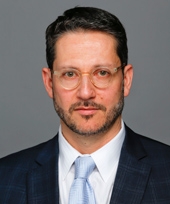 Ariel Katz合作论文数Centre for the Study of Korea, University of Toronto3Brandon Butler合作论文数3Thomas Margoni合作论文数Faculty of Law, The University of Western Ontario3Craig Joyce合作论文数2marshall a leaffer合作论文数2
 m r f senftleben合作论文数Institute for Information Law (IViR),, University of Amsterdam2
 Sean M. Flynn合作论文数College of Law, Washington2João Pedro Quintais合作论文数2
 Hobbs Renee合作论文数Harrington Sch Commun & Media, Univ Rhode Isl2Joshua Sarnoff合作论文数2
 Christophe Geiger合作论文数2
 Srividhya Ragavan合作论文数University of Oklahoma2
 Lydia Pallas Loren合作论文数2
 Lucie Guibault合作论文数Institute for Information Law;University of Amsterdam;Institute for Information Law, University of Amsterdam2
 Susan D. Carle合作论文数2Allan Rocha de Souza合作论文数1Rachael G Samberg合作论文数1Margot E. Kaminski合作论文数1Margaret Chon合作论文数1Prabha Sridevan合作论文数1meredith jacob合作论文数1
 Or Cohen-Sasson合作论文数1shubha ghosh合作论文数School of Law, University of Wisconsin, Madison1
 Luca Schirru合作论文数Universidade Positivo1
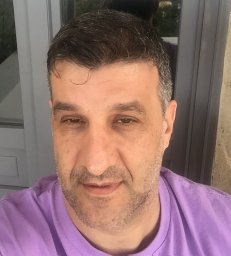 Ofer Tur-Sinai合作论文数Faculty of Law, Ono Academic College1
 Mitja Jančič合作论文数Jožef Stefan International Postgraduate School1myra tawfik合作论文数U. of Windsor1
 Matthew Sag合作论文数School of Law, Emory University1Yogesh Pai合作论文数Centre for Innovation, Intellectual Property and Competition (CIIPC),, National Law University1glynn s lunney合作论文数1
 Ana Ramalho合作论文数International and European Law1
 victoria f phillips合作论文数Emory University, Emory University1
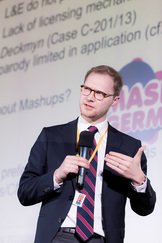 Bernd Justin Jütte合作论文数University College Dublin1Victoria L Phillips合作论文数1
 David Levine合作论文数Department of Physical Therapy, The University of Tennessee at Chattanooga1
 Susy Frankel合作论文数FRSNZ, Victoria University of Wellington1
 David Tan合作论文数Faculty of Law, National University of Singapore1Christopher Jon Sprigman合作论文数1
 Jorge L. Contreras合作论文数SJ Quinney Coll Law, Univ Utah1
 Michael Carroll合作论文数Department of Pediatrics, Boston Children's Hospital;Division of Immunology, Boston Children's Hospital;Harvard Medical School, Harvard University1Haochen Sun合作论文数1
 Irene Calboli合作论文数1
 Jonas Andersson Schwarz合作论文数1
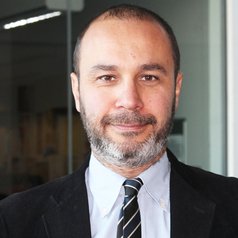 Enrico Bonadio合作论文数PHD Candidate International and European Union Law, University of Florence1




