Hardness, X-ray diffraction and transmission as well as infrared reflection measurements on virgin and ultraviolet (UV)-irradiated amorphous films of the GexAs40−xS60 system have been performed. The UV light induces film softening for x<19 and film hardening for x>19. The structure remains amorphous but the distance characteristic of medium range order decreases for x<19 and increases for x>19. Photo-contraction of the films (up to ∼12%) has been revealed from IR spectra and X-ray transmission experiments. A main effect of UV light is the release of sulphur.
Amorphous multilayers based on Se and CdSe alternated sublayers were successfully prepared by thermal vacuum evaporation and laser ablation with the periodicity of 22 nm. The multilayer structure is stable up to approximately 70 degree(s)C. In the samples prepared by laser ablation a large contraction of the multilayer stacking occurs by annealing. Amorphous SiOx/CdSe multilayers with the periodicity of approximately 15 nm were successfully prepared by thermal vacuum evaporation. The structure is stable up to 400 degree(s)C annealing temperature. Pulse excimer laser irradiation of the SiOx based multilayer produces an expansion of the interlayer distance with approximately 0.33%.
Lanthanum stearate films were prepared by the conventional Langmuir-Blodgett method and by a dragging procedure. Multilayers have been obtained and studied by X-ray diffraction. The electron density distribution normal to the bilayer plane has been calculated. (C) 1997 Elsevier Science S.A.
The dye 2-toluidinonaphthalino-6-sulphonate TNS is sensitive to ligand binding events at the active site of RUBISCO purified from spinach or Rhodospirillum rubrum. Equilibrium binding curves of the substrate D-ribulose 1,5-bisphosphate RUBP and the inhibitor 6-D-phosphogluconate 6-PG to RUBISCO from spinach were apparently biphasic. Iodine laser temperature jump (ILTJ) experiments showed a fast and a slow bimolecular binding reaction of both ligands corresponding to a strong and a weak equilibrium binding process. In Stopped Flow (SF) experiments different reaction mechanisms were observed for the binding of the transition state analogue 2-carboxy-D-arabinitol 1,5-bisphosphate CABP to RUBISCO in the presence and absence of magnesium ions. In the absence of magnesium ions CABP binds in a reversible bimolecular binding reaction to RUBISCO. In the presence of magnesium ions an irreversible two step reaction mechanism for the CABP binding was detected. Molecular dynamic (MD) simulations of ligand binding to RUBISCO were used for modelling of the strong influence of magnesium ions on the kinetics of ligand binding to RUBISCO.
The active penetration of various positively charged substances into monomolecular films of deep rough mutant lipopolysaccharide (ReLPS) has been investigated. In this study the antibiotic polymyxin B (PMB) shows the highest affinity to lipopolysaccharides and increases the area of ReLPS monofilms by 50%. It binds with a molar ratio of n [PMBReLPS] ≈ 0.8 and neutralises the charge of the lipopolysaccharide in the monofilm. In contrast, other highly positively charged substances are almost inactive. A two step mechanism for the interaction is proposed. In the first step, electrostatic attraction leads to a weak binding between the positively charged substance and the negatively charged lipid. In a second step, the lipophilic part of the substance is inserted into the membrane.
The thermal stability of amorphous SeCdSe multilayers has been investigated by X-ray diffraction. The multilayer structure is stable up to ∼60°C. After annealing at higher temperatures hexagonal selenium and hexagonal CdSe phases with nanometric crystallite size were revealed.
ADVERTISEMENT RETURN TO ISSUEPREVNoteCorrosion Induced by Chromosulfuric Acid Influences Pressure Readings from a Wilhelmy Balance Mounted on a Tombak SpringStefan Obst, Peer-Joachim Koch, Clemens Kahle, and Hans BradaczekView Author Information Institut für Kristallographie, Freie Universität Berlin, Takustrasse 6, D-14195 Berlin, Germany Cite this: Langmuir 1996, 12, 14, 3527–3528Publication Date (Web):July 10, 1996Publication History Received19 February 1996Revised28 March 1996Published online10 July 1996Published inissue 1 January 1996https://pubs.acs.org/doi/10.1021/la9601465https://doi.org/10.1021/la9601465brief-reportACS PublicationsCopyright © 1996 American Chemical SocietyRequest reuse permissionsArticle Views58Altmetric-Citations-LEARN ABOUT THESE METRICSArticle Views are the COUNTER-compliant sum of full text article downloads since November 2008 (both PDF and HTML) across all institutions and individuals. These metrics are regularly updated to reflect usage leading up to the last few days.Citations are the number of other articles citing this article, calculated by Crossref and updated daily. Find more information about Crossref citation counts.The Altmetric Attention Score is a quantitative measure of the attention that a research article has received online. Clicking on the donut icon will load a page at altmetric.com with additional details about the score and the social media presence for the given article. Find more information on the Altmetric Attention Score and how the score is calculated. Share Add toView InAdd Full Text with ReferenceAdd Description ExportRISCitationCitation and abstractCitation and referencesMore Options Share onFacebookTwitterWechatLinked InRedditEmail Other access optionsGet e-Alertsclose SUBJECTS:Atmospheric chemistry,Electrochemistry,Humidity,Oxidation,Sensors Get e-Alerts
 Mircea C. Popescu合作论文数5
 Adam Lorinczi合作论文数4Florinel Sava合作论文数4
 Thomas Gutberlet合作论文数3
 Diana Nesheva合作论文数G. Nadjakov Institute of Solid-State Physics, Bulgarian Academy of Sciences3
 Elena Vateva合作论文数3M. Kastowsky合作论文数2W. Uebach合作论文数2Clemens Kahle合作论文数2Stefan Obst合作论文数2
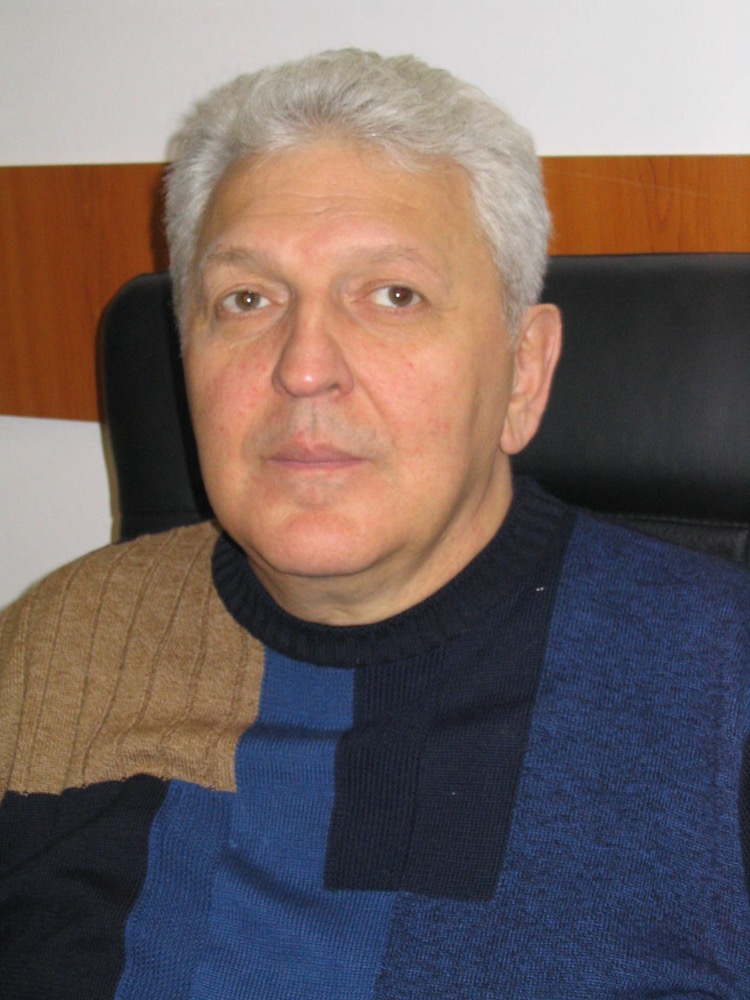 Ion Mihailescu合作论文数Faculty of Physics, University of Bucharest;Institute of Atomic Physics;Laser-Surface- Plasma Interactions Laboratory1
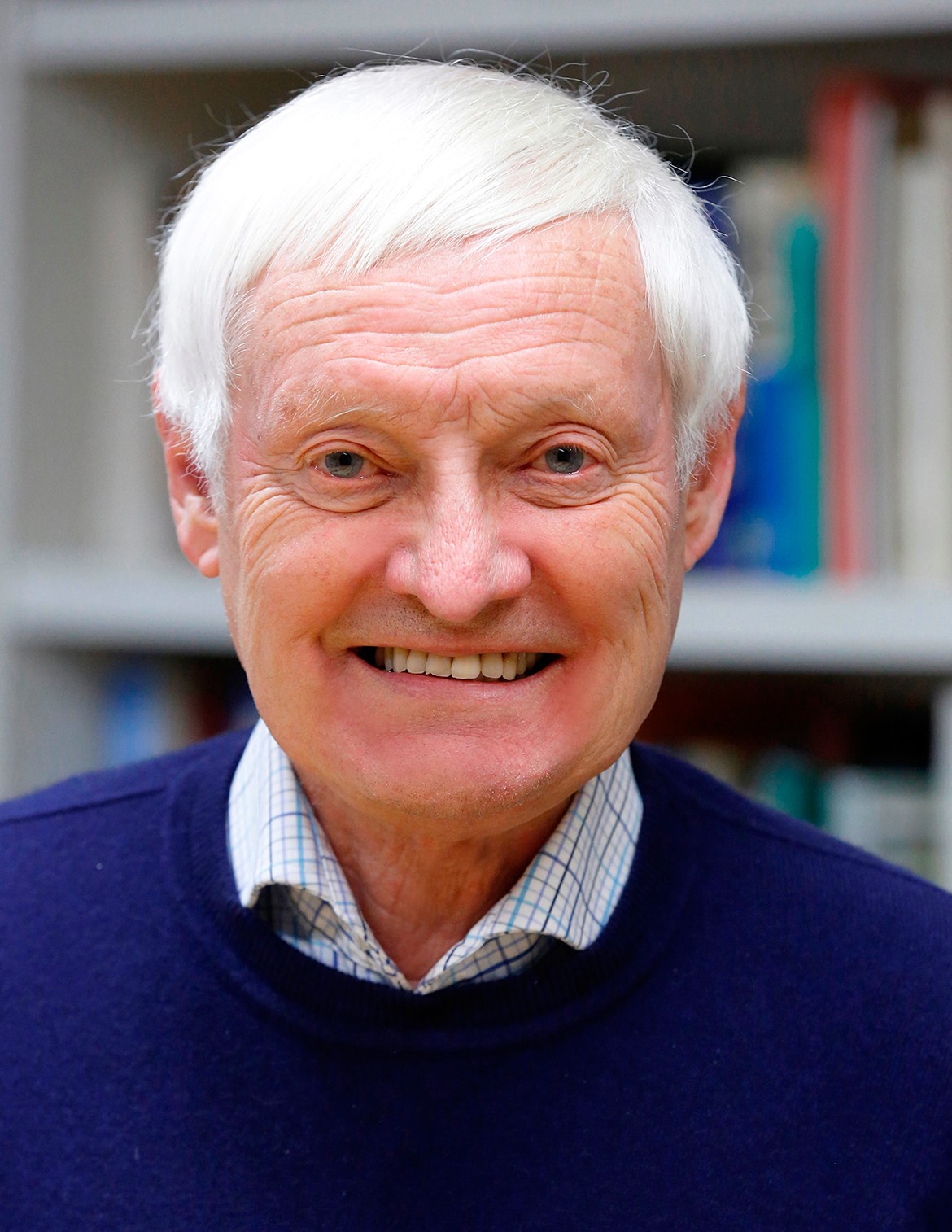 Joachim Frank (阿希姆·弗兰克)合作论文数Howard Hughes Medical Institute, Department of Biochemistry and Molecular Biophysics, College of Physicians and Surgeons, Columbia University;Department of Biological Sciences, Columbia University1W. Dürr合作论文数1Joachim Vater合作论文数1E. Skordeva合作论文数1Josef F. Holzwarth合作论文数1Hans Bradaczek合作论文数1




