— Yerba mate, Ilex Paraguayensis, is a plant of Paraguayan origin used in infusions/macerations by the ancient inhabitants of Paraguay as a “reviver”/energy beverage and mineral supplier which consumption is lasting up today; furthermore, it is extended almost worldwide. In regard to its mineral content very few studies are known; moreover, none has been published related to the occurrence of REE (rare earth) and other refractory elements in the leaves. In this work, minor and trace elements composition have been investigated by XRF techniques to determine their correlation as well as provenance. The analysis of complex spectra was performed by the AXIL software and the quantitative analysis by the QAES software. Analyzed trace elements were the refractory Rb , Sr, Y, Zr, Nb, Ba, La, Ce, Nd , 3d as Ti, Cr, Ni, Cu, Zn. Minor elements were Mn, Fe which are often related to the above refractory together with S and K.
A representative group of seal dies made of copper alloys from the collection of the National Museum of Slovenia was investigated by energy-dispersive X-ray fluorescence spectrometry (EDXRF). Chronologically, the artefacts date from the early 13th century to the present. Non-destructive EDXRF screening of elemental fingerprints of Cu, Zn, Pb, Ag, Sn and Sb was performed on 95 seal dies, and the obtained elemental data set was further processed by chemometric tools such as principal component analysis (PCA). The relationships between the elemental composition of analysed seal dies, type of alloy applied and their historical context-date, location of manufacture and, possibly, social rank of the owner-were examined in detail.
Two fundamental-parameter (FP) based models for quantification of 2D elemental distribution maps of intermediate-thick biological samples by synchrotron low energy μ-X-ray fluorescence spectrometry (SR-μ-XRF) are presented and applied to the elemental analysis in experiments with monochromatic focused photon beam excitation at two low energy X-ray fluorescence beamlines—TwinMic, Elettra Sincrotrone Trieste, Italy, and ID21, ESRF, Grenoble, France. The models assume intermediate-thick biological samples composed of measured elements, the sources of the measurable spectral lines, and by the residual matrix, which affects the measured intensities through absorption. In the first model a fixed residual matrix of the sample is assumed, while in the second model the residual matrix is obtained by the iteration refinement of elemental concentrations and an adjusted residual matrix. The absorption of the incident focused beam in the biological sample at each scanned pixel position, determined from the output of a photodiode or a CCD camera, is applied as a control in the iteration procedure of quantification.
Mine Tailings of "La Aurora", a mining site located in central Mexico, display anomalous concentrations of As, Zn, Pb, Cu and Cd. However, data on their potential toxicity is not available. It is known that toxicity is related to elemental speciation. In this work, we evaluated the biogeochemical dynamics of As in terms of mobility and chemical nature. For this purpose, samples of soils, mine tailings, plants and water were collected. Synchrotron based techniques and chemical fractionation extractions were used to determine As speciation, potential mobility, and bioavailability. Our results showed that As is present in concentrations up to 12,672 +/- 34 and 326 +/- 10 mg kg (1) in mine tailings and nearby soils, respectively. Xray Absorption Spectroscopy ( XAS) analysis demonstrated that As is present as AsV in a structure similar to that of kankite (FeAsO4 center dot 3.5H(2)O) and beudantite ( PbFe3 (AsO4)(SO4)(OH)(6)). The presence of these mineral structures were confirmed by m X-Ray Fluorescence and X-ray Absorption Near Edge Structure ( m-XRF/XANES). Arsenic was also detected in plant species growing in the tested soils. The highest As concentrations were determined in the roots of Baccharis salicifolia ( up to 44 mg kg (1)). In a creek nearby the mine tailings, As levels of 163 +/- 15 mg L (1) were quantified. In terms of phytoaccessibility and bioaccessibility, As levels can be considered toxic for both plants and humans. According to sequential extraction results, As is associated mainly with the crystalline Fe-Ox fraction. (C) 2017 Elsevier Ltd. All rights reserved.
Buckwheat is a gluten-free crop with great potential as a cereal substitute in diets. We investigated how processing of grains into groats (hydrothermal processing to remove the husk) and sprouts (7-day-old seedlings) affects mineral element concentrations in two buckwheat species, Tartary buckwheat (Fagopyrum tataricum Gaertn.) and common buckwheat (Fagopyrum esculentum Moench). In addition, changes to the spatial distribution of magnesium, phosphorus, sulfur, potassium, calcium, manganese, and iron in Tartary buckwheat groats and sprouts were studied. Apart from lowering calcium concentrations, hydrothermal processing had little effect on mineral element concentrations in both species. In both species, sprouts had higher concentrations of magnesium, phosphorus, sulfur, calcium, and molybdenum than grains. Distinct changes were seen in the distribution of mineral elements in Tartary buckwheat sprouts compared to groats. Significant species-specific differences in mineral element concentrations were observed, but further studies are needed to capture the extent of variability in mineral element concentrations in buckwheat.
A comparison of different dissolution techniques for determination of uranium in soil samples was made. Conventional wet dissolution with mixtures of HNO3, HClO4 and HF acids, microwave dissolution using HNO3 and HF, and alkaline fusion with Na2CO3 and Na2O2 were evaluated. For testing the effectiveness of the dissolution procedures, two reference materials and six soil samples from the surroundings of a former uranium mine were investigated. It was observed that the content of uranium in the residues determined by INAA represents a significant contribution to its total concentration in the sample, especially in the case of microwave dissolution.
The methods of electrodeposition and “molecular plating” were studied for the production of uranium targets with an areal density up to 0.6mgcm−2 on aluminium and up to 1.5mgcm−2 on stainless steel backings from aqueous and organic electrolytes. For characterisation of the deposited material, gamma-ray spectrometry, alpha-particle spectrometry, X-ray fluorescence, X-ray powder diffraction, scanning electron microscopy and autoradiography were applied.
Artefacts of pottery belonging to the Guarani ethnic group were investigated by XRF techniques. The Tupi-Guarani, is one of the three main representatives of the Neolithic culture in the Amazonian scope. Such an ethnic group dispersed towards the South; in the Paraguayan area between the Paraguay and the Parana Rivers several Guarani ethnic movements by both rivers and their tributaries are perceived. The lithology and ceramics typology have contributed to support that perception. The archaeological findings help to clarify prehistoric cultural aspects and dispersal areas. In that context, the knowledge of the chemical composition of the found ceramic devices, in particular of the rare earth elements (REE) and other refractory ones provide information on this dispersion and its expansion. Selected trace elements (Rb, Sr, Y, Zr, Nb, Ba, La, Ce, and Nd) were determined in samples from thirteen archaeological sites with XRF using an Am-241 source. Their spidergrams have allowed identifying four different sets of samples according to their areas of provenance.
Abstract Selected trace and minor elements analyzed by XRF in sandstone samples were Rb-Sr-Zr-Nb-Ba-La-Ce-Nd as well as Ti-Mn-Fe with which they are often correlated. Refractory elements like REE are considered useful indicators of geochemical processes and, in this case, of provenance . Usually they maintain their original relationships and are transferred almost directly into sediments. The values here found, absolute and normalized, show correlations among the samples, allowing the establishment of their origin. Most of them in the spidergram patterns display positive spikes of Zr, and negative anomalies at Nb, Sr, Ti: differences in their height/depth could be in relation with the different Series or Formations. Strikingly, spidergrams of samples collected from the Patiño Formation show marked negative anomalies interalia of Ba, as well as positive spikes of Nb and Zr, very similar to those found in magmatic specimens from Misiones, Carapeguá-Acahay and Alto Paraguay Province and quite different from the other analyzed samples. In addition a remarkable presence of Precambrian signatures were found in the analyzed sandstones from the Paleozoic.
Minor and trace elements composition of bottom sediments from water bodies in Western Paraguay have been investigated by XRF techniques to determine their correlation as well as provenance. The analysis of complex spectra was performed by the AXIL software and the quantitative analysis by the QAES software. Analyzed trace elements were the refractory elements Rb, Sr, Y, Zr, Nb, Ba, La, Ce, Pr, Nd, Zr, y and other HFSE as Cr, Ni, Cu, together with Zn. Minor elements were Ti, Mn, Fe which are often to the above refractories related. According to their normalized spidergrams two sets of sediments can be differentiated. Those from Pilcomayo and Verde rivers as well as from km164-Wetland show light rare earth elements (LREE) enrichment, negative Nb and Ti anomalies and no spike at Zr. On the other hand, sediments from Confuso, Aguaray(Jehe), Negro and Montelindo rivers have spidergrams very alike, with strong negative anomalies at Nb, Nd and Ti whereas a positive at Zr. Further, in the former there is a strong correlation of Fe versus the refractory elements; such a correlation does not exist in the latter. The sediments from the Pilcomayo & Verde Rivers and from the km164-Wetland evolved as the sub-Andean/Andean metamorphic/sedimentary materials.
Elemental analyses of 10 geological samples from Morocco and some Standard Reference Materials were performed by Energy Dispersion X-Rays Fluorescence, Wavelength Dispersion X-Rays Fluorescence and Neutron Activation Analysis techniques in order to assess the accuracy and sensitivity of the concentrations determined with regard to requirements in geochemical exploration. The possibilities of utilization of EDXRF as an appropriate and economic technique for the analysis of various elements which are important in interpretation of geochemical data were evaluated.
Geochemical processes in soft immature rocks of the Asunción area are studied through X-ray fluorescense analysis of some trace and minor elements used as provenance indicators. Good correlation between light rare earth elements and other refractories were found and that the analytical data suggest inter alia an overall stable continental area setting.
The aim of this study was to quantify the amount of the biologically active wear particles in the periprosthetic tissue around loosened polyacetal isoelastic stems to find the pattern of their distribution in the periprosthetic tissue and determine their origin. Proton microbeam measurements of thin tissue sections enabled us identification and quantified elemental analysis of individual wear particles in the tissue. The Ba concentration measured on the wear particles matches the Ba concentration measured with in-air PIXE on the polyacetal stem directly proving the origin of the wear particles which suppose to play a decisive biological role in the process of premature aseptic loosening of polyacetal stems.
Contents of elements in 72 samples of honey from different parts of Slovenia were analysed. All samples were purchased by beekeepers and stored in glass containers. With the method total reflection X-ray fluorescence spectroscopy (TXRF) presence and content of 17 elements was proved. Samples were classified among 9 Slovenian natural geographical regions according to their geographical origin. It was stated that significant differences exist among different regions in the content of chlorine, potassium, calcium, manganese, bromine and rubidium. But the main characteristics of regions could not be established because of too few samples. So, the final conclusion is that the expansion of research and analysing more samples from each region is needed to be able to get a elemental composition databank of honey from each region and finally to be able to determine geographical origin of unknown Slovenian honey sample. Higher contents of K and Rb in Slovenian honey enable distinguishing between Slovenian and foreign honey. Comparing the elemental profile of samples from the same location, but different years of purchase tested influence of the year of purchase. Results showed that the year of purchase did not have an important influence on elemental profile of samples.
Trace and minor elements in Slovenian honey were analysed by total reflection X-ray fluorescence spectroscopy. Upto 16 elements (K, Cl, S, P, Ca, Mn, Rb, Cu, Fe, Ni, Cr, Br, Ti, Pb, Sr and As) were detected, in a range of average content from 1.24 mgkg−1 for Sr to 2590 mgkg−1 for K. Statistically significant differences were established between different types of honey (acacia, floral, lime, chestnut, spruce, fir, forest and Metcalfa pruinosa honeydew honey). The highest content of elements was determined in forest honey and the lowest in acacia honey. Honeys were also separated according to their botanical origin as nectar honey or honeydew honey. Total elemental content and the content of S, Cl, K and Rb in honeydew honey was statistically significantly higher than in nectar honey. Chestnut honey differed in statistically its significantly higher contents of Rb and Ca from nectar and honeydew honeys. The year of honey production proved to have no statistically significant influence on elemental content. A comparison of our data with the literature data showed a relatively large diversity.
The capabilities of the Si PIN diode x-ray detector were determined and compared with those of a standard Si(Li) detector. The x-ray fluorescence (XRF) analysis systems assembled with these two detectors included annular radioisotope excitation sources of Cd-109 and Fe-55. The systems were calibrated for sensitivity and quantification was performed with fundamental parameters software. Based on the analysis of the standard reference material NIST 2710 (Montana soil), the elemental sensitivities and the limits of detection of both systems were obtained. The elemental sensitivities of the Si PIN detector for fluorescence x-rays in the energy range up to 10 keV were comparable to those of the Si(Li) detector. At higher fluorescence x-ray energies the sensitivity of the Si PIN detector gradually decreased and was smaller by a factor of ∼4 at 20 keV. The reason was mainly the small thickness of the sensitive volume of the Si PIN diode (0.2 mm) and therefore the smaller relative efficiency of this detector. The assessed limits of detection (LODs) were comparable for the two detectors, which was mainly due to the lower spectral background of the Si PIN detector in excitation with the Cd-109 source as a result of its smaller sensitive thickness. The accuracy of elemental determinations for the two detectors was comparable and within the limits of the assessed uncertainties, which were calculated considering all the steps of the analysis, i.e. spectrum measurement and analysis, sensitivity calibration and quantification. Copyright © 2004 John Wiley & Sons, Ltd.
Sulfur and chlorine are essential elements in the metabolic processes of ruminants, and correct planning strategy of ruminant nutrition should provide a sufficient content of S and Cl in the animal's body. S and Cl can be found in various types of animal fodder in the form of organic compounds and minerals. In this work, the Cl and S content in forage was determined by X-ray fluorescence spectrometry (XRF), and its performance was then compared in parallel analyses by instrumental neutron activation analysis (INAA), inductively coupled plasma atomic emission spectrometry (ICP-AES) and potentiometric methods. The results were compared and critically evaluated in order to assess the performance and capability of the XRF technique in analysis of animal fodder.
The X-ray fluorescence analysis of some minor and trace elements in sediments of Itaipu Dam reservoir was used for a study of geochemical processes and the evolution and history of a water body, which characterise the geological history as well as the present changes in the area. Inter alia good correlation with the Ti and incompatible elements content in whole rock was found and that REEs can be used as provenance indicators.
Elemental analysis of rubber samples is rather difficult, but XRF spectrometry offers some advantages relative to other more popular chemical instrumental techniques due to relatively simple sample preparation. For the excitation annular radionuclide photon sources of 55Fe and 109Cd were used. The analyses of metal content in samples of natural latex have been performed in order to investigate the relation between the low specific resistivity of the latex and the respective metal content. The results are presented and discussed.
The major oxide and trace element compositions of seven sedimentary rock reference samples (claystone, organic-rich argillite, two limestones, dolostone, sandstone and feldspathized volcanic ash) are presented. Among studied samples the organic-rich argillite (“Dictyonema shale”) 15 conspicuous for wide range of chemical elements with higher contents than in common sedimentary rocks. The content of 68 elements and components has been determined.
 Marijan Nečemer合作论文数13P. Rupnik合作论文数5Mitja Kregar合作论文数5M. Budnar合作论文数5J. F. Facetti-Masulli合作论文数5Žiga Šmit合作论文数4C. T. Yap合作论文数4
 Marko Vakselj合作论文数4S.M. Tang合作论文数4V. Ramšak合作论文数4
 Radojko Jacimovic合作论文数3
 Katarina Vogel-Mikus合作论文数Biotechnical Faculty, University of Ljubljana3
 Ivan Kreft合作论文数3U Dobersek合作论文数2P. Horvat合作论文数2Primoz Pelicon合作论文数2
 Matej Pavsic合作论文数[3] R. P. Feynman Phys. Rev, 84, 108 (1951)2Terezija Golob合作论文数2Joze Drinovec合作论文数2M. G. Bilal合作论文数2W. Dehnhardt合作论文数2
 Ljudmila Benedik合作论文数2A vonBohlen合作论文数1b povh合作论文数1j kivisilla合作论文数1M. Bagar-Povše合作论文数1D.O. Rocha-Amador合作论文数1Jp Willis合作论文数1M. N. Ingham合作论文数1Richard M. ROUSSEAU合作论文数1B Holynska合作论文数1Ma.G. De La Rosa-Álvarez合作论文数1
 Muhammad Bilal合作论文数1o c kistner合作论文数1tomaž lazar合作论文数1M Jamnik合作论文数1Gustavo Cruz-Jiménez合作论文数1
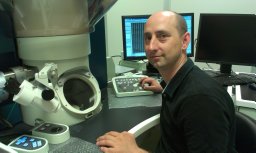 Saso Sturm合作论文数Jozef Stefan Inst1
 Moussa Bounakhla合作论文数1
 Benjamin Zorko合作论文数1Jurečič S合作论文数1
 Petra Planinsek合作论文数1
 Rene Loredo-Portales合作论文数1
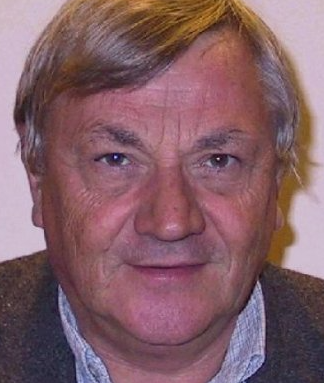 Rene Van Grieken合作论文数Department of Chemistry, University of Antwerp1Guy Demortier合作论文数1Walter Kutschera合作论文数1Boris Pihlar合作论文数1Beata Ostachowicz合作论文数1Jasna Injuk合作论文数1




