Background: The interaction between biological researchers and the bioinformatics tools they use is still hampered by incomplete interoperability between such tools. To ensure interoperability initiatives are effectively deployed, end-user applications need to be aware of, and support, best practices and standards. Here, we report on an initiative in which software developers and genome biologists came together to explore and raise awareness of these issues: BioHackathon 2009.Results: Developers in attendance came from diverse backgrounds, with experts in Web services, workflow tools, text mining and visualization. Genome biologists provided expertise and exemplar data from the domains of sequence and pathway analysis and glyco-informatics. One goal of the meeting was to evaluate the ability to address real world use cases in these domains using the tools that the developers represented. This resulted in i) a workflow to annotate 100,000 sequences from an invertebrate species; ii) an integrated system for analysis of the transcription factor binding sites (TFBSs) enriched based on differential gene expression data obtained from a microarray experiment; iii) a workflow to enumerate putative physical protein interactions among enzymes in a metabolic pathway using protein structure data; iv) a workflow to analyze glyco-gene-related diseases by searching for human homologs of glyco-genes in other species, such as fruit flies, and retrieving their phenotype-annotated SNPs.Conclusions: Beyond deriving prototype solutions for each use-case, a second major purpose of the BioHackathon was to highlight areas of insufficiency. We discuss the issues raised by our exploration of the problem/solution space, concluding that there are still problems with the way Web services are modeled and annotated, including: i) the absence of several useful data or analysis functions in the Web service "space"; ii) the lack of documentation of methods; iii) lack of compliance with the SOAP/WSDL specification among and between various programming-language libraries; and iv) incompatibility between various bioinformatics data formats. Although it was still difficult to solve real world problems posed to the developers by the biological researchers in attendance because of these problems, we note the promise of addressing these issues within a semantic framework.
The Taverna workflow management system is an open source project with a history of widespread adoption within multiple experimental science communities, and a long-term ambition of effectively supporting the evolving need of those communities for complex, data-intensive, service-based experimental pipelines. This short paper describes how the recently overhauled technical architecture of Taverna addresses issues of efficiency, scalability, and extensibility, and presents performance results based on a collection of synthetic workflows, as well as a concrete case study involving a production workflow in the area of cancer research.
Workflows systems are steadily finding their way into the work practices of scientists. This is particularly true in the in silico science of bioinformatics, where biological data can be processed by Web Services. In this paper, we investigate the potential of evolving the users’ interaction with workflow environments so that it more closely relates to the mode in which their day to day work is carried out. We present the Data Playground, an environment designed to encourage the uptake of workflow systems in bioinformatics through more intuitive interaction by focusing the user on their data, rather than on the processes. We implement a prototype plug-in for the Taverna workflow environment and show how this can promote the creation of workflow fragments by automatically converting the users’ interactions with data and Web Services into a more conventional workflow specification.
This paper describes how the UK AstroGrid Virtual Observatory system has adopted and extended the Taverna workflow system to provide a highly capable workflow solution for astronomy users.
BACKGROUND:There has been a dramatic increase in the amount of quantitative data derived from the measurement of changes at different levels of biological complexity during the post-genomic era. However, there are a number of issues associated with the use of computational tools employed for the analysis of such data. For example, computational tools such as R and MATLAB require prior knowledge of their programming languages in order to implement statistical analyses on data. Combining two or more tools in an analysis may also be problematic since data may have to be manually copied and pasted between separate user interfaces for each tool. Furthermore, this transfer of data may require a reconciliation step in order for there to be interoperability between computational tools. RESULTS:Developments in the Taverna workflow system have enabled pipelines to be constructed and enacted for generic and ad hoc analyses of quantitative data. Here, we present an example of such a workflow involving the statistical identification of differentially-expressed genes from microarray data followed by the annotation of their relationships to cellular processes. This workflow makes use of customised maxdBrowse web services, a system that allows Taverna to query and retrieve gene expression data from the maxdLoad2 microarray database. These data are then analysed by R to identify differentially-expressed genes using the Taverna RShell processor which has been developed for invoking this tool when it has been deployed as a service using the RServe library. In addition, the workflow uses Beanshell scripts to reconcile mismatches of data between services as well as to implement a form of user interaction for selecting subsets of microarray data for analysis as part of the workflow execution. A new plugin system in the Taverna software architecture is demonstrated by the use of renderers for displaying PDF files and CSV formatted data within the Taverna workbench. CONCLUSION:Taverna can be used by data analysis experts as a generic tool for composing ad hoc analyses of quantitative data by combining the use of scripts written in the R programming language with tools exposed as services in workflows. When these workflows are shared with colleagues and the wider scientific community, they provide an approach for other scientists wanting to use tools such as R without having to learn the corresponding programming language to analyse their own data.
There seems to be a general consensus on the crucial role metadata can play for enhancing the functionalities of scientific workflows systems, e.g., workflow and service discovery, composition and provenance browsing, among others. However, in most cases their management is under-specified, if not left unaddressed at all. A step in this direction, the main contribution of the work presented in this paper is an overview of metadata and their management in the Taverna workflow system. In Taverna, we consider metadata to be a first class citizen in the system, in the sense that we fully cover their life cycle from their creation, through their use and curation until their eventual removal. We present the main steps of this cycle and present the models used for metadata specification. In doing so, we distinguish two classes of metadata: metadata that describe workflow related entities, such as services, workflows and sub- workflows, and metadata that describe workflow executions, also known as workflow provenance.
UNLABELLED:Taverna is an application that eases the integration of tools and databases for life science research by the construction of workflows. The Taverna Interaction Service extends the functionality of Taverna by defining human interaction within a workflow and acting as a mediation layer between the automated workflow engine and one or more users.AVAILABILITY:Taverna, the Interaction Service plug-in and web application are available as open source and can be downloaded from http://taverna.sourceforge.net/
This paper presents the formal syntax and the operational semantics of Taverna, a workflow management system with a large user base among the e-Science community. Such formal foundation, which has so far been lacking, opens the way to the translation between Taverna workflows and other process models. In particular, the ability to automatically compile a simple domain-specific process description into Taverna facilitates its adoption by e-scientists who are not expert workflow developers. We demonstrate this potential through a practical use case.
In silico experiments have hitherto required ad hoc collections of scripts and programs to process and visualise biological data, consuming substantial amounts of time and effort to build, and leading to tools that are difficult to use, are architecturally fragile and scale poorly. With examples of the systems applied to real biological problems, we describe two complimentary software frameworks that address this problem in a principled manner; ^my Grid Taverna, a workflow design and enactment environment enabling coherent experiments to be built, and UTOPIA, a flexible visualisation system to aid in examining experimental results.
UNLABELLED:Many data manipulation processes involve the use of programming libraries. These processes may beneficially be automated due to their repeated use. A convenient type of automation is in the form of workflows that also allow such processes to be shared amongst the community. The Taverna workflow system has been extended to enable it to use and invoke Java classes and methods as tasks within Taverna workflows. These classes and methods are selected for use during workflow construction by a Java Doclet application called the API Consumer. This selection is stored as an XML file which enables Taverna to present the subset of the API for use in the composition of workflows. The ability of Taverna to invoke Java classes and methods is demonstrated by a workflow in which we use libSBML to map gene expression data onto a metabolic pathway represented as a SBML model.AVAILABILITY:Taverna and the API Consumer application can be freely downloaded from http://taverna.sourceforge.net
Taverna is an application that eases the use and integration of the growing number of molecular biology tools and databases available on the web, especially web services. It allows bioinformaticians to construct workflows or pipelines of services to perform a range of different analyses, such as sequence analysis and genome annotation. These high-level workflows can integrate many different resources into a single analysis. Taverna is available freely under the terms of the GNU Lesser General Public License (LGPL) from http://taverna.sourceforge.net/.
Life sciences research is based on individuals, often with diverse skills, assembled into research groups. These groups use their specialist expertise to address scientific problems. The in silico experiments undertaken by these research groups can be represented as workflows involving the co-ordinated use of analysis programs and information repositories that may be globally distributed. With regards to Grid computing, the requirements relate to the sharing of analysis and information resources rather than sharing computational power. The myGrid project has developed the Taverna Workbench for the composition and execution of workflows for the life sciences community. This experience paper describes lessons learnt during the development of Taverna. A common theme is the importance of understanding how workflows fit into the scientists' experimental context. The lessons reflect an evolving understanding of life scientists' requirements on a workflow environment, which is relevant to other areas of data intensive and exploratory science. Copyright © 2005 John Wiley & Sons, Ltd.
SPINE (Structural Proteomics In Europe) was established in 2002 as an integrated research project to develop new methods and technologies for high-throughput structural biology. Development areas were broken down into workpackages and this article gives an overview of ongoing activity in the bioinformatics workpackage. Developments cover target selection, target registration, wet and dry laboratory data management and structure annotation as they pertain to high-throughput studies. Some individual projects and developments are discussed in detail, while those that are covered elsewhere in this issue are treated more briefly. In particular, this overview focuses on the infrastructure of the software that allows the experimentalist to move projects through different areas that are crucial to high-throughput studies, leading to the collation of large data sets which are managed and eventually archived and/or deposited.
The life sciences research domain depends on effective access to the data and data analysis. There are tool packages (e.g. EMBOSS) and service repositories (e.g. BioMoby) that bring together a critical mass of computational methods. A standard defining how these tools can be integrated into data analysis grids is needed. The paper describes an upcoming standard for Life Sciences Analysis Engine that facilitates uniform access to data analysis operations. The paper also points to the early implementation of the standard: Soaplab and its companion Gowlab.
We present a hybrid system within which the end user, typically a knowledge worker in the life science domain, can manipulate an exemplar data set in an exploratory fashion. Observation of this manual process is used to create a data flow based workflow. The user programs the system 'by example' allowing the creation of complex reusable processes by users with knowledge of the data but lacking programming expertise.
The Taverna e-Science Workbench is a central component of myGrid, a loosely coupled suite of middleware services designed to support in silico experiments in biology. Taverna enables the construction and enactment of complex workflows over resources on local and remote machines, allowing the automation of otherwise labour-intensive multi-step bioinformatics tasks. As the Taverna user community has grown, so has the demand for new features and additions. This paper outlines the functional requirements that have become apparent over the last year of working with domain scientists, along with the solutions implemented in both the Taverna workbench and the Freefluo enactment engine to address concerns relating to workflow construction and enactment, respectively
 Carole Goble合作论文数School of Computer Science, The University of Manchester18
 Peter Li合作论文数13
 Robert Stevens合作论文数Department of Computer Science, School of Computer Science, University of Manchester10
 Darren Marvin合作论文数IT Innovation Centre, Southampton, UK
Mark Greenwood University of Manchester, Manchester, UK
Carole Goble University of Manchester, Manchester, UK
Anil Wipat University of Newcastle upon Tyne, Newcastle upon Tyne, UK
Peter Li University of Newcastle upon Tyne, Newcastle upon Tyne, UK
Tim Carver MRC Rosalind Franklin Centre for Genomics Research, Hinxton, UK7
Darren Marvin合作论文数IT Innovation Centre, Southampton, UK
Mark Greenwood University of Manchester, Manchester, UK
Carole Goble University of Manchester, Manchester, UK
Anil Wipat University of Newcastle upon Tyne, Newcastle upon Tyne, UK
Peter Li University of Newcastle upon Tyne, Newcastle upon Tyne, UK
Tim Carver MRC Rosalind Franklin Centre for Genomics Research, Hinxton, UK7 Katy Wolstencroft合作论文数The University of Manchester, School of Computer Science, Manchester, United Kingdom7
 Chris Wroe合作论文数Department of Computer Science;University of Manchester;Department of Computer Science, University of Manchester6
 Phillip W. Lord合作论文数Department of Computer Science, University of Manchester6
 Matthew Pocock合作论文数School of Computing;University of Newcastle;School of Computing, University of Newcastle6
 Anil Wipat合作论文数School of Computing, Newcastle University6
 Kevin Glover合作论文数School of Computer Science, Faculty of Science, The University of Nottingham5Justin Ferris合作论文数5
 Duncan Hull合作论文数School of Computer Science, Manchester in the UK5
 Douglas Kell合作论文数Department of Biochemistry, Institute of Integrative Biology, University of Liverpool4
 Norman W. Paton合作论文数School of Computer Science, University of Manchester4
 Stuart Owen合作论文数SmithKline Beecham Pharmaceuticals4
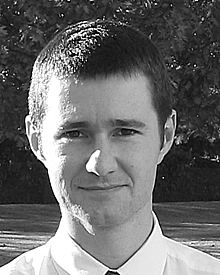 Matthew Addis合作论文数4Martin Senger合作论文数4M. Nedim Alpdemir合作论文数University of Manchester
Department of Computer Science
Information Management Group4Mark Greenwood合作论文数3A. Kanapin合作论文数3M Biswas合作论文数3David Ian Withers合作论文数3
Matthew Addis合作论文数4Martin Senger合作论文数4M. Nedim Alpdemir合作论文数University of Manchester
Department of Computer Science
Information Management Group4Mark Greenwood合作论文数3A. Kanapin合作论文数3M Biswas合作论文数3David Ian Withers合作论文数3 Chris Greenhalgh合作论文数School of Computer Science, University of Nottingham3
 Paolo Missier合作论文数School of Computing, Newcastle University/The Alan Turing Institute3
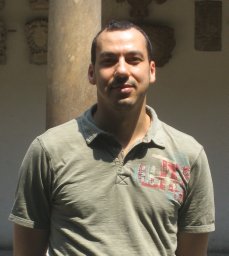 Khalid Belhajjame合作论文数University of Manchester3
 Jun Zhao合作论文数Department of Computer Science, University of Oxford;Oxford Martin School, University of Oxford3
 Evgeny Zdobnov合作论文数Department of Life Sciences, Faculty of Natural Sciences, Imperial College London;Swiss Institute of Bioinformatics, Faculté de Médecine, University of Geneva;Medical School, University of Geneva3
 Rolf Apweiler合作论文数European Bioinformatics Institute3
 Rodrigo Lopez合作论文数European Molecular Biology Laboratory, European Bioinformatics Institute3
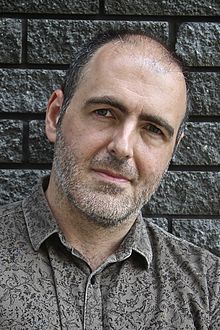 Stephen Pettifer合作论文数Department of Computer Science, The University of Manchester3Youla Karavidopoulou合作论文数3
 Daniele Turi合作论文数School of Computer Science The University of Manchester3Wolfgang Fleischmann合作论文数3Antoon Goderis合作论文数School of Computer Science, University of Manchester, UK3
 Ingo Wassink合作论文数3
 Stian Soiland-Reyes合作论文数School of Computer Science, University of Manchester3
 Florence Servant合作论文数3
 Nicola Mulder合作论文数3MDR Croning合作论文数2V Dialani合作论文数2CJA Sigrist合作论文数2Giles Velarde合作论文数2
 Tom Rodden合作论文数School of Computer Science, Faculty of Science, University of Nottingham2Alan R. Williams合作论文数2Xiaojian Liu合作论文数2
 Terri Attwood合作论文数Department of Computer Science, School of Engineering, Faculty of Science and Engineering, The University of Manchester2Beate Marx合作论文数2
 Luc Moreau合作论文数Department of Informatics, Faculty of Natural, Mathematical & Engineering Sciences, King’s College London2
 Steve Oliver合作论文数Department of Biochemistry, University of Cambridge;Cambridge Systems Biology Centre, University of Cambridge2




