This paper presents and describes an approach to generate innovative labeled datasets that enable automated text classifiers to automatically detect online employee reviews referring to accounting control deficiencies, facilitating supplementary monitoring for auditors and management. Employees, who are on the front lines executing policies and procedures, play a critical role in a firm's control environment. Their feedback provides insights into how controls are functioning. Textual data were collected and manually coded using a structured coding scheme mapped to COSO internal control framework (2013) principles. The dataset is unique in that it provides a new source of data that has not been previously used in internal control research, offering new opportunities for exploring the relationship between employee feedback and control weaknesses, and shedding light on potential improvements in internal control practices. Downstream stakeholders (such as researchers, management, investors, and auditors) can benefit by having rapid, automated means for filtering and prioritizing employee reviews for further investigation, with respect to accounting control issue mentions.
The current advancement of artificial intelligence (AI) is the culmination of a prolonged effort to endow machines with human cognitive capabilities. Scholars and practitioners agree that AI has the potential to revolutionize decision-making in uncertain environments, with the potential role of AI in shaping entrepreneurial decision-making. Simultaneously, AI presents novel challenges, such as explainability, privacy, and data security, and may induce mistakes and ethical issues. As organizations and individuals expect AI decision-making processes to be transparent and understandable, the question of how entrepreneurial organizations adopt AI technologies remains unanswered. There is a lack of clarity on the implications of AI in the context of entrepreneurial organizations. To answer our research question, we conduct a qualitative study and use an interpretive research paradigm with an abductive approach to enrich the current understanding of the role of Explainable AI in shaping organizational processes and accomplishing organizational goals. The finding reveals that Explainable AI enables entrepreneurial organizations to align their decision-making. The role of the humanAI interface is crucial to leverage AI recommendations. We conclude with a discussion of future research on Explainable AI.
Industrialized countries and environmental protection agencies urge greener energy technology adoption and improvement in technological innovation. In this regard, the primary factor of greener energy adoption could be the budget allocated for renewable energy R&D, technological innovation, and socioeconomic conditions. The prime objective of this study is to explore the role of R&D for renewable energy adoption while considering economic and social factors. The present study analyzed quarterly data for Australia covering the period of 1994Q1–2019Q4. Furthermore, in this article, we employ the least absolute shrinkage and selection operator algorithm, ARDL bound testing, and a dynamic ARDL approach for a comprehensive empirical analysis. Empirical estimates reveal that R&D budgets for renewable energy, energy efficiency, and science and technology significantly promote greener energy adoption in the short term. However, the impact of the R&D budget on energy efficiency is positive in the long term. Technological innovation and economic growth are positively associated with green energy generation. From a policy perspective, an increase in budget allocation for R&D in renewables, energy efficiency, and technological innovation might act as a policy factor to bring environmental and economic sustainability.
The ubiquity of social media and the varying nature of subjective well-being (SWB) in a culturally heterogeneous world raises an essential question about how social media and culture jointly influence SWB. We argue that social media shapes the influence of cultural dimensions on SWB in nuanced ways, depending on the nature of the dimensions. Drawing on the affordance-based institutional logics perspective, we hypothesize that social media attenuates the adverse effects of power distance, masculinity, and uncertainty avoidance and amplifies the positive effects of individualism, long-term orientation, and indulgence on SWB. Using a dynamic panel model, our analysis shows that a degree of high social media diffusion in a country reduces the negative effect of power distance on SWB and increases the positive effect of individualism on SWB. These findings can help policymakers make informed decisions regarding increasing social media penetration as a means of overcoming negative cultural characteristics to enhance SWB.
Purpose Variations in customer expectations pose a challenge to service quality improvement in the airline industry. Understanding airline customers' expectations and satisfaction help service providers improve their offerings. The extant literature examines airline passengers' expectations in isolation, neglecting the overall impact of online reviews on service quality improvement. This paper systematically evaluates the airline industry's passengers' expectations and satisfaction using expectation confirmation theory (ECT) and the SERVQUAL framework. The paper analyzes online reviews to examine the relationship between airline service quality attributes and passengers' satisfaction. Design/methodology/approach The SERVQUAL framework was employed to examine the effects of customer culture, the reason for traveling, and seat type on customer's expectations and satisfaction across a large sample of airline customers. Findings A total of 17,726 observations were gathered from the Skytrax review website. The lowest satisfaction ratings were from passengers from the USA, Canada and India. Factors that affect perceived service performance include customer service, delays and baggage management. Empathy and reliability have the biggest impact on the perceived satisfaction of passengers. Research limitations/implications This research increases understanding of the consumer expectations through analysis of passengers' online reviews. Results are limited to a small sample of airline industries. Practical implications This study provides airlines with valuable information to improve customer service by analyzing online reviews. Social implications This study provides the opportunity for airline customers to gain better services when airline companies utilize the findings. Originality/value This paper offers insights into passengers' expectations and their perceived value for money in relation to seat types. Previous studies have not investigated value for money as a construct for passengers' expectations and satisfaction relative to service quality dimensions. This paper addresses this need.
Business schools (B-schools) are vital to achieving the sustainable development goals (SDGs) and the 2030 Agenda by creating awareness of sustainability among the next generation of leaders. Mindful of their responsibility, schools around the world have initiated efforts to integrate the SDGs into different aspects of their operations. However, the pace has been slow, with schools in some parts of the world lagging in even initiating the process, indicating that additional efforts are required to enhance their commitment. The academic literature in the area has also been growing but is in a very nascent stage, requiring fresh inputs and renewed focus for momentum. This article responds by invigorating theory and practice using a multimethod approach that includes 1) a review of the extant literature to present the state-of-the-art literature and identify research gaps that suggest future research directions, 2) a qualitative study assessing the current state of SDG integration, and 3) an evaluation of the relevant parts of the reports on principles of responsible management education by signatory schools to develop a set of parameters for the measurement of SDG integration. The findings of this article offer important implications for both internal and external stakeholders. For internal stakeholders, i.e., the B-school management, we offer a set of five broad parameters broken down into 39 indicators to benchmark and calibrate the related outcomes. For external stakeholders, i.e., the regulatory bodies, we offer insights for policy intervention and formulation of systematic sustainability-reporting protocols to guide B-schools.
Background and Objectives Many older adults adopt equipment to address physical limitations and reduce dependence on others to complete basic activities of daily living. Although a few prior studies have considered injuries associated with assistive devices for older adults, those studies focused on older adults’ health and functional risks for injury. There is limited analysis of older adult injuries involving defective or malfunctioning assistive devices. Research Design and Methods Data from this study are from the National Electronic Surveillance System All Injury Program which collected data on consumer product-related injuries from a probability sample of 66 hospital Emergency Departments across the United States. Data from 30 776 older adult Emergency Department (ED) injury narratives from 2016 to 2020 were coded according to the assistive device involved and whether malfunctioning led to the injury. The study team manually examined all narratives in which the assistive device was coded to have malfunctioned. Results A total of 10 974 older adult ED cases were treated for 12 488 injuries involving a defective device. Injuries included 4 212 head and neck injuries (eg, concussion), 4 317 trunk injuries (eg, hip fractures), and 3 959 arm or leg injuries (eg, leg fracture). Of these patients, 4 586 were admitted to a hospital ward for further evaluation and treatment. Seventy percent of these patients were injured while using a walker; in contrast, wheelchairs were implicated in only 4% of the above cases. Design flaws were identified in 8 158 cases and part breakage/decoupling incidents in 2 816 cases. Discussion and Implications Our findings provide evidence that assistive devices are actively involved in older adult injuries. Further research is needed to reduce injuries associated with assistive devices by educating patients and their careproviders about device use and assembly and developing effective methods for informing manufacturers about malfunctioning devices.
Corporate knowledge becomes enterprise strategic resources for sustaining corporate competitiveness by transferring irreplaceable diversified knowledge among employees. One key challenge for enterprises is to ensure that employees mutually and effectively share knowledge. This study integrates a social exchange perspective to understand key factors conducive to successful knowledge transfer in two dimensions: velocity and viscosity. Three key construct areas are examined for influence on the two dependent variables: micro levels (individual and group), macro level (organizational), and knowledge factors. 225 knowledge management system users in 15 companies were surveyed. A path analysis was used to validate 17 proposed hypotheses, with four major findings reported as results: 1) all eight predictive factors exhibited significant influence on both dependent variables; 2) measures of both dependent variables persistently increased with positive influence from common factors of articulability, incentives and training; 3) the organization must consider differential effects of knowledge, individuality, and organization on the two dependent variables; and 4) some factors potentially negatively affect dependent variables. For example, excessive interaction may decrease velocity, while employees with high perceived self-efficacy may decrease velocity and viscosity.
Although food trucks have attracted significant attention among the dining public, little is known in the academic literature about what drives consumer satisfaction with them. Employing a grounded theory methodology, we analyzed a large set of Yelp reviews to determine whether the antecedents of satisfaction with food trucks differ from those associated with quick-service restaurants. We found that for most attributes, positive experiences at food trucks have smaller upward effects on satisfaction than they do for quick service restaurants, whereas negative experiences have larger downward effects. We further found that comments about anticipation appear far more frequently in food truck reviews, suggesting that the downward effect of negative experiences may be attributable to expectations. This has implications for theory in that it suggests some modifications to conventional instruments for measuring satisfaction. It also has implications for management practice, in that it suggests best practices with regard to managing expectations of food trucks.
Smart tourism technologies (STTs) enable tourists to obtain travel information instantly and to conduct several contactless transactions, which are preferred by travelers to limit the amount of unnecessary contacts after the COVID-19 pandemic. Based on the theory of planned behavior (TPB), this paper surveyed 451 tourists and investigated the influence of attitudes and self-efficacy on an intention to visit smart tourism destinations. Attributes of STTs and tourists’ expertise and personal innovativeness were explored to understand their influence on attitudes and self-efficacy. Furthermore, we examined the moderating effect of being domestic or international tourists to address the differences in self-efficacy, attitudes, and behavioral intention. Our research findings show that attitudes have a stronger effect on behavioral intention than self-efficacy does, and interactivity has the strongest effect, among other factors, on attitudes. The finding suggests that by focusing on providing interactive services that can respond quickly to tourists’ requests together with personalized information, tourism providers would be able to enhance tourists’ intention to visit smart tourism destinations. Tourist type (domestic vs. international) did moderate the effects of interactivity and personalization on attitudes towards STTs. The finding highlights the differences between the two groups of travelers and provides an initial point for future research.
Digital nomadism allows individuals to travel worldwide while using various forms of information technology (IT) to work digitally. Places like Chiang Mai, Thailand, and Canggu, Bali/Indonesia, have gained popularity among digital nomads in the past decade. In contributing to the economies of local communities, these nomads, with their unique characteristics, are an interesting, new visitor type. Governments worldwide are starting to recognise the potential of digital nomadism to improve local visitor economies. However, the impacts of digital nomadism on local communities, their culture and economies, are not without challenges and require further understanding. Almost all existing studies on digital nomadism focus on the nomads themselves, while, in this study, we take the perspective of the locals visited by digital nomads. Using the case study of Chiang Mai, the "digital nomad capital", we answer the following research questions: What are the impacts of digital nomadism on local communities? How do digital nomads compare to other visitor types within the visitor economy of a local community? Our findings reveal diverse socio-cultural, economic and technological impacts and how locals in Chiang Mai evaluate digital nomads differently compared to other types of visitors. This research, grounded in an in-depth case study, contributes to a better understanding of digital nomadism by offering new knowledge about its ambivalent impacts on local communities. We also discuss contributions to the wider literature and implications for policy.
The usage of information technology (IT) has changed the process of learning and teaching in the last few years significantly. This trend has been boosted by the COVID-19 pandemic. Students not having the needed IT equipment, IT skills or online connections are facing issues in this process: A digital divide in education. This research aims
The 2021 military coup d'état in Myanmar and the Coronavirus (COVID-19) pandemic commencing at the end of 2019 have had major impacts on the already existing digital divide in this Southeast Asian country. This paper aims to explore the effects of these two events on the digital divide and their consequences on the learning practices of students in Myanmar. Following a broad review of relevant literature, primary data were collected from students in Myanmar about their use of IT for online learning and the outcomes. The raw data resulting from this field research has been shared with stakeholders who analyzed, evaluated, and commented on it during expert interviews. The main findings are: IT usage for online education among students in Myanmar is a matter of major concern. A majority of students nationwide have no access to computers. The IT skill level in the country corresponds to this finding and is only on an average level. Smartphones are more accessible but are often old or of lower quality. Internet connections are available but are vulnerable to disruptions initiated by the military regime. Therefore, it can be concluded that students in Myanmar in many cases did not have the technical equipment or skills necessary to learn effectively through the usage of IT during the national crises. Nevertheless, it can be stated that IT helped and was also supportive in sustaining and improving the well-being of students in Myanmar.
This study explores the factors that drive the adoption of sustainable business model innovations (SBMIs). In this mixed-method (qualitative and quantitative) study, we draw on upper echelon theory to identify the factors that have led firms to switch from conventional products and processes to sustainable business innovation. This study of senior managers uses qualitative data to understand the mechanisms adopted by top management to make the switch to SBMIs. Data was gathered from 285 middle managers to empirically validate the theoretical model. The study concludes that in the top management team (TMT), ambidextrous learning has a positive association with the firm's decision to adopt SBMIs. However, TMT diversity and university-industry collaboration are positively associated with ambidextrous learning by top management and, subsequently, the adoption of SBMIs. Our findings also suggest that transformational leadership positively moderates the association between TMT diversity and ambidextrous learning. However, the impact on the relationship between collaboration and ambidextrous learning is negative.
Background Older adults who have difficulty moving around are commonly advised to adopt mobility-assistive devices to prevent injuries. However, limited evidence exists on the safety of these devices. Existing data sources such as the National Electronic Injury Surveillance System tend to focus on injury description rather than the underlying context, thus providing little to no actionable information regarding the safety of these devices. Although online reviews are often used by consumers to assess the safety of products, prior studies have not explored consumer-reported injuries and safety concerns within online reviews of mobility-assistive devices. Objective This study aimed to investigate injury types and contexts stemming from the use of mobility-assistive devices, as reported by older adults or their caregivers in online reviews. It not only identified injury severities and mobility-assistive device failure pathways but also shed light on the development of safety information and protocols for these products. Methods Reviews concerning assistive devices were extracted from the “assistive aid” categories, which are typically intended for older adult use, on Amazon’s US website. The extracted reviews were filtered so that only those pertaining to mobility-assistive devices (canes, gait or transfer belts, ramps, walkers or rollators, and wheelchairs or transport chairs) were retained. We conducted large-scale content analysis of these 48,886 retained reviews by coding them according to injury type (no injury, potential future injury, minor injury, and major injury) and injury pathway (device critical component breakage or decoupling; unintended movement; instability; poor, uneven surface handling; and trip hazards). Coding efforts were carried out across 2 separate phases in which the team manually verified all instances coded as minor injury, major injury, or potential future injury and established interrater reliability to validate coding efforts. Results The content analysis provided a better understanding of the contexts and conditions leading to user injury, as well as the severity of injuries associated with these mobility-assistive devices. Injury pathways—device critical component failures; unintended device movement; poor, uneven surface handling; instability; and trip hazards—were identified for 5 product types (canes, gait and transfer belts, ramps, walkers and rollators, and wheelchairs and transport chairs). Outcomes were normalized per 10,000 posting counts (online reviews) mentioning minor injury, major injury, or potential future injury by product category. Overall, per 10,000 reviews, 240 (2.4%) described mobility-assistive equipment–related user injuries, whereas 2318 (23.18%) revealed potential future injuries. Conclusions This study highlights mobility-assistive device injury contexts and severities, suggesting that consumers who posted online reviews attribute most serious injuries to a defective item, rather than user misuse. It implies that many mobility-assistive device injuries may be preventable through patient and caregiver education on how to evaluate new and existing equipment for risk of potential future injury.
The last decades have witnessed major changes in the way spirituality is perceived and is being practiced. As digital technology is being fully integrated into our daily life, most human activities are moving from physical spaces to augmented spaces, i.e., hybrid spaces powered by computerized technology. One fascinating, yet emerging element of this digital revolution is the fact that spirituality is also moving to these augmented spaces. This paper explores how the needs for spirituality of Human beings can get actualized in the new age of technology. We will describe how technology is preparing and supporting a shift of spiritual experience from physical to augmented spaces, by analyzing how technology interacts with both spiritual practices (rituals and places) and mediators (officiants and artifacts). We will also describe how the new forms of inequalities may emerge from this shift and might further impact current and future spiritual practices.
Background The increased environmental uncertainty caused by the global pandemic creates challenges for academic incubators. The lack of vital services has decreased the chances of entrepreneurial success for student ventures. This study aims to provide insights into the impact of environmental uncertainties on students’ relationships with academic incubators, thereby affecting user satisfaction and entrepreneurial success. This study further investigates the moderating role of entrepreneurial orientation the internal locus of control on the relationships between environmental uncertainty, relationship with academic incubator, and entrepreneurial successMethods The PLS-SEM method was used to analyze the relationships between all the constructs.Results The findings show that environmental uncertainty can create an urgent need for student entrepreneurs to approach the academic incubator for support and maintain good relationships.Conclusion The ad-hoc relationship formed during the environmental uncertainty does not necessarily help student entrepreneurs increase their chance of success in launching their business.
In the last decade, the need for smart-space design has been on the rise. Various data collected from Internet-of-Things (IoT) and sensors are used to optimize the operation of smart spaces, which, in urban areas, are evolving into smart cities. How can smart spaces provide value to citizens? There is a need to develop smart services that leverage emerging technologies while taking an inclusive and empowering approach to the inhabitants. To address this need, we present a framework for designing smart spaces and we use a bottom-up (inclusive) approach to instantiate a smart kiosk (SK). The SK prototype provides a practical approach for transforming a traditional building into a smart space utilizing IoT and artificial intelligence technologies. The design science research (DSR) methodology was followed for designing and evaluating the prototype. An iterative process that involves occupant feedback and brainstorming sessions coupled with a literature review was carried out to identify the issues and services related to a smart building. The SK prototype implements three intelligent services that were prioritized by the citizens of the building. The results show that the SK has a high usage and acceptance rate and it can transform a lobby into a highly engaged and smart building space. The prototyping process suggests important factors to ideate and assess smart services and shows that small-scale projects can be successful to enable smart buildings. The framework provides a theoretical contribution while the design and development process assists practitioners in identifying and developing intelligent services based on IoT technology.
 Laddawan Kaewkitipong合作论文数Dept Management Informat Syst, Thammasat Business Sch25
 c c chen合作论文数15
 Alan S Abrahams合作论文数University of Cambridge;Computer Laboratory;Computer Laboratory, University of Cambridge14Daniel Firpo合作论文数13
 Richard Gruss合作论文数University of North Carolina at Chapel Hill8
 Chung-Ping Chen合作论文数Center for Artificial Intelligence and Advanced Robotics, Department of Electrical Engineering, National Taiwan University;ECE Department, University of Wisconsin, Madison7
 Amandeep Dhir合作论文数School of Business and Law, University of Agder6Xuesong Zhang合作论文数6Namrata Mali合作论文数5
 Felipe Restrepo合作论文数Ivey Business Sch, Western Univ5
 Nohel Zaman合作论文数Loyola Marymount Univ5
 David M Goldberg合作论文数San Diego State University5
 Makoto Nakayama合作论文数5Juthamon Sithipolvanichgul合作论文数Dept Accounting, Thammasat Univ4
 Ali Anjomshoae合作论文数4Vachiraporn Khayun合作论文数4Bob Nanthakorn合作论文数3
 Laura Sands合作论文数Department of Human Development and Family Science, College of Liberalarts and Human Sciences, Virginia Polytechnic Institute and State University;Center for Gerontology, Virginia Polytechnic Institute and State University3
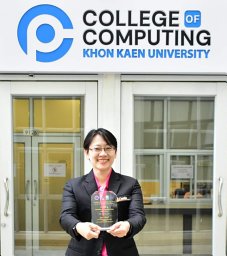 Sumonta Kasemvilas合作论文数School of Information Systems and Technology;Claremont Graduate University;School of Information Systems and Technology, Claremont Graduate University3
 Shan Pan合作论文数School of Information Systems and Technology Management, University of New South Wales;Digital Sustainability Knowledge Hub, University of New South Wales3Judy Land合作论文数North Carolina Central University3
 Puneet Kaur合作论文数Department of Psychosocial Science, Faculty of Psychology, University of Bergen3Kristin Kirk合作论文数Virginia Tech2Mototaka Sakashita合作论文数2Elise Omaki合作论文数2
 Hoon-Seok Choi合作论文数Sungkyunkwan Univ, Seoul, South Korea2
 Suresh Malodia合作论文数Strategic Marketing Area, MICA2
 Shalini Talwar合作论文数Department of Finance and Economics, S.P. Jain Institute of Management and Research2Zachary Davis合作论文数Jacksonville University2
 Eojina Kim合作论文数Hospitality & Tourism Management, Pamplin Coll Business2
 Wendy C. Shields合作论文数Health Policy and Management, Bloomberg School of Public Health, Johns Hopkins University2
 Johnathon P. Ehsani合作论文数Health Policy and Management, Bloomberg School of Public Health, Johns Hopkins University2
 Lorne Olfman合作论文数Center for Information Systems & Technology, Claremont Graduate University, Claremont Graduate University;School of Information Science, Claremont Graduate University;School of Information Systems and Technology, Claremont Graduate University2
 Shin-Yuan Hung合作论文数Department of Information Management, National Chung Cheng University2
 Sonya Zhang合作论文数Cal Poly Pomona2
 Carmen Mei Ling Leong合作论文数School of Information Systems & Technology Management, Business School, The University of New South Wales2
 Angsana A. Techatassanasoontorn合作论文数College of Information Sciences and Technology, Pennsylvania State University2
 Solomon Negash合作论文数Kennesaw State University2
 Yenni Tim合作论文数School of Information Systems & Technology Management, Business School, The University of New South Wales2
 Samir Chatterjee合作论文数Center for Information Systems & Technology, Claremont Graduate University2Pei-Lee Teh合作论文数1
 Kon Mouzakis合作论文数1David E. Drew合作论文数1
 Nazrul Islam合作论文数1Somtochukwu Emmanuel Dike合作论文数1nantapanuwat nattapol合作论文数1
 Lukui Huang合作论文数1Elisabeth Beaunoyer合作论文数1
 Badr Alsamani合作论文数1




