Invasive species can disrupt native epidemiological processes, potentially leading to the emergence of zoonotic pathogens. The relatively recent appearance and spread of the bank vole (Clethrionomys glareolus) in Ireland provides a unique model system to study these phenomena. The depauperate small mammal community in Ireland, combined with baseline data, allows us to identify the invasion gradient of C. glareolus and its effects on rodent-borne pathogens over time. A total of 498 C. glareolus and 584 Apodemus sylvaticus were sampled, via removal trapping, across nine sites in Ireland in 2016 and 2017, with six sites revisited in 2021 and 2022. 16S rRNA metabarcoding identified 10 putative pathogenic Operational Taxonomic Units (OTUs) present in these rodents, relating to four bacterial taxa, Bartonella spp., Mycoplasma coccoides, Mycoplasma haemomuris and Mycoplasma penetrans, and one family of protozoans, Sarcocystidae. Several epidemiological processes were found to be correlated with the C. glareolus invasion; firstly, C. glareolus in Ireland exhibited patterns consistent with the enemy release hypothesis, compared to native populations in France, and the native A. sylvaticus in Ireland. Secondly, a potential dilution effect, with reduced prevalence of M. haemomuris in A. sylvaticus at the C. glareolus invasion core compared to the invasion front, was observed. Finally, C. glareolus had increased prevalence of Sarcocystidae at the invasion front when compared to the invasion core, depending on the time and stage of invasion. These findings further our understanding of pathogen dynamics during biological invasions, demonstrating that invaders affect native host-pathogen communities differently as they advance through various stages of establishment.
Despite advances in understanding infectious diseases, the persistence and re-emergence of wildlife pathogens continue to raise public and veterinary health concerns. This study investigates the relationship between biodiversity and rodent-borne diseases in Europe, focusing on habitat alterations and their impact on rodent diversity. We present host-pathogen data from 21 temperate forest sites and eight urban green spaces throughout five European countries, environments where rodents are abundant and human/domestic animals-wildlife interactions are likely to occur. From 2020 to 2022, 3766 specimens comprising 15 different small mammal species were analyzed. Samples were screened for bacteria via 16S rRNA sequencing or PCR, and for viral antibodies using immunofluorescent assays. Pathogens from several genera, including Bartonella, Borrelia, Mycoplasma, Anaplasma, Neoehrlichia, Leptospira, Orthohantavirus, and Orthopoxvirus, were detected at non-negligible prevalence in 11 host species. Host community composition differed between habitats, with more urban adapters in parks than in forests. Pathogen richness increased with an increase in host species diversity, supporting the "host-diversity begets parasite-diversity" hypothesis, though not with anthropization. The absence of some vector-transmitted parasites in urban areas suggests a shift in pathogen community driven by human impact. Host species and intrinsic factors were dominant explanatory variables for Mycoplasma species and Sarcocystidae, while extrinsic environmental and climatic factors influenced variations in several vector-transmitted pathogens. Apodemus sylvaticus and Clethrionomys glareolus served as important connector hosts in urban spaces and temperate forests, respectively. These results improve our understanding of the complex local host-pathogen system, aiding future management decisions and supporting the public health sector.
IntroductionInter- and transdisciplinary research (ITDR) is increasingly promoted to address “wicked problems”, particularly in health sectors adopting approaches like Ecohealth. Our Ecohealth-inspired project on rodent-borne diseases, initiated just before the COVID-19 pandemic, provided an opportunity to evaluate ITDR implementation.MethodsWe employed a recently developed semi-quantitative evaluation method to measure our project’s success in achieving ITDR and analyzed factors influencing this achievement.ResultsThe project showed strengths in system description, team task allocation, and data sharing, but had lower scores in engaging societal actors throughout the project cycle.DiscussionWe identified the underexplored influence of problem wickedness as a critical determinant of ITDR success. Addressing rodent-borne diseases, a less wicked problem, limited engagement potential but enabled constructive dialog with local actors. These insights are vital for addressing variably wicked problems in a polycrisis era. We propose recommendations to strengthen researchers’ capacities, particularly in Ecohealth.
The European badger, Meles meles, is an important wildlife host for Mycobacterium bovis and contributes to the epidemiology of bovine tuberculosis (bTB) in cattle in several countries. The control of zoonotic diseases, such as bTB, is a central component of global One-Health strategies. Such strategies are complicated by human-wildlife conflicts, particularly where wildlife reservoirs are legally protected. The contrasting objectives of disease management and wildlife conservation, therefore, can require significant investment in research to support evidence-based policies. In Britain and Ireland, for example, badgers are a legally protected species but are also subject to lethal control and vaccination for disease management. In this paper, we review recent (2012-2022) advances in research on this wildlife host on the island of Ireland, which is used to underpin national policies and identify research gaps. In recent years, significant advances in estimating key parameters related to badger management and population dynamics have been made, including estimating population abundance at varying scales (local, landscape, and national). Advances in tracking technology, integrated with mark-recapture and modelling tools, have provided significant insights into the movement ecology of badgers and their interactions with cattle. The adaptation of genetic technologies has improved our understanding of the transmission dynamics of M. bovis among different hosts. As a disease management strategy, the culling of badgers to control bTB has reduced badger densities significantly, although this is not considered a sustainable sole long-term solution to the problem of spillback infection. The recent development of vaccination strategies presents an additional approach to control the disease in wild populations. These types of interventions will require significant applied research to ensure they are sustainable and to maximise benefits. It is also expected that focused research efforts will improve human-wildlife coexistence in the context of the broader One-Health strategy.
Major advances in the understanding of infectious diseases have been achieved in the last decades. However, the persistence and re-emergence of pathogens continue to raise public and veterinary health concerns, of which the recent COVID-19 pandemic may be one of the most dramatic examples. Understanding the impact of habitat alterations and concomitant biodiversity loss on pathogen transmission and emergence from wildlife remains challenging. Here, we aim to elucidate the interlinkages between biodiversity and rodent-borne diseases at local and European scales. We present recently collected host-pathogen data from 21 temperate forest sites and eight urban green spaces throughout five European countries, environments where rodents are abundant and human/domestic animals – wildlife interactions are likely to occur. 3766 specimens were analyzed during the period from 2020 to 2022 comprising 15 different small mammal species. Different organ tissues of each specimen were screened for bacteria by either 16S rRNA amplicon sequencing or specific PCR. The presence of antibodies to different families of viruses was screened using immunofluorescent assays. A multitude of pathogens of zoonotic potential from several genera including Bartonella, Borrelia, Mycoplasma, Anaplasma, Neoehrlichia, Leptospira , Orthohantavirus and Orthopoxvirus were detected at non-negligible prevalence in 11 different terrestrial mammal species. A shift in host community composition was observed along the anthropization gradient with more urban adapters in more anthropized sites. Pathogen richness increased with an increase in host species diversity, following the “host-diversity begets parasite-diversity” hypothesis. The absence of some vector-transmitted parasites in urban areas suggests a shift in pathogen community along the anthropization gradient. Host species and host intrinsic factors were dominant explanatory variables for endoparasitic Mycoplasma species and Sarcocystidae , while extrinsic environmental and climatic factors where influential in explaining variations in occurrences of several vector-transmitted pathogens. Apodemus sylvaticus and Clethrionomys glareolus were important connector host species in respectively urban green spaces and temperate forests. Increased host diversity, but not anthropization, correlated with a richer pathogen community. These results ultimately lead to an increased understanding of the complex host-pathogen system at the local landscape that can aid future management decisions and support the public health sector. ### Competing Interest Statement The authors have declared no competing interest.
Animal behaviour can moderate biological invasion processes, and the native fauna's ability to adapt. The importance and nature of behavioural traits favouring colonization success remain debated. We investigated behavioural responses associated with risk-taking and exploration, both in non-native bank voles (Myodes glareolus, N = 225) accidentally introduced to Ireland a century ago, and in native wood mice (Apodemus sylvaticus, N = 189), that decline in numbers with vole expansion. We repeatedly sampled behavioural responses in three colonization zones: established bank vole populations for greater than 80 years (2 sites), expansion edge vole populations present for 1-4 years (4) and pre-arrival (2). All zones were occupied by wood mice. Individuals of both species varied consistently in risk-taking and exploration. Mice had not adjusted their behaviour to the presence of non-native voles, as it did not differ between the zones. Male voles at the expansion edge were initially more risk-averse but habituated faster to repeated testing, compared to voles in the established population. Results thus indicate spatial sorting for risk-taking propensity along the expansion edge in the dispersing sex. In non-native prey species the ability to develop risk-averse phenotypes may thus represent a fundamental component for range expansions.
Babesia microti is a tick-transmitted protozoan parasite of wildlife that can also cause serious disease in humans. It is now well established that B. microti represents an assemblage of different strains or species, only some of which are important zoonotic pathogens. Therefore, in order to assess the potential public health risk associated with B. microti in any given location, it is important to determine the strains that are present. This is the first study on the presence and identity of B. microti in Ireland. Overall, 314 wood mice (Apodemus sylvaticus), 243 bank voles (Myodes glareolus) and 634 questing Ixodes ricinus nymphs collected in various locations across Ireland were screened for the presence of B. microti by metabarcoding and nested PCR, respectively. Overall 8 rodent spleen samples (1.4%) were positive for B. microti, while all tick samples tested negative. Rodent isolates were identified as the 'Munich' strain which rarely causes human disease and is chiefly transmitted by the mouse tick, Ixodes trianguliceps. Together with reports from the UK these results suggest that B. microti does not represent a sig-nificant public health risk in Britain or Ireland.
In biological invasion processes animal behavior moderates the success of invasive species, and the native fauna’s ability to adapt. The importance of behavioral syndromes and flexibility of invading species for invasion success remains debated. We investigated behavior of rodents, the bank vole ( Myodes glareolus ) currently invading Ireland, and the native wood mouse ( Apodemus sylvaticus ) that declines with vole invasion, at replicated sites at pre-invasion, edge, and source of the invasion. We found that individual rodents varied consistently in risk-taking behaviors, and mice had not adapted to the presence of invasive voles. Voles at the invasion edge were more careful but also more flexible compared to voles the invasion source. The ability to develop timid and flexible phenotypes may contribute to the invasion success of rodents worldwide. ### Competing Interest Statement The authors have declared no competing interest.
We report serological surveillance for exposure to SARS-CoV-2 in 1,237 wild rodents and other small mammals across Europe. All samples were negative with the possible exception of one. Given the ongoing circulation of this virus in humans and potential host jumps, we suggest such surveillance be continued.
We report results from serologic surveillance for exposure to SARS-CoV-2 among 1,237 wild rodents and small mammals across Europe. All samples were negative, with the possible exception of 1. Despite suspected potential for human-to-rodent spillover, no evidence of widespread SARS-CoV-2 circulation in rodent populations has been reported to date.Esitämme tulokset serologisesta tutkimuksesta, jossa seulottiin SARS-CoV-2 tartuntojen varalta 1,237 luonnonvaraista jyrsijää ja piennisäkästä eri puolilta Eurooppaa. Kaikki näytteet olivat negatiivisia, yhtä näytettä lukuun ottamatta. SARS-CoV-2:n läikkymisen ihmisistä jyrsijöihin on arveltu olevan mahdollista, mutta todisteet viruksen laajamittaisesta leviämisestä jyrsijäpopulaatioissa puuttuvat.
Carnivores tend to exhibit a lack of (or less pronounced) genetic structure at continental scales in both a geographic and temporal sense and this can confound the identification of post-glacial colonization patterns in this group. In this study we used genome-wide data (using genotyping by sequencing [GBS]) to reconstruct the phylogeographic history of a widespread carnivore, the red fox (Vulpes vulpes), by investigating broad-scale patterns of genomic variation, differentiation and admixture amongst contemporary populations in Europe. Using 15,003 single nucleotide polymorphisms (SNPs) from 524 individuals allowed us to identify the importance of refugial regions for the red fox in terms of endemism (e.g., Iberia). In addition, we tested multiple post-glacial recolonization scenarios of previously glaciated regions during the Last Glacial Maximum using an Approximate Bayesian Computation (ABC) approach that were unresolved from previous studies. This allowed us to identify the role of admixture from multiple source population post-Younger Dryas in the case of Scandinavia and ancient land-bridges in the colonization of the British Isles. A natural colonization of Ireland was deemed more likely than an ancient human-mediated introduction as has previously been proposed and potentially points to a larger mammalian community on the island in the early post-glacial period. Using genome-wide data has allowed us to tease apart broad-scale patterns of structure and diversity in a widespread carnivore in Europe that was not evident from using more limited marker sets and provides a foundation for next-generation phylogeographic studies in other non-model species.
Parasitic nematodes of Oesophagostomum spp., commonly known, as 'nodular worms' are emerging as the most widely distributed and prevalent zoonotic nematodes. Oesophagostomum infections are well documented in African non-human primates; however, the taxonomy, distribution and transmission of Oesophagostomum in Asian non-human primates are not adequately studied. To better understand which Oesophagostomum species infect Asian non-human primates and determine their phylogeny we analysed 55 faecal samples from 50 orangutan and 5 gibbon individuals from Borneo and Sumatra. Both microscopy and molecular results revealed that semi-wild animals had higher Oesophagostomum infection prevalence than free ranging animals. Based on sequence genotyping analysis targeting the Internal transcribed spacer 2 of rDNA, we report for the first time the presence of O. aculeatum in Sumatran apes. Population genetic analysis shows that there is significant genetic differentiation between Bornean and Sumatran O. aculeatum populations. Our results clearly reveal that O. aculeatum in free-ranging animals have a higher genetic variation than those in semi-wild animals, demonstrating that O. aculeatum is circulating naturally in wildlife and zoonotic transmission is possible. Further studies should be conducted to better understand the epidemiology and dynamics of Oesophagostomum transmission between humans, non-human primates and other wild species and livestock in Southeast Asia.
The primary driver of the observed increase in emerging infectious diseases (EIDs) has been identified as human interaction with wildlife and this increase has emphasized knowledge gaps in wildlife pathogens dynamics. Wild rodent models have proven excellent for studying changes in parasite communities and have been a particular focus of eco-immunological research. Helminth species have been shown to be one of the factors regulating rodent abundance and indirectly affect disease burden through trade-offs between immune pathways. The Myodes glareolus invasion in Ireland is a unique model system to explore the invasion dynamics of helminth species. Studies of the invasive population of M. glareolus in Ireland have revealed a verifiable introduction point and its steady spread. Helminths studies of this invasion have identified enemy release, spillover, spillback and dilution taking place. Longitudinal studies have the potential to demonstrate the interplay between helminth parasite dynamics and both immune adaptation and coinfecting microparasites as M. glareolus become established across Ireland. Using the M. glareolus invasion as a model system and other similar wildlife systems, we can begin to fill the large gap in our knowledge surrounding the area of wildlife pathogen dynamics.
One of the primary drivers of emerging infectious diseases (EIDs) is human intervention via host or parasite translocations. A unique opportunity to study host and parasite dispersal during a bio-invasion currently exists in Ireland due to the introduction of the bank vole (Myodes glareolus) in the 1920s. The continuing range expansion of M. glareolus within Ireland presents a natural large-scale perturbation experiment. This study used the Irish M. glareolus model to conduct a spatiotemporal study analysing the parasite dynamics of native and invasive species throughout their range. Myodes glareolus and native Apodemus sylvaticus were trapped in woodlands across Ireland and surveyed for their helminth parasites. Myodes glareolus in Ireland were found to have lower parasite diversity in comparison to records of M. glareolus from across Europe and A. sylvaticus in Ireland. Increased density of M. glareolus resulted in a dilution effect, with significantly lower levels of parasitism overall in native hosts, where M. glareolus has been established longest. However, three helminth parasite species of A. sylvaticus increased in abundance in the presence of M. glareolus. Furthermore, M. glareolus at the expansion front were less parasitised (lower abundance and prevalence of certain parasites and lower parasite diversity) than M. glareolus from the core population. This "enemy release" is believed to be mediating the continued successful spread of the invader across Ireland. Our results identify two important variables, seasonality and the stage of the invasion, which should not be overlooked when investigating or managing the changing distribution of hosts and their parasites. Studies of bio-invasions and parasite transmission have primarily focused on the invasive host species or the native host species in cases where virulent pathogen spillover is observed. Our results demonstrate how the concurrent study of invasive and native hosts, and the careful identification of their parasite communities, allows the dynamic processes influencing the parasite component and intracommunity to be identified.
Key to the success of orangutan conservation management practices is the prevention of the introduction of infectious diseases to the remaining populations. Previous reports of Entamoeba spp. positive orangutans are of concern as Entamoeba spp. infection has been linked to morbidity and mortality in primates. It remains to be determined if the Entamoeba species infecting orangutans is the pathogenic Entamoeba histolytica. Orangutan fecal samples have been collected from orangutans from sites in Sumatra (Bukit Lawang, Ketambe, and Suaq, 241 samples from 64 individuals), and two sites in Kalimantan (Sebangau and Tuanan, 129 samples from 39 individuals). All samples were from wild orangutans except for a proportion from Sumatra which were from semi‐wild (108 samples, 10 individuals). E. histolytica‐specific nested PCR assays were carried out on the fecal samples. A total of 36 samples from 17 individuals tested positive for E. histolytica. When compared with published sequences using NCBI BLAST the E. histolytica positive samples showed a 98–99% concordance. The majority (76%, n = 36) of the positive isolates came from semi‐wild orangutans in Bukit Lawang. This study supports the growing body of evidence that contact with humans is an important risk factor for infection of wild primates with E. histolytica.
Throughout Europe interest in tick-borne agents is increasing, particularly with regard to those that can cause human disease. The reason for this is the apparent rise in the incidence of many tick-borne diseases (TBD's). While there has never been a national survey of ticks or TBD's in Ireland, the trend here appears to be the reverse with a decline in the incidence of some agents seemingly associated with decreasing tick numbers particularly on agricultural land. In the absence of robust baseline data, however, this development cannot be confirmed. This review collates the limited information available from several dated published records on tick species and a small number of studies focused on certain TBD's. Some pilot data on tick density and TBD agents collected in 2016 are also presented. The aim is to explore the particular situation in Ireland with regard to ticks and TBD's and to provide a reference for future workers in the field.
Syphacia stroma (von Linstow, 1884) Morgan, 1932 and Syphacia frederici Roman, 1945 are oxyurid nematodes that parasitize two murid rodents, Apodemus sylvaticus and Apodemus flavicollis, on the European mainland. Only S. stroma has been recorded previously in Apodemus spp. from the British Isles. Despite the paucity of earlier reports, we identified S. frederici in four disparate British sites, two in Nottinghamshire, one each in Berkshire and Anglesey, Wales. Identification was based on their site in the host (caecum and not small intestine), on key morphological criteria that differentiate this species from S. stroma (in particular the tail of female worms) and by sequencing two genetic loci (cytochrome C oxidase 1 gene and a section of ribosomal DNA). Sequences derived from both genetic loci of putative British S. frederici isolates formed a tight clade with sequences from continental worms known to be S. frederici, clearly distinguishing these isolates from S. stroma which formed a tight clade of its own, distinct from clades representative of Syphacia obvelata from Mus and S. muris from Rattus. The data in this paper therefore constitute the first record of S. frederici from British wood mice, and confirm the status of this species as distinct from both S. obvelata and S. stroma.
Trade-offs in the allocation of finite-energy resources among immunological defences and other physiological processes are believed to influence infection risk and disease severity in food-limited wildlife populations. However, this prediction has received little experimental investigation. Here we test the hypothesis that food limitation impairs the ability of wild field voles ( Microtus agrestis ) to mount an immune response against parasite infections. We conducted a replicated experiment on vole populations maintained in large outdoor enclosures during boreal winter, using food supplementation and anthelmintic treatment of intestinal nematodes. Innate immune responses against intestinal parasite infections were compared between food-supplemented and non-supplemented voles. Voles with high food availability mounted stronger immune responses against intestinal nematode infections than food-limited voles. No food effects were seen in immune responses to intracellular coccidian parasites, possibly owing to their ability to avoid activation of innate immune pathways. Our findings demonstrate that food availability constrains vole immune responses against nematode infections, and support the concept that spatio-temporal heterogeneity in food availability creates variation in infectious disease susceptibility.
Background The important cereal crop Sorghum bicolor (L.) Moench biosynthesize and accumulate the defensive compound dhurrin during development. Previous work has suggested multiple roles for the compound including a function as nitrogen storage/buffer. Crucial for this function is the endogenous turnover of dhurrin for which putative pathways have been suggested but not confirmed. Results In this study, the biosynthesis and endogenous turnover of dhurrin in the developing sorghum grain was studied by metabolite profiling and time-resolved transcriptome analyses. Dhurrin was found to accumulate in the early phase of grain development reaching maximum amounts 25 days after pollination. During the subsequent maturation period, the dhurrin content was turned over, resulting in only negligible residual dhurrin amounts in the mature grain. Dhurrin accumulation correlated with the transcript abundance of the three genes involved in biosynthesis. Despite the accumulation of dhurrin, the grains were acyanogenic as demonstrated by the lack of hydrogen cyanide release from macerated grain tissue and by the absence of transcripts encoding dhurrinases. With the missing activity of dhurrinases, the decrease in dhurrin content in the course of grain maturation represents the operation of hitherto uncharacterized endogenous dhurrin turnover pathways. Evidence for the operation of two such pathways was obtained by metabolite profiling and time-resolved transcriptome analysis. By combining cluster- and phylogenetic analyses with the metabolite profiling, potential gene candidates of glutathione S-transferases, nitrilases and glycosyl transferases involved in these pathways were identified. The absence of dhurrin in the mature grain was replaced by a high content of proanthocyanidins. Cluster- and phylogenetic analyses coupled with metabolite profiling, identified gene candidates involved in proanthocyanidin biosynthesis in sorghum. Conclusions The results presented in this article reveal the existence of two endogenous dhurrin turnover pathways in sorghum, identify genes putatively involved in these transformations and show that dhurrin in addition to its insect deterrent properties may serve as a storage form of reduced nitrogen. In the course of sorghum grain maturation, proanthocyanidins replace dhurrin as a defense compound. The lack of cyanogenesis in the developing sorghum grain renders this a unique experimental system to study CNglc synthesis as well as endogenous turnover.
Trade-offs in the allocation of finite-energy resources among immunological defences and other physiological processes are believed to influence infection risk and disease severity in food-limited wildlife populations. However, this prediction has received little experimental investigation. Here we test the hypothesis that food limitation impairs the ability of wild field voles ( Microtus agrestis ) to mount an immune response against parasite infections. We conducted a replicated experiment on vole populations maintained in large outdoor enclosures during boreal winter, using food supplementation and anthelmintic treatment of intestinal nematodes. Innate immune responses against intestinal parasite infections were compared between food-supplemented and non-supplemented voles. Voles with high food availability mounted stronger immune responses against intestinal nematode infections than food-limited voles. No food effects were seen in immune responses to intracellular coccidian parasites, possibly due to their ability to avoid activation of innate immune pathways. Our findings demonstrate that food availability constrains vole immune responses against nematode infections, and support the concept that spatio-temporal heterogeneity in food availability creates variation in infectious disease susceptibility.
 Heikki Henttonen合作论文数Natural Resources Institute Finland (Luke)15
 Kristian M Forbes合作论文数14
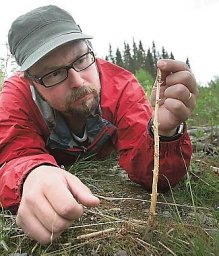 Otso Huitu合作论文数Suonenjoki Research Unit Finnish Forest Research Institute14
 Tarja Sironen合作论文数10
 Colin Lawton合作论文数7
 Olli Vapalahti合作论文数Department of Virology, Faculty of Medicine, University of Helsinki7
 Erhan Yalcindag合作论文数6
 Andrew McManus合作论文数6
 Zintl Annetta合作论文数Conway Institute of Biomedical and Biomolecular Research, University College Dublin6Ivona Foitová合作论文数6
 Jana Eccard合作论文数Animal Ecology, University of Potsdam6
 Radka Peckova合作论文数5Hawkins Conall合作论文数5
 Celia V Holland (Celia Holland)合作论文数Department of Zoology, School of Natural Sciences, Trinity College Dublin5
 Nathalie Charbonnel合作论文数UMR CBGP (INRA/IRD/Cirad/Montpellier SupAgro),, INRA EFPA5Liina Voutilainen合作论文数Finnish Forest Research Institute5Jasmin Firozpoor合作论文数4
 D.T. De Waal合作论文数School of Veterinary Medicine, University College Dublin4
 Maciej Grzybek合作论文数4
 Colombo Valeria C合作论文数Laboratorio de Ecología de Enfermedades (LEcEn),, ICIVET LITORAL (UNL-CONICET),4
 Herwig Leirs合作论文数Department of Biology, Universiteit Antwerpen4Vincent Sluydts合作论文数Department of Biology, University of Antwerp4
 Vincent Bourret合作论文数Département de biologie, Université Laval4
 Tapio Mappes合作论文数Department of Biological and Environmental Science;University of Jyvaskyla;Department of Biological and Environmental Science, University of Jyvaskyla4Roslyn Gleadow合作论文数3
 Anne Jaaskelainen合作论文数3
 Birger Lindberg Møller合作论文数Section for Plant Biochemistry, Department of Plant and Environmental Sciences, Exercise and Sports, Faculty of Science, University of Copenhagen3Lara Dutra合作论文数University of Helsinki3Marie Bouilloud合作论文数Institut Agro, Univ Montpellier3
 Hussein Alburkat合作论文数Faculty of Medicine, University of Helsinki3
 Paula M Kinnunen合作论文数3Castel Guillaume合作论文数3
 Helen Morrogh-Bernard合作论文数The Anatomy School, University of Cambridge Wildlife Research Group3
 Grace Mulcahy合作论文数School of Agriculture, Food Science and Veterinary Medicine, University College Dublin3Jukka Niemimaa合作论文数Vantaa Research Unit Finnish Forest Research Institute3
 Wisnu Nurcahyo合作论文数Kedokteran Hewan Faculty, Gadjah Mada University3
 Julien Pradel合作论文数2Sanna Mäki合作论文数2
 Aleksander Goll合作论文数2Vinaya Venkat合作论文数Univ Helsinki2Valeria Mazza合作论文数2Joanna Nowicka合作论文数2
 Nathan Ranc合作论文数Harvard Univ, Dept Organism & Evolutionary Biol, Cambridge, MA 02138 USA2
 Ravi Kant合作论文数Univ Helsinki, Fac Vet Med, Dept Vet Biosci, Helsinki, Finland2Wasniewski Marine合作论文数2
 Christian Imholt合作论文数2
 Natalie O'Donnell合作论文数2
 Seppo Meri合作论文数Department of Bacteriology and Immunology, Faculty of Medicine, University of Helsinki2
 Cecilia K. Blomstedt合作论文数School of Biological Sciences, Monash University2




