We show that any N-dimensional unitary matrix can be realized using a finite sequence of concatenated identical fixed multiport beam splitters (MBSs) and phase shifters (PSs). Our construction is based on a Lie group theorem applied to existing decompositions. Using the Bell-Walmsley-Clements framework, we prove that any N-dimensional unitary requires N + 2 phase masks, N - 1 fixed MBSs, and N - 1 BSs. Our scheme conventional schemes (e.g., Clements), all while keeping the same number of PSs. Experimentally, these MBSs can be realized as a monolithic element via femtosecond laser writing, offering superior performance through reduced insertion losses. As an application, we present a reconfigurable linear optical circuit that implements a three-dimensional unitary emerging in the unambiguous discrimination of two nonorthogonal qubit states.
Multipartite entangled states, such as Greenberger–Horne–Zeilinger (GHZ) states, are important resources in multiparty quantum networking tasks. We consider protocols for generating such states from networks of Bell pairs and local operations and classical communication. We present a computationally-efficient protocol for generating GHZ states that is also efficient with respect to the number of consumed Bell pairs, (local) gates, and Bell-pair sources. Our protocol: (1) requires O(N) gates in a network with N nodes, independent of the network topology; (2) has time complexity O(N2), avoiding the Steiner tree and any other computationally-hard problem; (3) maintains a near-optimal number of consumed Bell pairs. Numerically, our protocol outperforms those based on (approximate) Steiner trees with respect to the number of gates and Bell-pair sources. We prove that the minimal Bell-pair source cost is given by solving the graph-theoretic dominating set problem, and we demonstrate numerically that our protocol is nearly optimal for this quantity. Finally, we analytically characterize the impact of noisy Bell pairs and gates on the fidelity of the distributed GHZ states.
We present a systematic study of Schrödinger cat codes constructed from Kerr-type coherent states, including displaced Kerr coherent states and Barut--Girardello Kerr coherent states, each admitting two distinct families determined by the sign of the Kerr nonlinearity. By tuning the Kerr parameter and coherent-state amplitude, these states interpolate between $\mathfrak{su}(2)$, $\mathfrak{su}(1,1)$ coherent states, providing a unified and versatile foundation for this type of bosonic quantum error correction. Unlike standard two-component Schrödinger cat codes, where a single photon-loss event induces an uncorrectable bit-flip, the nonlinear phase-space structure of Kerr cat states enables simultaneous detection and correction of both photon-loss and dephasing errors within a unified recovery framework, with optimal recovery operations determined via convex optimization. We demonstrate that Kerr cat encodings significantly outperform conventional cat codes under combined loss and dephasing noise, and that judicious parameter optimization can suppress both error channels to a level that reduces the overhead of additional error correction layers. We further show that Kerr-deformed coherent-state manifolds under engineered two-photon driving emerge as effective steady states of driven-dissipative dynamics, with single-photon decoherence strongly suppressed and leakage outside the protected manifold appearing only as higher-order corrections in the deformation strength. Our extended formalism identifies generalized Kerr Schrödinger cat codes as promising candidates for fault-tolerant bosonic quantum computation in experimental platforms such as nonlinear photonics.
Non-Gaussian states are essential resources for universal, fault-tolerant optical quantum computing, but their generation rate remains limited by low heralding probabilities and operation in nanosecond temporal modes. Here, we demonstrate multi-photon generalized photon subtraction in picosecond optical wave packets, establishing the state-generation capability required for high-rate operation by addressing the temporal-mode bottleneck that has constrained the achievable rate. Two interfering ultrashort squeezed vacua are heralded by photon-number-resolving detection with a high-speed transition-edge sensor and characterized by pulsed homodyne detection matched to 10-ps temporal modes at a 5-MHz pump repetition rate. We reconstruct Wigner functions without loss correction that exhibit up to four distinct negative regions for four-photon heralding, together with an effective cat-state amplitude of α_eff = 1.69. This amplitude approaches the range of practical relevance for fault-tolerant cat-code architectures and for adaptive breeding toward logical-qubit generation, while the picosecond temporal mode establishes a platform compatible with high-rate, scalable time-multiplexed photonic architectures.
Pairwise fusion gates are linear-optical measurements that herald Bell projections onto two-rail subspaces of two d-rail single-photon qudits. Without ancillary input photons, these passive measurements succeed with probability 1-d^-1, with all failures confined to the diagonal logical subspace. We show that identical single-mode squeezers applied to the 2d interferometer outputs before photon-number-resolving detection recover part of this structured failure sector. Photon-number parity preserves the successful off-diagonal fusion signatures, while selected all-even patterns yield POVM elements proportional to definite pairwise Bell projectors. We derive the exact logical-space POVM and prove that a diagonal pattern is accepted if and only if its photon-number-imbalance vector has exactly two nonzero components of equal magnitude. The resulting closed elliptic-integral expression increases the ideal success probability, for instance, from 75% to 79.62% for d=4, and from 83.33% to 87.15% for d=6. With a representative finite detector saturation threshold, n_ sat=7, the respective certified values remain 78.84% and 86.71%. These results establish active Gaussian processing as a method for recycling structured measurement failures without ancillary input photons, at the cost of 2d squeezing operations and a larger photon-number range at detection.
In quantum communication and fusion-based quantum computation, photonic Bell measurements are fundamentally limited when only passive linear optics is employed. While for qubits, some Bell states can be unambiguously identified with static beam splitters and no extra photons or entanglement, additional auxiliary photons or at least additional auxiliary degrees of freedom with a certain level of additional entanglement are needed to approach or attain a complete, deterministic Bell measurement. Here, we prove an exact resource threshold when the same two photons carry system qudits of dimension d and a fixed auxiliary entangled state Φ, possibly distributed over several additional degrees of freedom, with total Schmidt rank r_Φ. We show that a single conclusive Bell-label functional can occur for r_Φ⩾⌈ d/2⌉, but deterministic discrimination of all d^2 Bell-state labels requires r_Φ⩾ d. A maximally entangled rank-d auxiliary state achieves the bound by local Bell-basis sorting between each photon's system and auxiliary degrees of freedom. Thus, the auxiliary Schmidt rank is a certified resource for ancilla-photon-free, embedded photonic Bell measurements.
Quantum networks promise secure communication, distributed sensing and modular quantum computing by interconnecting distant quantum nodes through photonic links. Extending such networks beyond metropolitan distances requires quantum repeaters to overcome the exponential attenuation of photons in optical fiber. Across all architectures, a key requirement is the indistinguishability of single photons, which directly impacts the fidelity of photonic operations based on two-photon interference, such as Bell-state measurements and fusion gates. Here, we demonstrate generation of highly indistinguishable single photons from a coherently excited tin-vacancy center in diamond, achieving raw Hong-Ou-Mandel interference visibilities exceeding 0.95. By separating intrinsic emitter properties from technical imperfections, we show that decoherence plays a negligible role and that the remaining limitations are predominantly technical in nature, arriving at an intrinsic indistinguishability of up to 0.999. We further show that quantum frequency conversion to the telecom C-band preserves the photon indistinguishability. In combination with the long-lived electron and nuclear spin coherence times, these results establish tin-vacancy centers in diamond as a competitive platform for long-distance quantum networks and photonic quantum information processing. We further substantiate this potential through Monte Carlo simulations of a quantum-repeater link, demonstrating that the SnV-center platform surpasses the bound set by direct transmission.
The recent breakthroughs in the distribution of quantum information and high-precision time and frequency (T F) signals over long-haul optical fibre networks have transformative potential for physically secure communications, resilience of timing infrastructure (such as that supporting Global Navigation Satellite Systems (GNSS)) and fundamental physics. To date, these capabilities remain confined to isolated testbeds, with quantum and T F signals accessible, for example in Germany, to only a few institutions. In this white paper we propose the QTF Backbone: a dedicated national fibre-optic infrastructure in Germany for the networked distribution of Quantum and T F signals using dark fibres and specialised hardware. The QTF Backbone is planned as a four-phase deployment over ten years to ensure scalable, sustainable access for research institutions and industry. The concept builds on successful demonstrations of time and frequency distribution at high Technology Readiness Levels (TRLs) across Europe, including PTB–MPQ links in Germany, REFIMEVE in France, and the Italian LIFT network. The QTF Backbone will enable transformative Research and Development (R D), support a nationwide QTF ecosystem, and ensure the transition from innovation to deployment. As a national and European hub, it will position Germany and Europe at the forefront of quantum networking, as well as T F transfer.
With the rise of artificial intelligence and machine learning, a new wave of private information is being flushed into applications. This development raises privacy concerns, as private datasets can be stolen or abused for non-authorized purposes. Secure function computation aims to solve such problems by allowing a service provider to compute functions of datasets in the possession of a a data provider without reading the data itself. A foundational primitive for such tasks is Bit Commitment (BC), which is known to be impossible to realize without added assumptions. Given the pressing nature of the topic, it is thus important to develop BC systems and prove their security under reasonable assumptions. In this work, we provide a novel quantum optical BC protocol that uses the added assumption that the network provider will secure transmission lines against eavesdropping. Under this added assumption, we prove security of our protocol in the honest but curious setting and discuss the hardness of Mayer's attack in the context of our protocol.
Bosonic modes provide hardware-efficient quantum memories and logical registers, including highly non-Gaussian encoded states, but transferring finite-dimensional bosonic states through a restricted ancilla interface requires identifying which collective mode is actually controlled. We study a restricted setting in which two oscillators couple with opposite signs to a single two-level ancilla. In the normal-mode basis, the symmetric mode is dark, while transfer between the physical modes is equivalent to synthesizing parity on the antisymmetric bright mode. This reduction gives exact finite-sum transfer formulas for Fock states, Fock-state qubits, and finite Fock superpositions, and explains why resonant single-ancilla transfer is recurrence-limited beyond the single-photon sector. We then show that detuned Jaynes–Cummings evolution provides a native two-parameter route to high-fidelity finite-cutoff parity synthesis, with residual ancilla excitation, calibration sensitivity, and a minimal Markovian noise estimate quantified separately. Bosonic-code examples illustrate how transfer sensitivity is governed by photon-number support and residual bright-mode phase errors. The result provides a practical benchmark and organizing principle for constrained ancilla-mediated bosonic transfer when direct exchange is unavailable or undesirable.
Bell measurements (BMs) are ubiquitous in quantum information and technology. They are basic elements for quantum commmunication, computation, and error correction. In particular, when performed on logical qubits encoded in physical photonic qubits, they allow for a read-out of stabilizer syndrome information to enhance loss tolerance in qubit-state transmission and fusion. However, even in an ideal setting without photon loss, BMs cannot be done perfectly based on the simplest experimental toolbox of linear optics. Here we demonstrate that any logical BM on stabilizer codes can always be mapped onto a single physical BM perfomed on any qubit pair from the two codes. As a necessary condition for the success of a logical BM, this provides a general upper bound on its success probability, especially ruling out the possibility that the stabilizer information obtainable from only partially succeeding, physical linear-optics BMs could be combined into the full logical stabilizer information. We formulate sufficient criteria to find schemes for which a single successful BM on the physical level will always allow to obtain the full logical information by suitably adapting the subsequent physical measurements. Our approach based on stabilizer group theory is generally applicable to any stabilizer code, which we demonstrate for quantum parity, five-qubit, standard and rotated planar surface, tree, and seven-qubit Steane codes. Our schemes attain the general upper bound for all these codes, while this bound had previously only been reached for the quantum parity code.
There are various approaches to long-range quantum communication based on conceptually different forms of quantum repeaters. Here, we explore a quantum repeater scheme that employs quantum error correction (QEC) both on the flying (light) qubits and on the stationary (matter) qubits. The idea is to combine the benefits of encoded one-way and two-way schemes where effective channel transmission and loss scaling are enhanced by means of photon loss codes and encoded quantum memories, respectively, while sacrificing some of their advantages, such as high clock rates, independent of classical communication times (one-way), and potentially large segment lengths (two-way). More specifically, we illustrate, propose, and analyze such a quantum repeater using the bosonic Gottesman-Kitaev-Preskill (GKP) code, which naturally enables encoding and QEC of qudits, protecting them against transmission and memory loss, the latter, for instance, occurring on collective spin modes of atomic ensembles. While the encoded one-way and two-way schemes on their own either require very high repeater link coupling efficiencies and GKP squeezing or allow for experimentally more feasible, small values of these parameters, respectively, we find that there are intermediate parameter regimes where the combined repeater protocol is superior.
Encoding a qubit in the continuous degrees of freedom of a quantum system, such as bosonic modes, is a powerful alternative to modern quantum error correction (QEC). Among the most prominent bosonic QEC codes, binomial codes provide protection against loss and dephasing errors by encoding logical states in finite superpositions of Fock states with binomially weighted coefficients. While much attention has been given to their error-correcting capabilities and integration into fault-tolerant architectures, efficient methods for generating arbitrary binomial codewords remain scarce. In this work, we propose a scheme for generating these codewords by exploiting nonlinear multiphoton interactions between a continuous-variable bosonic mode (oscillator) and a two-level system (spin/qubit). Our proposed scheme assumes the ability to prepare the oscillator in an arbitrary Fock state and the qubit in an arbitrary superposition of its basis states and access to arbitrarily high multiphoton interactions. To enhance the experimental feasibility of our scheme, we further demonstrate how to reduce the required order parameter of multiphoton interactions by a factor of two for a special class of code states.
Long-distance quantum communication necessitates the use of quantum repeaters, which typically include highly coherent quantum memories. We provide a theoretical analysis of the secret key rates for a quantum repeater system incorporating bosonic error correction and memory components. Specifically, we focus on the application of Binomial codes for two repeater segments. Using these codes, our investigation aims to suppress memory loss errors that commonly affect systems such as atoms and microwave cavities, in contrast to dephasing errors in single-spin memories. We further discuss a physical implementation of such a quantum repeater comprising a microwave cavity and a superconducting transmon, capable of state engineering with high fidelities (>97%) and logical Bell state measurements for successful entanglement swapping. As an alternative approach, we also discuss a realization in the all-optical domain.
Quantum repeaters that incorporate quantum error correction codes have been shown to be a promising alternative compared with the original quantum repeaters that rely upon probabilistic quantum error detection depending on classical communication over remote repeater stations. A particularly efficient way of encoding qubits into an error correction code is through bosonic codes where even a single oscillator mode serves as a sufficiently large, physical system. Here we consider the bosonic Gottesman-Kitaev-Preskill (GKP) code as a natural choice for a loss-correction-based quantum repeater. However, unlike existing treatments, we focus on the excitation loss that occurs in the local, stationary memory qubits as represented by, for instance, collective atomic spin modes. We analyze and assess the performance of such a GKP-based quantum repeater where, apart from the initial state generations and distributions, all operations can be performed via deterministic linear mode transformations, as opposed to other existing memory-based quantum repeater schemes.
Multipartite entangled states, particularly Greenberger–Horne–Zeilinger (GHZ) and other graph states, are important resources in multiparty quantum network protocols and measurement-based quantum computing. We consider the problem of generating such states from networks of bipartite entangled (Bell) pairs. We adopt the perspective that, in practice, unlike the traditional information-theoretic setting, local operations and classical communications are not free. Consequently, protocols should not only be efficient with respect to the number of consumed Bell pairs, as typically considered, but also efficient with respect to the number of (local) gates, number of Bell-pair sources, and computational complexity. In this work, we present a protocol for producing GHZ states in arbitrary Bell-pair networks that is efficient with respect to all of these figures of merit. We prove that our protocol: (1) requires O(N) gates in a network with N nodes, independent of the topology of the network; (2) has time complexity O(N^2), thereby avoiding finding a Steiner tree or solving any other computationally hard problem; and (3) maintains nearly the optimal number of consumed Bell pairs. We prove that the minimal Bell-pair source cost is equivalent to the graph-theoretic dominating set problem, and via numerical simulations on real-world network models, we demonstrate that our protocol is nearly optimal with respect to Bell-pair source cost. Numerically, our protocol also outperforms existing protocols based on (approximate) Steiner trees with respect to both number of gates and Bell-pair sources. Finally, we provide a detailed analysis of the impact of noisy Bell pairs and gates on the fidelity of the distributed GHZ states.
By precisely timed optical excitation of their spin, optical emitters such as semiconductor quantum dots or atoms can be harnessed as sources of linear photonic cluster states. This significantly reduces the required resource overhead to reach fault-tolerant optical quantum computing. Here, we develop an algorithm that analytically tracks the global density matrix through the process of the protocol for generating linear-cluster states by Lindner and Rudolph. From this we derive a model to calculate the entangling gate fidelity and the state fidelity of the generated linear optical cluster states. Our model factors in various sources of error, such as spin decoherence and the finite excited state lifetime. Additionally, we highlight the presence of partial reinitialization of spin coherence with each photon emission, eliminating the hard limitation of coherence time. Our framework provides valuable insight into the cost-to-improvement trade-offs for device design parameters as well as the identification of optimal working points. For a combined state-of-the-art quantum dot with a spin coherence time of T_2^*=535 ns and an excited state lifetime of τ=23 ps, we show that a near-unity entangling gate fidelity as well as near-unity state fidelity for 3-photon and 7-photon linear cluster states can be reached.
In this paper, using the notion of nonlinear coherent states, we define a deformed bosonic dephasing channel modelling the impact of a Kerr medium on a quantum state, as it occurs, for instance, in quantum communication based on optical fibers. We show that, in certain regimes, the Kerr nonlinearity is able to compensate the dephasing. In addition, our studies reveal that the quantum capacity of the deformed bosonic dephasing channel can be greater than that of the undeformed, standard bosonic dephasing channel for certain nonlinearity parameters.
Macronode cluster states are promising for fault-tolerant continuous-variable quantum computation, combining gate teleportation via homodyne detection with the Gottesman-Kitaev-Preskill code for universality and error correction. While the two-dimensional Quad-Rail Lattice offers flexibility and low noise, it lacks the dimensionality required for topological error correction codes essential for fault tolerance. This work presents a four-dimensional cluster state, termed the Octo-Rail Lattice, generated using time-domain multiplexing. This new macronode design combines the noise properties and flexibility of the Quad-Rail Lattice with the possibility to run various topological error correction codes including surface and color codes. Besides, the presented experimental setup is easily scalable and includes only static optical components allowing for a straight-forward implementation. Analysis demonstrates that the Octo-Rail Lattice, when combined with GKP qunaught states and the surface code, exhibits noise performance compatible with a fault-tolerant threshold of 9.75 dB squeezing. This ensures universality and fault-tolerance without requiring additional resources such as other non-Gaussian states or feed-forward operations. This finding implies that the primary challenge in constructing an optical quantum computer lies in the experimental generation of these highly non-classical states. Finally, a generalisation of the design to arbitrary dimensions is introduced, where the setup size scales linearly with the number of dimensions. This general framework holds promise for applications such as state multiplexing and state injection.
Fiber-based classical communication is all-optical and uses light pulses reamplified and reshaped every 50-100 km in classical repeaters. Most compatible with this would be a quantum communication system which is also all-optical with quantum processing units placed in similar intervals. However, existing all-optical quantum communication protocols either require complicated quantum error correction steps for logical-qubit recoveries at every few kilometers or, over larger quantum repeater segments, they would at least depend on sharing complex multi-photon entangled states. Here we propose an all-optical memory-based quantum repeater for long-distance quantum communication, with quantum memories at each repeater station realized in the form of fiber loops combined with suitable quantum error correction codes for photon-loss protection. By sending only single-photon states through the fibers connecting the stations, such repeaters can operate in the classical infrastructure's long-segment regime. We analyze the performance of our scheme for the Gottesman-Kitaev-Preskill code, including a concatenation with the Steane code, as well as the single-photon quantum parity code for total distances up to 10000 km.
 Akira Furusawa (古澤明)合作论文数Department of Applied Physics, School of Engineering, The University of Tokyo63
 Samuel L. Braunstein合作论文数Department of Computer Science, University of York18
 Kae Nemoto (根本香絵)合作论文数National Institute of Informatics;The Graduate University for Advanced Studies14
 Ryuji Ukai合作论文数14
 Shuntaro Takeda (武田俊太郎)合作论文数Department of Applied Physics, School of Engineering, The University of Tokyo;Institute of Engineering Innovation, School of Engineering, The University of Tokyo13
 Bill Munro合作论文数Center for Quantum Technologies, Okinawa Institute of Science and Technology13
 Jun-ichi Yoshikawa合作论文数11
 Norbert Lutkenhaus合作论文数Institute for Quantum Computing, University of Waterloo;Department of Physics & Astronomy, University of Waterloo;evolutionQ11
 Warit Asavanant合作论文数OptQC Corp.10Frank Schmidt合作论文数Inst Phys, Johannes Gutenberg Univ Mainz10
 Radim Filip合作论文数Department of Optics, Faculty of Science, Palacky University10Mamoru Endo合作论文数University of Tokyo10Yosuke Hashimoto合作论文数9Kenzo Makino合作论文数9Kosuke Fukui合作论文数9
 Kan Takase合作论文数Dept Appl Phys, Univ Tokyo9Yoshichika Miwa合作论文数9Fuwa Maria合作论文数School of Engineering, The University of Tokyo8E. Shchukin合作论文数8Ricardo Wickert合作论文数7
 Ulrik Lund Andersen合作论文数Department of Physics, Technical University of Denmark;Max-Planck-Institut Für Die Physik Des Lichts7denis gonta合作论文数6
 Damian Markham合作论文数Department of Physics;Graduate School of Science;University of Tokyo;Graduate School of Science, University of Tokyo6Seckin Sefi合作论文数6
 Hidehiro Yonezawa合作论文数School of Engineering & Information Technology, The University of New South Wales Canberra6guze ming (明古澤)合作论文数5Fumiya Okamoto合作论文数5
 Petr Marek合作论文数Dept Opt, Palacky Univ5Marcel Bergmann合作论文数5
 Gerd Leuchs合作论文数Institut für Optik, Information und Photonik, Department Physik, Naturwissenschaftliche Fakultät, Friedrich-Alexander-Universität Erlangen-Nürnberg5
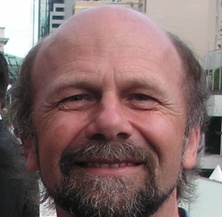 Timothy Ralph合作论文数School of Mathematics and Physics, Faculty of Science, University of Queensland5
 Seiji C. Armstrong合作论文数ACQAO5
 Carlo Cafaro合作论文数Department of Physics;University at Albany-SUNY;Department of Physics, University at Albany-SUNY5Hironari Nagayoshi合作论文数4Rei Sakakibara合作论文数4Takeshi Toyama合作论文数4
 Shota Yokoyama合作论文数School of Engineering & Information Technology, The University of New South Wales Canberra4
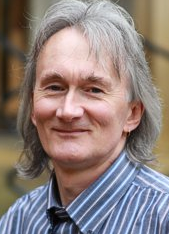 Tim Spiller合作论文数Department of Physics, University of York4
 Gu Mile (顾麦然)合作论文数Division of Physics and Applied Physics, School of Physical and Mathematical Sciences, Nanyang Technological University;Interdisciplinary Institute of Information Sciences, Tsinghua University;Centre for Quantum Technologies, National University of Singapore4
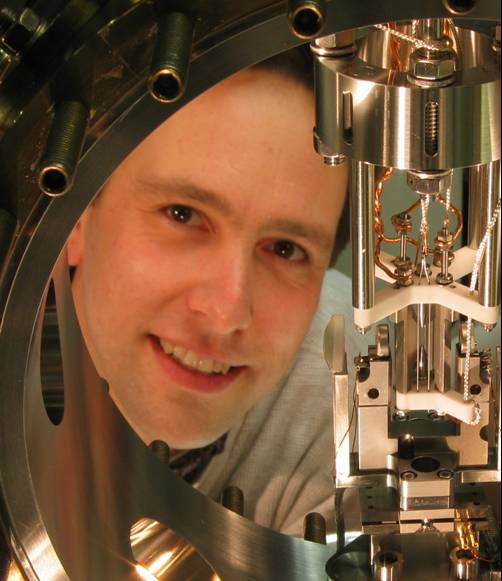 Christoph Becher合作论文数Department of Physics, Faculty of Natural Sciences and Technology, Saarland University4
 Gerard Milburn合作论文数School of Mathematics and Physics, The University of Queensland4Junichi Yoshikawa合作论文数First Department of Internal Medicine, Osaka City University Medical School4Noriaki Iwata合作论文数4
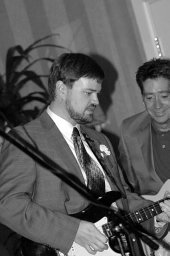 Thaddeus D. Ladd合作论文数Edward L. Ginzton Laboratory;Stanford University;Edward L. Ginzton Laboratory, Stanford University4Stefanie Barz合作论文数Fac Phys, Univ Vienna4Atsushi Sakaguchi合作论文数4
 Christian Weedbrook合作论文数University of Queensland4
 Nadja K. Bernardes合作论文数Optical Quantum Information Theory Group;Max Planck Institute for the Science of Light;Optical Quantum Information Theory Group, Max Planck Institute for the Science of Light4




