We experimentally demonstrate the continuous-variable quantum approximate optimization algorithm (CV-QAOA) for multi-variable problems and multiple QAOA depths using a measurement-based CV quantum computing platform on a quad-rail lattice (QRL) cluster state. We propose a systematic method to map arbitrary quadratic cost functions onto the QRL architecture and examine the resulting construction in settings involving up to 100 modes. Using the programmable platform, we prepare the CV-QAOA ansatz and optimize the variational parameters via Bayesian optimization. We then investigate the performance on quadratic optimization problems and observe that increasing the depth from 1 to 2 improves performance, whereas further increases yield only limited gains. In contrast, numerical simulations under idealized conditions, assuming an infinite number of measurement shots and gradient-based optimization, indicate that the performance of CV-QAOA can improve with increasing depth, suggesting that the experimentally observed limitations primarily arise from noise accumulation and classical optimization challenges. This work provides an experimental demonstration of CV-QAOA on a programmable CV platform and establishes a foundation for future developments of variational quantum algorithms in CV systems.
Quantum computing holds the potential to revolutionize fields such as cryptography, optimization, and quantum simulations. Among various quantum computing approaches, optical quantum computers are particularly promising due to their high-speed operations, scalability, and compatibility with communication technologies [1]. Recent advances in time-domain multiplexing have demonstrated the proof of principle of large-scale analog quantum computation in optical setups [2], [3]. However, previous systems have been limited by the number of inputs, clock frequency, and flexibility.
Optical technology is a highly promising platform for quantum computing due to its enormous potential for large-scale, ultrafast computation. However, realizing a programmable and scalable system remains a significant challenge. Here, we present a high-speed programmable Gaussian quantum computing platform with one hundred inputs based on a continuous-variable full-stack architecture. Our system features a 100 MHz clock frequency and integrates a cloud-based interface with an open-source Python software development kit, mqc3, significantly enhancing accessibility and operational flexibility. We provide a comprehensive characterization of our system and its capabilities through multi-input and multi-step teleportation, as well as the programmable routing of quantum states across 101 input modes. This platform represents a critical milestone in scalable analog quantum information processing, offering a robust testbed for the future integration of non-Gaussian resources and the development of large-scale optical neural networks.
We generate one-dimensional cluster states with temporal-mode durations of 40 ps across over one million qumodes, which enables high-speed and large-scale optical quantum computation.
Continuous-variable quad-rail lattice cluster states enable flexible quantum circuit design on their two-dimensional structure. However, how to combine basic operations on the quad-rail lattice cluster state to realize multimode operations has not been deeply discussed. Here we show a concrete configuration design to efficiently implement beamsplitter network operations on the cluster state. Furthermore, combining the beamsplitter networks, a configuration design of multimode Gaussian unitary operations is also shown. It is theoretically known that the Gaussian operations are sufficient for universal quantum computation if appropriate non-Gaussian states are injected. Our results are fundamentally important for utilizing the flexible quad-rail lattice cluster states for computations.
Tracking the dynamics of a quantum system is conventionally achieved by monitoring the system continuously in time and filtering the information contained in measurement records via the causal quantum trajectory approach. However, in practical scenarios there is often loss of information to the environment, leading to filtered states that are impure because of decoherence. If real-time tracking is not required, the lost information can be maximally extracted via acausal quantum state smoothing, which has been theoretically proven to better restore the system's coherence (purity) than causal filtering. Interestingly, quantum state smoothing requires assumptions of how any lost quantum information (unobserved by the experimenter) was turned into classical information by the environment. In this work, we experimentally demonstrate smoothing scenarios, using an optical parametric oscillator and introducing `observed' and `unobserved' channels by splitting the output beam into two independent homodyne detectors. We achieve improvement in state purification of 10.3
Quantum detector tomography (QDT) is a fundamental technique for calibrating quantum devices and performing quantum engineering tasks. In this paper, we utilize regularization to improve the QDT accuracy whenever the probe states are informationally complete or informationally incomplete. In the informationally complete scenario, without regularization, we optimize the resource (probe state) distribution by converting it to a semidefinite programming problem. Then in both the informationally complete and informationally incomplete scenarios, we discuss different regularization forms and prove the mean squared error scales as O(1/N) or tends to a constant with N state copies under the static assumption. We also characterize the ideal best regularization for the identifiable parameters, accounting for both the informationally complete and informationally incomplete scenarios. Numerical examples demonstrate the effectiveness of different regularization forms and a quantum optical experiment test shows that a suitable regularization form can reach a reduced mean squared error.
Our Universe has undergone a transition from a cold and neutral state to a hot and ionized state. In the standard picture, this transition is caused by UV and X-ray photons emitted by stars and galaxies. However, cosmic rays (CRs) can also contribute to the heating and ionization of the cosmic gas. It is suggested that CRs are accelerated in the early Universe in the supernova remnants of the first stars, just as they are in the current Universe. Although it has been pointed out that ionization by CRs raises the global temperature of the intergalactic medium by $10$ to $200 \, \mathrm{K}$, in our previous work, we found that the heating rate of resistive heating induced by streaming CRs can exceed that of ionization heating. The resistive heating is caused by the electron return current induced by streaming CRs. In this work, we study the heating around a galaxy, which is the source of photons and CRs, including the photo-heating, CR ionization heating, and CR resistive heating. It is shown that the gas in the vicinity of the galaxy is rapidly heated up to $\sim 10^4 \, \mathrm{K}$ by CR resistive heating.
It is expected that cosmic rays (CRs) escape from high-redshift galaxies at redshift $z\sim 10 \, - \, 20$ because CRs are accelerated by supernova remnants of the first stars. Although ultraviolet and X-ray photons are widely considered the main source of heating of the intergalactic medium, CRs can also contribute to it. When the CRs propagate in the intergalactic medium, in addition to the heating process due to CR ionization, resistive heating occurs due to the electron return current induced by the streaming CRs. We evaluate the heating rate around a galaxy as a function of the distance from the galaxy. We find that the resistive heating induced by CRs dominates over the other heating processes in the vicinity of the galaxy $r \lesssim 10^2 \, \mathrm{kpc}$ until the temperature reaches $T\sim 10^4 \, \mathrm{K}$. We also recalculate the strength of the magnetic field generated by streaming CRs under the presence of X-ray heating and show that achieved strength can be about $1$ order of magnitude smaller when the X-ray heating is included. The presence of the "first" CRs could be confirmed from the characteristic signature of CR heating imprinted on the $21$-$\mathrm{cm}$ line map in future radio observations.
Our previous work revealed that the energy spectrum of cosmic rays produced by the standard diffusive shock acceleration (DSA) can be modified by downstream sound waves originated from inhomogeneity of the shock upstream medium. However, the background plasma was described by linear analytical solutions and nonlinear evolution of sound waves was not included. In this work, we investigate how nonlinear effects such as steepening and dissipation of sound waves affect particle acceleration by using test-particle simulations. First, we imitate weak shock waves steepened from sound waves by analytical sawtooth waves and show that large-scale waves can efficiently accelerate particles earlier than they dissipate. Next, we numerically solve shock propagation into an inhomogeneous medium and discuss particle acceleration by downstream waves. Our results imply additional acceleration by downstream sound waves works even when they evolve nonlinearly.
It is recently proposed that cosmic rays generate a seed magnetic field in the early universe. In this paper, we propose another generation mechanism of magnetic fields by cosmic rays, which is the Biermann battery driven by resistive heating induced by the streaming of cosmic rays. This mechanism is dominant in small-scale, low-temperature, and strongly-ionized regions, compared with other previously proposed mechanisms. Because cosmic rays are expected to be accelerated after the death of the first stars, this mechanism can work during structure formation in the early universe. We show that it makes the seed magnetic field with sufficient strength for the subsequent dynamo to amplify it to the micro Gauss level in the current galaxies.
Robustness and reliability are two key requirements for developing practical quantum control systems. The purpose of this paper is to design a coherent feedback controller for a class of linear quantum systems suffering from Markovian jumping faults so that the closed-loop quantum system has both fault tolerance and H-infinity disturbance attenuation performance. This paper first extends the physical realization conditions from the time-invariant case to the time-varying case for linear stochastic quantum systems. By relating the fault tolerant H-infinity control problem to the dissipation properties and the solutions of Riccati differential equations, an H-infinity controller for the quantum system is then designed by solving a set of linear matrix inequalities (LMIs). In particular, an algorithm is employed to introduce additional noises and to construct the corresponding input matrices to ensure the physical realizability of the quantum controller. For real applications of the developed fault-tolerant control strategy, we present a linear quantum system example from quantum optics, where the amplitude of the pumping field randomly jumps among different values. It is demonstrated that a quantum H-infinity controller can be designed and implemented using some basic optical components to achieve the desired control goal.
Quantum detector tomography is a fundamental technique for calibrating quantum devices and performing quantum engineering tasks. In this paper, a novel quantum detector tomography method is proposed. First, a series of different probe states are used to generate measurement data. Then, using constrained linear regression estimation, a stage-1 estimation of the detector is obtained. Finally, the positive semidefinite requirement is added to guarantee a physical stage-2 estimation. This Two-stage Estimation (TSE) method has computational complexity $O(nd^{2}M)$ , where $n$ is the number of $d$ -dimensional detector matrices and $M$ is the number of different probe states. An error upper bound is established, and optimization on the coherent probe states is investigated. We perform simulation and a quantum optical experiment to testify the effectiveness of the TSE method.
Continuous-variable optical quantum computation has seen much progress in recent years. In particular, cluster states-the universal resource for measurement-based quantum computation-have been realized in a scalable fashion using the time-domain multiplexing method. To utilize the cluster states in actual quantum computation, the measurement bases need to be programmed according to the desired computation. In addition, as the information is encoded in time in the time-domain multiplexing method, the measurement bases must be dynamically changed in time to fully utilize the large-scale cluster states. Here we report demonstrations of quantum operations using time-domain-multiplexed cluster states with a clock frequency of 25 MHz. This is achieved by our combining the cluster state-generation setup with the setup to change the measurement basis in the time domain. We also formulate a method to evaluate and verify continuous-variable operations where the quantum entanglements in the cluster states are utilized. Therefore, we demonstrate the implementation of quantum operations on scalable continuous-variable cluster-state architectures. The results in this work are compatible with the developing nonlinear feedforward and non-Gaussian state generation technology, which brings the realization of the large-scale fault-tolerant universal optical quantum computer closer to reality.
In this paper, we consider the filtering problem of an optical parametric oscillator (OPO). The OPO pump power may fluctuate due to environmental disturbances, resulting in uncertainty in the system modeling. Thus, both the state and the unknown parameter may need to be estimated simultaneously. We formulate this problem using a state-space representation of the OPO dynamics. Under the assumption of Gaussianity and proper constraints, the dual Kalman filter method and the joint extended Kalman filter method are employed to simultaneously estimate the system state and the pump power. Numerical examples demonstrate the effectiveness of the proposed algorithms.
In this paper, we consider the filtering problem of an optical parametric oscillator (OPO). The OPO pump power may fluctuate due to environmental disturbances, resulting in uncertainty in the system modeling. Thus, both the state and the unknown parameter may need to be estimated simultaneously. We formulate this problem using a state-space representation of the OPO dynamics. Under the assumption of Gaussianity and proper constraints, the dual Kalman filter method and the joint extended Kalman filter method are employed to simultaneously estimate the system state and the pump power. Numerical examples demonstrate the effectiveness of the proposed algorithms.
We develop fast and programmable phase switching of local oscillators of homodyne measurements suitable for time-domain multiplexed one-way quantum computation. Using this technique, we demonstrate quantum teleportation of EPR states multiplexed in time.
We investigate effects of upstream density fluctuations on the diffusive shock acceleration (DSA) by Monte Carlo simulations. The simulations show that particles are reaccelerated in the shock downstream region by a sound wave generated at the shock front. The timescale of turbulent acceleration by the sound wave is estimated. We propose a new back reaction of particles accelerated around the shock front. The accelerated particles generate the upstream density fluctuations by the Drury instability, which are converted to the downstream sound waves by the shock. The downstream sound waves modify the momentum spectrum of particles accelerated around the shock front. This new back reaction affects emission from the accelerated particles, which gives a new constraint on the acceleration efficiency of the DSA.
We investigate a coherent feedback squeezer that uses quantum coherent feedback (measurement-free) control. Our squeezer is simple, easy to implement, robust to the gain fluctuation, and broadband compared to the existing squeezers because of the negative coherent feedback configuration. We conduct a feasibility study that looks at the stability conditions for a feedback system to optimize the designs of real optical devices. The feasibility study gives fabrication tolerance necessary for designing and realizing the actual device. Our formalism for the stability analysis is not limited to optical systems but can be applied to the other bosonic systems.
 Akira Furusawa (古澤明)合作论文数Department of Applied Physics, School of Engineering, The University of Tokyo20
 Hidehiro Yonezawa合作论文数School of Engineering & Information Technology, The University of New South Wales Canberra19
 Warit Asavanant合作论文数OptQC Corp.15
 Jun-ichi Yoshikawa合作论文数8Yu Shiozawa合作论文数7Yutaka Ohira合作论文数7
 Daoyi Dong合作论文数School of Engineering and Information Technology, University of New South Wales, Canberra7
 Nicolas C. Menicucci合作论文数Department of Physics;Princeton University;Department of Physics, Princeton University7Takahiro Serikawa合作论文数Dept Appl Phys, Univ Tokyo6
 Rafael N. Alexander合作论文数Ctr Quantum Computat & Commun Technol, RMIT Univ6Baramee Charoensombutamon合作论文数5Atsushi Sakaguchi合作论文数Opt Quantum Comp Res Team, RIKEN5
 Kan Takase合作论文数Dept Appl Phys, Univ Tokyo4
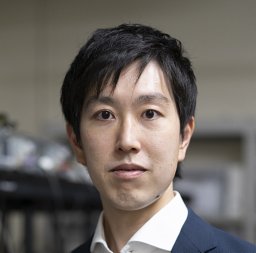 Shuntaro Takeda (武田俊太郎)合作论文数Department of Applied Physics, School of Engineering, The University of Tokyo;Institute of Engineering Innovation, School of Engineering, The University of Tokyo4
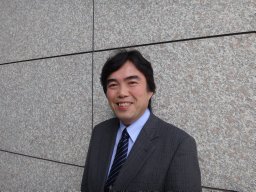 Toshiyuki Kaji合作论文数Faculty of Pharmaceutical Sciences, Hokuriku University4Elanor H. Huntington合作论文数School of Information Technology and Electrical Engineering;University College;University of New South Wales;University College, University of New South Wales4Mamoru Endo合作论文数University of Tokyo4
 Peter Van Loock合作论文数Institute of Physics, Mainz University4
 Ryuji Ukai合作论文数4Kenzo Makino合作论文数3Takeru Ebihara合作论文数3
 Asuka Inoue合作论文数NTT Device Technology Labs, NTT Corporation3
 Takahiro Kashiwazaki合作论文数NTT Corp, NTT Device Technol Labs3Nakamura Tomohiro合作论文数Department of Preventive Medicine and Epidemiology, Tohoku University3
 Takeshi Umeki合作论文数3Shigenari Suzuki合作论文数3Yosuke Hashimoto合作论文数2David D. McManus合作论文数2Chanond Sornphiphatphong合作论文数2Hisashi Ogawa合作论文数2Hiroki Emura合作论文数2
 Trevor A Wheatley合作论文数Opticum Pty Limited2
 Katanya B Kuntz合作论文数Sch. of Eng. & Inf. Technol., Univ. of New South Wales;c;Sch. of Eng. & Inf. Technol., Univ. of New South Wales2
 Qi Yu合作论文数2
 Yuanlong Wang合作论文数School of Engineering and Information Technology, University of New South Wales2
 Toshikazu Hashimoto合作论文数Graduate School of Medicine, Hokkaido University2
 Ryosuke Nakamura合作论文数Graduate School of Agriculture, Kyoto University2
 Nicola Dalla Pozza合作论文数University of Padova2Dezun Dong合作论文数1Shota Yamazaki合作论文数1Masanori Okada合作论文数1Taichi Yamashima合作论文数1Fumiya Okamoto合作论文数1Masaya Kobayashi合作论文数1
 Naoto Takanashi合作论文数1Takeyoshi Tajiri合作论文数Inst Ind Sci, Univ Tokyo1
 Shuixin Xiao合作论文数1
 Daniel Peace合作论文数Australian Res Council, Griffith Univ1




