Current advances in human head modeling allow to generate plausible-looking 3D head models via neural representations. Nevertheless, constructing complete high-fidelity head models with explicitly controlled animation remains an issue. Furthermore, completing the head geometry based on a partial observation, e.g. coming from a depth sensor, while preserving details is often problematic for the existing methods. We introduce a generative model for detailed 3D head meshes on top of an articulated 3DMM which allows explicit animation and high-detail preservation at the same time. Our method is trained in two stages. First, we register a parametric head model with vertex displacements to each mesh of the recently introduced NPHM dataset of accurate 3D head scans. The estimated displacements are baked into a hand-crafted UV layout. Second, we train a StyleGAN model in order to generalize over the UV maps of displacements. The decomposition of the parametric model and high-quality vertex displacements allows us to animate the model and modify it semantically. We demonstrate the results of unconditional generation and fitting to the full or partial observation. The project page is available at https://seva100.github.io/headcraft.
We present Neural Head Avatars, a novel neural representation that explicitly models the surface geometry and appearance of an animatable human avatar that can be used for teleconferencing in AR/VR or other applications in the movie or games industry that rely on a digital human. 1 1 philgras.github.io/neural_head_avatars/neural_head_avatars.html Our representation can be learned from a monocular RGB portrait video that features a range of different expressions and views. Specifically, we propose a hybrid representation consisting of a morphable model for the coarse shape and expressions of the face, and two feed-forward networks, predicting vertex offsets of the underlying mesh as well as a view- and expression-dependent texture. We demonstrate that this representation is able to accurately extrapolate to unseen poses and view points, and generates natural expressions while providing sharp texture details. Compared to previous works on head avatars, our method provides a disentangled shape and appearance model of the complete human head (including hair) that is compatible with the standard graphics pipeline. Moreover, it quantitatively and qualitatively outperforms current state of the art in terms of reconstruction quality and novel-view synthesis.
Attacks that aim to identify the training data of neural networks represent a severe threat to the privacy of individuals in the training dataset. A possible protection is offered by anonymization of the training data or training function with differential privacy. However, data scientists can choose between local and central differential privacy, and need to select meaningful privacy parameters ϵ . A comparison of local and central differential privacy based on the privacy parameters furthermore potentially leads data scientists to incorrect conclusions, since the privacy parameters are reflecting different types of mechanisms. Instead, we empirically compare the relative privacy-accuracy trade-off of one central and two local differential privacy mechanisms under a white-box membership inference attack. While membership inference only reflects a lower bound on inference risk and differential privacy formulates an upper bound, our experiments with several datasets show that the privacy-accuracy trade-off is similar for both types of mechanisms despite the large difference in their upper bound. This suggests that the upper bound is far from the practical susceptibility to membership inference. Thus, small ϵ in central differential privacy and large ϵ in local differential privacy result in similar membership inference risks, and local differential privacy can be a meaningful alternative to central differential privacy for differentially private deep learning besides the comparatively higher privacy parameters.
Differential privacy allows bounding the influence that training data records have on a machine learning model. To use differential privacy in machine learning, data scientists must choose privacy parameters (ϵ,δ). Choosing meaningful privacy parameters is key, since models trained with weak privacy parameters might result in excessive privacy leakage, while strong privacy parameters might overly degrade model utility. However, privacy parameter values are difficult to choose for two main reasons. First, the theoretical upper bound on privacy loss (ϵ,δ) might be loose, depending on the chosen sensitivity and data distribution of practical datasets. Second, legal requirements and societal norms for anonymization often refer to individual identifiability, to which (ϵ,δ) are only indirectly related. We transform (ϵ,δ) to a bound on the Bayesian posterior belief of the adversary assumed by differential privacy concerning the presence of any record in the training dataset. The bound holds for multidimensional queries under composition, and we show that it can be tight in practice. Furthermore, we derive an identifiability bound, which relates the adversary assumed in differential privacy to previous work on membership inference adversaries. We formulate an implementation of this differential privacy adversary that allows data scientists to audit model training and compute empirical identifiability scores and empirical (ϵ,δ).
Releasing data in the form of trained neural networks with differential privacy promises meaningful anonymization. However, there is an inherent privacy-accuracy trade-off in differential privacy which is challenging to assess for non-privacy experts. Furthermore, local and central differential privacy mechanisms are available to either anonymize the training data or the learnt neural network, and the privacy parameter $\epsilon$ cannot be used to compare these two mechanisms. We propose to measure privacy through a black-box membership inference attack and compare the privacy-accuracy trade-off for different local and central differential privacy mechanisms. Furthermore, we need to evaluate whether differential privacy is a useful mechanism in practice since differential privacy will especially be used by data scientists if membership inference risk is lowered more than accuracy. We experiment with several datasets and show that neither local differential privacy nor central differential privacy yields a consistently better privacy-accuracy trade-off in all cases. We also show that the relative privacy-accuracy trade-off, instead of strictly declining linearly over $\epsilon$, is only favorable within a small interval. For this purpose we propose $\varphi$, a ratio expressing the relative privacy-accuracy trade-off.
There has been a large number of contributions on privacy-preserving smart metering with Differential Privacy, addressing questions from actual enforcement at the smart meter to billing at the energy provider. However, exploitation is mostly limited to application of cryptographic security means between smart meters and energy providers. We illustrate along the use case of privacy preserving load forecasting that Differential Privacy is indeed a valuable addition that unlocks novel information flows for optimization. We show that (i) there are large differences in utility along three selected forecasting methods, (ii) energy providers can enjoy good utility especially under the linear regression benchmark model, and (iii) households can participate in privacy preserving load forecasting with an individual membership inference risk <60 % , only 10% over random guessing.
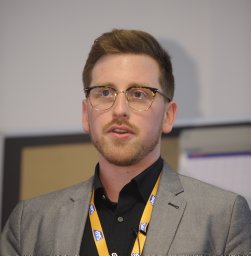 Daniel Bernau合作论文数SAP SE, Karlsruhe, Germany4
 Florian Kerschbaum合作论文数David R. Cheriton School of Computer Science, Faculty of Mathematics, University of Waterloo3
 Jonas Robl合作论文数2
 Gunther Eibl合作论文数Josef Ressel Center for User-Centric Smart Grid Privacy, Security and Control, Salzburg University of Applied Sciences;c;Josef Ressel Center for User-Centric Smart Grid Privacy, Security and Control, Salzburg University of Applied Sciences2
 Matthias Nießner合作论文数Department of Informatics, Technical University of Munich;Visual Computing Lab, Technical University of Munich;Synthesia Technologies;SpAItial AI2
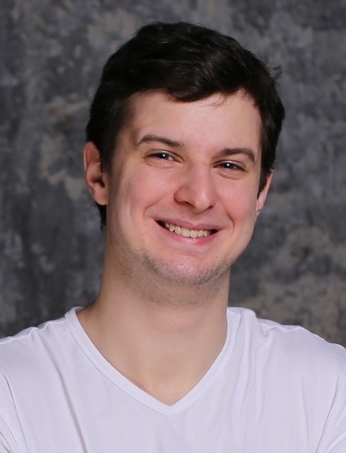 Artem Sevastopolsky合作论文数Visual Computing & AI Lab, Technical University of Munich1
 Simon Giebenhain合作论文数Department of Computer Science, University of Konstanz1
 Malte Prinzler合作论文数Max Planck ETH Center for Learning Systems1Hannah Keller合作论文数SAP SE, Karlsruhe, Germany1
 Shahrukh Athar合作论文数Dept. of Electr. Eng., Lahore Univ. of Manage. Sci.;c;Dept. of Electr. Eng., Lahore Univ. of Manage. Sci.1
 Titus Leistner合作论文数COPRESENCE;Visual Learning Lab, Heidelberg University1
 Hartmut Schmeck合作论文数Institute of Applied Informatics and Formal Description Methods, Karlsruhe Institute of Technology1
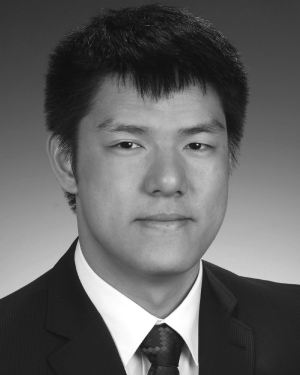 Kaibin Bao合作论文数1
 Carsten Rother合作论文数Computer Vision and Learning Lab, University of Heidelberg;Rabbitai1
 Justus Thies合作论文数Department of Computer Science, Technical University of Darmstadt1
 Luisa Verdoliva合作论文数Department of Electrical Engineering and Information Technology, University Federico II of Naples1




