Shadow boundaries can be confused with material boundaries as both exhibit sharp changes in luminance or contrast within a scene. However, shadows do not modify the intrinsic color or texture of surfaces. Therefore, on both sides of shadow edges traversing regions with the same material, the original color and texture should be the same if the shadow is removed properly. These shadow/shadow-free pairs are very useful but difficult-to-collect supervision signals. The crucial contribution of this paper is to learn how to identify those shadow edges that traverse material-consistent regions and how to use them as self-supervision for shadow removal refinement during test time. To achieve this, we fine-tune SAM, an image segmentation foundation model, to produce a shadow-invariant segmentation and then extract material-consistent shadow edges by comparing the SAM segmentation with the shadow mask. Utilizing these shadow edges, we introduce color- and texture-consistency losses to enhance the shadow removal process. We demonstrate the effectiveness of our method in improving shadow removal results on more challenging, in-the-wild images, outperforming the state-of-the-art shadow removal methods. Additionally, we propose a new metric and an annotated dataset for evaluating the performance of shadow removal methods without the need for paired shadow/shadow-free data. Our code and dataset are available at: https://github.com/cvlabstonybrook/ShadowRemovalRefine
Current advances in human head modeling allow to generate plausible-looking 3D head models via neural representations. Nevertheless, constructing complete high-fidelity head models with explicitly controlled animation remains an issue. Furthermore, completing the head geometry based on a partial observation, e.g. coming from a depth sensor, while preserving details is often problematic for the existing methods. We introduce a generative model for detailed 3D head meshes on top of an articulated 3DMM which allows explicit animation and high-detail preservation at the same time. Our method is trained in two stages. First, we register a parametric head model with vertex displacements to each mesh of the recently introduced NPHM dataset of accurate 3D head scans. The estimated displacements are baked into a hand-crafted UV layout. Second, we train a StyleGAN model in order to generalize over the UV maps of displacements. The decomposition of the parametric model and high-quality vertex displacements allows us to animate the model and modify it semantically. We demonstrate the results of unconditional generation and fitting to the full or partial observation. The project page is available at https://seva100.github.io/headcraft.
Creating photorealistic avatars for individuals traditionally involves extensive capture sessions with complex and expensive studio devices like the LightStage system. While recent strides in neural representations have enabled the generation of photorealistic and animatable 3D avatars from quick phone scans, they have baked-in capture-time lighting, lack facial details and have missing regions in areas such as the back of the ears. Thus, they lag in quality compared to studio-captured avatars. In this paper, we propose a method to bridge this gap by generating studio-like illuminated texture maps from short, monocular phone captures. We do this by parameterizing the phone texture maps using the W+ space of a StyleGAN2, enabling near-perfect reconstruction. Then, we finetune a StyleGAN2 by sampling in the W+ parameterized space using a very small set of studio-captured textures as an adversarial training signal. To further enhance the realism and accuracy of facial details, we super-resolve the output of the StyleGAN2 using a diffusion model conditioned on image gradients of the phone-captured texture map. Once trained, our method excels at producing studio-like facial texture maps from casual monocular smartphone videos. Demonstrating its capabilities, we showcase the generation of photorealistic, uniformly lit, complete avatars from monocular phone captures.
Recent advances in Neural Radiance Fields (NeRFs) have made it possible to reconstruct and reanimate dynamic portrait scenes with control over head-pose, facial expressions and viewing direction. However, training such models assumes photometric consistency over the deformed region e.g. the face must be evenly lit as it deforms with changing head-pose and facial expression. Such photometric consistency across frames of a video is hard to maintain, even in studio environments, thus making the created reanimatable neural portraits prone to artefacts during reanimation. In this work, we propose CoDyNeRF, a system that enables the creation of fully controllable 3D portraits in real-world capture conditions. CoDyNeRF learns to approximate illumination dependent effects via a dynamic appearance model in the canonical space that is conditioned on predicted surface normals and the facial expressions and head-pose deformations. The surface normals prediction is guided using 3DMM normals that act as a coarse prior for the normals of the human head, where direct prediction of normals is hard due to rigid and non-rigid deformations induced by head-pose and facial expression changes. Using only a smartphone-captured short video of a subject for training, we demonstrate the effectiveness of our method on free view synthesis of a portrait scene with explicit head pose and expression controls, and realistic lighting effects.
Over the past decades, numerous Image Quality Assessment (IQA) models have emerged, aiming to predict the perceptual quality of images. However, individual models are often biased toward certain types of image content or distortions, depending on the design principle and process. An intuitive idea is to harness the strengths and mitigate the weaknesses of each IQA model, by fusing the scores of multiple models into a stronger one. Here we make one of the first attempts to seek an optimal solution for the idea and propose a general framework for unsupervised IQA score fusion using deep Maximum a Posteriori (MAP) estimation. The proposed model conducts fine-grained uncertainty estimation at the score level to increase the accuracy and reduce the uncertainty in fused predictions. Comprehensive experiments demonstrate the superiority of the proposed model over individual IQA models and other fusion methods. It also exhibits an interesting capability of rejecting "bad" models in the fusion process.
Peer-based aggression following social rejection is a costly and prevalent problem for which existing treatments have had little success. This may be because aggression is a complex process influenced by current states of attention and arousal, which are difficult to measure on a moment to moment basis via self report. It is therefore crucial to identify nonverbal behavioral indices of attention and arousal that predict subsequent aggression. We used Support Vector Machines (SVMs) and eye gaze duration and pupillary response features, measured during positive and negative peer-based social interactions, to predict subsequent aggressive behavior towards those same peers. We found that eye gaze and pupillary reactivity not only predicted aggressive behavior, but performed better than models that included information about the participant's exposure to harsh parenting or trait aggression. Eye gaze and pupillary reactivity models also performed equally as well as those that included information about peer reputation (e.g. whether the peer was rejecting or accepting). This is the first study to decode nonverbal eye behavior during social interaction to predict social rejection-elicited aggression.
In practical media distribution systems, visual content usually undergoes multiple stages of quality degradation along the delivery chain, but the pristine source content is rarely available at most quality monitoring points along the chain to serve as a reference for quality assessment. As a result, full-reference (FR) and reduced-reference (RR) image quality assessment (IQA) methods are generally infeasible. Although no-reference (NR) methods are readily applicable, their performance is often not reliable. On the other hand, intermediate references of degraded quality are often available, e.g., at the input of video transcoders, but how to make the best use of them in proper ways has not been deeply investigated. Here we make one of the first attempts to establish a new paradigm named degraded-reference IQA (DR IQA). Specifically, by using a two-stage distortion pipeline we lay out the architectures of DR IQA and introduce a 6-bit code to denote the choices of configurations. We construct the first large-scale databases dedicated to DR IQA and have made them publicly available. We make novel observations on distortion behavior in multi-stage distortion pipelines by comprehensively analyzing five multiple distortion combinations. Based on these observations, we develop novel DR IQA models and make extensive comparisons with a series of baseline models derived from top-performing FR and NR models. The results suggest that DR IQA may offer significant performance improvement in multiple distortion environments, thereby establishing DR IQA as a valid IQA paradigm that is worth further exploration.
Banding or false contour is an annoying visual artifact whose impact negatively degrades the perceptual quality of visual content. Since users are increasingly expecting better visual quality from such content and banding leads to deteriorated quality-of-experience, the area of banding removal or debanding has taken paramount importance. Existing debanding approaches are mostly knowledge-driven, while data-driven debanding approaches remain surprisingly missing. In this work, we construct a large-scale dataset of 51,490 pairs of corresponding pristine and banded image patches, which enables us to make one of the first attempts at developing a deep learning based banding artifact removal method for images that we name deep debanding network (deepDeband). We also develop a bilateral weighting scheme that fuses patch-level debanding results to full-size images. Extensive performance evaluation shows that deepDeband is successful at greatly reducing banding artifacts in images, outperforming existing methods both quantitatively and visually. The proposed algorithm and dataset are made publicly available.1
Data augmentation is an intuitive step towards solving the problem of few-shot classification. However, ensuring both discriminability and diversity in the augmented samples is challenging. To address this, we propose a feature disentanglement framework that allows us to augment features with randomly sampled intra-class variations while preserving their class-discriminative features. Specifically, we disentangle a feature representation into two components: one represents the intra-class variance and the other encodes the class-discriminative information. We assume that the intra-class variance induced by variations in poses, backgrounds, or illumination conditions is shared across all classes and can be modelled via a common distribution. Then we sample features repeatedly from the learned intra-class variability distribution and add them to the class-discriminative features to get the augmented features. Such a data augmentation scheme ensures that the augmented features inherit crucial class-discriminative features while exhibiting large intra-class variance. Our method significantly outperforms the state-of-the-art methods on multiple challenging fine-grained few-shot image classification benchmarks. Code is available at: https://github.com/cvlab-stonybrook/vfd-iccv21
The enormous space and diversity of natural images is usually represented by a few small-scale human-rated image quality assessment (IQA) datasets. This casts great challenges to deep neural network (DNN) based blind IQA (BIQA), which requires large-scale training data that is representative of the natural image distribution. It is extremely difficult to create human-rated IQA datasets composed of millions of images due to constraints of subjective testing. While a number of efforts have focused on design innovations to enhance the performance of DNN based BIQA, attempts to address the scarcity of labeled IQA data remain surprisingly missing. To address this data challenge, we construct so far the largest IQA database, namely Waterloo Exploration-II, which contains 3,570 pristine reference and around 3.45 million singly and multiply distorted images. Since subjective testing for such a large dataset is nearly impossible, we develop a novel mechanism that synthetically assigns perceptual quality labels to the distorted images. We construct a DNN-based BIQA model called EONSS, train it on Waterloo Exploration-II, and test it on nine subject-rated IQA datasets, without any retraining or fine-tuning. The results show that with a straightforward DNN architecture, EONSS is able to outperform the very state-of-the-art in BIQA, both in terms of quality prediction performance and execution speed. This study strongly supports the view that the quantity and quality of meaningfully annotated training data, rather than a sophisticated network architecture or training strategy, is the dominating factor that determines the performance of DNN-based BIQA models. (Note: Since this is an ongoing project, the final versions of Waterloo Exploration-II database, quality annotations, and EONSS, will be made publicly available in the future when it culminates.)
Deep generative models have recently demonstrated impressive results in photo-realistic facial image synthesis and editing. Existing neural network-based approaches usually only rely on texture generation to edit expressions and largely neglect the motion information. However, facial expressions are inherently the result of muscle movement. In this work, we propose a novel end-to-end network that disentangles the task of facial editing into two steps: a "motion-editing" step and a "texture-editing" step. In the "motion-editing" step, we explicitly model facial movement through an image deformation, warping the image into the desired expression. In the "texture-editing" step, we generate the necessary textures, such as teeth and shading effects, for a photo-realistic result. Our physically-based task-disentanglement system design allows each step to learn a focused task, and thus need not generate texture to hallucinate motion. Our system is trained in a self-supervised manner, requiring no ground truth deformation annotation. Using Action Units [8] as the representation for facial expression, our method improves the state-of-the-art facial expression editing performance in both qualitative and quantitative evaluations.
Fine-grained few-shot recognition often suffers from the problem of training data scarcity for novel categories.The network tends to overfit and does not generalize well to unseen classes due to insufficient training data. Many methods have been proposed to synthesize additional data to support the training. In this paper, we focus one enlarging the intra-class variance of the unseen class to improve few-shot classification performance. We assume that the distribution of intra-class variance generalizes across the base class and the novel class. Thus, the intra-class variance of the base set can be transferred to the novel set for feature augmentation. Specifically, we first model the distribution of intra-class variance on the base set via variational inference. Then the learned distribution is transferred to the novel set to generate additional features, which are used together with the original ones to train a classifier. Experimental results show a significant boost over the state-of-the-art methods on the challenging fine-grained few-shot image classification benchmarks.
Image quality assessment (IQA) algorithms aim to predict perceived image quality by human observers. Over the last two decades, a large amount of work has been carried out in the field. New algorithms are being developed at a rapid rate in different areas of IQA, but are often tested and compared with limited existing models using out-of-date test data. There is a significant gap when it comes to large-scale performance evaluation studies that include a wide variety of test data and competing algorithms. In this work we aim to fill this gap by carrying out the largest performance evaluation study so far. We test the performance of 43 full-reference (FR), seven fused FR (22 versions), and 14 no-reference (NR) methods on nine subject-rated IQA datasets, of which five contain singly distorted images and four contain multiply distorted content. We use a variety of performance evaluation and statistical significance testing criteria. Our findings not only point to the top performing FR and NR IQA methods, but also highlight the performance gap between them. In addition, we have also conducted a comparative study on FR fusion methods, and an important discovery is that rank aggregation based FR fusion is able to outperform not only other FR fusion approaches but also the top performing FR methods. It may be used to annotate IQA datasets as a possible alternative to subjective ratings, especially in situations where it is not possible to obtain human opinions, such as in the case of large-scale datasets composed of thousands or even millions of images.
High Dynamic Range (HDR) Wide Color Gamut (WCG) Ultra High Definition (4K/UHD) content has become increasingly popular recently. Due to the increased data rate, novel video compression methods have been developed to maintain the quality of the videos being delivered to consumers under bandwidth constraints. This has led to new challenges for the development of objective Video Quality Assessment (VQA) models, which are traditionally designed without sufficient calibration and validation based on subjective quality assessment of UHD-HDR-WCG videos. The large performance variations between different consumer HDR TVs, and between consumer HDR TVs and professional HDR reference displays used for content production, further complicates the task of acquiring reliable subjective data that faithfully reflects the impact of compression on UHD-HDR-WCG videos. In this work, we construct a first-of-its-kind video database composed of PQ-encoded UHD-HDR-WCG content, which is subsequently compressed by H.264 and HEVC encoders. We carry out a subjective study on a professional 4K-HDR reference display in a controlled lab environment. We also benchmark representative Full Reference (FR) and No-Reference (NR) objective VQA models against the subjective data to evaluate their performance on compressed UHD-HDR-WCG video content. The database will be made available to the public, subject to content copyright constraints.
In real-world visual content acquisition and distribution systems, a vast majority of visual content undergoes multiple distortions between the source and the end user. However, traditional image quality assessment (IQA) algorithms are usually validated and at times trained on image databases with a single distortion stage. Existing IQA methods for multiply distorted images remain limited in their scope and performance. In this work we design a first-of-its-kind blind IQA model for multiply distorted visual content based on a deep end-to-end convolutional neural network. The network is trained on a newly developed dataset which is composed of millions of multiply distorted images annotated with synthetic quality scores. Our tests on three publicly available subject-rated multiply distorted image databases show that the proposed model outperforms state-of-the-art blind IQA methods in terms of both accuracy and speed.
Monitoring and maintenance of photovoltaic (PV) modules are critical for a reliable and efficient operation. Hotspots in PV modules due to various defects and operational conditions may challenge the reliability, and in turn, the entire PV system. From the monitoring standpoint, hotspots should be detected and categorized for subsequent maintenance. In this paper, hotspots are detected, evaluated, and categorized uniquely by using a machine learning technique on thermal images of PV modules. To achieve so, the texture and histogram of gradient (HOG) features of thermal images of PV modules are used for classification. The categorized hotspots are detected by training the machine learning algorithm, i.e., a Naive Bayes (nBayes) classifier. Experimental results are performed on a 42.24-kWp PV system, which demonstrates that a mean recognition rate of around 94.1% is achieved for the set of 375 samples.
In practical media distribution systems, visual content often undergoes multiple stages of quality degradations along the delivery chain between the source and destination. By contrast, current image quality assessment (IQA) models are typically validated on image databases with a single distortion stage. In this work, we construct two large-scale image databases that are composed of more than 2 million images undergoing multiple stages of distortions and examine how state-of-the-art IQA algorithms behave over distortion stages. Our results suggest that the performance of existing IQA models degrades rapidly with distortion stages, especially when the distortion types of different stages vary. We also find that full-reference and no-reference frameworks, though both readily applicable, have major drawbacks at predicting the quality of images at middle distortion stages. However, when the quality level of the previous stage is accessible, significantly improved quality prediction performance may be achieved. This study points out a new avenue of degraded-reference IQA research that is both practically desirable and technically challenging.
Advances in the field of medical imaging have led to an immense increase in the volume of images being acquired. A fast growing application is to enable physicians to access image data remotely from any viewing device. This casts new challenges for data rate compression. Meanwhile medical images typically have High Dynamic Range (HDR), which needs to be transformed to Low Dynamic Range (LDR) through a so-called “windowing” operation in order for them to be viewed on standard displays to best visualize specific types of content such as tissues or bone structures. This leads to a basic question: Should data compression be performed before windowing or vice versa? Answering this question needs domain knowledge and also requires comparing HDR and LDR images in terms of objective measures, which has only recently become possible. In this paper, we compare the two alternative schemes by using a recently proposed structural fidelity measure. Our study suggests that data compression followed by windowing delivers better performance than the other alternative.
This brief introduces a low-cost hardware design for approximate squaring functions which preserve maximum information content of the signals in template-matching applications. Analysis of signal statistics for two example applications, i.e., motion estimation and disparity estimation, is presented. This information is then specifically incorporated in the hardware design process to develop approximate squarers which outperform existing designs in hardware resource savings and performance while processing real-world data. Specifically, the proposed architectures make distinction between low-and high-entropy portions of the input data to intelligently trade off bit precision with hardware complexity. Mathematical and experimental results show mean-relative-error figures to be as low as 1.2% and the performance to be as good as conventional full-precision processing scenarios. Implementation results for current-generation six-input look up table (LUT) and four-input LUT FPGAs have been discussed in relation to the proposed design flow.
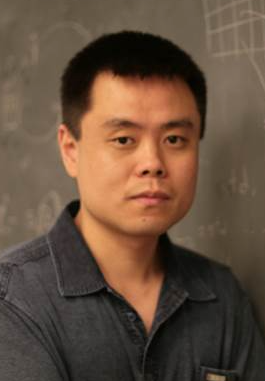 Zhou Wang合作论文数Department of Electrical and Computer Engineering, University of Waterloo;SSIMWAVE Inc.9
 Dimitris Samaras合作论文数Computer Vision Lab, Department of Computer Science, Stony Brook University5
 Zhongling Wang合作论文数Dept Elect & Comp Engn, Univ Waterloo4Raymond Zhou合作论文数2
 Muhammad Ali Siddiqi合作论文数Erasmus MC, Dept Neurosci, NL-3015 GD Rotterdam, Netherlands2
 Zhixin Shu合作论文数Adobe Research2
 Hieu Le合作论文数Computer Vision Lab, Faculté Informatique et Communications, École polytechnique fédérale de Lausanne2
 Mingzhen Huang (黄铭振)合作论文数State University of New York at Buffalo2
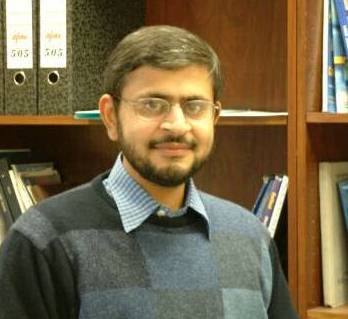 Shahid Masud合作论文数Department of Computer Science,
Lahore University of Management Sciences,2
Shahid Masud合作论文数Department of Computer Science,
Lahore University of Management Sciences,2 Jingyi Xu合作论文数Stony Brook University2Wenbo Yang合作论文数1Zhengyu Yang合作论文数1Stanislav Pidhorskyi合作论文数1
 Artem Sevastopolsky合作论文数Visual Computing & AI Lab, Technical University of Munich1sigma modulator合作论文数1
 Muhammad Bilal合作论文数1
 Simon Giebenhain合作论文数Department of Computer Science, University of Konstanz1
 Wajahat Akhtar合作论文数Department of Electrical Engineering, Lahore University of Management Sciences1Thilan Costa合作论文数1
 Sagnik Das合作论文数Stony Brook University1
 Kamran Ali Khan Niazi合作论文数AAU Energy, Aalborg Univ1
 Fujun Luan合作论文数Apple1
 Johanna M Jarcho合作论文数Sect Dev & Affect Neurosci, NIMH1
 Abdul Rehman合作论文数1
 Hassan Abbas Khan合作论文数1
 Kai Zeng合作论文数Wireless Innovation and Cybersecurity Laboratory, Department of Electrical and Computer Engineering, Volgenau School of Engineering, George Mason University1
 Shunsuke Saito (齋藤隼介)合作论文数Meta;Facebook Reality Labs1
 Zexiang Xu (徐泽祥)合作论文数Hillbot1
 Sai Bi合作论文数Adobe Research1
 Quarmley Megan合作论文数Department of Psychiatry, University of Pennsylvania Perelman School of Medicine1
 Yongheng Yang (杨永恒)合作论文数College of Electrical Engineering, Zhejiang University1
 Chen Cao (曹晨)合作论文数Facebook Research Labs1Zhibo Yang合作论文数1
 Philip William Grassal合作论文数Visual Learning Lab, Heidelberg University1
 Kalyan Sunkavalli合作论文数Adobe Research1
 Hojatollah Yeganeh合作论文数Faculty of Engineering, University of Waterloo1
 Matthias Nießner合作论文数Department of Informatics, Technical University of Munich;Visual Computing Lab, Technical University of Munich;Synthesia Technologies;SpAItial AI1
 Luisa Verdoliva合作论文数Department of Electrical Engineering and Information Technology, University Federico II of Naples1S. Masud合作论文数Department of Computer Science,
Lahore University of Management Sciences,1
Luisa Verdoliva合作论文数Department of Electrical Engineering and Information Technology, University Federico II of Naples1S. Masud合作论文数Department of Computer Science,
Lahore University of Management Sciences,1




