In this study, we investigate the use of simultaneous transmitting and reflecting reconfigurable intelligent surfaces (STAR-RISs) mounted on energy-efficient uncrewed aerial vehicles (UAVs) to support satellite Internet of Things (IoT) communications served by low-Earth orbit (LEO) satellites. First, we propose a STAR-RIS-equipped UAV framework termed integrated STAR-RIS and UAV (ISRU). Then, we aim to optimize energy efficiency by jointly adjusting the UAV's flight path, STAR-RIS phase-shifts, and power allocation among IoT devices, all while maintaining equitable user fairness level. However, solving this problem presents considerable challenges due to the nonconvexity and NP-hardness properties of the objective function and constraints. To address, our work introduces a Dinkelbach-based alternating optimization (AO) procedure termed integrated trajectory, phase-shift, and power allocation (ITPP). Our simulation results show that the integration of ISRU and ITPP can achieve 67% higher sum-rates than non-ISRU schemes and save up to 40% more energy than unoptimized trajectory schemes.
Cell-free massive multiple-input multiple-output (CFmMIMO) coordinates a great number of distributed access points (APs) with central processing units (CPUs), effectively reducing interference and ensuring uniform service quality for user equipment (UEs). However, its cooperative nature can result in intense fronthaul signaling between CPUs in large-scale networks. To reduce the inter-CPU fronthaul signaling for systems with limited fronthaul capacity, we propose a low-complexity online UE-AP association approach for scalable CFmMIMO that combines network- and user-centric clustering methodologies, relies on local channel information only, and can handle dynamic UE arrivals. Numerical results demonstrate that compared to the state-of-the-art method on fronthaul signaling minimization, our approach can save up to 94% of the fronthaul signaling load and 83% of the CPU processing power at the cost of only up to 8.6% spectral efficiency loss, or no loss in some cases.
This study tackles the online user allocation problem in mobile edge computing (MEC) systems powered by non-orthogonal multiple access. App vendors need to determine a proper wireless channel in a base station/edge server and sufficient transmit power for every user. We consider a stochastic MEC system where users arrive and depart over time. When an edge server runs out of computing resources, some users will have to wait until the resources become available again, which incurs an allocation delay cost. This cost is often not investigated in many studies, which also do not consider a multi-cell, multi-channel system as we do in this work, due to its complexity. We aim to minimize the allocation delay and transmit power costs, increasing the system's energy efficiency. To achieve this objective while guaranteeing users’ data rate requirements over time, we adopt the Lyapunov framework to convert this long-term optimization problem into a series of subproblems to be solved in every time slot. To solve the aforementioned subproblems efficiently, we present a distributed game theory-based approach. The proposed algorithm is theoretically evaluated and experimentally demonstrated to outperform several baseline and state-of-the-art methods, highlighting the significance of systematic consideration for both computation and communication aspects of this problem.
Edge computing is a promising solution to enabling highly accessible resources and latency-sensitive services for nearby users. In public safety, it can provide critical support for urban crowd/hazard management services, such as real-time path planning, hazard warning, etc. In a crowd/hazard scenario, crowds can be allocated to nearby edge servers for obtaining real-time support, e.g., evacuation instructions for those who want to evacuate and crowd flow updates for those who want to rescue, etc. In such scenarios, the behaviors of different roles (like rescuers and evacuees) and the positive/negative interactions among them must be considered in user allocation for reducing injuries and fatalities. In this paper, these issues are defined as a novel Role-Based Criticality (RBC) model to describe the fatal risks of different roles in the crowd/hazard scenarios. Based on the model, the Role-Based User Allocation (RUA) problem is formulated. To tackle this problem, we devise an optimal solution named RUA-ILP based on Integer Linear Programming. To accommodate large-scale scenarios, we propose two representative approximate approach named RUA-A and RUA-GA to ensure efficient and effectiveness user allocation respectively. They can maximize the overall role-based criticality which can reduce injuries and fatalities in crowd/hazard scenarios by theoretical proofing and extensive experiments conducted on a real-world dataset.
Edge Computing, extending cloud computing, has emerged as a prospective computing paradigm. It allows a SaaS (Software-as-a-Service) vendor to allocate its users to nearby edge servers to minimize network latency and energy consumption on their devices. From the SaaS vendor’s perspective, a cost-effective SaaS user allocation (SUA) aims to allocate maximum SaaS users on minimum edge servers. However, the allocation of excessive SaaS users to an edge server may result in severe interference and consequently impact SaaS users’ data rates. In this article, we formally model this problem and prove that finding the optimal solution to this problem is NP-hard. Thus, we propose ISUAGame, a game-theoretic approach that formulates the interference-aware SUA (ISUA) problem as a potential game. We analyze the game and show that it admits a Nash equilibrium. Then, we design a novel decentralized algorithm for finding a Nash equilibrium in the game as a solution to the ISUA problem. The performance of this algorithm is theoretically analyzed and experimentally evaluated. The results show that the ISUA problem can be solved effectively and efficiently.
Mobile edge computing (MEC) is a new distributed computing paradigm where edge servers are deployed at, or near cellular base stations in close proximity to end-users. This offers computing resources at the edge of the network, facilitating a highly accessible platform for real-time, latency-sensitive services. A typical MEC environment is highly stochastic with random user arrivals and departures over time. Here, we address the user allocation problem from a service provider's perspective, who needs to allocate its users to the cloud or edge servers in a specific area. A user, who has a multi-dimensional resource requirement, can be allocated to either the remote cloud, which incurs a high latency, or an edge server, which results in a low latency but might require the user to wait in a queue. This article aims to achieve a controllable trade-off between performance (throughput) and several associated costs such as queuing delay and latency costs. We model this problem as a stochastic optimization problem, propose SUAC (Stochastic User AlloCation) – an online Lyapunov optimization-based algorithm, and prove its performance bounds. The experimental results demonstrate that SUAC outperforms existing approaches, effectively allocating users with a desired trade-off while keeping the system strongly stable.
Mobile edge computing (MEC) allows edge servers to be placed at cellular base stations. App vendors like Uber and YouTube can rent computing resources and deploy latency-sensitive applications on edge servers for their users to access. Non-orthogonal multiple access (NOMA) is an emerging technique that facilitates the massive connectivity of 5G networks, further enhancing the capability of MEC. The edge user allocation (EUA) problem faces new challenges in 5G NOMA-based MEC systems. In this study, we investigate the EUA problem in a multi-cell multi-channel downlink power-domain NOMA-based MEC system. The main objective is to help mobile app vendors maximize their benefit by allocating maximum users to edge servers in a specific area at the lowest computing resource and transmit power costs. To this end, we introduce a decentralized game-theoretic approach to effectively select a channel and edge server for each user while fulfilling their resource and data rate requirements. We theoretically and experimentally evaluate our solution, which significantly outperforms various state-of-the-art and baseline approaches.
Edge computing is a new distributed computing paradigm extending the cloud computing paradigm, offering much lower end-to-end latency, as real-time, latency-sensitive applications can now be deployed on edge servers that are much closer to end-users than distant cloud servers. In edge computing, edge user allocation (EUA) is a critical problem for any app vendors, who need to determine which edge servers will serve which users. This is to satisfy application-specific optimization objectives, e.g., maximizing users’ overall quality of experience, minimizing system costs, and so on. In this article, we focus on the cost-effectiveness of user allocation solutions with two optimization objectives. The primary one is to maximize the number of users allocated to edge servers. The secondary one is to minimize the number of required edge servers, which subsequently reduces the operating costs for app vendors. We first model this problem as a bin packing problem and introduce an approach for finding optimal solutions. However, finding optimal solutions to the $\mathcal {NP}$ -hard EUA problem in large-scale scenarios is intractable. Thus, we propose a heuristic to efficiently find sub-optimal solutions to large-scale EUA problems. Extensive experiments conducted on real-world data demonstrate that our heuristic can solve the EUA problem effectively and efficiently, outperforming the state-of-the-art and baseline approaches.
As many applications and services are moving towards a more human-centered design, app vendors are taking the quality of experience (QoE) increasingly seriously. End-to-end latency is a key factor that determines the QoE experienced by users, especially for latency-sensitive applications such as online gaming, health care, critical warning systems and so on. Recently, edge computing has emerged as a promising solution to the high latency problem. In an edge computing environment, edge servers are deployed at cellular base stations, offering processing power and low network latency to users within their geographic proximity. In this paper, we tackle the user allocation problem in edge computing from an app vendor's perspective, where the vendor needs to decide which edge servers to serve which users in a specific area. Also, the vendor must consider the various levels of quality of service (QoS) for its users. Each QoS level results in a different QoE level; thus, the app vendor needs to decide the QoS level for each user so that the overall user experience is maximized. To tackle the NP-hardness of this problem, we formulate it as a potential game then propose QoEGame, an effective and efficient game-theoretic approach that admits a Nash equilibrium as a solution to the user allocation problem. Being a distributed algorithm, QoEGame is able to fully utilize the distributed nature of edge computing. Finally, we theoretically and empirically evaluate the performance of QoEGame, which is illustrated to be significantly better than the state of the art and other baseline approaches.
Edge computing has emerged as a new computing paradigm that allows computation and storage resources in the cloud to be distributed to edge servers. Those edge servers are deployed at base stations to provide nearby users with high-quality services. Thus, data caching is extremely important in ensuring low latency for service delivery in the edge computing environment. To minimize the data caching cost and maximize the reduction in service latency, we formulate this Edge Data Caching (EDC) problem as a constrained optimization problem in this paper. We prove the NP-completeness of this EDC problem and provide an optimal solution named IPEDC to solve this problem based on Integer Programming. Then, we propose an approximation algorithm named AEDC to find approximate solutions with a limited bound. We conduct intensive experiments on a real-world data set and a synthesized data set to evaluate our approaches. Our results demonstrate that IPEDC and AEDC significantly outperform the four representative baseline approaches.
As online services and applications are moving towards a more human-centered design, many app vendors are taking the quality of experience (QoE) increasingly seriously. End-to-end latency is a key factor that determines the QoE experienced by users, especially for latency-sensitive applications such as online gaming, autonomous vehicles, critical warning systems and so on. Edge computing has then been introduced as an effort to reduce network latency. In a mobile edge computing system, edge servers are usually deployed at, or near cellular base stations, offering processing power and low network latency to users within their proximity. In this work, we tackle the edge user allocation (EUA) problem from the perspective of an app vendor, who needs to decide which edge servers to serve which users in a specific area. Also, the vendor must consider the various levels of quality of service (QoS) for its users. Each QoS level leads to a different QoE level. Thus, the app vendor also needs to decide the QoS level for each user so that the overall user experience is maximized. We first optimally solve this problem using Integer Linear Programming technique. Being an NP-hard problem, it is intractable to solve it optimally in large-scale scenarios. Thus, we propose a heuristic approach that is able to effectively and efficiently find sub-optimal solutions to the QoE-aware EUA problem. We conduct a series of experiments on a real-world dataset to evaluate the performance of our approach against several state-of-the-art and baseline approaches.
In edge computing, edge servers are placed in close proximity to end-users. App vendors can deploy their services on edge servers to reduce network latency experienced by their app users. The edge user allocation (EUA) problem challenges service providers with the objective to maximize the number of allocated app users with hired computing resources on edge servers while ensuring their fixed quality of service (QoS), e.g., the amount of computing resources allocated to an app user. In this paper, we take a step forward to consider dynamic QoS levels for app users, which generalizes but further complicates the EUA problem, turning it into a dynamic QoS EUA problem. This enables flexible levels of quality of experience (QoE) for app users. We propose an optimal approach for finding a solution that maximizes app users' overall QoE. We also propose a heuristic approach for quickly finding sub-optimal solutions to large-scale instances of the dynamic QoS EUA problem. Experiments are conducted on a real-world dataset to demonstrate the effectiveness and efficiency of our approaches against a baseline approach and the state of the art.
In an edge computing environment, edge servers are deployed at base stations to offer highly accessible computing capacities and services to nearby users. Data caching is thus extremely important in edge computing environments to reduce service latency. The optimal data caching strategy in the edge computing environment will minimize the data caching cost while maximizing the reduction in service latency. In this paper, we formulate this edge data caching (EDC) problem as a constrained optimization problem (COP), prove that the EDC problem is 𝒩𝒫 -complete, propose an optimal approach named IPEDC to solve the EDC problem using the Integer Programming technique, and provide a heuristic algorithm named LGEDC to find near-optimal solutions. We have evaluated our approaches on a real-world data set and a synthesized data set. The results demonstrate that IPEDC and LGEDC significantly outperform two representative baseline approaches.
In mobile edge computing, edge servers are geographically distributed around base stations placed near end-users to provide highly accessible and efficient computing capacities and services. In the mobile edge computing environment, a service provider can deploy its service on hired edge servers to reduce end-to-end service delays experienced by its end-users allocated to those edge servers. An optimal deployment must maximize the number of allocated end-users and minimize the number of hired edge servers while ensuring the required quality of service for end-users. In this paper, we model the edge user allocation (EUA) problem as a bin packing problem, and introduce a novel, optimal approach to solving the EUA problem based on the Lexicographic Goal Programming technique. We have conducted three series of experiments to evaluate the proposed approach against two representative baseline approaches. Experimental results show that our approach significantly outperforms the other two approaches.
 Qiang He合作论文数School of Science, Computing and Emerging Technologies, Swinburne University of Technology12
 Feifei Chen合作论文数School of Information Technology, Faculty of Science Engineering & Built Environment, Deakin University11
 Mohamed Abdelrazek合作论文数Deakin Univ, Sch Informat Technol, Geelong, Vic, Australia10
 John Grundy合作论文数Human-Centric Software Engineering, Monash University;Faculty of Information Technology, Monash University10
 Yun Yang合作论文数Department of Computer Science and Software Engineering, Swinburne University of Technology;Department of Computing Technologies, School of Science, Computing and Engineering Technologies, Swinburne University of Technology9
 Guangming Cui合作论文数Swinburne University of Technology7
 John Hosking合作论文数Faculty of Science, University of Auckland7
 Xiaoyu (Shaw) Xia合作论文数School of Computing Technologies, RMIT University6
 Chang Liu合作论文数Department of Computer Science and Information Technology, La Trobe University2
 Wei Xiang合作论文数School of Computing, Engineering & Mathematical Sciences, La Trobe University;Cisco-La Trobe Centre for AI and Internet of Things, La Trobe University2
 Hai Jin (金海)合作论文数School of Computer Science & Technology, Huazhong University of Science and Technology;Zhengzhou University2
 Peng Cheng合作论文数2
 William D. Lukito合作论文数1
 Ensheng Liu合作论文数1
 Kan Yu合作论文数1
 Guoqiang Mao (毛国强)合作论文数School of Transportation, Southeast University1
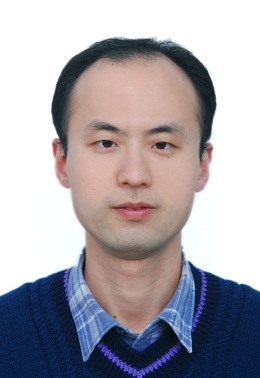 Gaofeng Zhang (张高峰)合作论文数School of Software, Hefei University of Technology1
 Liping Zheng (郑利平)合作论文数School of Computer Science and Information Engineering, Hefei University of Technology1
 Tao Gu合作论文数Department of Computing, School of Computing, Faculty of Science and Engineering, Macquarie University1
 Khoa T. Phan合作论文数California Institute of Technology, University of Alberta1
 Xiaoyan Zhu (朱晓妍)合作论文数Xidian University1
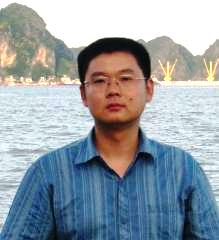 Benzhu Xu (徐本柱)合作论文数School of Software, Hefei University of Technology;School of Computer Science and Information Engineering, Hefei University of Technology1




