BACKGROUND Multilocular thymic cyst (MTC) is a rare mediastinal lesion which is considered to occur in the process of acquired inflammation. It is usually characterized by well-defined cystic density and is filled with transparent liquid. CASE SUMMARY We report on a 39-year-old male with a cystic-solid mass in the anterior mediastinum. Computer tomography (CT) imaging showed that the mass was irregular with unclear boundaries. After injection of contrast agent, there was a slight enhancement of stripes and nodules. According to CT findings, it was diagnosed as thymic cancer. CONCLUSION After surgery, MTC accompanied by bleeding and infection was confirmed by pathological examination. The main lesson of this case was that malignant thymic tumor and MTC of the anterior mediastinum sometimes exhibit similar CT findings. Caution is necessary in clinical work to avoid misdiagnosis.
Very-low field magnetic resonance imaging (VLF-MRI, B0 < 0.1T) has an essential application in medical imaging diagnosis because of its light weight and low cost. For single-channel RF coil VLF-MRI system, a planar spiral LC-resonator placed on the surface of samples was designed to improve the local SNR. First, an equivalent circuit model was established to evaluate the boosting effects on radiofrequency (RF) mag-netic field and SNR. Second, the relationship between the resonant capacitance and the transmission coefficient was deduced according to the circuit model, and the appropriate resonant capacitance was obtained. Then, the influence of the diameter and the number of turns of the LC-resonator on the SNR is considered, and the structure of the LC-resonator was optimized to maximize the SNR. Finally, a phan-tom MRI experiment was carried out with our home-built 54.6 mT MRI system to compare the SNR of the experiment with the calculation, the SNR enhancement trend of the two was consistent. Additional experiments were conducted using orange and chicken leg to demonstrate the SNR enhancement abilities of the LC-resonator. The enhancement of SNR reached up to 1.8-fold and 2.2-fold depending on the dis-tance between the sample and LC-resonator. For comparison, we conducted imaging experiments on sur -face receiving coil with the same parameters, and the results show that the SNR of the LC resonator is comparable to that of the surface coil. The reported LC-resonator provide a low-cost local enhancement method for VLF-MRI. (c) 2022 Elsevier Inc.
To develop and validate an effective model for distinguishing COVID‐19 from bacterial pneumonia. In the training group and internal validation group, all patients were randomly divided into a training group (n = 245) and a validation group (n = 105). The whole lung lesion on chest computed tomography (CT) was drawn as the region of interest (ROI) for each patient. Both feature selection and model construction were first performed in the training set and then further tested in the validation set with the same thresholds. Additional tests were conducted on an external multicentre cohort with 105 subjects. The diagnostic model of LightGBM showed the best performance, achieving a sensitivity of 0.941, specificity of 0.981, accuracy of 0.962 on the validation dataset. In this study, we established a differential model to distinguish between COVID‐19 and bacterial pneumonia based on chest CT radiomics and clinical indexes.
 Qingning Yang合作论文数2
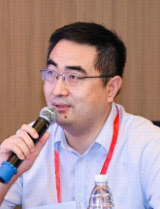 Chuanming Li (李传明)合作论文数School of Medicine, Chongqing University;Chongqing University Central Hospital2
 Feng Shi (石峰)合作论文数School of Biomedical Engineering, ShanghaiTech University;Department of Research and Development, Shanghai United Imaging Intelligence Co1Boying Zhao合作论文数1Liping Lin合作论文数1
 Xiaohan Kong合作论文数1Shike Wang合作论文数1Xinghua Liu合作论文数1Yana Zhang合作论文数1Yichu He合作论文数Shanghai United Imaging Intelligence Co Ltd, Dept Res & Dev, Shanghai, Peoples R China1
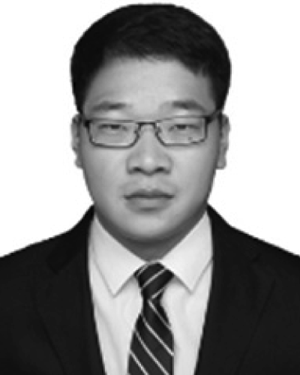 Yucheng He合作论文数1Junbang Feng合作论文数1
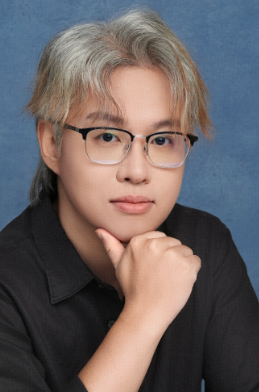 Yi Guo (郭逸)合作论文数School of Automation and Intelligent Sensing, Shanghai Jiao Tong University1
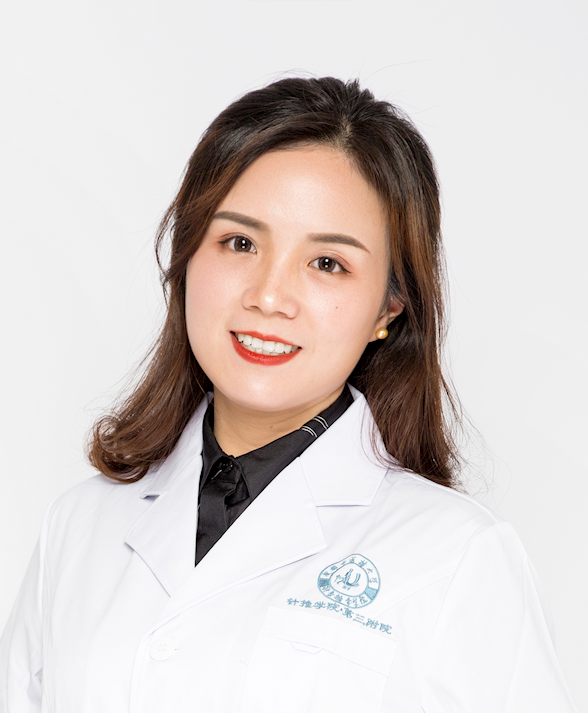 Jiao Chen (陈姣)合作论文数成都中医药大学针灸推拿学院.第三附属医院1
 Zheng Xu (徐征)合作论文数School of Electrical Engineering, Chongqing University1
 Lingwen Kong (孔令文)合作论文数Chongqing University Central Hospital1Jiamin Wu (吴嘉敏)合作论文数1Ying Wei (魏颖)合作论文数College of Information Science and Engineering, Northeastern University1
 Xiaofei Hu (胡晓飞)合作论文数1
 Jun Liu (刘军)合作论文数中南大学湘雅第二医院1




