Comprehensive Summary Chiral amines are essential structural motifs in pharmaceuticals, fine chemicals, and bioactive natural products. Asymmetric transfer hydrogenation (ATH) of imines represents one of the most straightforward approaches to chiral amine synthesis, yet aqueous ATH of non‐activated acyclic imines remains a longstanding challenge due to the inherent hydrolytic lability of these substrates. Herein, we successfully achieve the aqueous asymmetric transfer hydrogenation of non‐activated acyclic imines via a micellar catalysis strategy, employing an N,O‐chelated half‐sandwich iridium(III) complex as the chiral catalyst. The anionic surfactant sodium dodecyl sulfate (SDS) self‐assembles into micelles in aqueous media, whose hydrophobic core encapsulates both the hydrolytically labile imine substrates and lipophilic metal catalyst. This confined microenvironment effectively isolates acyclic imines from the bulk aqueous phase to suppress the hydrolysis side reaction, while enriching reactants to improve mass transfer efficiency, and also exerts a positive regulatory effect on the stereochemical control of the transformation. After systematic optimization, this protocol has broad substrate scope, affording over 40 chiral amines in good to excellent yields with up to 98% enantiomeric excess (ee). With micellar catalysis suppressing substrate hydrolysis in water, this work provides an efficient green route to chiral amines and expands the scope of aqueous asymmetric transfer hydrogenation.
1,8-Diazabicyclo[5.4.0]undec-7-ene (DBU) catalyzed Michael addition reactions between alpha,beta-unsaturated esters and benzophenone-imines of glycine esters have been realized in THF at room temperature by using LiBr as an additive, effectively enabling the glutamation of phenols, thiophenols, secondary amines and imides. 3-Substituted glutamic acid esters were obtained in excellent yields and diastereoselectivities (up to quantitative yield and >20 : 1 dr). These glutamic acid esters were readily converted into their corresponding pyroglutamic acid esters in high yields through acidic hydrolysis followed by lactamization.
DBU-catalyzed Michael reactions between tert-butyl 2-((diphenyl-methylene) amino)acetate and simple beta-substituted alpha, beta-unsaturated esters have been achieved in high yields (up to 95% yield) and diastereoselectivties (up to 99:1 dr) in the presence of 1.0 eq. of LiBr in acetonitrile under room temperature. The Michael adduct can be easily converted into trans-3-substituted pyroglutamic acid ester through in-situ acidic hydrolysis following lactamation. [GRAPHICS] .
A series of chiral bifunctional organocatalysts were prepared and used for enantioselective synthesis of 3-substituted isoindolinones from 2-formylarylnitriles and malonates through aldol-cyclization rearrangement tandem reaction in excellent yields and enantioselectivites (up to 87% yield and 95% ee) without recrystallization. In this investigation, we found that chiral tertiary-amine catalysts with a urea group can afford 3-substituted isoindolinones both in higher yields (87% vs. 77%) and enantioselectivities (95% ee vs. 46% ee) than chiral bifunctional phase-transfer catalysts.
A highly enantioselective Michael addition between benzophenone-imine of glycine esters and beta-substituted alpha,beta-unsaturated pyrazolamides has been realized by using 10 mol% of a chiral cyclopropenimine (Lambert catalyst, CSB-1) as an organosuperbase catalyst under very mild conditions to afford Michael adducts in up to 95% yield and 99% ee. The pyroglutamic acid esters with two adjacent stereocenters are obtained through subsequent lactamization in quantitative yields and excellent enantioselectivities. A highly chiral cyclopropenimine-catalyzed enantioselective Michael addition between benzophenone-imine of glycine esters and beta-substituted alpha,beta-unsaturated pyrazolamides has been realized to afford Michael adducts in up to 95% yield and 99% ee.
实验室安全是化学教学和研究的基础,中国高校化学相关学科的飞速发展对化学实验室安全管理水平的要求不断提升.汲取海外知名院校化学实验室安全管理先进经验对中国高校化学实验室安全水平的提升具有重要意义,其中威胁健康物质控制(control of substances hazardous to health,COSHH)规程是英国安全管理的重要实践和关键组成,在英国高校实验室安全管理中扮演着重要角色,对英国高校化学实验室安全管理水平至今维持在国际较高水准具有重要意义,同时也对中国高校化学实验室人员安全意识和安全管理水平的提升带来了重要参考和启示.
Myeloid cell leukemia-1 (Mcl-1) is a crucial member of Bcl-2 family protein and is recognized as a promising therapeutic target for cancer treatment. Here, based on the lead compound we reported earlier, a focused library of analogues was designed, synthesized and evaluated for the inhibitory activity against Mcl-1. 2-oxy-3-phenylacrylic acid derivative III-2, turned out to be the most potent compound with good binding affinity for Mcl-1 and anti-proliferative activities. In addition, the effective inhibition of cell migration, the improvement of apoptosis and the decreased expression of Mcl-1 by compound III-2, as well as the molecule docking elucidated its mechanism of action. Taken together, 2-oxy-3-phenylacrylic acid derivatives may represent a new class of Mcl-1 inhibitors and deserve further study.
A highly efficient asymmetric Michael addition of bulky glycine imine to α,β-unsaturated isoxazoles has been achieved by using 5 mol% of chiral cyclopropenimine as a chiral organo-superbase catalyst under mild conditions. Michael adducts were obtained in excellent yields (up to 97%) and stereoselectivities (up to>99 : 1 dr and 98% ee). A significant solvent effect was found in these chiral organosuperbase catalyzed asymmetric Michael reactions. Gram-scale preparation of Michael adducts and their transformations are realized to provide corresponding products without loss of stereoselectivities. The configurations of Michael adduct was determined by single-crystal X-ray diffraction analysis.
Methicillin-resistant Staphylococcus aureus (MRSA)-caused infection is difficult to treat because of its resistance to commonly used antibiotic, and poses a significant threat to public health. To develop new anti-bacterial agents to combat MRSA-induced infections, we synthesized novel squaric amide derivatives and evaluated their anti-bacterial activity by determining the minimum inhibitory concentration (MIC). Additionally, inhibitory activity of squaric amide 2 (SA2) was measured using the growth curve assay, time-kill assay, and an MRSA-induced skin infection animal model. A scanning electron microscope and transmission electron microscope were utilized to observe the effect of SA2 on the morphologies of MRSA. Transcriptome analysis and real-time PCR were used to test the possible anti-bacterial mechanism of SA2. The results showed that SA2 exerted bactericidal activity against a number of MRSA strains with an MIC at 4–8 µg/mL. It also inhibited the bacterial growth curve of MRSA strains in a dose-dependent manner, and reduced the colony formation unit in 4× MIC within 4–8 h. The infective lesion size and the bacterial number in the MRSA-induced infection tissue of mice were reduced significantly within 7 days after SA2 treatment. Moreover, SA2 disrupted the bacterial membrane and alanine dehydrogenase-dependent NAD+/NADH homeostasis. Our data indicates that SA2 is a possible lead compound for the development of new anti-bacterial agents against MRSA infection.
DBU-catalyzed Michael additions of bulky glycine imines to α,β-unsaturated isoxazoles and pyrazolamides have been realized in THF with 1.0 eq. LiBr as an additive at room temperature to provide Michael adducts in excellent yields (up to 97%) and diastereoselectivities (> 20:1).Image 1
有机化学是药学类专业重要的专业基础课,与药物化学、药物分析、药理学和药剂学等主干课程有着重要联系,是药学专业课程培养体系的基石.目前药学类专业的有机化学教学普遍存在教学内容重化学轻药学和课程考核重理论轻实践的问题,很难达到培养复合型、创新型人才目标.本文从理论教学改革、实践教学改革和课程评价改革三方面进行了探讨,期望能为打破传统教学模式局限,实现应用型人才和创新型人才的培养目标提供一定参考.
A solvent-free grinding reaction to 3-substituted isoindolin-1-ones from 2-cyanoarylaldehydes and various activated methylene compounds (such as dimethyl malonate, ethyl acetoacetate) have been developed. All products were obtained without tedious column chromatographic purification and characterized by NMR and MS. This method is highlighted by its simple manipulation, short reaction time, wide substrate scope, high yield and atom-economy, and also has a potential use in new drug design and natural product synthesis.
A series of bifunctional phase-transfer catalysts (PTCs) were synthesized to catalyze the [3 + 2] coupling reaction of isocyanates and epoxides to afford 2-oxazolidinones in good to high yields (up to 92% yield) using PhCl as a solvent at 100 °C within 12 h. These bifunctional PTCs were easily prepared from commercially available tertiary-primary diamines and isocyanates (or isothiocyanates, mono-squaramides, respectively) in two simple steps with good modularity and demonstrated high efficiency (2.5 mol% catalyst-loading). The synergistic interaction of the quaternary ammonium salt center and hydrogen-bond donor group in the catalyst with the substrate is crucial to this atom-economic reaction.
AIM AND OBJECTIVE:The direct β-functionalization of trans-β-nitroolefins by Michael reaction is regarded as an efficient way to provide precursors for β-functional amines. However, Michael additions by grinding means with solvent-free conditons are rarely reported. We have developed facile access to β-functional nitroalkanes by grinding means under solvent-free conditions.MATERIALS AND METHODS:From commercially available materials including ethyl 2-nitroacetate, alkyl 2-cyanoacetates and malononitrile, the grinding reactions between these above-mentioned activated methylenecompounds and various trans-β-nitroolefins were performed at room temperature and solvent-free conditions.RESULTS:A highly efficient direct Michael reaction of nitroolefins by simple grinding means has been developed. Various trans-nitrostyrenes were easily converted into corresponding β-functional nitroalkanes in excellent yields within 5~10 min (up to 36 examples).CONCLUSION:Herein, we have developed a simple and efficient way to β-functional nitroalkanes through Michael reactions by grinding means. The grinding Michael reaction is fast, clean and stable and these Michael adducts could be easily converted into the other amino compounds served as building blocks in organic synthesis.
Convenient synthesis and useful application of a series of Josiphos-type binaphane ligands were described. The iridium complexes of these chiral diphosphines displayed excellent enantioselectivity and good reactivity in the asymmetric hydrogenation of challenging 1-aryl-substituted dihydroisoquinoline substrates (full conversions, up to >99% ee, 4000 TON). The use of 40% HBr (aqueous solution) as an additive dramatically improved the asymmetric induction of these catalysts. This transformation provided a highly efficient and enantioselective access to chiral 1-aryl-substituted tetrahydroisoquinolines, which were of great importance and common in natural products and biologically active molecules.
A series of bifunctional phase-transfer catalysts with a quaternary onium center and a hydrogen-bonding donor group were prepared for the fixation of CO2 with epoxides under mild conditions by using a CO2 balloon (1 atm) to produce cyclic carbonates up to 95% yields.
A one-pot, base-catalyzed, tandem grinding process involving carrying out aldol condensation and Michael addition in sequence to produce 3,4,5-trisubstituted isoxazoles from 3,5-dimethyl-4-nitroisoxazole, aromatic aldehydes and activated methylene compounds has been developed. In the presence of 10 mol% of pyrrolidine, aldol condensations of 3,5-dimethyl-4-nitroisoxazole with various aromatic aldehydes were performed with 3-10 minutes of grinding to provide 5-styryl-3-methyl-4-nitroisoxazoles in good to quantitative yields without further purification. Then, Michael additions between 5-styryl-3-methyl-4-nitroisoxazoles and activated methylene compounds (including ethyl 2-nitroacetate and alkyl 2-cyanoacetates) were carried out in the presence of 10 mol% of Et3N in the same mortar with 3-5 minutes of continuous grinding to produce 3,4,5-trisubstituted isoxazoles in good to excellent yields.
Ferrocene (Fc) as a privileged framework for chiral organocatalysts (Orgcat) has been developed rapidly in recent years. Herein, five categories have been summarized, including Fc-based nucleophilic, bifunctional, BrOnsted acid, hydrogen-bonding organocatalysts and Fc-based frustrated Lewis pairs. Their applications in enantioselective transformations were also highlighted and discussed in this Minireview.
The direct enantioselective amination of nitroolefins has been performed with l-tert-leucine-derived squaramide-scaffold bifunctional phase-transfer catalysts under base-free and water-rich conditions with low catalyst loading (0.5-1 mol%) to provide 2-aminonitroalkanes in good yields (up to 96%) and enantioselectivities (up to 93% ee).
发现于1998年的食欲素体系(orexin system),包括两个G-蛋白偶联受体(G-protein coupled receptors,GPCRs):食欲素-1受体(orexin-1 receptor,OX1R)和食欲素-2受体(orexin-2 receptor,OX2R),以及两个神经肽激动剂:食欲素-A (orexin A,OX-A)和食欲素-B (orexin B,OX-B).这一体系与肥胖、焦虑和睡眠紊乱之间的必然联系,使其迅速成为药物研发的热门靶点之一.针对这一体系研发的食欲素受体拮抗剂(orexin receptorantagonists,ORA),在治疗失眠症方面格外引人注目.2014年8月,美国FDA批准了Merck公司研发的苏沃雷生(suvorexant)上市,成为第一个用于治疗失眠症的食欲素受体拮抗剂.本文综述食欲素受体拮抗剂研究的重要进展,主要关注该类药物的化学结构、作用机制以及临床研究现状.
 Shengyong Zhang (张生勇)合作论文数College of Chemistry & Materials Science, Northwest University;Air Force Medical University24
 Xiaoli Sun合作论文数13Jiang Ru合作论文数12XiaoYe Li (李晓晔)合作论文数9Huifang Nie合作论文数8Peng Liu合作论文数8Yue-Dan Li合作论文数6
 Lin Yao (姚琳)合作论文数6XueYing Liu (刘雪英)合作论文数6Xiaomu Hu合作论文数5Wei He合作论文数5Dongxiao Cui合作论文数5MuQiong Li (李穆琼)合作论文数5Yanyan Jia合作论文数5Yujun Bai合作论文数4Mei‐Ling Cheng合作论文数4Quanjun Wang合作论文数4SiKun Cheng (程司堃)合作论文数4Hai-Bo Wang合作论文数4Si-Kai Zhu合作论文数3Wenmin Liu合作论文数3Zhuang Tian合作论文数3Linlin Jing合作论文数3
 Weiping Chen (陈维平)合作论文数School of Mechanical and Automotive Engineering, South China University of Technology3
 Xiaohui Zheng (郑晓晖)合作论文数The College of Life Sciences, Northwest University3Junping Gao (高俊萍)合作论文数3Ping Huang合作论文数2Dongxu ZHANG (张东旭)合作论文数2XiangYang Qin (秦向阳)合作论文数2
 Yan Zhao (赵燕)合作论文数College of Life Sciences, Shaanxi Normal University2
 Hai Dong (董海)合作论文数School of Chemistry and Chemical Engineering, Huazhong University of Science and Technology2Linjie Yan合作论文数2
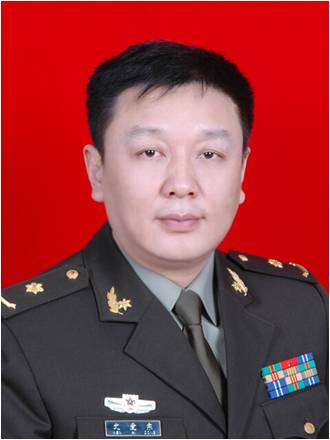 Aidong Wen (文爱东)合作论文数第四军医大学第一附属医院药剂科2Ke Chen合作论文数1Yue Zhang合作论文数1Ruyue Zhang合作论文数1Dongshen Zhai合作论文数1Yachen Hou合作论文数1Yamiao Chen合作论文数1Jiayue Xi合作论文数1Chun-Feng Chen合作论文数1Li Wang合作论文数1
 Peng Gao合作论文数1Yan SUN (孙彦)合作论文数1




