The primary goal of the Artificial Heart Program of the National Heart, Lung, and Blood Institute (NHLBI) is the development of long-term, fully implantable, electrically energized, mechanical circulatory support systems - both ventricular assist (VAS) and total artificial heart (TAH). Systems must be tether-free and allow most moderate-level, everyday activities. Biocompatibility must be adequate, with minimal problems from thrombi, emboli, infection, or other complications. At least two-year demonstrated reliability is expected. Both the VAS and TAH programs have three stages: development, validation through bench testing and in animals, and clinical investigation. One type of VAS has completed long-term bench testing, with no failure in any of 12 units in 24 to 35 months of mock loop operation. Validation in animals for 4–6 months is beginning. The stages and plans for clinical investigation are outlined. Four groups are engaged in the TAH development; some features of their approaches are summarized.
The Coronary Artery Surgery Study (CASS) includes 780 patients with mild or moderate stable angina pectoris or asymptomatic survivors of a myocardial infarction who were randomized to either medical or surgical therapy and 1,319 patients who were eligible for randomization but were not randomized (randomizable patients). There were no substantial aggregate differences observed in any of the survival comparisons after 10 years of follow-up study between the randomized and randomizable patients assigned to the medical (79% versus 80%) or surgical (82% versus 81%) groups or in patient subgroups stratified according to coronary artery disease extent and left ventricular ejection fraction. Cox regression analyses were done with independent variables known to be predictors of survival, including surgical versus medical therapy and randomized versus randomizable group, to test the null hypothesis of a mortality difference between medical versus surgical assignment according to group assignment (randomized versus randomizable). In no case did the initial group category enter as a significant predictor of survival. The results in the randomizable group reinforce those in the randomized group with respect to the medical versus surgical comparison. Two subgroups are identified with a significant surgical advantage: 1) patients with proximal left anterior descending coronary artery stenosis greater than or equal to 70% and an ejection fraction less than 0.50, and 2) patients with three vessel coronary artery disease and an ejection fraction less than 0.50. In both groups, coronary bypass surgery had a statistically significant beneficial effect on survival (p less than 0.05). After a decade of follow-up, the CASS randomizable patients confirm conclusions reached on the basis of the CASS randomized trial.
Two years ago, Grüntzig and his colleagues1 reported their initial experience with percutaneous transluminal coronary angioplasty (PTCA) in 50 patients. In that same issue, the Journal published an editorial that summarized a National Heart, Lung, and Blood Institute (NHLBI) conference convened to review preliminary information on 205 cases of PTCA and to discuss methods whereby physicians treating patients with cardiovascular disease could assist in the development and evaluation of the technique.2 The participants at that conference agreed that candidates for this new investigational procedure should have unacceptable angina inadequately controlled by maximal medical therapy; that they should have proximal, accessible, . . .
DR. Andreas Gruntzig and his colleagues are to be congratulated. In this issue of the Journal, they report on their experience with their first 50 patients undergoing percutaneous transluminal coronary angioplasty. The report provides evidence that in carefully selected and prepared patients, and in the hands of an experienced team, balloon angioplasty can effectively dilate highly stenotic coronary vessels and provide immediate improvement in myocardial perfusion and myocardial performance, as measured both subjectively and objectively. Moreover, this improvement can persist for six months or longer. Thus, percutaneous transluminal coronary angioplasty can be seriously considered as a promising new technic. . . .
DR. Andreas Grüntzig and his colleagues are to be congratulated. In this issue of the Journal, they report on their experience with their first 50 patients undergoing percutaneous transluminal coronary angioplasty. The report provides evidence that in carefully selected and prepared patients, and in the hands of an experienced team, balloon angioplasty can effectively dilate highly stenotic coronary vessels and provide immediate improvement in myocardial perfusion and myocardial performance, as measured both subjectively and objectively. Moreover, this improvement can persist for six months or longer. Thus, percutaneous transluminal coronary angioplasty can be seriously considered as a promising new technic. . . .
IT HAS BEEN appreciated for many years that both the rate and rhythm of the heart exert strong influences on the strength of cardiac contractions. In 1871 Bowditch wrote that "the interval between a contraction of the heart and the preceding beat is of such importance for the strength of the contraction that a study of this effect is a prime necessity."1 Many investigators then studied the effects of premature beats on cardiac contractility and by the turn of the century, Woodworth2 had clearly demonstrated in isolated cardiac tissue that the contraction following an extrasystole is usually stronger than those that preceded it, a phenomenon
Recent modifications of a fiberoptic catheter system now permit direct and continuous measurement of intravascular oxygen saturation. The response time of the new instrument is 0.1 sec. By an interchange of optical filters, the device can also be used for the registration of indicator dilution curves using indocyanine green dye. Oxygen saturation has been measured without complications in 30 patients for periods as long as three hours. The system proved particularly useful in facilitating rapid and thorough catheterization studies in patients with left to right shunts, without the necessity of withdrawing blood. In addition, the rapid response time of the catheter-tip oximeter permitted study of phasic changes in the pulmonary arterial oxygen saturation during respiratory maneuvers. Variations of up to 3 per cent saturation were noted with deep respirations, a decrease in saturation resulting from inspiration. Changes in pulmonary arterial oxygen saturation during the Valsalva maneuver were variable in patients without circulatory shunts, although decreases occurred on its release. In patients with atrial septal defect, pulmonary arterial oxygen saturation also decreased with inspiration, while during the Valsalva maneuver, an increase in the saturation was observed. Finally, the catheter-tip oximeter permitted continuous measurement of the pulmonary arterial oxygen saturation before, during and after muscular exercise either in the supine or upright positions. It is concluded that this instrument provides a new and valuable tool both for cardiovascular diagnosis and for clinical investigations.
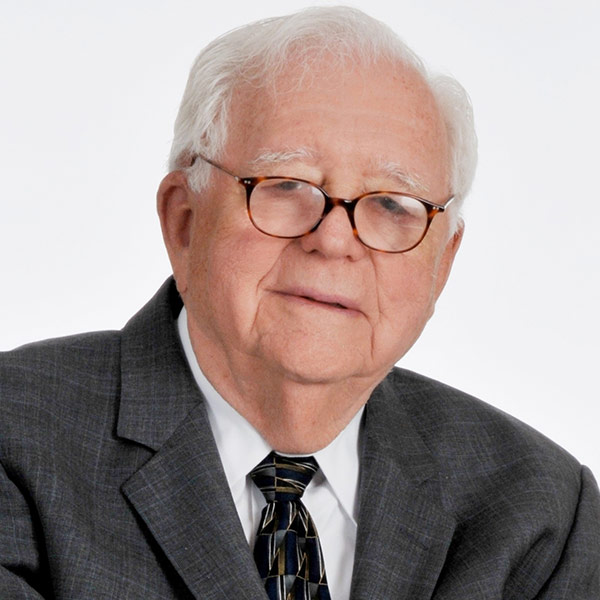 Eugene Braunwald合作论文数Department of Medicine, Brigham and Women's Hospital, Harvard Medical School5
 Dean T. Mason合作论文数4Michael B. Mock合作论文数3James H. Gault合作论文数3John Ross合作论文数University of California, San Diego2S.David Rockoff合作论文数2John Ross Jr.合作论文数2Levy R I合作论文数1Chisato Nojiri合作论文数1
 Edmund Sonnenblick合作论文数Cardiology Division, Albert Einstein College of Medicine1
 Curt D Furberg合作论文数Department of Public Health Sciences, Wake Forest University Baptist Medical Center1
 Richard A. Kronmal合作论文数Department of Biostatistics, School of Public Health, University of Washington;Department of Statistics, School of Public Health, University of Washington;Collaborative Health Studies Coordinating Center, University of Washington1Tetsuzo Akutsu合作论文数1Hitoshi Koyanagi合作论文数1Setsuo Takatani合作论文数1Eugene R. Passamani合作论文数1Thomas Killip合作论文数1
 Bernard R. Chaitman合作论文数Core ECG/MI Classification Laboratory, School of Medicine, Saint Louis University1Eric D. Foster合作论文数1




