Among the large variety of heterostructure field effect transistors, multichannel devices present a particular originality: their transconductance profile is very flexible and depends on the structure parameters. They are therefore naturally tailormade for high signal non linear applications. In this paper, the specific case of double quantum-well structures is studied. Conventional and pseudomorphic devices are characterized under dc and RF conditions. Very high current densities (up to 1.2 A/mm) are demonstrated. The effect of different structural parameters on the transconductance and cut-off frequency is discussed. The results are analyzed in order to give a full understanding of these devices and to demonstrate their performances.
Polycide-gate silicon n-channel MOSFETs were fabricated on the basis of a standard 0.5- mu m MOS technology and measured over the 1.5-26.5-GHz frequency range, in order to investigate the effects of channel-length reduction on device behavior at high frequency. Excellent microwave performances were obtained with a maximum operating frequency (f/sub max/) and a unity-current-gain frequency f/sub t/ near 20 GHz for 0.5- mu m-gate-length NMOS devices. An equivalent circuit for a MOSFET with its parasitic elements was extracted from measured S-parameter data. The influence of gate resistance, gate-to-drain overlap capacitance, substrate conductivity, and the transit-time effect between the source and drain on microwave characteristics was analyzed.< >
A method to determine the small-signal equivalent circuit of FETs is proposed. This method consists of a direct determination of both the extrinsic and intrinsic small-signal parameters in a low-frequency band. This method is fast and accurate, and the determined equivalent circuit fits the S-parameters well up to 26.5 GHz.<>
The main characteristics of avalanche frequency multipliers are presented in order to show their capabilities when operated as stable millimeter wave sources. Performances and frequency dependance upon operating parameters such as temperature, input drive level, as well as biasing and tuning is given while experimental curves of additive phase noise contributed by these avalanche multipliers are discussed in some details.
 Georges. Salmer合作论文数3
 m lerme合作论文数2Jean Gautier合作论文数2
 Christine Raynaud合作论文数2G. Guégan合作论文数2
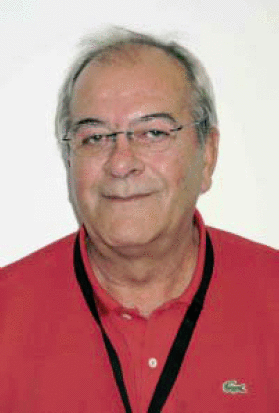 Paulalain Rolland合作论文数2Y. Crosnier合作论文数1B. Bonte合作论文数1eugene constant合作论文数1Abdennaceur Baghdad合作论文数1
 Alain Cappy合作论文数Département Hyperfréquences et Semiconducteurs, Institut d'Electronique et Microélectronique du Nord U.M.R. C.N.R.S. No. 99291
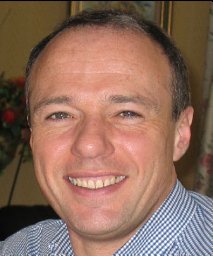 C. Gaquiere合作论文数IEMN/TIGER1
 Didier Theron合作论文数Institut d’Electronique, de Microélectronique et de Nanotechnologie, Cité scientifique––Avenue Poincaré––B.P. 691
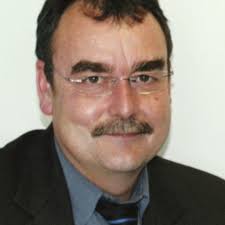 Gilles Dambrine合作论文数Institute of Electronics, Microelectronics and Nanotechnology, University of Lille;Higher School of Teaching and Education, University of Lille1
 Frederic Heliodore合作论文数1




