In order to comprehensively investigate the multiphysics coupling in spintronic devices, it is essential to parallelize and utilize GPU-acceleration to address the spatial and temporal disparities inherent in the relevant physics. Additionally, the use of cutting-edge time integration libraries as well as machine learning (ML) approaches to replace and potentially accelerate expensive computational routines are attractive capabilities to enhance modeling capabilities moving forward. Leveraging the Exascale Computing Project software framework AMReX, as well as SUNDIALS time-integration libraries and python-based ML workflows, we have developed an open-source micromagnetics modeling tool called MagneX. This tool incorporates various crucial magnetic coupling mechanisms, including Zeeman coupling, demagnetization coupling, crystalline anisotropy interaction, exchange coupling, and Dzyaloshinskii-Moriya interaction (DMI) coupling. We demonstrate the GPU performance and scalability of the code and rigorously validate MagneX's functionality using the mumag standard problems and widely-accepted DMI benchmarks. Furthermore, we demonstrate the data-driven capability of MagneX by replacing the computationally-expensive demagnetization physics with neural network libraries trained from our simulation data. With the capacity to explore complete physical interactions, this innovative approach offers a promising pathway to better understand and develop fully integrated spintronic and electronic systems.
We investigate ion acoustic solitary waves (solitons) of varying amplitudes in a one-dimensional plasma using fully kinetic particle-in-cell simulations. The initial soliton conditions are based on the Korteweg–de Vries (KdV) equation, treating ions as a cold species and electrons with finite temperature. Our findings reveal that KdV solitons evolve nonlinearly to a saturated state at higher amplitude, deviating from KdV predictions for ion density and electric potential, and from the Boltzmann relation for electron density. At this saturated state, the KdV model cannot accurately describe the soliton behavior. For small amplitudes, Sagdeev's model describes the saturated state, but not the soliton width; for larger amplitudes, it models the width accurately, but not the amplitude. These discrepancies arise from assuming a Boltzmann relation for electron density, while electron trapping creates non-Boltzmann densities—a deviation that increases with soliton amplitude. Additionally, we observe that the soliton amplitude oscillates roughly at the electron bounce frequency. The soliton is better described by Schamel's electron density formulation and a modified KdV equation incorporating electron trapping. The soliton velocity matches best with predictions from Sagdeev's and Schamel's models. Moreover, the soliton speed–amplitude relationship differs from existing theoretical predictions. Finally, we find minimal ion and electron Landau damping effects.
Abstract Laser-driven plasma accelerators provide tabletop sources of relativistic electron bunches and femtosecond x-ray pulses, but usually require petawatt-class solid-state-laser pulses of wavelength λ L ~ 1 μm. Longer-λ L lasers can potentially accelerate higher-quality bunches, since they require less power to drive larger wakes in less dense plasma. Here, we report on a self-injecting plasma accelerator driven by a long-wave-infrared laser: a chirped-pulse-amplified CO2 laser (λ L ≈ 10 μm). Through optical scattering experiments, we observed wakes that 4-ps CO2 pulses with < 1/2 terawatt (TW) peak power drove in hydrogen plasma of electron density down to 4 × 1017 cm−3 (1/100 atmospheric density) via a self-modulation (SM) instability. Shorter, more powerful CO2 pulses drove wakes in plasma down to 3 × 1016 cm−3 that captured and accelerated plasma electrons to relativistic energy. Collimated quasi-monoenergetic features in the electron output marked the onset of a transition from SM to bubble-regime acceleration, portending future higher-quality accelerators driven by yet shorter, more powerful pulses.
HfO_2- and ZrO_2-based ferroelectric thin films have emerged as promising candidates for the gate oxides of next generation electronic devices. Recent work has experimentally demonstrated that a tetragonal/orthorhombic (t/o-) phase mixture with partially in-plane polarization can lead to negative capacitance (NC) stabilization. However, there is a discrepancy between experiments and the theoretical understanding of domain formation and domain wall motion in these multi-phase, polycrystalline materials. Furthermore, the effect of anisotropic domain wall coupling on NC has not been studied so far. Here we apply 3D phase field simulations of HfO_2- and ZrO_2-based mixed-phase ultra-thin films on silicon to understand the necessary and beneficial conditions for NC stabilization. We find that smaller ferroelectric grains and a larger angle of the polar axis with respect to the out-of-plane direction enhances the NC effect. Furthermore, we show that theoretically predicted negative domain wall coupling even along only one axis prevents NC stabilization. Therefore, we conclude that topological domain walls play a critical role in experimentally observed NC phenomena in HfO_2- and ZrO_2-based ferroelectrics.
Developing complex, reliable advanced accelerators requires a coordinated, extensible, and comprehensive approach in modeling, from source to the end of beam lifetime. We present highlights in Exascale Computing to scale accelerator modeling software to the requirements set for contemporary science drivers. In particular, we present the first laser-plasma modeling on an exaflop supercomputer using the US DOE Exascale Computing Project WarpX. Leveraging developments for Exascale, the new DOE SCIDAC-5 Consortium for Advanced Modeling of Particle Accelerators (CAMPA) will advance numerical algorithms and accelerate community modeling codes in a cohesive manner: from beam source, over energy boost, transport, injection, storage, to application or interaction. Such start-to-end modeling will enable the exploration of hybrid accelerators, with conventional and advanced elements, as the next step for advanced accelerator modeling. Following open community standards, we seed an open ecosystem of codes that can be readily combined with each other and machine learning frameworks. These will cover ultrafast to ultraprecise modeling for future hybrid accelerator design, even enabling virtual test stands and twins of accelerators that can be used in operations.
We present a massively parallel, 3D phase-field simulation framework for modeling ferro-electric materials based scalable logic devices. We self-consistently solve the time-dependent Ginzburg Landau (TDGL) equation for ferroelectric polarization, Poisson equation for electric potential, and charge equation for carrier densities in semiconductor regions. The algorithm is implemented using the AMReX software framework, which provides effective scalability on manycore and GPU-based supercomputing architectures. We demonstrate the performance of the algorithm with excellent scaling results on NERSC multicore and GPU systems, with a significant (15x) speedup on the GPU using a node-by-node comparison. We further demonstrate the applicability of the code in simulations of ferroelectric domain-wall induced negative capacitance (NC) effect in Metal-Ferroelectric-Insulator-Metal (MFIM) and Metal-Ferroelectric-Insulator-Semiconductor-Metal (MFISM) devices. The charge (Q) v.s. applied voltage (V) responses for these structures clearly indicates stabilized negative capacitance.
Nonlinear interaction between kinetic instabilities driven by electron drift in crossed electric and magnetic fields in the presence of multiply-charged ion streams is investigated using kinetic simulations. Singly, doubly, and triply charged ion streams, flowing in the direction parallel to the applied electric field, interact with electrons drifting in the cross-field direction. Microturbulence that develops due to the mode coupling between ion-ion two-stream instability (IITSI) and electron cyclotron drift instability (ECDI) is shown to suppress cross-field electron transport when triply charged ion stream is present. In addition, the total ion current density, i.e., the total ionization rate, is varied to study the effects of the ion density on cross-field electron transport. An increase in the cross-field electron diffusion is observed when the wavelength of the plasma waves decreases. The results from the two cases, i.e., (i) triply charged ion cases and (ii) variation of the ionization rate, suggest that the cross-field electron transport is affected by both the amplitude and wavelength of the plasma wave.
In this article, the effects of increasing plasma density on the cross-field electron transport driven by kinetic instabilities are investigated. A 2-D collisionless particle-in-cell (PIC) simulation is performed on cases with only singly charged ions and with a mixture of singly and doubly charged ions, at different levels of plasma density. It is observed using the PIC simulations that the level of plasma density affects the plasma waves that are driven by the microinstabilities, including the electron cyclotron drift instability (ECDI) and ion–ion two-stream instability (IITSI). The simulation results suggest that the enhancement of cross-field electron transport is correlated with the excitation of smaller wavelength modes and the increased amplitude of the plasma waves.
The advent of chirped-pulse amplification in the 1980s and femtosecond Ti:sapphire lasers in the 1990s enabled transformative advances in intense laser–matter interaction physics. Whereas most of experiments have been conducted in the limited near-infrared range of 0.8–1 μm, theories predict that many physical phenomena such as high harmonic generation in gases favor long laser wavelengths in terms of extending the high-energy cutoff. Significant progress has been made in developing few-cycle, carrier-envelope phase-stabilized, high-peak-power lasers in the 1.6–2 μm range that has laid the foundation for attosecond X ray sources in the water window. Even longer wavelength lasers are becoming available that are suitable to study light filamentation, high harmonic generation, and laser–plasma interaction in the relativistic regime. Long-wavelength lasers are suitable for sub-bandgap strong-field excitation of a wide range of solid materials, including semiconductors. In the strong-field limit, bulk crystals also produce high-order harmonics. In this review, we first introduce several important wavelength scaling laws in strong-field physics, then describe recent breakthroughs in short- (1.4–3 μm), mid- (3–8 μm), and long-wave (8–15 μm) infrared laser technology, and finally provide examples of strong-field applications of these novel lasers. Some of the broadband ultrafast infrared lasers will have profound effects on medicine, environmental protection, and national defense, because their wavelengths cover the water absorption band, the molecular fingerprint region, as well as the atmospheric infrared transparent window.
A parallel, relativistic, three-dimensional particle-in-cell code SPACE has been developed for the simulation of electromagnetic fields, relativistic particle beams, and plasmas. In addition to the standard second-order Particle-in-Cell (PIC) algorithm, SPACE includes efficient novel algorithms to resolve atomic physics processes such as multi-level ionization of plasma atoms, recombination, and electron attachment to dopants in dense neutral gases. SPACE also contains a highly adaptive particle-based method, called Adaptive Particle-in-Cloud (AP-Cloud), for solving the Vlasov-Poisson problems. It eliminates the traditional Cartesian mesh of PIC and replaces it with an adaptive octree data structure. The code’s algorithms, structure, capabilities, parallelization strategy and performances have been discussed. Typical examples of SPACE applications to accelerator science and engineering problems are also presented.
A self consistent computational model is developed to investigate the co-propagation of a light beam through an inhomogeneous beam of neutral particles, with the aim to evaluate the feasibility of an innovative deep-space propulsion concept. The light beam can be manipulated through the refractive index that is affected by the gaseous medium. Simultaneously, neutral particles experience optical dipole force and scattering force due to atomic polarizability, leading to particle trapping. Simulations are validated against experimental results from relevant studies. The model is then used to gain insight into the opportunities and limitations of employing a coupled light-particle beam as a space propulsion system. A configuration of the coupled beam that has been optimized to maximize propagation distance is compared with the propagation of individual light and particle beams. The ratio of particle beam radius to light beam waist is varied to explore its influence on effective particle trapping and waveguiding.
The polarizability of atoms and molecules gives rise to optical forces that trap particles and a refractive index that guides light beams, potentially leading to a self-guided laser and particle beam propagation. In this paper, the mutual interactions between an expanding particle beam and a diffracting light beam are investigated using an axisymmetric particle-light coupled simulation. The nonlinear coupling between particles and photons is dependent on the particle beam radius, particle density, particle velocity and temperature, polarizability, light beam waist, light frequency (with respect to the resonance frequency), and light intensity. The computational results show that the maximum propagation distance is achieved when the waveguiding effect is optimized to single-mode operation. The application of the coupled beam propagation as a space propulsion system is discussed.
Nonlinear interaction between kinetic instabilities in partially magnetized plasmas in the presence of multiply charged ion streams is investigated using kinetic simulations. It was observed by Hara and Tsikata [Phys. Rev. E 102, 023202 (2020)] that the axial ion–ion two-stream instability due to singly and doubly charged ion streams, coupled with the azimuthal electron cyclotron drift instability (ECDI), enhances cross-field electron transport. In the present study, it is observed that the addition of triply charged ions (as a third ion species) contributes to damping of the excited modes, leading to a reduction in the cross-field electron transport. The net instability-driven electron transport is shown to be a function not only of the azimuthal modes, such as the ECDI, but of the multiple ion species that dictate the development of additional plasma waves. It is found that trapping of the higher ion charge states within the plasma waves results in broadening of the ion velocity distribution functions.
Propagation of a light beam through a collisional and inhomogeneous beam of neutral particles is investigated. The light beam can be manipulated through the refractive index that is affected by the gaseous medium. Simultaneously, neutral particles experience optical dipole force and scattering force due to atomic polarizability, leading to particle trapping. The simulation results of fully coupled light-particle propagation show agreement with experimental data from the literature. The effects of particle density, detuning frequency with respect to the resonance frequency, and light intensity on the mutual guiding of light and particle beams is studied for particle beam densities below the critical density that results in single-mode operation of optical waveguides.
Long wavelength infrared laser-driven plasma wakefield accelerators are investigated here in the self-modulated laser wakefield acceleration (SM-LWFA) and blowout regimes using 3D particle-in-cell simulations. The simulation results show that in the SM-LWFA regime, self-injection arises with wave breaking, whereas in the blowout regime, self-injection is not observed under the simulation conditions. The wave breaking process in the SM-LWFA regime occurs at a field strength that is significantly below the 1D wave-breaking threshold. This process intensifies at higher laser power and plasma density and is suppressed at low plasma densities (≤1×1017cm−3 here). The produced electrons show spatial modulations with a period matching that of the laser wavelength, which is a clear signature of direct laser acceleration.
Numerical simulation of a coupled laser and particle beam is applied to maximize propagation for deep space propulsion. A fully verified and validated code illustrates the ability of a Gaussian laser beam to trap particles in a co-propagating beam through the dipole force. Likewise, the refractive index distribution created by the presence of the particle beam creates a waveguiding effect that opposes diffraction of the light beam. Losses due to particle-photon scattering and particle-particle collisions are also taken into account. The influence of several relevant parameters on effective particle trapping and waveguiding is explored. Factors that maximize propagation distance are identified and give insight into the opportunities and limitations of employing a coupled laser-particle beam as a space propulsion system.
Long wavelength infrared (LWIR) laser driven plasma wakefield accelerators are investigated here in the self-modulated laser wakefield acceleration (SM-LWFA) and blowout regimes using 3D Particle-in-Cell simulations. The simulation results show that in SM-LWFA regime, self-injection arises with wave breaking, whereas in the blowout regime, self-injection is not observed under the simulation conditions. The wave breaking process in SM-LWFA regime occurs at a field strength that is significantly below the 1D wave-breaking threshold. This process intensifies at higher laser power and plasma density and is suppressed at low plasma densities (≤ 1×10^17 cm^-3 here). The produced electrons show spatial modulations with a period matching that of the laser wavelength, which is a clear signature of direct laser acceleration (DLA).
 Roman Samulyak合作论文数Computational Science Center;Brookhaven National Laboratory;Computational Science Center, Brookhaven National Laboratory17
 Zgadzaj Rafal合作论文数14
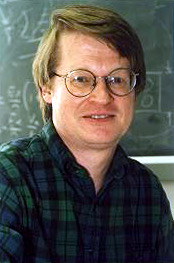 Michael Downer合作论文数Department of Physics, College of Natural Sciences, The University of Texas at Austin;Center for High Energy Density Physics, The University of Texas at Austin;Institute for Fusion Studies, The University of Texas at Austin14
 Vladimir N Litvinenko合作论文数Institute of Nuclear Physics13
 Navid Vafaei-Najafabadi合作论文数12
 Mikhail Polyanskiy合作论文数Accelerator Test Facility, Brookhaven National Laboratory10James Welch合作论文数9
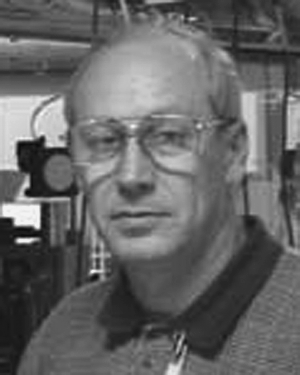 Igor V. Pogorelsky合作论文数Accelerator Test Facil, Brookhaven Natl Lab9M Babzien合作论文数8Jiayang Yan合作论文数Dept. Physics and Astronomy, Stony Brook University8
 L. D. Amorim合作论文数Lawrence Berkeley Natl Lab8
 Kwangmin Yu合作论文数8
 M. Fedurin合作论文数8
 Chandrashekhar Joshi合作论文数Electrical and Computer Engineering Department, School of Engineering, University of California8Pietro Iapozzuto合作论文数7
 Irina Petrushina合作论文数Dept Phys & Astron, SUNY Stony Brook7
 Warren Mori合作论文数Physics and Astronomy Department, College of Physical Sciences, University of California, Los Angeles;Samueli School of Engineering, University of California, Los Angeles7
 Kentaro Hara合作论文数Department of Aeronautics and Astronautics, Stanford University7K. Kusche合作论文数6
 Christina Swinson合作论文数6Wei Lu (鲁巍)合作论文数5Yichao Jing合作论文数4Andres M. Castillo合作论文数4
 Mael Flament合作论文数Qunnect, Inc. (United States)4
 Mark Palmer合作论文数Accelerator Science & Technology Department, Brookhaven National Laboratory4
 Kupfer Rotem合作论文数3Andy J Nonaka合作论文数2Chaojie Zhang (张超杰)合作论文数2
 Prabhjot Kaur合作论文数Department of Nephrology, Postgraduate Institute of Medical Education and Research2
 Revathi Jambunathan合作论文数Center for Computational Sciences and Engineering, Lawrence Berkeley National Laboratory2
 Sayeef Salahuddin合作论文数Department of Electrical Engineering and Computer Sciences, University of California, Berkeley2M. Palmer合作论文数2Weiqun Zhang合作论文数Shanghai Astronomical Observatory Chinese Academy of Sciences, Chinese Academy of Sciences2N. Vafaei-Najafabadi合作论文数1Andrew Nonaka合作论文数1Ryan T. Sandberg合作论文数1Derek Kuldinow合作论文数1
 Apurva Gaikwad合作论文数1Karl Kusche合作论文数1Thomas Clark合作论文数1Chase Geiger合作论文数1Jun Ma合作论文数1
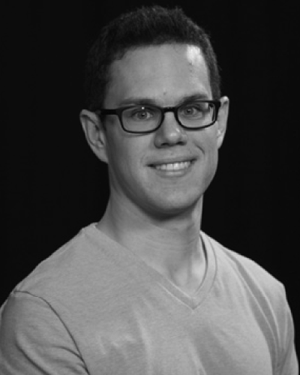 Kyle Miller合作论文数1Alexander Sinn合作论文数1Alex C. Fletcher合作论文数1Mikhail Fedurin合作论文数1Shaohua Yuan合作论文数Dept Appl Math & Stat, SUNY Stony Brook1




