An efficient approach to regio- and stereoselective synthesis of (Z)-vinylsulfonylated quinoxalin-2-ones has been developed. This oxidative reaction involves copper-catalyzed vinylsulfonylation of quinoxalin-2(1H)-ones with alkynes and sulfonyl hydrazides. Various functionalized vinylsulfonylated quinoxalin-2(1H)-one derivatives have been synthesized in excellent yields. The reaction proceeds via sulfonyl radicals generated from sulfonyl hydrazides.
An efficient methodology for the copper-catalyzed direct oxidative aroylations of quinoxalin-2(1H)-ones with methylarenes is reported. This methodology offers an efficient access to diverse and polyfunctionalized 3-aroylated quinoxalin-2(1H)-ones starting from readily available quinoxalin-2(1H)-ones and various methylarenes using TBHP as an oxidant. This protocol is broadly compatible with diverse substrates and is highly functional-group tolerant.
A transition-metal (TM)-free and halogen-free NaOtBu-mediated oxidative cross-coupling between the sp3 C-H bond of oxindoles and sp2 C-H bond of nitroarenes has been developed to access 3-aryl substituted and 3,3-aryldisubstituted oxindoles in DMSO at room temperature in a short time. Interestingly, the sp3 C-H bond of oxindoles could also react with styrene under TM-free conditions for the practical synthesis of quaternary 3,3-disubstituted oxindoles. The synthesized 3-oxindoles have also been further transformed into advanced heterocycles, that is, benzofuroindoles, indoloindoles, and substituted indoles. Mechanistic experiments of the reaction suggests the formation of an anion intermediate from the sp3 C-H bond of oxindole by tert-butoxide base in DMSO. The addition of nitrobenzene to the in-situ generated carbanion leads to the 3-(nitrophenyl)oxindolyl carbanion in DMSO which is subsequently oxidized to 3-(nitro-aryl) oxindole by DMSO.
An entry from the Cambridge Structural Database, the world’s repository for small molecule crystal structures. The entry contains experimental data from a crystal diffraction study. The deposited dataset for this entry is freely available from the CCDC and typically includes 3D coordinates, cell parameters, space group, experimental conditions and quality measures.
Transition-metal-free synthetic methods have been developed for the preparation of unsymmetrical diaryl and aryl alkyl chalcogenides: sulfones, sulfides, and selenides from the sp3-C-H bond of oxindole, tetralone, arylacetamide, and aryl chalcogenide precursors. Sulfones were obtained from sodium sulfinates using potassium iodide, tert-butyl hydroperoxide in DMSO, and acetic acid. Sulfides and selenides were prepared from diaryl disulfides or diselenides employing potassium tert-butoxide in DMSO. α-Tetralone underwent concomitant chalcogenation and aromatization resulting in 2-chalcogenyl-1-naphthols in one pot.
A mild and efficient palladium-catalyzed synthetic method for the C-H functionalization of N-(quinolin-8-yl)ferrocenecarboxamide has been developed. Various aryl iodides containing I, NO2, CN, COMe, CO2Et, and NH functionalities and also alkyl iodides underwent the Pd-catalyzed intermolecular carbon-carbon bond forming reaction with ferrocenecarboxamide successfully which led to a diverse array of bis(aryl/alkyl)ferrocenecarboxamides in 34-92% yields. Cross-coupling of the ferrocenyl C-H bond with aryl iodides can also be achieved utilizing an economical Ni catalyst. Additionally, selective monoalkylation of ferrocenecarboxamide was studied using sodium bicarbonate as base and dibenzyl-phosphoric acid as additive under Pd-catalyzed reaction conditions. Subsequently, removal of the directing group, 8-aminoquinoline, from bis(aryl)ferrocenecarboxamides led to bis(aryl)ferrocenes bearing versatile methyl ester and carboxaldehyde functional groups.
A catalytic system consisting of bis(4-methoxyphenyl)selenide and 4-(dimethylamino)pyridine (DMAP) has been developed for the regioselective synthesis of medium-sized bromo/iodo lactones and bromooxepanes possessing high transannular strain. (77)Se NMR, mass spectrometry and theoretical studies reveal that the reaction proceeds via a quaternary selenium intermediate.
A synthetic method has been developed for the preparation of biologically important isoindolinones including indoprofen and DWP205190 drugs from 2-alkylbenzamide substrates by transition metal-free intramolecular selective oxidative coupling of C(sp(3))-H and N-H bonds utilizing iodine, potassium carbonate and di-tert-butyl peroxide in acetonitrile at 110-140 °C.
A KO(t)Bu-mediated intermolecular oxidative C-C coupling of nitroarenes with indoles is presented in DMSO at room temperature in an open flask. By using this mild and economical methodology, syntheses of β-(2/4-nitroaryl)-indoles with sensitive functionalities such as bromo, iodo, cyano, and nitro were achieved chemo- and regioselectively. Synthesized β-(2/4-nitroaryl) indoles were transformed into densely functionalized biindoles, indoloindoles, and (4-aminoaryl)-indoles which demonstrate post-transformation utility of the developed methodology.
An entry from the Cambridge Structural Database, the world’s repository for small molecule crystal structures. The entry contains experimental data from a crystal diffraction study. The deposited dataset for this entry is freely available from the CCDC and typically includes 3D coordinates, cell parameters, space group, experimental conditions and quality measures.
A convenient strategy for the synthesis of 3-aryl/alkyl-1,4-benzothiazines has been developed. This reaction proceeds via 1,2-thioacetoxylation of an alkene with silver acetate and acetic acid as an additive, followed by cyclization using TFA. The addition of alkene took place in a regioselective manner, forming exclusively one regioisomer, which was confirmed by a single crystal X-ray study. Various differently substituted alkenes, such as aromatic and aliphatic olefins, were coupled with amino disulfides to form a library of benzothiazine derivatives.
A method which avoids metal and halogen for the synthesis of 3-arylthioindoles from indoles and diaryl disulfides using ammonium persulfate in methanol has been presented. Moreover, double C-H sulfenylation of indoles at 2 and 3-positions has also been achieved using iodine and ammonium persulfate.
A series of electron withdrawing or donating group substituted phenols were chemoselectively arylated with various substituted bromo-nitroarenes using KO(t)Bu at room temperature via an SNAr pathway. The synthesis of natural alkaloids (carbazoles), dibenzofurans, and a biaryl-indole was achieved from the synthesized nitro-biaryl-ols.
An entry from the Cambridge Structural Database, the world’s repository for small molecule crystal structures. The entry contains experimental data from a crystal diffraction study. The deposited dataset for this entry is freely available from the CCDC and typically includes 3D coordinates, cell parameters, space group, experimental conditions and quality measures.
AbstractIn some cases the reaction with diphenyldisulfide affords dithiolated products [cf.
A transition-metal-free synthetic method has been developed for the synthesis of unsymmetrical diaryl chalcogenides (S, Se, and Te) from diaryl dichalcogenides and arenes under oxidative conditions by using potassium persulfate at room temperature. Variously substituted arenes such as anisole, thioanisole, diphenyl ether, phenol, naphthol, di- and trimethoxy benzenes, xylene, mesitylene, N,N-dimethylaniline, bromine-substituted arenes, naphthalene, and diaryl dichalcogenides underwent carbon-chalcogen bond-forming reaction to give unsymmetrical diaryl chalcogenides in trifluoroacetic acid. To understand the mechanistic part of the reaction, a detailed in situ characterization of the intermediates has been carried out by (77)Se NMR spectroscopy by using diphenyl diselenide as the substrate. (77)Se NMR study suggests that electrophilic species ArE(+) is generated by the reaction of diaryl dichalcogenide with persulfate in trifluoroacetic acid. The electrophilic attack of arylchalcogenium ion on the arene may be responsible for the formation of the aryl-chalcogen bond.
AbstractKOtBu In DMSO can be efficiently used for the synthesis of unsymmetrical diaryl sulfides and selenides from diaryl dichalcogenides and aryl bromides.
An entry from the Cambridge Structural Database, the world’s repository for small molecule crystal structures. The entry contains experimental data from a crystal diffraction study. The deposited dataset for this entry is freely available from the CCDC and typically includes 3D coordinates, cell parameters, space group, experimental conditions and quality measures.
Potassium tert-butoxide mediated carbon-chalcogen C-E (E=O, S and Se) coupling reaction has been studied from aryl bromide and phenol/aryl disulfide/diselenide substrates. A series of unsymmetrical diary] chalcogenides were accessed from aryl bromide and diary! dichalcogenide precursors by using 2.5 equiv of potassium tert-butoxide in DMSO at 80 degrees C. Unsymmetrical diaryl ethers were also obtained by using phenol precursors at 40-45 degrees C. Aryl bromides with methyl, trifluoromethyl, methoxy and nitro substituents showed compatibility in the carbon-chalcogen bond forming reaction. 4-Methoxy, methyl, trifluoromethyl substituted bromobenzene substrates gave two regioisomers: 3-substituted and 4-substituted diaryl chalcogenides when reacted with phenols/diaryl disulfides/diselenides. Formation of two regioisomeric diaryl chalcogenides in the reaction mixture suggests that potassium tert-butoxide reacts with bromobenzene to produce benzyne intermediate, which subsequently reacts with diary! dichalcogenides and finally give a regioisomeric mixture of 4-substituted and 3-substituted diary] chalcogenides. (C) 2013 Elsevier Ltd. All rights reserved.
 Sangit Kumar合作论文数19
 Moh. Sattar合作论文数10
 Shailesh Kumar合作论文数8
 Ajay Verma合作论文数Department of Chemistry, Indian Institute of Science Education and Research (IISER) Bhopal7
 Sadhan Jana合作论文数Indian Inst Technol, Dept Chem, Mumbai 400076, Maharashtra, India5
 Abhimanyu Yadav合作论文数5
 Balkrishna Shah Jaimin合作论文数IISER, Indian Inst Sci Educ & Res Bhopal4
 Bhakuni Bhagat Singh合作论文数Department of Chemistry, Indian Institute of Science Education and Research (IISER) Bhopal4
 Vandana Rathore合作论文数3
 Saket Patel合作论文数2
 Chayan Dhar Clinton合作论文数Sch Chem Engn, Yeungnam Univ2
 Kaustubh Shrimali合作论文数College of Mines and Earth Sciences, University of Utah2
 shubham sharma合作论文数2
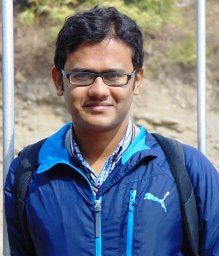 Soumava Biswas合作论文数Department of Chemistry, IISER Bhopal2
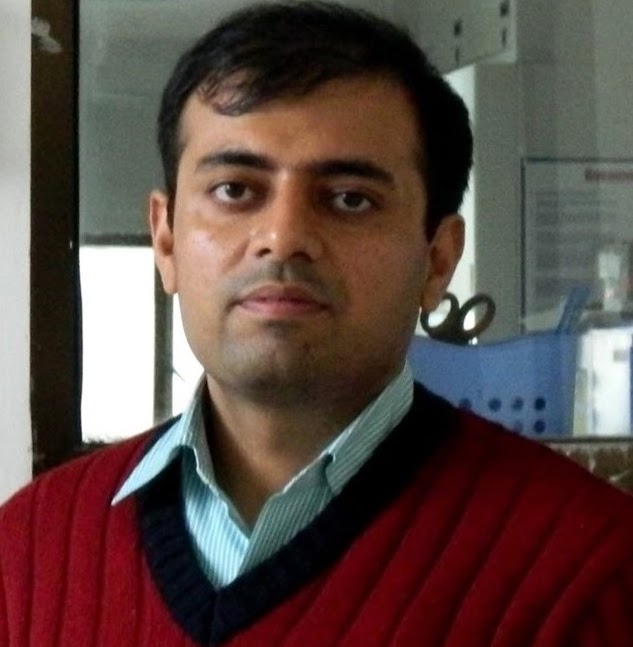 Deepak Chopra合作论文数Indian Institute of Science Education and Research2
 Panini Piyush合作论文数Dept Chem, Indian Inst Sci Educ & Res Bhopal2
 Michael R. Detty合作论文数Department of Chemistry, University at Buffalo, The State University of New York2
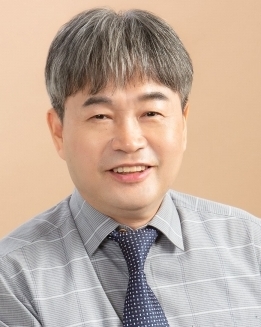 Yong Rok Lee合作论文数Organic Materials Synthesis Laboratory, School of Chemical Engineering, Yeungnam University2Amit Adhikary合作论文数1
 Amit Kumar合作论文数1
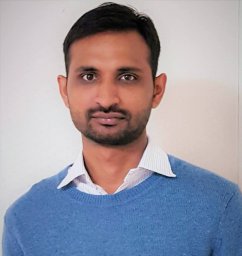 Raju S. Thombal合作论文数Sch Chem Engn, Yeungnam Univ1
 Khanal Hari Datta合作论文数School of Chemical Engineering, Yeungnam University1Meenakshi合作论文数1




