Equitable technology transfer is a cornerstone of achieving a just transition (JT), enabling climate resilience and sustainable development in the Global South. While intellectual property (IP) protections are designed to incentivize innovation, they often constrain access to climate technologies, creating systemic barriers for nations in the Global South. Through a dual lens of doctrinal and qualitative analysis, this article examines the contested role of IP systems (particularly the World Trade Organization's TRIPS and TRIPS-plus clauses in trade agreements) in shaping the global landscape of climate technology transfer. It highlights the implications for achieving a JT and the geopolitical asymmetries that perpetuate technological dependency, and the potential pathways for strengthening Southern agency. Findings reveal that current IP frameworks exacerbate inequities but also highlight actionable reforms. The article calls for reimagining IP governance as an instrument for equity and climate justice, urging international collaboration to dismantle colonial legacies embedded in global knowledge systems and advance innovation through commons-based approaches essential for sustainable futures.
Tomato flu or tomato fever has been reported to be a viral disease by 'The Lancet Respiratory Medicine' journal, detailing about the first instance of this unexplained sickness which occurred on 6 May 2022. This has spread to few regions of India and viral sequencing in 2022 showed its homology with Coxsackie A16 virus. Tomato flu seemed to be a manifestation of Hand-foot-and-mouth-disease (HFMD) caused by Coxsackie viruses. Patent documents are rich source of technological information in a particular area and patents related to diseases are an important area which when extensively explored may give valid scientific clues. Thus, in the present study, we explored the patent landscape of coxsackie viruses, the causal agent of the tomato flu outbreak, to have far sighted effects in future.
Abstract The role of intellectual property in biomedical innovation is often construed by the source of its funding viz. public or private. While privately funded innovations are assumed to rely on intellectual property for monopolistic expansions and profit gains, publicly funded research is expected to serve the broader social good without proprietary constraints. In the light of the accumulating evidence over the last few decades, it is now understood that this causal narrative, appears simplistic. To gain a deeper understanding of innovation, whether profit-driven or socially oriented, it is crucial to examine the broader context of basic and translational research. This article investigates the management of intellectual property within two significant biomedical research funding organizations: the publicly funded United States National Institutes of Health (NIH) and the public-private-philanthropic partnership, the Coalition for Epidemic Preparedness Innovations (CEPI). The findings reveal that despite different claims about intellectual property strategies, these institutions exhibit similar practices influenced by the spectre of larger privatisation processes intrinsic to global market forces. This analysis suggests that a singular logic of one-size-fits-all approach to intellectual property is inadequate in promoting biomedical innovation for the greater public good.
Patenting issues related to emerging technologies has always caused turmoil in the innovation ecosystem since past few decades. Three-dimensional (3D) bioprinting is one of the emerging technologies that challenges the traditional patent systems around the globe due to the complexity of the subject matter related to bioprinting innovations. Traditional patent systems have historically been adapted to new technologies; however, the pace of technological advancement has always been faster. Given the complexity of bioprinting technology and the subject matter limitations in traditional patent systems, it is often challenging for patent applicants and inventors to obtain protection for their innovations, resulting in a detrimental affect on the IP ecosystem. This chapter addressed this issue by examining the patent provisions of India and the US in light of subject matter related to 3D bioprinted tissues and organs. The initial sections of this chapter analyses the patentable subject matter exclusions as defined in section 3 of the Patent Act 1970 and clarified by examination guidelines. The analysis of bioprinting innovations from a US perspective is provided in the chapter's later sections, that analysed the patentable subject matter provisions as defined by section 101 of US patent law, examination guidelines, and relevant case law.
Myriad Genetics is one of the leading biotechnology firms with a specialization in genetic testing, cancer research and precision medicine. Myriad has filed its first patent application in 1995 and now developed a patent portfolio of more than a thousand patent applications. It is almost 10 years since the US Supreme Court provided its decision on gene patenting and considering the same the present study examined how this decision has impacted biotechnology companies and specifically Myriad Genetics in declining patent filings and their other IP strategy to protect their intangible assists in a strategic manner. This article provided analysis on certain anticompetitive practices of Myriad that fueled and built the path towards Myriad’s case on gene patent litigation. In addition, this article also provides commentary on Myriad’s abuse of dominant position in light of Article 82, 86 of European Competition, Section 46 of Australia and Section 2 of Sherman Act and further provides discussion on the gene litigation under Article 10bis of Paris Convention for unfair competition, Article 31 and 40 of TRIPS for anticompetitive practices. Further, an empirical analysis of Myriad’s patent portfolio specifically focused on Myriad’s patent applications with subject matter related to genes and nucleic acids provided insights on how the leading genetic testing firm has transformed its IP strategy from patents to trade secrets.
The recent outbreak of one of the RNA viruses (2019-nCoV) has affected most of the population and the fatalities reported may label it as a modern-day scourge. Active research on RNA virus infections and vaccine development had more commercial impact which leads to an increase in patent filings. Patents are a goldmine of information whose mining yields crucial technological inputs for further research. In this research article, we have investigated both the patent applications and granted patents, to identify the technological trends and their impact on 2019-nCoV infection using biotechnology-related keywords such as genes, proteins, nucleic acid etc. related to the RNA virus infection. In our research, patent analysis was majorly focused on prospecting for patent data related to the RNA virus infections. Our patent analysis specifically identified spike protein (S protein) and nucleocapsid proteins (N proteins) as the most actively researched macromolecules for vaccine and/or drug development for diagnosis and treatment of RNA virus based infectious diseases. The outcomes of this patent intelligence study will be useful for the researchers who are actively working in the area of vaccine or drug development for RNA virus-based infections including 2019-nCoV and other emerging and re-emerging viral infections in the near future.
Indigenous communities around the globe live close to nature and develop their culture according to the flora, fauna, and environmental conditions around them. In these conditions, the Indigenous communities develop their own unique Traditional Cultural Expressions. Since the last three decades, there have been different instances where this Indigenous knowledge has been misappropriated and commercialized without any prior consent of the Traditional communities. Even though different nations develop specific platforms/portals to provide protection for their country’s Traditional knowledge, that protection was more a kind of defensive and limited to restrict parties who try to monopolize the traditional knowledge through Intellectual Property protection. In this scenario, there is a need for an international framework for the protection of Indigenous knowledge that would provide different rules and principles for the international protection of Indigenous knowledge and offer incentives to the Traditional communities. With this regard, the present research article focuses on explaining the present implications and the reasons behind the need for an international framework for the protection of Indigenous knowledge.
A healthy IP system creates opportunities and benefits for the industries, consumers, small businesses, governments, and the economy, including greater innovation, choice, competition, and jobs. Incentives to innovate, job creations, opportunities and revenue generation for governments make the environment interoperable and beneficial for all stakeholders. The IP created by industries and individuals can be licensed to others as a way of generating revenue. It is within this, already complex environment, where negotiating a fair royalty rate can become one of the most challenging tasks. It is here where the application of the 25 percent rule emerged as a rule of thumb, to determine royalty rates in most licensing transactions, specifically in patent licensing. In light of the above, this research study has looked into different issues relating to the credibility of the 25 percent rule after the Uniloc case. Moreover, this study tried to trace out and examine multiple issues, such as the validity of the grounds for rejecting the Rule, the criticism leveled against it, the applicability of the Daubert standards, limitations and exceptions to the Rule and other related issues that will answer the credibility of the 25 percent rule.
Before considering the aspect of inventorship, we should first consider the meaning of an “invention” and “inventor”. TRIPS didn’t provide any specific definition of what is an invention or who is an inventor. Patent laws of some jurisdictions define an invention as a human creation. Here, the question that should be asked is how an AI can be identified as an inventor? and how its autonomously developed invention can be identified as an invention?
Designs are considered as one of the imperative aspects of a business. Design rights as a branch of Intellectual property rights plays a crucial role in protecting unique designs from infringement. In this regard, design rights have become increasingly important for designers and businesses all over the globe. Primarily, this article provides an overview of design law and registration process in Australia with an emphasis on Start-ups and SMEs. Secondly, this article provides insights on design registration trends of Start-ups and SMEs in Australia. Thirdly, the study provides the importance of designs as an intellectual property for Start-ups and SMEs. Further, the study sheds some light on how registered designs can be used as collaterals.
English Abstract: Artificial intelligence (AI) is immensely capable of questioning this human ‘self-awareness’ by replicating the human potential to think, sense and also to make decisions in any knowledge field. Advanced research in AI has identified increasingly diverse applications of AI all over the globe. One of the crucial aspects of these AI programs is; even though the instructions have been given by the programmers, the final creative output is sometimes generated by intelligent machines by taking decisions by themselves based on the dense neural networks. In view of the above, some argue that the inventorship rights for such inventions should be owned by intelligent machines. Nevertheless, researchers and legal experts suggest that the inventions developed by machines will always need human intervention and creative input. In this regard, this research focuses on inventorship and ownership issues in relation to inventions developed by humans using AI. This report has tried to resolve these issues by analyzing the statutes and case laws of US, UK, India and Japan. In addition, this report provides the opinions of technological and legal experts. Lastly, the report provides author's suggestions and recommendations which have proposed a framework model that would be helpful to decide the ownership and inventorship of inventions developed by humans using AI. Japanese Abstract: 人工知能(A I)は、どのような知的分野であれ、思考し、知覚し、また決定を下 す人間の潜在的な能力を再現することで、人間のこの『自己認識』を大きく揺る がす可能性がある。AIに関する先進的な研究により、世界中でAIの応用方法がい っそう多様化していることが判明した。これらのA Iプログラムの決定的に重要な 側面の一つが、命令を与えるのがプログラマーであるにしても、最終的かつ創造 的な出力は、インテリジェントマシンが、高密度のニューラルネットワークに基 づき、時には自ら決定を行うことにより生成するということである。上記の点を 考慮し、そのような発明の発明者としての権利を知的機械に帰属させるべきであ ると主張する人々もいる。とはいえ、研究者や法律の専門家は、機械により開発 された発明には今後も常に人間の介入と創造的な情報の提供が必要だと示唆して いる。この点について、本研究では、人間がA Iを用いて開発した発明の発明者適 格及び権利帰属の問題に着目する。本報告書では、米国、英国、インド、日本の 法令及び裁判例を分析することで、これらの疑問に答えようとしている。さらに、 本報告書では、技術及び法律分野の専門家の意見も明らかにしている。最後に、 本報告書では、執筆者の意見と提言を述べる。それは、人間がAIを用いて開発し た発明の権利帰属と発明者適格を決定する助けになるような枠組みモデルを提案 するものである。
Patenting medical therapeutic methods has become one of the toughest tasks for inventors and scientists in some jurisdictions where these methods are excluded from patentable subject matter. There are recent amendments by different countries in relation to patentability aspects of Therapeutic methods. In this scenario, analysis of these recent amendments would provide a path for researchers in the field to identify whether their inventions are considered as patentable subject matter. Our analysis sheds some light on different statutes and regulations of major jurisdictions on the patentable subject matter and patentability aspects of therapeutic methods. Furthermore, we have identified that most of the jurisdictions restrict inventors in patenting therapeutic methods. However, some countries such as United States and Australia allow patents related to therapeutic methods. We think adapting different strategies that are provided in this article would help researchers, inventors and patent attorneys in patenting the inventions related to therapeutic methods. Moreover, while applying the provided strategies, it is suggested that inventors should draft the patent claims by keeping a note of different statutes and regulations of countries in which they are interested to file the patent applications.
Machine learning is a major class of artificial intelligence that enables machines to learn from their experiences without being explicitly programmed. The programs and machines that are equipped with this path-breaking technology have been producing creative works that have given rise to one of the major research questions of this article: “Who owns the rights over intelligent machine-created works?” This article has tried to answer this question by interpreting the copyright laws of different jurisdictions from an authorship and ownership perspective. Secondly, it provides an analysis of the case law of different jurisdictions that have defined copyright ownership and authorship with respect to machine-generated works. Additionally, this article sheds some light on different arguments and expert opinions in relation to the authorship and ownership aspects of works generated by artificial intelligence systems. Finally, this article provides the author’s opinions and recommendations in relation to the issue and proposes a future model for the protection of creative works generated by intelligent machines.
Patenting bioinformatic inventions has become a ride on the rail to the scientists and inventors. Specifically in bioinformatics, drafting an invention in bounds of patentability criteria is one the most critical task for an inventor to protect his invention. As bioinformatics is a budding field of science, patentable subject matter in bioinformatics was not specifically defined by most of the patent offices in the world. In this regard, we have tried to explain patentable subject matter in bioinformatics by classifying bioinformatics into different subject fields. Additionally, we have tried to trace out patentable subject matter for bioinformatic inventions based on country-specific patentability standards and granted bioinformatic patents of US, Europe, India, Canada and Australia.
 Ranjith Kumavath合作论文数Nanyang Technological University8
 Seema Soni合作论文数6
 Debmalya Barh合作论文数Ctr Genom & Appl Gene Technol, IIOAB5
 Vasco Ariston De Carvalho Azevedo合作论文数Instituto de Estudos Avançados Transdisciplinares, Universidade Federal de Minas Gerais5
 Nishad Deshpande合作论文数CSIR- Unit for Research and Development of Information Products4
 Sandeep Tiwari合作论文数4
 Amjad Ali合作论文数3
 Artur Silva合作论文数3
 Rajkumar Hirwani合作论文数3
 Neha Barve合作论文数3Marriam Bakhtiar合作论文数3
 Luis Carlos Guimaraes合作论文数3
 Anil Kumar合作论文数3
 Kenneth Blum合作论文数3
 Anderson R. Santos合作论文数Department of Computer Science, Federal University of Uberlandia3
 Nidia Leon-Sicairos合作论文数CIASaP, Univ Autonoma Sinaloa3
 Gupta Krishnakant合作论文数3
 Adrian Canizalez-Roman合作论文数Faculty of Medicine, Autonomous University of Sinaloa3
 Rommel Ramos合作论文数Centro de Genômica e Biologia de Sistemas, Instituto de Ciências Biológicas, Universidade Federal do Pará3
 Syed Shah Hassan合作论文数Instituto de Ciências Biológicas, Universidade Federal de Minas Gerais3
 Neha Jain合作论文数Department of Prosthodontics, Manav Rachna Dental College3Rahangdale Sachin合作论文数3Verma Ankit合作论文数3
 Preetam Ghosh合作论文数Department of Computer Science & Engineering, University of Texas at Arlington3
 Jan Baumbach合作论文数International NRW Graduate School in Bioinformatics and Genome Research, Universität Bielefeld3
 Amarendra Narayan Misra合作论文数3Anderson Miyoshi合作论文数3Neha Mago合作论文数2
 Abdul Haseeb合作论文数2Swapnil Laxman Bhalke合作论文数2Sara Haynie合作论文数2
 Saurabh Yadav合作论文数2
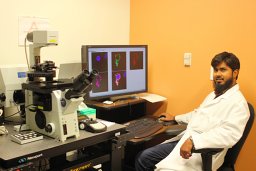 Mohammad Ansari合作论文数2Khatri Gourav合作论文数2
 Nazir M. Khan合作论文数Radiation Biology & Health Sciences Division, Bhabha Atomic Research Centre2Vandana Mishra合作论文数Department of Environmental Biology and Centre for Environmental Management of Degraded Ecosystems (CEMDE),, University of Delhi2
 Tariq M. Haqqi合作论文数School of Medicine, Case Western Reserve University;Rainbow Babies and Children ' s Hospital;University Hospitals of Cleveland;Case Western Reserve University, University Hospitals of Cleveland2
 Dr. Dara Ajay合作论文数Department of Pharmacoinformatics, National Institute of Pharmaceutical Education and Research (NIPER),2Nalinda Atapattu合作论文数1Jeanine Zieseniss合作论文数1
 Shreya Kar合作论文数1
 Kumar Alan Prem合作论文数Yong Loo Lin School of Medicine, National University of Singapore1Kumari Pragati合作论文数1




