OBJECTIVES:This study aimed to develop consensual definitions and semiquantitative scoring for structural damage on ultrasound and to test the reliability of individual components of a global Outcome Measures in Rheumatology ultrasound joint damage score (GLODS) in rheumatoid arthritis (RA). METHODS:A Delphi survey including statements on normal ultrasound appearance of joint features, scanning technique, new definitions, and scoring systems for 3 components of structural damage (bone erosions, cartilage change, and joint malalignment) was circulated among task force members. After agreement (≥75% of grades 4-5 on a 1-5 Likert scale) was achieved on the statements, datasets of ultrasound images representing various grades of the above-mentioned structural damage components were created and used in 2 web-based exercises. Finally, the metacarpophalangeal joints 1 to 5 of 7 patients with RA were scanned with ultrasound, twice on the same day by 7 task force members for detecting and scoring the 3 components using the consensus-based semiquantitative GLODS. Intraobserver and interobserver reliability of the new scoring system was measured by weighted kappa. RESULTS:Agreement on a total of 9 statements was reached in 4 Delphi rounds. Intraobserver and interobserver reliability for the individual components ranged from good to excellent in both the web-based (0.72-0.97) and the live exercises (0.68-0.89). Intraobserver and interobserver reliability of the total GLODS was shown to be excellent (0.92) and good (0.69), respectively. CONCLUSIONS:Ultrasound is a reliable tool for evaluating bone erosions, cartilage change, and joint malalignment in the hand joints of patients with RA. These features can be reliably integrated into a global ultrasound score.
Objectives The main objective was to generate a GLobal OMERACT Ultrasound DActylitis Score (GLOUDAS) in psoriatic arthritis and to test its reliability. To this end, we assessed the validity, feasibility and applicability of ultrasound assessment of finger entheses to incorporate them into the scoring system. Methods The study consisted of a stepwise process. First, in cadaveric specimens, we identified enthesis sites of the fingers by ultrasound and gross anatomy, and then verified presence of entheseal tissue in histological samples. We then selected the entheses to be incorporated into a dactylitis scoring system through a Delphi consensus process among international experts. Next, we established and defined the ultrasound components of dactylitis and their scoring systems using Delphi methodology. Finally, we tested the interobserver and intraobserver reliability of the consensus- based scoring systemin patients with psoriatic dactylitis. Results 32 entheses were identified in cadaveric fingers. The presence of entheseal tissues was confirmed in all cadaveric samples. Of these, following the consensus process, 12 entheses were selected for inclusion in GLOUDAS. Ultrasound components of GLOUDAS agreed on through the Delphi process were synovitis, tenosynovitis, enthesitis, subcutaneous tissue inflammation and periextensor tendon inflammation. The scoring system for each component was also agreed on. Interobserver reliability was fair to good (κ 0.39–0.71) and intraobserver reliability good to excellent (κ 0.80–0.88) for dactylitis components. Interobserver and intraobserver agreement for the total B-mode and Doppler mode scores (sum of the scores of the individual abnormalities) were excellent (interobserver intraclass correlation coefficient (ICC) 0.98 for B-mode and 0.99 for Doppler mode; intraobserver ICC 0.98 for both modes). Conclusions We have produced a consensus-driven ultrasound dactylitis scoring system that has shown acceptable interobserver reliability and excellent intraobserver reliability. Through anatomical knowledge, small entheses of the fingers were identified and histologically validated.
Objectives The efficacy of artificial intelligence (AI)-driven chatbots like ChatGPT4 in specialized medical consultations, particularly in rheumatology, remains underexplored. This study compares the proficiency of ChatGPT4' responses with practicing rheumatologists to inquiries from patients with SLE. Methods In this cross-sectional study, we curated 95 frequently asked questions (FAQs), including 55 in Chinese and 40 in English. Responses for FAQs from ChatGPT4 and five rheumatologists were scored separately by a panel of rheumatologists and a group of patients with SLE across six domains (scientific validity, logical consistency, comprehensibility, completeness, satisfaction level and empathy) on a 0-10 scale (a score of 0 indicates entirely incorrect responses, while 10 indicates accurate and comprehensive answers). Results Rheumatologists' scoring revealed that ChatGPT4-generated responses outperformed those from rheumatologists in satisfaction level and empathy, with mean differences of 0.537 (95% CI, 0.252-0.823; P < 0.01) and 0.460 (95% CI, 0.227-0.693; P < 0.01), respectively. From the SLE patients' perspective, ChatGPT4-generated responses were comparable to the rheumatologist-provided answers in all six domains. Subgroup analysis revealed ChatGPT4 responses were more logically consistent and complete regardless of language and exhibited greater comprehensibility, satisfaction and empathy in Chinese. However, ChatGPT4 responses were inferior in comprehensibility for English FAQs. Conclusion ChatGPT4 demonstrated comparable, possibly better in certain domains, to address FAQs from patients with SLE, when compared with the answers provided by specialists. This study showed the potential of applying ChatGPT4 to improve consultation in SLE patients.
Gout is one of the most common noncommunicable diseases in Hong Kong. Although effective treatment options are readily available, the management of gout in Hong Kong remains suboptimal. Like other countries, the treatment goal in Hong Kong usually focuses on relieving symptoms of gout but not treating the serum urate level to target. As a result, patients with gout continue to suffer from the debilitating arthritis, as well as the renal, metabolic, and cardiovascular complications associated with gout. The Hong Kong Society of Rheumatology spearheaded the development of these consensus recommendations through a Delphi exercise that involved rheumatologists, primary care physicians, and other specialists in Hong Kong. Recommendations on acute gout management, gout prophylaxis, treatment of hyperuricemia and its precautions, co-administration of non-gout medications with urate-lowering therapy, and lifestyle advice have been included. This paper serves as a reference guide to all healthcare providers who see patients who are at risk and are known to have this chronic but treatable condition.
The purpose of this prospective study is to compare the Chinese visceral adiposity index (CVAI) between early rheumatoid arthritis (ERA) patients and healthy controls; and to assess the relationship between CVAI and the bone microstructure using high-resolution peripheral quantitative computed tomography (HR-pQCT) in ERA patients. 104 female ERA and 100 age-, gender- and BMI-matched healthy controls were recruited for the comparison of CVAI. All ERA patients were prospectively followed for 1 year. HR-pQCT scan of the distal radius, tibia and second metacarpal head were performed at baseline and after one-year. ERA patients were divided into two sub-groups according to the median CVAI value (65.73) (low CVAI and high CVAI groups). CVAI in the ERA group was significantly higher than the controls group ( p = 0.01). At baseline, the high CVAI group had a higher ESR level ( p = 0.004) while the cortical volumetric bone mineral density (vBMD) was lower (at both the distal radius and tibia, all p < 0.05) compared to the low CVAI group. Linear regression analysis revealed that a higher baseline CVAI was an independent predictor of a lower cortical vBMD at month 12 (distal radius: B = − 0.626, p = 0.022, 95%CI − 1.914 to − 0.153; tibia: B = − 0.394, p = 0.003, 95%CI − 1.366 to − 0.290); and a greater reduction in trabecular vBMD (tibia: B = 0.444, p = 0.001, 95%CI 0.018–0.063; distal radius: B = 0.356, p = 0.008, 95%CI 0.403–0.063). In summary, CVAI is an independent predictor of trabecular bone loss in female patients with ERA, which may be augmented by a chronic inflammatory state in patients with visceral dysfunction of fat metabolism. Trial registration: http://Clinicaltrial.gov no: NCT01768923, 16/01/2013.
Anti-melanoma differentiation-associated gene 5 (MDA5) dermatomyositis is characterized by serological detection of anti-MDA5 antibody and rapidly progressive interstitial lung disease. In this study, the largest cohort of skin biopsies to date of anti-MDA5 dermatomyositis was reviewed and compared with cases of dermatomyositis with negative serology. Findings contribute to the histological diagnosis and evaluation of the severity of cutaneous inflammation in anti-MDA5 dermatomyositis. Skin biopsies collected over a 7-year period from individuals with clinically and histologically confirmed dermatomyositis with anti-MDA5 serology were reviewed. A total of 46 cases with 17 anti-MDA5 positive cases were retrieved. Patients with positive antibody were younger (53.7 vs. 60.6 years, p = .013). No differences in epidermal changes (p > .05) were observed. Pertaining to interface changes, anti-MDA5 dermatomyositis showed a higher degree of pigmentary incontinence (p = .014), suggesting increased and sustained cutaneous inflammation. Periodic acid-Schiff (PAS) stain demonstrated a greater degree of basement membrane thickening (p = .045). Other parameters, including dermal inflammation, dermal mucin deposition and vasculitic/vasculopathic features did not show statistical difference between anti-MDA5 positive and negative dermatomyositis (p > .05). Findings suggest increased cutaneous inflammation for anti-MDA5 dermatomyositis. In skin biopsies, marked pigmentary incontinence or basement membrane thickening should raise suspicion of anti-MDA5 dermatomyositis.
Henrik Sjögren was a Swedish ophthalmologist who wrote a dissertation (in German) consisting of a 131-page long monograph on patients who exhibited a constellation of keratitis sicca, xerostomia and arthritis. This article highlights several key moments of his life and work leading to the delineation of a new syndrome.
The Hong Kong Society of Rheumatology (HKSR) has developed evidence-based position statements on the use of magnetic resonance imaging (MRI) in axial spondyloarthritis (axSpA). A special interest group (SIG) developed the statements based on the literature review of the following research questions: 1) In whom should SI joint MRI be done to diagnose axSpA? 2) Should spine MRI be performed for diagnosis of axSpA? 3) Should spine and SI joint MRI be used in the assessment and monitoring of disease activity? 4) Which MRI sequence(s) should be used in axSpA? These statements have at least 75% agreement from voting rheumatology fellows of HKSR, and are developed to serve as local practice guidelines for rheumatologists and musculoskeletal radiologists in the management of axSpA.
Background Jagged ends of plasma DNA are a recently recognized class of fragmentomic markers for cell-free DNA, reflecting the activity of nucleases. A number of recent studies have also highlighted the importance of jagged ends in the context of pregnancy and oncology. However, knowledge regarding the generation of jagged ends is incomplete. Methods Jaggedness of plasma DNA was analyzed based on Jag-seq, which utilized the differential methylation signals introduced by the DNA end-repair process. We investigated the jagged ends in plasma DNA using mouse models by deleting the deoxyribonuclease 1 (Dnase1), DNA fragmentation factor subunit beta (Dffb), or deoxyribonuclease 1 like 3 (Dnase1l3) gene. Results Aberrations in the profile of plasma DNA jagged ends correlated with the type of nuclease that had been genetically deleted, depending on nucleosomal structures. The deletion of Dnase1l3 led to a significant reduction of jaggedness for those plasma DNA molecules involving more than 1 nucleosome (e.g., size ranges 240-290 bp, 330-380 bp, and 420-470 bp). However, less significant effects of Dnase1 and Dffb deletions were observed regarding different sizes of DNA fragments. Interestingly, the aberration in plasma DNA jagged ends related to multinucleosomes was observed in human subjects with familial systemic lupus erythematosus with Dnase1l3 deficiency and human subjects with sporadic systemic lupus erythematosus. Conclusions Detailed understanding of the relationship between nuclease and plasma DNA jaggedness has opened up avenues for biomarker development.
Objective Anti-melanoma differentiation-associated protein 5 (MDA5)-positive DM is associated with rapidly progressive interstitial lung disease (RP-ILD) and high mortality. This multicentre retrospective study aimed to identify predictors of mortality and RP-ILD. Methods Anti-MDA5-positive DM patients were identified from the Hong Kong Myositis Registry and the Clinical Data Analysis and Reporting System. Clinical characteristics were reviewed. Risk factors for mortality and RP-ILD were identified. Results Among the 116 recruited patients, 100 (86.2%) had ILD, 47 (40.5%) had RP-ILD and 44 (37.9%) patients died. Cox regression analysis revealed RP-ILD [hazard ratio (HR) 9.735 (95% CI 3.905, 24.272)], age >52 years [HR 4.750 (95% CI 1.692, 13.333)], ferritin level >2800 pmol/l [HR 3.042 (95% CI 1.323, 6.997)] and lactate dehydrogenase (LDH) >400 IU/l [HR 2.290 (95% CI 1.009, 5.198)] were independent predictors of mortality. With regard to RP-ILD, analyses showed that potential predictors at baseline included age >50 years [HR 2.640 (95% CI 1.277, 5.455)], LDH >300 IU/l [HR 3.189 (95% CI 1.469, 6.918)], fever [HR 1.903 (95% CI 0.956, 3.790)] and neutrophil:lymphocyte ratio >7.0 [HR 1.967 (95% CI 0.942, 4.107)]. We proposed a prediction model based on fever, LDH, age and white cell count (FLAW) to stratify the risk of development of RP-ILD. The probability of RP-ILD in a patient with a score of 4 was 100%. A small internal validation cohort showed the odds of RP-ILD with FLAW scores of 0, 1, 2 and 3 were 0%, 0%, 42.9% and 75%, respectively. Conclusions Anti-MDA5-associated RP-ILD is significantly associated with poor survival rates. The FLAW model maybe useful to predict the development of RP-ILD.
Perspectives of women aged 18–45 years with chronic rheumatic diseases (CRD), and clinicians, in the Asia-Pacific (APAC) region are reported. Online surveys were completed by women, pregnant in the past 2–5 years, with moderate to severe rheumatoid arthritis (RA), psoriatic arthritis (PsA), axial spondyloarthritis (axSpA), and rheumatologists, obstetricians, orthopaedic surgeons who medically manage CRDs. Among 210 (RA 122, PsA 48, axSpA 40) patients, 52% (n = 109/210) delayed their decision to have children, most commonly due to concerns of passing on disease to offspring. 33% (n = 70/210) discussed family planning with a healthcare professional at diagnosis. Patients most often initiated discussions. 94% (n = 193/205) stopped treatment around pregnancy due to fear of fetal harm. 66% (n = 139/210) of patients felt they did not receive all relevant information on the impact of CRDs and treatment on pregnancy. Among 335 clinicians who participated, 82% (n = 143/174) of rheumatologists, 86% (n = 72/84) of obstetricians and 43% (n = 33/77) of orthopaedic surgeons agreed good disease control during pregnancy was their primary goal. 69% (n = 120/174) of rheumatologists were ‘very comfortable’ with prescribing tumour necrosis factor inhibitors (TNFi) for women aged 18–45 years. Comfort levels generally decreased with the onset of family planning. More obstetricians and orthopaedic surgeons supported avoiding TNFi during pregnancy than rheumatologists (40% [n = 34/84]/38% [n = 29/77] versus 16% [n = 28/174]). Access to more TNFi safety data during pregnancy was considered paramount for increasing clinician comfort. Patients and physicians need current information and multidisciplinary discussions for improved management of CRD in women in APAC.
Background Whether calprotectin could play a role in augmenting cardiovascular (CV) risk in patients with psoriatic arthritis (PsA) remains uncertain. The aim of this study is to elucidate the association between serum calprotectin level and subclinical atherosclerosis in patient with PsA. Method Seventy-eight PsA patients (age: 52 ± 10 years, 41 [52.6%] male) without CV disease were recruited into this cross-sectional study. Carotid intima-media thickness (cIMT) and the presence of plaque were determined by high-resolution ultrasound. Calprotectin levels in serum were quantified by enzyme-linked immunosorbent assay. The variables associated with the presence of carotid plaque (CP) were selected from the least absolute shrinkage and selection operator (LASSO) regression analysis. Results 29/78 (37.2%) of patient had carotid plaque (CP+ group). Serum calprotectin level was significantly higher in the CP+ group (CP− group: 564.6 [329.3–910.5] ng/ml; CP+ group: 721.3 [329.3–910.5] ng/ml, P = 0.005). Serum calprotectin level correlated with PsA disease duration (rho = 0.280, P = 0.013) and mean cIMT (rho = 0.249, P = 0.038). Using LASSO regression analysis, the levels of Ln-calprotectin (OR: 3.38, 95% CI [1.37, 9.47]; P = 0.026) and PsA disease duration (OR: 1.09, 95% CI [1.01, 1.18]; P = 0.013) were screened out from a total of 19 variables. The model in predicting the presence of CP was constructed by Ln-calprotectin and PsA disease duration with an area under the receiver-operating characteristic (ROC) curve of 0.744, (95 CI% [0.59, 0.80], P = 0.037). Conclusion Serum calprotectin level is associated with the presence of CP in PsA. Further studies are required to confirm whether this pathway is associated with CV events in PsA.
There has been a remarkable shift in the ways and means of knowledge exchange in recent times, with an exponential increase in sharing information online while braving widespread lockdowns amid a raging pandemic.1 The widespread use of social media (SoMe) among the youth (up to 70% in some surveys) opens the case for building an online community for collaborative learning with a global outreach.2 Digitalization of medicine has ushered in an era of emeetings, online mentoring, and ecollaborations, lending a unique enthusiasm and dynamics to an entire generation of scholars.35 Trending scientific information on #MedTwitter and #AcademicTwitter have made the conventional learning models less impactful, especially during the pandemic, which made physical presence an exception to the norm. However, these adaptive measures may be here to stay after the situation returns to normal.6 The use of SoMe for learning is notably slower among scholars in the AsiaPacific region, albeit gaining momentum in recent times.7,8 Central agencies like APLAR (Asia Pacific League of Associations for Rheumatology) have recorded a total number of 1127 followers on Twitter and 3835 followers on Facebook with a maximum engagement of 1708 people, while BSR (British Society of Rheumatology) has 13.1 k followers on Twitter (as seen in the first quarter of the year 2021). These numbers highlight the importance of increasing awareness about the scholarly use of SoMe among the youth of the AsiaPacific region.9 The number of followers may be improved by a charismatic presence; however, the quality and credibility of the content plays a larger role. Central agencies like APLAR, American College of Rheumatology (ACR), European League Against Rheumatism (EULAR), and so on, hold the potential to be the torchbearers in leading education on SoMe platforms while dispersing information for the lay public. They also may act as the credible sources for reliable engagement with other scholars, practitioners, researchers, allied specialists, allied health professionals, nurse practitioners, and most importantly, patients with chronic diseases. Moreover, an increased presence of academics on such platforms will improve the representation of AsiaPacific regional experts on a global platform, thus ensuring a holistic approach to shaping global communication and furthering scientific exchange.10 However, the scholars from the AsiaPacific countries may potentially face specific limitations in using SoMe. In this brief, the authors discuss the current landscape of SoMe in the AsiaPacific and explore solutions to enhance academic engagement on social media platforms (SMPs) for career advancement.
Background With increasing life expectancy in China, no large population-based studies have been done on the trend for musculoskeletal disorders in China. We have investigated the pattern and trend of five major musculoskeletal disorders in China from the Global Burden of Disease Study 2017 and its association with sociodemographic index (SDI). Methods The main outcome measures were incidence, prevalence, and disability-adjusted life years (DALYs) for rheumatoid arthritis, osteoarthritis, low back pain, neck pain, and gout. Average annual percent change (AAPC) and annual percent change (APC) between 1990 and 2017 were analyzed with Joinpoint regression. Results The age-standardized rate of incidence, prevalence, and DALYs for the five major musculoskeletal disorders increased with age. For SDI, the age-standardized rate of DALYs was zigzagged increasing for rheumatoid arthritis and curvilinear increasing for gout, curvilinear decreasing for low back pain, and reaching to the highest point for osteoarthritis and neck pain with an SDI value of 0.61. The AAPC in age-standardized rate of DALYs indicated an increasing trend for rheumatoid arthritis (0.20, 95% CI 0.07, 0.34), osteoarthritis (0.26, 95% CI 0.20, 0.31), neck pain (0.09, 95% CI 0.07, 0.12), and gout (0.25, 95% CI 0.23, 0.27), but a decreasing trend for low back pain (− 0.96, 95% CI − 0.98, − 0.93). The AAPC of risk factors indicated a decreasing trend in smoking (− 0.14, 95% CI − 0.24, − 0.04) for rheumatoid arthritis, smoking (− 0.22, 95% CI − 0.24, − 0.19) and occupational ergonomic factors (− 1.25, 95% CI − 1.29, − 1.21) for low back pain, and impaired kidney function (− 0.95, 95% CI − 1.00, − 0.90) for gout, but an increasing trend in high body-mass index for osteoarthritis (3.10, 95% CI 3.03, 3.17), low back pain (3.07, 95% CI 2.99, 3.14), and gout (3.12, 95% CI 3.04, 3.20). Comparing the burden of five musculoskeletal diseases in China with the 19 countries of G20, China ranked first to second in the number of DALYs, and 12th to 16th in age-standardized rate of DALYs. Conclusion There are remarkably complex temporal patterns in disease burden and risk factors for five major musculoskeletal disorders across past three decades. Population-wide initiatives targeting high body-mass index may mitigate the burden of musculoskeletal disorders.
Background: Psoriasis is a common, chronic, inflammatory, debilitating, systemic disease with a great impact on healthcare systems worldwide. As targeted therapies have transformed the therapeutic landscape, updated estimates of the Global Burden of Disease (GBD) imposed by psoriasis are necessary in order to evaluate the effects of past health care policies and to orient and inform new national and international healthcare strategies. Methods: Data were extracted from the GBD 2019 study, which collates a systematic review of relevant scientific literature, national surveys, claims data, and primary care sources on the prevalence of psoriasis. Prevalence data were combined with disability weight (DW) to yield years lived with disability (YLDs). Measures of burden at global, regional, and national levels were generated for incidence, prevalence, and YLDs, due to psoriatic disease. All measures were reported as absolute numbers, percentages, and crude and age-adjusted rates per 100,000 persons. In addition, psoriasis burden was assessed by socio-demographic index (SDI). Findings: According to the GBD 2019 methodology, there were 4,622,594 (95% uncertainty interval or UI 4,458,904-4,780,771) incident cases of psoriasis worldwide in 2019. The age-standardized incidence rate in 2019 was 57.8 (95% UI 55.8-59.7) per 100,000 people. With respect to 1990, this corresponded to a decrease of 20.0% (95% UI -20.2 to -19.8). By sex, the age-standardized incidence rate was similar between men [57.8 (95% UI 55.8-59.8) per 100,000 people] and women [(57.8 (95% UI 55.8-59.7) per 100,000 people]. With respect to 1990, this corresponded to a decrease by 19.5% (95% UI -19.8 to -19.2) and by 20.4% (95% UI -20.7 to -20.2) for men and women, respectively. The age-standardized incidence rate per 100,000 persons was found to vary widely across geographic locations. Regionally, high-income countries and territories had the highest age-standardized incidence rate of psoriasis [112.6 (95% UI 108.9-116.1)], followed by high-middle SDI countries [69.4 (95% UI 67.1-71.9)], while low SDI countries reported the lowest rate [38.1 (95% UI 36.8-39.5)]. Similar trends were detected for prevalence and YLDs. Conclusion: In general, psoriasis burden is greatest in the age group of 60-69 years, with a relatively similar burden among men and women. The burden is disproportionately greater in high-income and high SDI index countries of North America and Europe. With advances in psoriasis therapeutics, objective evaluation of psoriasis disease burden is critical to track the progress at the population level.
OBJECTIVE:To determine causal associations between genetically predicted TNF-α, IL-12p70 and IL-17 levels and risk of PsA.METHODS:The publicly available summary-level findings from genome-wide association studies (GWAS) was used to identify loci influencing normal physiological concentrations of TNF-α, IL-12p70 and IL-17 (n = 8293) among healthy individuals as exposure and a GWAS for PsA from the UK Biobank (PsA = 900, control = 462 033) as the outcome. A two-sample Mendelian randomization (MR) analysis was performed using the inverse-variance weighted (IVW), weighted median and MR-Egger regression methods. Sensitivity analysis and MR-Egger regression analysis were performed to evaluate the heterogeneity and pleiotropic effects of each variant.RESULTS:Single-nucleotide polymorphisms (SNPs) at genome-wide significance from GWASs on TNF-α, IL-12p70 and IL-17 were identified as the instrumental variables. The IVW method indicated a causal association between increased IL-17 level and risk of PsA (β = -0.00186 per allele, s.e. = 0.00043, P = 0.002). Results were consistent in the weighted median method (β = -0.00145 per allele, s.e. = 0.00059, P = 0.014) although the MR-Egger method suggested a non-significant association (β = -0.00133 per allele, s.e. = 0.00087; P = 0.087). Single SNP MR results revealed that the C allele of rs117556572 was robustly associated with risk of PsA (β = 0.00210, s.e. = 0.00069, P = 0.002). However, no evidence for a causal effect was observed between TNF-α, IL-12p70, decreased IL-17 levels and risk of PsA.CONCLUSION:Our findings provide preliminary evidence that genetic variants predisposing to higher physiological IL-17 level are associated with decreased risk of PsA.
Aims: Psoriatic arthritis (PsA) is associated with accelerated atherosclerosis due to underlying inflammation. Whether inflammatory burden and drugs used to suppress inflammation over time are associated with cardiovascular (CV) events remained unclear. This study aims to examine the time-varying effect of C-reactive protein (CRP) levels and the use of drugs, including non-steroidal anti-inflammatory drugs (NSAIDs) and disease modifying anti-rheumatic drugs, on the risk of CV events independent of traditional CV risk factors in PsA patients. Methods: A retrospective cohort analysis was performed in patients with PsA who were recruited from 2008 to 2015 and followed until the end of 2019. The outcome was occurrence of a first CV event. Framingham risk score (FRS) was used to quantify the traditional CV risk. Cox proportional hazard models with time-varying CRP levels and drugs used were analysed to identify the risk factors for CV events in PsA patients. Results: Two hundred patients with PsA [median age: 47.5 (40.0–56.0); male: 119 (59.5%)] were recruited. After a mean follow-up of 8.8 ± 3.8 years, 30 (15%) patients developed a first CV event. The multivariable Cox regression model showed that time-varying CRP level [hazard ratio (HR) 1.02, 95% confidence interval (CI) 1.00–1.04] and NSAIDs exposure (HR 0.38, 95% CI 0.15–0.96) were significantly associated with CV events after adjusting for baseline FRS (HR 5.06, 95% CI 1.84–13.92). Conclusion: Increased inflammatory burden as reflected by elevated CRP level was associated with increased risk of CV events, while the risk was significantly reduced with NSAIDs use in PsA patients.
Postoperative renal impairment is a serious complication of major surgeries that leads to increased morbidity and mortality. The objective of our study was to identify the risk factors for renal impairment following total joint arthroplasty. Among 17 938 total joint arthroplasties performed between 2000 and 2007, patients developing renal complications were identified. For performing univariate and multivariate analyses, patients with renal impairment were matched in a 1:2 ratio with control group who did not develop renal impairment. Ninety-eight (0.55%) patients developed either acute renal failure or acute renal injury. We identified the following as independent risk factors: elevated body mass index; elevated preoperative serum creatinine; and history of chronic obstructive pulmonary disease, liver disease, congestive heart failure, hypertension, and underlying heart disease. Renal impairment was significantly associated with increased duration of hospital stay and with in-hospital and 1-year all-cause mortality. In high-risk patients, preoperative optimization might be considered in an attempt to reduce the incidence of such a complication.
OBJECTIVES:To determine the efficacy of biologics in preventing radiographic progression in peripheral joints of PsA patients.METHODS:Studies were searched in MEDLINE, Web of Science, and abstracts from the last three EULAR and ACR meetings up to 31 December 2019. Primary and secondary endpoints were the proportion of patients without radiographic progression and the mean change in total radiographic score at week 24.RESULTS:Eleven studies, involving 5382 patients, 9 drugs and 18 treatments, were included. Patients receiving biologics were more likely to achieve radiographic non-progression compared with placebo [odds ratio: pooled: 2.40, 95% CI: 2.00, 2.87; TNF inhibitors (TNFi): 2.94, 95% CI: 2.38, 3.63; IL inhibitors (ILi): 2.15, 95% CI: 1.69, 2.74; abatacept: 1.54, 95% CI: 1.03, 2.28] and have significantly lower radiographic progression [standardized mean difference (SMD): pooled: -2.16, 95% CI: -2.91, -1.41; TNFi: -2.82, 95% CI: -4.31, -1.33; ILi: -1.60, 95% CI: -2.49, -0.72; abatacept: -0.40, 95% CI: -0.59, -0.21]. Concomitant MTX therapy was not superior to monotherapy (SMD: pooled: 0.01, 95% CI: -0.07, 0.08; biologics: 0.01, 95% CI: -0.09, 0.11; placebo: -0.01, 95% CI: -0.13, 0.12). The effect of ustekinumab and secukinumab on radiographic progression was not influenced by prior anti-TNF therapy (SMD: -0.08, 95% CI: -0.25, 0.10).CONCLUSION:Biologic agents may retard radiographic progression in PsA patients in terms of bone erosion and joint space narrowing compared with placebo. MTX seems to have no added effect. Prior anti-TNF therapy seems to not influence the radiographic efficacy of IL blockers.
 Lai-Shan Tam合作论文数Prince of Wales Hospital Hong Kong, Prince of Wales Hospital44Edmund K. Li合作论文数26Tena K. Li合作论文数19
 I. T. Cheng合作论文数Department of Medicine & Therapeutics, The Chinese University of Hong Kong15Martin Li合作论文数14
 James F. Griffith合作论文数Department of Imaging and Interventional Radiology,The Chinese University of Hong Kong14
 Tracy Y Zhu合作论文数13Qing Shang合作论文数12
 Ling Qin (秦岭)合作论文数Musculoskeletal Research Laboratory, Department of Orthopaedics & Traumatology, The Chinese University of Hong Kong;Institute for Tissue Engineering and Regenerative Medicine, The Chinese University of Hong Kong11
 Dongze WU合作论文数10
 Pui Wai Alex Lee (李沛威)合作论文数Department of Medicine & Therapeutics, Faculty of Medicine, The Chinese University of Hong Kong;Li Ka Shing Institute of Health Sciences, The Chinese University of Hong Kong;Prince of Wales Hospital, Hospital Authority8
 Vivian W Y Hung合作论文数8Steven H Lam合作论文数7
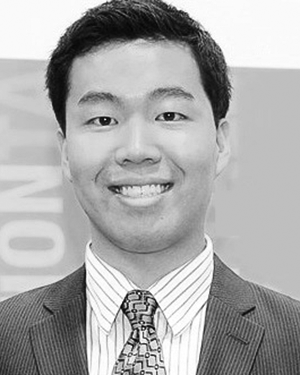 Jack J Lee合作论文数7
 Lin Shi合作论文数Research Centre for Medical Image Computing, Faculty of Medicine, The Chinese University of Hong Kong;Division of Neurology, Department of Medicine and Therapeutics, The Chinese University of Hong Kong;Division of Biomedical Engineering, The Chinese University of Hong Kong7Isaac C Yim合作论文数6
 Kitty Yan Kwok合作论文数6Jiang Yue合作论文数6Emily W Kun合作论文数6Lydia Ho Pui Tam合作论文数5Shirley K Ying合作论文数5Fan Xiao合作论文数Univ Hong Kong, Dept Pathol, Hong Kong, Peoples R China5Shen Jiayun合作论文数Department of Medicine and Therapeutics, The Chinese University of Hong Kong5So Ho合作论文数5Yip Ronald合作论文数5Mei Yan Law合作论文数4Steve Pang合作论文数4Mimi Chang合作论文数4Alexander Lee合作论文数4
 Jiankun Xu合作论文数4
 Defeng Wang (王德峰)合作论文数College of Medicine and Biological Information Engineering, Northeastern University;The Chinese University of Hong Kong4
 Cheuk-Man Yu (余卓文)合作论文数The Chinese University of Hong Kong4
 George A. Bruyn合作论文数Reumakliniek Lelystad4John E Sanderson合作论文数Beijing Anzhen Hospital, Capital Medical University3Lydia H P Tam合作论文数3Ronald Man Lung Yip合作论文数3Billy T Lai合作论文数3
 Lene Terslev合作论文数Department of Clinical Medicine, Faculty of Health and Medical Sciences, University of Copenhagen3
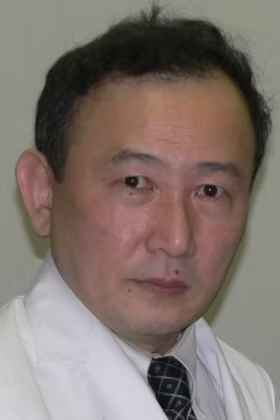 Yoshiya Tanaka合作论文数First Department of Internal Medicine, School of Medicine, University of Occupational and Environmental Health3Hanova Petra合作论文数3
 Rossa Chiu (趙慧君)合作论文数Department of Chemical Pathology, Faculty of Medicine, The Chinese University of Hong Kong3
 Chi Chiu Mok合作论文数Division of Rheumatology, Department of Medicine, Tuen Mun Hospital;The Chinese University of Hong Kong3Kei Ikeda合作论文数3
 Jieruo Gu (古洁若)合作论文数The Third Affiliated Hospital, Sun Yat-sen University3
 Bryan Ping Yen Yan (甄秉言)合作论文数Division of Cardiology, Department of Medicine & Therapeutics, Faculty of Medicine, The Chinese University of Hong Kong;Heart & Vascular Institute, The Chinese University of Hong Kong3
 CC Szeto (司徒卓俊)合作论文数Department of Medicine & Therapeutics, Faculty of Medicine, The Chinese University of Hong Kong;Division of Nephrology, The Chinese University of Hong Kong;Graduate Division of Medical Sciences, The Chinese University of Hong Kong3
 Dennis Yuk Ming Lo (卢煜明)合作论文数Department of Chemical Pathology, Faculty of Medicine, The Chinese University of Hong Kong3Rebecca Wing-Yan Chan合作论文数Prince of Wales Hospital, The Chinese University of Hong Kong3
 Chak Sing Lau (劉澤星)合作论文数Department of Medicine, School of Clinical Medicine, LKS Faculty of Medicine, The University of Hong Kong3




