Background: β-3 adrenoceptor (AR) activation is antiarrhythmic in a canine model of ventricular arrhythmia. Na-K ATPase (NKA) expression is higher in female than male rats and is stimulated by β-3 agonist due to an inhibitory oxidative modification. Objective: To test the hypothesis that mirabegron, a β-3 agonist approved by the FDA for treating overactive bladder, has more anti-fibrillatory effects in females than in male rabbit ventricles due to NKA stimulation. Methods: We performed optical mapping studies in 6 male and 6 female Langendorff-perfused rabbit hearts at baseline, then sequentially after adding mirabegron (500 and 1000 nM), followed by ouabain (500 nM), a specific NKA blocker. All hearts underwent 10 attempts of ventricular fibrillation (VF) induction with a ventricular burst pacing (20 Hz for 10 s) at each stage of the experiment. Results: A shows phase maps during VF. Triangles indicate PSs. Mirabegron 1000 nM significantly decreased VF inducibility (number of VF induced in the 10 attempts) from 4.8±3.2 to 2.2±2.9 (p=0.034) in females but not in males (from 4.5±2.6 to 5.0±2.8, p=0.656) ( B ). Consistent with our previous reports, Mirabegron 1000 nM decreased PSs/VF (number of phase singularity per VF episode) in females (from 10.5±2.7 to 2.9±3.3, p=0.010) but not in males (from 11.3±2.3 to 9.7±2.6, p=0.167). Adding ouabain did not reverse mirabegron’s effects on PSs/VF (2.4±3.9, p=0.706) in females. However, it decreased PSs/VF significantly in males (3.4±4.0, p=0.038). Mirabegron decreased conduction velocity (CV, activation time -1 , /s) in both males (from 40.3±6.5 to 30.4±5.3, p<0.001) and females (from 38.8±7.2 to 30.0±4.9, p=0.010). Adding ouabain did not further change CV in both males (31.6±8.2, p=0.434) and females (28.1± 5.3, p=0.066). Ouabain decreased APD 25 after mirabegron significantly (54.6±6.6 ms vs 68.4±3.4 ms in males, p=0.019; 51.4±6.9 ms vs 65.6±6.5 ms in females, p=0.049, 200 ms pacing cycle length), but did not change the APD 80 . Conclusion: Mirabegron reduced PSs/VF and VF inducibility more in females than males. These sex-specific antiarrhythmic effects were not affected by NKA blockade with ouabain.
Single-point missense mutations in the 3 calmodulin (CaM) genes (CALM1, CALM2, CALM3) which encode the identical amino acid sequence, cause LQTS and/or CPVT. All 3 CaM genes are expressed in the heart. It remains unclear how a mutation in only 1 of 6 CaM alleles can give rise to severe arrhythmia.
OBJECTIVE:Postural orthostatic tachycardia syndrome (POTS) is associated with abnormal blood pressure (BP) regulation and increased prevalence of nocturnal nondipping. We hypothesized that nocturnal nondipping of BP is associated with elevated skin sympathetic nerve activity (SKNA) in POTS. METHOD:We used an ambulatory monitor to record SKNA and electrocardiogram from 79 participants with POTS (36 ± 11 years, 72 women), including 67 with simultaneous 24-h ambulatory BP monitoring. RESULTS:Nocturnal nondipping of BP was present in 19 of 67 (28%) participants. The nondipping group had a higher average SKNA (aSKNA) from midnight of day 1 to 0100 h on day 2 than the dipping group ( P = 0.016, P = 0.030, respectively). The differences (Δ) of aSKNA and mean BP between daytime and night-time were more significant in the dipping group compared with the nondipping group (ΔaSKNA 0.160 ± 0.103 vs. 0.095 ± 0.099 μV, P = 0.021, and Δmean BP 15.0 ± 5.2 vs. 4.9 ± 4.2 mmHg, P < 0.001, respectively). There were positive correlations between ΔaSKNA and standing norepinephrine (NE) (r = 0.421, P = 0.013) and the differences between standing and supine NE levels ( r = 0.411, P = 0.016). There were 53 (79%) patients with SBP less than 90 mmHg and 61 patients (91%) with DBP less than 60 mmHg. These hypotensive episodes were associated with aSKNA of 0.936 ± 0.081 and 0.936 ± 0.080 μV, respectively, which were both significantly lower than the nonhypotensive aSKNA (1.034 ± 0.087 μV, P < 0.001 for both) in the same patient. CONCLUSION:POTS patients with nocturnal nondipping have elevated nocturnal sympathetic tone and blunted reduction of SKNA between day and night. Hypotensive episodes were associated with reduced aSKNA.
ATHENA has been designed as a general purpose detector capable of delivering the full scientific scope of the Electron-Ion Collider. Careful technology choices provide fine tracking and momentum resolution, high performance electromagnetic and hadronic calorimetry, hadron identification over a wide kinematic range, and near-complete hermeticity. This article describes the detector design and its expected performance in the most relevant physics channels. It includes an evaluation of detector technology choices, the technical challenges to realizing the detector and the R D required to meet those challenges.
Background and objective: Atrial fibrillation (AF) is one of the most frequent asymptomatic arrhythmias associated with significant morbidity and mortality. Identifying the susceptibility to AF based on routine or continuous ECG recording is of considerable interest. Despite several P-wave characteristics and skin sympathetic nerve activity (SKNA) linked to AF onset, neither factor has offered accurate predictability. We propose a deep learning enabled method for AF risk prediction. Methods: We develop a novel MVPNet to predict the upcoming onset of paroxysmal AF. MVPNet combines wavelet-based feature extraction and a deep learning classifier. MVPNet detect the approaching of AF onset by analyzing the template and frequency in P-wave segments. The morphological variant P wave (MVP) analysis includes P-wave and SKNA features cross temporal-spectral domain. Subsequently, we designed an optimized lightweight convolutional neural network model to detect the MVP features of pre-AF episodes during sinus rhythm segments. Wideband ECG data obtained through the neuECG protocol from eight PAF patients with 177 times AF occurrence in this study. We compared the accuracy of AF prediction between ordinary ECG and neuECG. Results: The MVPNet effectively predicted the onset of AF episodes. 89% of ECG recorded at 5 min before the AF onset can be identified using neuECG. The proposed deep learning model, MVPNet, obtained a better precision and inference speed with less computing resources than existing models. The gradient activation map showed that neuECG recording may be a superior AF risk predictor. Conclusions: MVP analysis combined SKNA and P-wave parameters to improve predictive accuracy. The proposed MVPNet based on neuECG is superior to existing AF risk assessment with improved reliability and effectiveness. The method can be potentially applied in clinical scenarios for real-time, continuous AF prediction. (c) 2021 Elsevier B.V. All rights reserved.
BACKGROUND:Telethonin (TCAP) is a Z-disk protein that maintains cytoskeletal integrity and various signaling pathways in cardiomyocytes. TCAP is shown to modulate α-subunit of the human cardiac sodium channel (hNav 1.5) by direct interactions. Several TCAP variants are found in cardiomyopathies. We sought to investigate whether TCAP variants are associated with arrhythmia syndromes. METHODS:Mutational analyses for TCAP were performed in 303 Japanese patients with Brugada syndrome, arrhythmogenic right ventricular cardiomyopathy, and J-wave pattern ECG. Using patch-clamp techniques, electrophysiological characteristics of hNav 1.5 were studied in HEK-293 cells stably expressing hNav 1.5 and transiently transfected with wild-type (WT) or variant TCAP. RESULTS:We identified two TCAP variants, c.145G>A:p.E49K and c.458G>A:p.R153H, in four individuals. p.E49K was found in two patients with ARVC or BrS. p.R153H was found in two patients with BrS or J-wave pattern ECG. No patient had variant hNav 1.5. Patch-clamp experiments demonstrated that peak sodium currents were significantly reduced in cells expressing p.R153H and p.E49K compared with WT-TCAP (66%, p.R153H; 72%, p.E49K). Voltage dependency of peak IV curve was rightward-shifted by 5 mV in cells expressing p.E49K compared with WT-TCAP. Voltage dependency of activation was not leftward-shifted by p.R153H, while voltage dependency of steady-state inactivation was leftward-shifted by p.E49K. CONCLUSIONS:We found two TCAP variants in the patients with BrS, J-wave pattern ECG, and ARVC that can cause loss-of-function of the hNav 1.5 in heterologous expression systems. Our observation suggests that these variants might impair INa and be associated with the patients' electrophysiological phenotypes. Further studies linking our experimental data to clinical phenotypes are warranted.
Recognition of the role of hyperglycaemia in seizures is vital, because they tend to refractory to antiepileptic drugs and respond to insulin therapy and hydration.
OBJECTIVES:This study aimed to test the hypothesis that subcutaneous nerve activity (SCNA) can adequately estimate the cardiac sympathetic tone and the effects of cryoablation of the stellate ganglion in dogs with pacing-induced heart failure (HF). BACKGROUND:Recording of SCNA is a new method to estimate sympathetic tone in dogs. HF is known to increase sympathetic tone and atrial arrhythmias. METHODS:Twelve dogs with pacing-induced HF were studied using implanted radiotransmitters to record the stellate ganglia nerve activity (SGNA), vagal nerve activity, and SCNA. Of these, 6 dogs (ablation group) underwent bilateral stellate ganglia cryoablation before the rapid ventricular pacing; the remaining 6 dogs (control group) had rapid ventricular pacing only. In both groups, SCNA was compared with SGNA and the occurrence of arrhythmias. RESULTS:SCNA invariably increased before the 360 identified atrial tachyarrhythmia episodes in the 6 control dogs before and after HF induction. SCNA and SGNA correlated in all dogs with an average correlation coefficient of 0.64 (95% confidence interval: 0.58 to 0.70). Cryoablation of bilateral stellate ganglia significantly reduced SCNA from 0.34 ± 0.033 μV to 0.25 ± 0.028 μV (p = 0.03) and eliminated all atrial tachyarrhythmias. CONCLUSIONS:SCNA can be used to estimate cardiac sympathetic tone in dogs with pacing-induced HF. Cryoablation of the stellate ganglia reduced SCNA and arrhythmia vulnerability.
Neuronal elements distributed throughout the cardiac nervous system, from the level of the insular cortex to the intrinsic cardiac nervous system, are in constant communication with one another to ensure that cardiac output matches the dynamic process of regional blood flow demand. Neural elements in their various ‘levels’ become differentially recruited in the transduction of sensory inputs arising from the heart, major vessels, other visceral organs and somatic structures to optimize neuronal coordination of regional cardiac function. This White Paper will review the relevant aspects of the structural and functional organization for autonomic control of the heart in normal conditions, how these systems remodel/adapt during cardiac disease, and finally how such knowledge can be leveraged in the evolving realm of autonomic regulation therapy for cardiac therapeutics.
Sinoatrial node (SAN) automaticity is jointly regulated by a voltage (cyclic activation and deactivation of membrane ion channels) and Ca(2+) clocks (rhythmic spontaneous sarcoplasmic reticulum Ca(2+) release). Using optical mapping in Langendorff-perfused canine right atrium, we previously demonstrated that the β-adrenergic stimulation pushes the leading pacemaker to the superior SAN, which has the fastest activation rate and the most robust late diastolic intracellular calcium (Cai) elevation. Dysfunction of the superior SAN is commonly observed in animal models of heart failure and atrial fibrillation (AF), which are known to be associated with abnormal SAN automaticity. Using the 3D electroanatomic mapping techniques, we demonstrated that superior SAN served as the earliest atrial activation site (EAS) during sympathetic stimulation in healthy humans. In contrast, unresponsiveness of superior SAN to sympathetic stimulation was a characteristic finding in patients with AF and SAN dysfunction, and the 3D electroanatomic mapping technique had better diagnostic sensitivity than corrected SAN recovery time testing. However, both tests have significant limitations in detecting patients with symptomatic sick sinus syndrome. Recently, we reported that the location of the EAS can be predicted by the amplitudes of P-wave in the inferior leads. The inferior P-wave amplitudes can also be used to assess the superior SAN responsiveness to sympathetic stimulation. Inverted or isoelectric P-waves at baseline that fail to normalize during isoproterenol infusion suggest SAN dysfunction. P-wave morphology analyses may be helpful in determining the SAN function in patients at risk of symptomatic sick sinus syndrome.
Introduction: Phospholamban (PLB) regulates cardiac sarcoplasmic reticulum (SR) Ca 2+ -ATPase (SERCA2a), thus modulating SR Ca 2+ dynamics. Recent studies demonstrated that SERCA is involved in Ca 2+ uptake into the lumen of nuclear envelope (NE) of cardiomyocytes (CMs). However, the regulatory role of PLB on Ca 2+ uptake into NE remains unknown. Hypothesis: We hypothesize that PLB is also responsible for modulating nuclear Ca 2+ dynamics. Methods: Confocal immunofluorescence microscopy was used to determine subcellular expression of PLB. By using fluo-4 based confocal line-scan Ca 2+ imaging, we measured spontaneous Ca 2+ waves (SCWs) across both cytoplasmic and nuclear regions in isolated permeabilized mouse CMs. Results: Several anti-PLB antibodies strongly stained PLB at both SR and the perinuclear membranes in CMs. A PLB peptide (residues 1-31) eliminated all these anti-PLB antibody stains. To identify the functional role of PLB expressed in the perinuclear membranes, we took advantage of our recently established method that a Fab fragment of anti-PLB monoclonal antibody (Fab) reversed PLB inhibition specifically and increased SR Ca 2+ uptake and release. SCWs through the nuclear regions had typically relative low fluorescent amplitude (F/F 0 ) and slow decay time (t 1/2 ) compared to that in the cytoplasmic region. At the free intracellular Ca 2+ concentration ([Ca 2+ ] i ) of 400 nM, Fab (100 μg/mL) significantly enhanced F/F 0 and decreased t 1/2 of SCWs in both cytoplasmic and nuclear regions. After addition of Fab, F/F 0 of SCWs through the nuclear regions increased from 0.91±0.16 to 1.27±0.19 (n=9, p<.05) while t 1/2 decreased from 137.6±18.5 ms to 105.0±11.3 ms, (p<.05). Similar effects were also observed after phosphorylation of PLB by addition of 20 μM cAMP (F/F 0 =1.43±0.11 vs. 1.04±0.14 in control, p<.05; t 1/2 =107.82±10.9 ms vs. 139.21±20.1 ms in control, n=6, p<.05). At high [Ca 2+ ] i of 1000 nM where PLB does not inhibit SERCA2a, addition of cAMP or Fab had no significant effect on SCWs in both cytoplasmic and nuclear regions. Conclusions: We demonstrated that PLB is expressed in and around NE. Acute removal of PLB inhibition increased perinuclear/nuclear Ca 2+ uptake and release. PLB is critically involved in nuclear Ca 2+ signaling modulation.
AIMS:We hypothesized that carvedilol can effectively suppress autonomic nerve activity (ANA) in ambulatory dogs during sinus rhythm and atrial fibrillation (AF), and that carvedilol withdrawal can lead to rebound elevation of ANA. Carvedilol is known to block pre-junctional β2-adrenoceptor responsible for norepinephrine release.METHODS AND RESULTS:We implanted radiotransmitters to record stellate ganglion nerve activity (SGNA), vagal nerve activity (VNA), and superior left ganglionated plexi nerve activity (SLGPNA) in 12 ambulatory dogs. Carvedilol (12.5 mg orally twice a day) was given for 7 days during sinus rhythm (n = 8). Four of the eight dogs and an additional four dogs were paced into persistent AF. Carvedilol reduced heart rate [from 103 b.p.m. (95% confidence interval (CI), 100-105) to 100 b.p.m. (95% CI, 98-102), P = 0.044], suppressed integrated nerve activities (Int-NAs, SGNA by 17%, VNA by 19%, and SLGPNA by 12%; all P < 0.05 vs. the baseline), and significantly reduced the incidence (from 8 ± 6 to 3 ± 3 episodes/day, P < 0.05) and total duration (from 68 ± 64 to 16 ± 21 s/day, P < 0.05) of paroxysmal atrial tachycardia (PAT). Following the development of persistent AF, carvedilol loading was associated with AF termination in three dogs. In the remaining five dogs, Int-NAs were not significantly suppressed by carvedilol, but SGNA significantly increased by 16% after carvedilol withdrawal (P < 0.001).CONCLUSION:Carvedilol suppresses ANA and PAT in ambulatory dogs during sinus rhythm.
短時間に心室頻拍(VT)・細動(VF)を繰り返す電気的ストーム(ES)は,予後不良な病態である.ESは不全心や梗塞心に多く見られるが,不全心では活動電位持続時間(APD)は延長し,さらに APD不均一性も増大する.一方,VT/VF後のCa2+過負荷環境では, APDは逆に短縮する.これは不全心でアパミン感受性Ca2+依存性K+チャネル(IKAS)が増加することに起因し,この際Ca2+トランジェント持続時間の短縮を伴わないとlate phase 3 early afterdepolarizationが発生してESの原因となる.また,IKASは不全心でのAPD不均一性にも関与する.不全心でVT/VFを有する例では交感神経密度が高く,交感神経刺激はVT/VF後のAPD短縮を促進する.梗塞心では梗塞境界域でのコネキシン蛋白やIKASの減少が見られる.梗塞急性期には交感神経は除神経されるが,その後神経再生が起こる.神経再生は非梗塞領域にも見られるが,これは梗塞領域で生じた神経成長因子が軸索輸送により広がるためで,星状神経節の形態的・機能的リモデリングを伴い,ES発生に寄与する.
Autonomic nervous system activation can induce significant and heterogeneous changes of atrial electrophysiology and induce atrial tachyarrhythmias, including atrial tachycardia and atrial fibrillation (AF). The importance of the autonomic nervous system in atrial arrhythmogenesis is also supported by circadian variation in the incidence of symptomatic AF in humans. Methods that reduce autonomic innervation or outflow have been shown to reduce the incidence of spontaneous or induced atrial arrhythmias, suggesting that neuromodulation may be helpful in controlling AF. In this review, we focus on the relationship between the autonomic nervous system and the pathophysiology of AF and the potential benefit and limitations of neuromodulation in the management of this arrhythmia. We conclude that autonomic nerve activity plays an important role in the initiation and maintenance of AF, and modulating autonomic nerve function may contribute to AF control. Potential therapeutic applications include ganglionated plexus ablation, renal sympathetic denervation, cervical vagal nerve stimulation, baroreflex stimulation, cutaneous stimulation, novel drug approaches, and biological therapies. Although the role of the autonomic nervous system has long been recognized, new science and new technologies promise exciting prospects for the future.
 Shien-Fong Lin (林顯豐)合作论文数Institute of Biomedical Engineering, National Chiao Tung University41
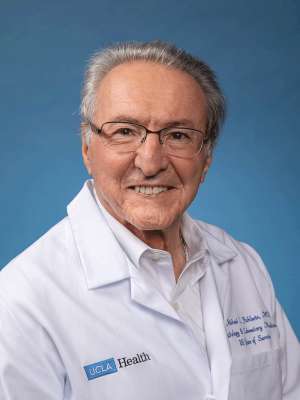 Michael C. Fishbein合作论文数Department of Pathology and Laboratory Medicine, University of California, Los Angeles;Jonsson Comprehensive Cancer Center, University of California, Los Angeles31
 Hrayr S. Karagueuzian合作论文数24Lan S. Chen合作论文数22Alex Y. Tan合作论文数Department of Medicine, Cedars-Sinai Medical Center13Sm Zhou合作论文数10Tj Wu合作论文数9
 Mark J. Shen合作论文数Krannert Institute of Cardiology, Indiana University School of Medicine9Mitsunori Maruyama合作论文数9
 James N. Weiss合作论文数Department of physiology, University of California, Los Angeles;David Geffen School of Medicine, University of California, Los Angeles8Yasushi Miyauchi合作论文数8
 Chung-Chuan Chou合作论文数Chang Gung Medical Hospital, Linkou8Masahiro Ogawa合作论文数7Shengmei Zhou合作论文数Department of Medicine, Cedars-Sinai Medical Center7
 Seong-Wook Han合作论文数Dongsan Medical Center, Keimyung University7
 Yuji Okuyama合作论文数6
 Eue-Keun Choi合作论文数Seoul National University, Seoul National University Hospital6
 Xiao Liu合作论文数Cedars Sinai Med Ctr, Smidt Heart Inst5Chun Hwang合作论文数5
 Jimin Cao (曹济民)合作论文数School of Basic Medical Sciences, Shanxi Medical University5
 Boyoung Joung合作论文数Department of Internal Medicine, Yonsei University;College of Medicine, Yonsei University;Cardiac Electrophysiology Laboratory, Yonsei University;Big Data Research Laboratory, Yonsei University5Yen-Bin Liu合作论文数5Juan Song合作论文数5Thomas H. Everett合作论文数University of California San Francisco5Tetsuji Shinohara合作论文数5Akira Hamabe合作论文数5C Hwang合作论文数4
 Alan Garfinkel合作论文数Department of Integrative Biology and Physiology, College of Life Sciences, University of California, Los Angeles4
 Park, Hyung Wook合作论文数Department of Cardiovascular Medicine, Chonnam National University Hospital;Department of Cardiovascular Medicine, College of Medicine, Chonnam National University4
 Hideki Hayashi合作论文数Department of Academic Surgery, Chiba University Graduate School of Medicine4Zhenhui Chen合作论文数4Hongmei Li合作论文数4Chikaya Omichi合作论文数4Cm Chang合作论文数3Juyi Wan合作论文数3
 C. Noel Bairey Merz合作论文数Barbra Streisand Women's Heart Center, Cedars-Sinai Medical Center;Preventative & Rehabilitative Cardiac Center, Cedars-Sinai Medical Center3
 Zhilin Qu合作论文数Department of Bioengineering, School of Engineering, University of California, Los Angeles3Lee Young Soo合作论文数3Yuan Yuan合作论文数3Chih-Tai Ting合作论文数3
 Hui Nam Pak合作论文数Department of Internal Medicine, Yonsei University;Severance Cardiovascular Hospital3Thomas Peter合作论文数3Tomohiko Ai合作论文数3
 Moon-Hyoung Lee合作论文数3Rn Doshi合作论文数2Ay Tan合作论文数2Byung Chun Jung合作论文数2Angela M Park合作论文数2




