Various graph models have emerged to meet diverse application needs, each with unique characteristics and specialties. Managing and analyzing graph data inevitably requires interactions across different models to serve upstream business requirements. Therefore, an Extract-Transform-Load (ETL) tool designed to bridge different graph models is desired. In this paper, we propose GETL, a generalized graph ETL framework capable of automatically identifying graph model schemas and performing seamless data conversion among RDF, RDF-star, labeled property graph, and the relational model. This is attributed to GETL's unified graph representation model, constructed as nested pairs, offering powerful capabilities in graph representation and model compatibility. Additionally, we develop a unified programming interface to support complex graph transformation tasks. It is built upon the Gremlin syntax and provides strong expressive capabilities. Finally, our evaluation demonstrates that GETL outperforms state-of-the-art solutions in terms of model conversion efficiency and data manipulation language (DML) intelligibility.
Wide-table vectors, where each embedding is linked with numerous structured attributes, are prevalent in applications such as autonomous driving and multimodal data processing for large-model training. Efficiently retrieving semantically similar vectors under attribute filters is crucial for these tasks, a problem addressed by Filtered Approximate Nearest Neighbor Search (FANNS). Recent approaches follow two paradigms: (1) building per-attribute dedicated indexes that integrate attribute information, which incurs prohibitive build time and storage in wide-table settings; or (2) building an attribute-agnostic general index and applying predicates at query time, which often degrades search efficiency. Consequently, neither paradigm adequately supports wide-table scenarios. We aim to achieve good query performance with low upfront cost by incorporating information from many attributes into a single graph index, avoiding prohibitive overhead. Our key observation is that graph-traversal information from past queries can be reused to optimize future queries with the same filter attribute. Based on this insight, we devise Graph with Adaptive Shortcuts (GAS), a framework that leverages historical query logs to build lightweight auxiliary structures, enhancing search efficiency over a single base graph with minimal overhead. Extensive experiments on real-world datasets show that GAS consistently outperforms existing general indexes in wide-table scenarios, achieving up to 42.1× speedup on datasets with thousands of structured attributes.
Vector databases have become a fundamental component for high-dimensional vector retrieval in artificial intelligence applications. Recent research has focused on filtered approximate nearest neighbor search (filtered ANN), which involves retrieving the nearest vectors that satisfy a given attribute-based filter. However, existing filters are generally limited to numerical range constraints or categorical existence checks, which restricts their applicability in more complex, real-world scenarios. In this paper, we investigate filtered ANN using graph range filters, where the retrieved vectors must be within a specified distance from the query node in a predefined filter graph. To address this problem, we propose DLH, a Distance-aware Labeling index with Hashing compression. DLH creates distance-aware labeling sets to enable efficient graph range filters via the simplified set intersection operations. Large labeling sets are further compressed into Bloom filters to improve query efficiency in DLH. Furthermore, recognizing that the query node is always involved in in-range queries of the graph range filters, we enhance DLH by memoizing the intermediate hashing index for the query node, yielding an optimized version called DLH-M. Experimental evaluations on diverse datasets demonstrate that DLH and DLH-M improve throughput by up to 70.3
Graph neural networks (GNNs) have become a prevalent framework for graph tasks. Many recent studies have proposed the use of graph convolution methods over the numerous subgraphs of each graph, known as subgraph graph neural networks. Despite their impressive performance, subgraph GNNs face challenges of both storage and computational inefficiencies due to the vast number and large size of subgraphs. In response to this problem, this paper introduces Ego-Nets-Fit-All (ENFA), a model that uniformly takes the small ego nets as subgraphs, thereby providing greater storage and computational efficiency, while at the same time guarantees identical outputs to the original subgraph GNNs. Experiments reveal that ENFA can reduce storage space by 29.0
An efficient data structure is fundamental to meeting the growing demands in dynamic graph processing. However, the dual requirements for graph computation efficiency (with contiguous structures) and graph update efficiency (with linked list-like structures) present a conflict in the design principles of graph structures. After experimental studies of state-of-the-art dynamic graph structures, we observe that the overhead of cache misses accounts for a major portion of the graph computation time. This paper presents GastCoCo, a system with graph storage and coroutine-based prefetch co-design. By employing software prefetching via stackless coroutines and designing a prefetch-friendly data structure CBList, GastCoCo significantly alleviates the performance degradation caused by cache misses. Our results show that GastCoCo outperforms state-of-the-art graph storage systems by 1.3×- 180×in graph updates and 1.4×- 41.1×in graph computation.
Large language models have shown exceptional capabilities in a wide range of tasks, such as text generation and video generation, among others. However, due to their massive parameter count, these models often require substantial storage space, imposing significant constraints on the machines deploying LLMs. To overcome this limitation, one research direction proposes to compress the models using integer replacements for floating-point numbers, in a process known as Quantization. Some recent studies suggest quantizing the key and value cache (KV Cache) of LLMs, and designing quantization techniques that treat the key and value matrices equivalently. This work delves deeper into the asymmetric structural roles of KV Cache, a phenomenon where the transformer's output loss is more sensitive to the quantization of key matrices. We conduct a systematic examination of the attention output error resulting from key and value quantization. The phenomenon inspires us to propose an asymmetric quantization strategy. Our approach allows for 1-bit quantization of the KV cache by implementing distinct configurations for key and value matrices. We carry out experiments across a variety of datasets, demonstrating that our proposed model allows for the quantization of up to 75 maintaining performance levels comparable to those of the models with floating parameters.
Iterative graph processing is widely used as a significant paradigm for large-scale data analysis. In many global businesses of multinational enterprises, graph-structure data is usually geographically distributed in different regions to support low-latency services. Geo-distributed graph processing suffers from the Wide Area Networks (WANs) with scarce and heterogeneous bandwidth, thus essentially differs from traditional distributed graph processing. In this paper, we propose RAGraph, a Region-Aware framework for geo-distributed graph processing. At the core of RAGraph, we design a region-aware graph processing framework that allows advancing inefficient global updates locally and enables sensible coordination-free message interactions and flexible replaceable communication module. In terms of graph data preprocessing, RAGraph introduces a contribution-driven edge migration algorithm to effectively utilize network resources. RAGraph also contains an adaptive hierarchical message interaction engine to switch interaction modes adaptively based on network heterogeneity and fluctuation, and a discrepancy-aware message filtering strategy to filter important messages. Experimental results show that RAGraph can achieve an average speedup of 9.7x (up to 98x) and an average WAN cost reduction of 78.5$% (up to 97.3%) compared with state-of-the-art systems.
The growing volume of graph data may exhaust the main memory. It is crucial to design a disk-based graph storage system to ingest updates and analyze graphs efficiently. However, existing dynamic graph storage systems suffer from read or write amplification and face the challenge of optimizing both read and write performance simultaneously. To address this challenge, we propose LSMGraph, a novel dynamic graph storage system that combines the write-friendly LSM-tree and the read-friendly CSR. It leverages the multi-level structure of LSM-trees to optimize write performance while utilizing the compact CSR structures embedded in the LSM-trees to boost read performance. LSMGraph uses a new memory structure, MemGraph, to efficiently cache graph updates and uses a multi-level index to speed up reads within the multi-level structure. Furthermore, LSMGraph incorporates a vertex-grained version control mechanism to mitigate the impact of LSM-tree compaction on read performance and ensure the correctness of concurrent read and write operations. Our evaluation shows that LSMGraph significantly outperforms state-of-the-art (graph) storage systems on both graph update and graph analytical workloads.
In many global businesses of multinational enterprises, graph-structure data is usually geographically distributed in different regions to support low-latency services. Geo-distributed graph processing suffers from the Wide Area Networks (WANs) with scarce and heterogeneous bandwidth, thus essentially differs from traditional distributed graph processing. In this paper, we propose RAGraph, a Region-Aware framework for geo-distributed graph processing. At the core of RAGraph, we design a region-aware graph processing framework that allows advancing inefficient global updates locally and enables sensible coordination-free message interactions. RAGraph also contains an adaptive hierarchical message interaction engine to switch interaction modes adaptively based on network heterogeneity and fluctuation, and a discrepancy-aware message filtering strategy to filter important messages. Finally, the experiments show that RAGraph can achieve 1.69X - 40.53X speedup and 20.9% - 97% WAN cost reduction compared with state-of-the-art systems.
Real-world graphs are constantly evolving, which demands updates of the previous analysis results to accommodate graph changes. By using the memoized previous computation state, incremental graph computation can reduce unnecessary recomputation. However, a small change may propagate over the whole graph and lead to large-scale iterative computations. To address this problem, we propose Layph, a two-layered graph framework. The upper layer is a skeleton of the graph which is much smaller than the original graph, and the lower layer has some disjoint subgraphs. Layph limits costly global iterative computations on the original graph to the small graph skeleton and a few subgraphs updated with the input graph changes. In this way, many vertices and edges are not involved in iterative computations, which significantly reduces the computation overhead and improves the performance of incremental graph processing. Our experimental results show that Layph outperforms current state-of-the-art incremental graph systems by 9.08× on average (up to 36.66×) in response time.
Graph algorithms support a broad spectrum of big data applications. A typical approach to scale graph algorithms is to run in a distributed and parallel setting with multiple processing devices. The approach requires balanced and effective utilization of computation, memory, and communication resources across devices. To address the problem, a large number of studies have been conducted, such as graph partitioning and asynchronous computation. However, there are still many outstanding issues yet to be solved. For example, the workloads can be skewed differently across devices, and between iterations, even with the state-of-the-art graph partitioners. As the graph partitions are typically static, they fall short in capturing the dynamic characteristics with different algorithms, inputs, and progress, leading to poor utilization of resources. Recently, GPUs have been increasingly used to accelerate various graph algorithms. Their highly efficient interconnection technologies, such as NVLink, open new opportunities for us to achieve better resource utilization. In this paper, we analyze the dynamic load-imbalance (DLB) problem and the long tail (LT) problem in multi-GPUs and solve them by adaptive remote work stealing on-the-fly. We first introduce a frontier stealing algorithm to solve the DLB problem, then an ownership stealing algorithm to solve the LT problem. Based on these two algorithms, we developed Gum — a multi-GPU graph processing system with high device utilization. We evaluated Gum on four typical graph algorithms (BFS, WCC, PR, SSSP). The results show that Gum can run up to an order of magnitude faster than Gunrock and Groute, with fewer stragglers and less synchronization overhead.
In recent years, a plethora of spectral graph neural networks (GNN) methods have utilized polynomial basis with learnable coefficients to achieve top-tier performances on many node-level tasks. Although various kinds of polynomial bases have been explored, each such method adopts a fixed polynomial basis which might not be the optimal choice for the given graph. Besides, we identify the so-called over-passing issue of these methods and show that it is somewhat rooted in their less-principled regularization strategy and unnormalized basis. In this paper, we make the first attempts to address these two issues. Leveraging Jacobi polynomials, we design a novel spectral GNN, LON-GNN, with Learnable OrthoNormal bases and prove that regularizing coefficients becomes equivalent to regularizing the norm of learned filter function now. We conduct extensive experiments on diverse graph datasets to evaluate the fitting and generalization capability of LON-GNN, where the results imply its superiority.
Recently, many applications have required the ability to perform dynamic graph analytical processing (GAP) tasks on the datasets generated by relational OLTP in real time. To meet the two key requirements of performance and freshness, this paper presents GART, an in-memory system that extends hybrid transactional/analytical processing (HTAP) systems to support GAP, resulting in hybrid transactional and graph analytical processing (HTGAP). GART fulfills two unique goals that are not encountered by HTAP systems. First, to adapt to rich workloads flexibility, GART proposes transparent data model conversion by graph extraction interfaces, which define rules for relational-graph mapping. Second, to ensure GAP performance, GART proposes an efficient dynamic graph storage with good locality that stems from key insights into HTGAP workloads, including (1) an efficient and mutable compressed sparse row (CSR) representation to guarantee the locality of edge scan, (2) a coarse-grained multi-version concurrency control (MVCC) scheme to reduce the temporal and spatial overhead of versioning, and (3) a flexible property storage to efficiently run different GAP workloads. Evaluations show that GART performs several orders of magnitude better than existing solutions in terms of freshness or performance. Meanwhile, for GAP workloads on the LDBC SNB dataset, GART outperforms the state-of-the-art general-purpose dynamic graph storage (i.e., LiveGraph) by up to 4.4x.
Spatial crowdsourcing has stimulated various new applications such as taxi calling and food delivery. A key enabler for these spatial crowdsourcing based applications is to plan routes for crowd workers to execute tasks given diverse requirements of workers and the spatial crowdsourcing platform. Despite extensive studies on task planning in spatial crowdsourcing, few have accounted for the location privacy of tasks, which may be misused by an untrustworthy platform. In this paper, we explore efficient task planning for workers while protecting the locations of tasks. Specifically, we define the Privacy-Preserving Task Planning (PPTP) problem, which aims at both total revenue maximization of the platform and differential privacy of task locations. We first apply the Laplacian mechanism to protect location privacy, and analyze its impact on the total revenue. Then we propose an effective and efficient task planning algorithm for the PPTP problem. Extensive experiments on both synthetic and real datasets validate the advantages of our algorithm in terms of total revenue and time cost.
With spatial crowdsourcing applications such as Uber and Waze deeply penetrated into everyday life, there is a growing concern to protect user privacy in spatial crowdsourcing. Particularly, locations of workers and tasks should be properly processed via certain privacy mechanism before reporting to the untrusted spatial crowdsourcing server for task assignment. Privacy mechanisms typically permute the location information, which tends to make task assignment ineffective. Prior studies only provide guarantees on privacy protection without assuring the effectiveness of task assignment. In this paper, we investigate privacy protection for online task assignment with the objective of minimizing the total distance, an important task assignment formulation in spatial crowdsourcing. We design a novel privacy mechanism based on Hierarchically Well-Separated Trees (HSTs). We prove that the mechanism is ε-Geo-Indistinguishable and show that there is a task assignment algorithm with a competitive ratio of O( ε 1/4 log N log 2 k), where ε is the privacy budget, N is the number of predefined points on the HST, and k is the matching size. Extensive experiments on synthetic and real datasets show that online task assignment under our privacy mechanism is notably more effective in terms of total distance than under prior differentially private mechanisms.
Dynamic ridesharing refers to services that arrange one-time shared rides on short notice. It underpins various real-world intelligent transportation applications such as car-pooling, food delivery and last-mile logistics. A core operation in dynamic ridesharing is the "insertion operator". Given a worker and a feasible route which contains a sequence of origin-destination pairs from previous requests, the insertion operator inserts a new origin-destination pair from a newly arrived request into the current route such that certain objective is optimized. Common optimization objectives include minimizing the maximum flow time of all requests and minimizing the total travel time of the worker. Despite its frequent usage, the insertion operator has a time complexity of O(n^3), where n is the number of all requests assigned to the worker. The cubic running time of insertion fundamentally limits the efficiency of urban-scale dynamic ridesharing based applications. In this paper, we propose a novel partition framework and a dynamic programming based insertion with a time complexity of O(n^2). We further improve the time efficiency of the insertion operator to O(n) harnessing efficient index structures, such as fenwick tree. Evaluations on two real-world large-scale datasets show that our methods can accelerate insertion by 1.5 to 998.1 times.
Crowdsourcing is anticipated as a promising paradigm for Future of Work (FoW), where groups of humans are engaged for problem-solving, services and innovation which are usually difficult for machines. During the entire workflow of crowdsourcing, intensive interactions take place between workers and the crowdsourcing platform, as well as among groups of workers. For sustainable crowdsourcing, the design and management of these interactions should not regard human workers as machines, but rather as individuals and social beings. In this article, we highlight the critical interactions in typical crowdsourcing ecosystems, summarize past efforts on human-centric interaction management in crowdsourcing, and discuss emerging interaction management research towards cross-platform crowdsourcing.
Spatial crowdsourcing emerges as a new computing paradigm with the development of mobile Internet and the ubiquity of mobile devices. The core of many real-world spatial crowdsourcing applications is to assign suitable tasks to proper workers in real time. Many works only assign a set of tasks to each worker without making the plan how to perform the assigned tasks. Others either make task plans only for a single worker or are unable to operate in real time. In this paper, we propose a new problem called the Multi-Worker-Aware Task Planning (MWATP) problem in the online scenario, in which we not only assign tasks to workers but also make plans for them, such that the total utility (revenue) is maximized. We prove that the offline version of MWATP problem is NP-hard, and no online algorithm has a constant competitive ratio on the MWATP problem. Two heuristic algorithms, called Delay-Planning and Fast-Planning, are proposed to solve the problem. Extensive experiments on synthetic and real datasets verify the effectiveness and efficiency of the two proposed algorithms.
Cars of the future have been predicted as shared and electric. There has been a rapid growth in electric vehicle (EV) sharing services worldwide in recent years. For EV-sharing platforms to excel, it is essential for them to offer private charging infrastructure for exclusive use that meets the charging demand of their clients. Particularly, they need to plan not only the places to build charging stations, but also the amounts of chargers per station, to maximally satisfy the requirements on global charging coverage and local charging demand. Existing research efforts are either inapplicable for their different problem formulations or are at a coarse granularity. In this paper, we formulate the \underlineE lectric \underlineV ehicle \underlineC harger \underlineP lanning (EVCP) problem especially for EV-sharing. We prove that the \shortpro problem is NP-hard, and design an approximation algorithm to solve the problem with a theoretical bound of $1-\frac1 e $. We also devise some optimization techniques to speed up the solution. Extensive experiments on real-world datasets validate the effectiveness and the efficiency of our proposed solutions.
These days, with the increasingly widespread employment of sensors, particularly those attached to vehicles, the collection of spatial data is becoming easier and more accurate. As a result, many relevant areas, such as spatial crowdsourcing, are gaining ever more attention. A typical spatial crowdsourcing scenario involves an employer publishing a task and some workers helping to accomplish it. However, most of previous studies have only considered the spatial information of workers and tasks, while ignoring individual variations among workers. In this paper, we consider the Software Development Team Formation (SDTF) problem, which aims to assemble a team of workers whose abilities satisfy the requirements of the task. After showing that the problem is NP-hard, we propose three greedy algorithms and a multiple-phase algorithm to approximately solve the problem. Extensive experiments are conducted on synthetic and real datasets, and the results verify the effectiveness and efficiency of our algorithms.
 Wenyuan Yu合作论文数Alibaba Group12
 Jingren Zhou合作论文数Alibaba Group10
 Yongxin Tong (童咏昕)合作论文数State Key Laboratory of Software Development Environment, School of Computer Science and Engineering, Beihang University7
 Shufeng Gong (巩树凤)合作论文数School of Computer Science and Engineering, Northeastern University6
 Yanfeng Zhang (张岩峰)合作论文数School of Computer Science and Engineering, Northeastern University6
 Ge Yu (于戈)合作论文数College of Computer Science and Engineering, Northeastern University6
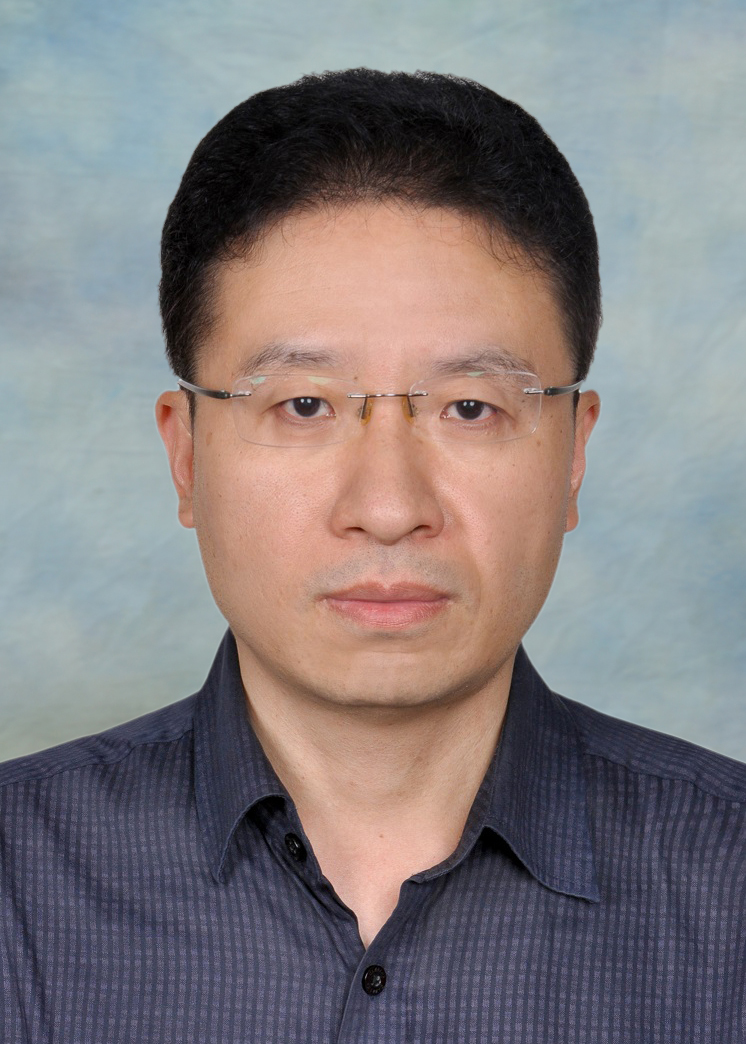 Ke Xu (许可)合作论文数School of Computer Science and Engineering, Beihang University5
 Zimu Zhou (周子慕)合作论文数Department of Data Science, City University of Hong Kong5
 Feng Yao合作论文数3Song Yu合作论文数3
 Sijie Shen合作论文数Shanghai Jiao Tong Univ, Inst Parallel & Distributed Syst, Shanghai, Peoples R China3
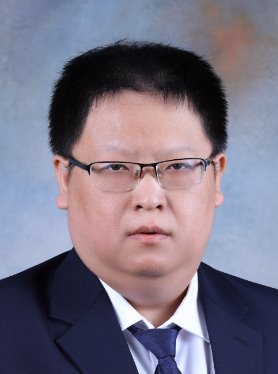 Yuxiang Zeng (曾宇祥)合作论文数School of Computer Science and Engineering, Beihang University3Tianshu Song合作论文数3
 Lei Chen (陳雷)合作论文数Department of Computer Science and Engineering, School of Engineering, The Hong Kong University of Science and Technology;Huawei Noah's Ark Lab3
 Bowen Du (杜博文)合作论文数State Key Lab of Software Development Environment, School of Computer Science and Engineering, Beihang University3
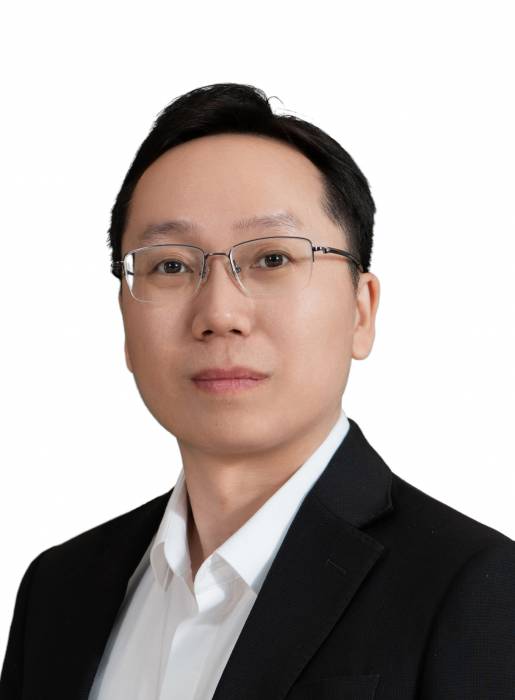 Haibo Chen (陈海波)合作论文数Institute of Parallel and Distributed Systems, School of Software, Shanghai Jiao Tong University2
 Yi Xu (徐毅)合作论文数北京航空航天大学2Lin Shi合作论文数2Lei Wang合作论文数Alibaba Group2Li Su合作论文数2
 Zihang Yao合作论文数2
 Longbin Lai合作论文数Univ New South Wales, Sydney, NSW, Australia2
 Yexuan Shi合作论文数SKLSDE Lab BDBC, Beihang Univ2
 Rong Chen (陈榕)合作论文数Institute of Parallel and Distributed Systems, School of Software, Shanghai Jiao Tong University;Shanghai AI Laboratory2Hongfu Li合作论文数1Zhixin Zhang合作论文数1Shuxian Hu合作论文数1Yongze Yan合作论文数1B. Zang合作论文数1Pengxi Liu合作论文数1
 Zhen Wang (王桢)合作论文数School of Computer Science and Engineering, Sun Yat-sen University1Xue Li合作论文数1LI Shu-Yuan (李书缘)合作论文数1Ke Meng合作论文数1
 Qiang Yin (尹强)合作论文数School of Computer Science, Shanghai Jiao Tong University1Qiange Wang合作论文数Northeastern Univ1Feng Zhu合作论文数Baidu Research1Luo Xiaojian合作论文数1
 Muhan Zhang (张牧涵)合作论文数Institute for Artificial Intelligence, Peking University1
 Yaliang Li合作论文数Tongyi Lab, Alibaba Group1
 Chao Tian (田超)合作论文数School of Computer Science and Engineering, Beihang University1
 Xiyuan Wang (王希元)合作论文数School of Intelligence Science and Technology, Peking University;Institute of Artificial Intelligence, Peking University1
 Geng Liang合作论文数North China Electric Power University, North China Electric Power University1
 Wenjun Zhou合作论文数Haslam College of Business, The University of Tennessee Knoxville;College on Artificial Intelligence, Institute for Operations Research and the Management Sciences1
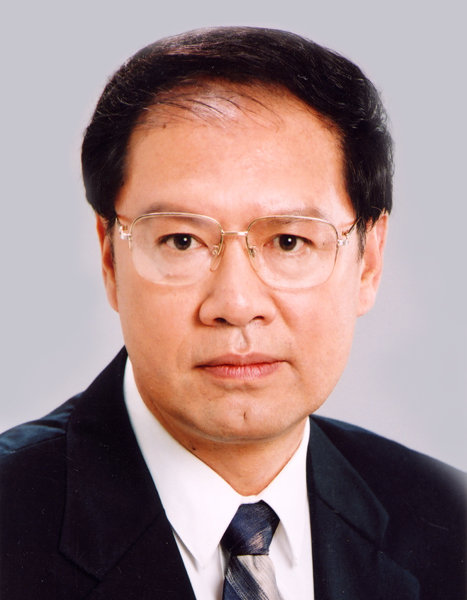 Wei Li (李未)合作论文数School of Computer Science and Engineering, Beihang University1
 Yansheng Wang (王晏晟)合作论文数State Key Laboratory of Software Development Environment, School of Computer Science and Enigneering, Beihang University1
 Zhewei Wei (魏哲巍)合作论文数Gaoling School of Artificial Intelligence, Renmin University of China1




