Bio-oils are an important part of the future energy composition.
Based on the characteristic of an ultrasonic sensor that can sense the external environment, we design an intelligent vehicle with obstacle avoidance function. First, we use MSP430 as the core of the design system. Then we use the ultrasonic sensors evenly distributed on the round zone of the obstacles, and to process the data and ambient temperature that transmitted from the ultrasonic receiver through the SCM. Finally, we make it to realize the function of intelligent controlling and avoiding obstacles automatically.
The supersaturation of total dissolved gas(TDG) downstream of dams,is one of the possible negative effects of hydropower stations on environment,which can lead to gas bubble disease or even death of fish.Based on the conceptual summarization of the TDG production process,the TDG prediction model for dam projects,in which the surface flow energy dissipation is adopted,is developed in this paper.The prediction model takes the average hydro-pressure as the main dependent variable.The model is more practical and easy to use because of avoiding using the dynamic pressure as the dependent variable,which is difficult to quantify.The model is calibrated by field data and employed in the TDG prediction of Gongzui Hydropower Project to be built on the Dadu River.
In order to resolve the issue concerning the relation of total dissolved gas(TDG) supersaturation and suspended sediment concentration of high-dams,a practical abatement measure for TDG supersaturation is put forward in this study.Based on a series of experiments,the production and release of TDG supersaturation in sediment laden flow are studied.The result shows that the production of TDG supersaturation remains almost the same level in either sediment laden flow or clear water for the same initial conditions.The rate of release of TDG supersaturation in sediment laden flow is significantly faster than that in clear water.The suspended sediment concentration can be increased through the use of bottom intakes,speeding up the release of TDG supersaturation.Such a measure can minimize the effect of TDG supersaturation on fish species in the downstream region of high-dams.
One of the possible negative environmental effects of hydropower stations is the supersaturation of total dissolved gas (TDG) downstream of high-dams, which can lead to gas bubble disease or even death of fish. By taking the TDG as the main study object, the paper launched the TDG field observations on Zipingpu, Three Gorges, Ertan, Manwan, Dachaoshan, Gongzui and Ertan dams in China. The factors affecting TDG generation and dissipation were explored. Energy dissipation structures, spill rates and operation patterns were the main factors causing TDG supersaturation. TDG saturations are essentially the same in the hydro-electric tail water and in the upper reaches, so hydro-electric tail water can be less TDG supersaturated through mixing downstream. The main factors affecting the dissipation process of the supersaturated TDG were tributary convergence, water depth and turbulence. TDG supersaturation was unevenly distributed in both the vertical and transverse directions. This study is important because it adds to the accumulating experience of TDG field observations of dam projects in China, and because it objectively and impartially evaluates the impacts of supersaturated TDG. The study also provides field data and references for future studies of TDG supersaturation caused by high-dams.
In this paper we study the distribution of the cardinality of the intersection of a centrally symmetric convex lattice set with lines perpendicular to x − axis or y − axis. For some centrally symmetric convex lattice set, we prove that neither the section counter function f x nor f y can be strictly increasing functions.
More and more high dams have been constructed and operated in China. The total dissolved gas (TDG) supersaturation caused by dam discharge leads to gas bubble disease or even death of fish. Through a series of experiments, the conditions and requirements of supersaturated TDG generation were examined in this study. The results show that pressure (water depth), aeration, and bubble dissolution time are required for supersaturated TDG generation, and the air-water contact area and turbulence intensity are the main factors that affect the generation rate of supersaturated TDG. The TDG supersaturation levels can be reduced by discharging water to shallow shoals downstream of the dam or using negative pressure pipelines. Furthermore, the TDG supersaturation levels in stilling basins have no direct relationship with those in reservoirs. These results are of great importance for further research on the prediction of supersaturated TDG generation caused by dam discharge and aquatic protection.
The release process of supersaturated total dissolved gas (TDG) in discharge water was studied through the laboratory experiments.The main factors for the release of gas from water were analyzed.The existing mathematic models for the release of the supersaturated TDG were validated by use of the prototype observations.Simultaneously,the formulas for the release coefficients were modified.On such a basis,the developed model was employed to predict the release process of supersaturated TDG of river section downstream a hydropower station on Jinsha River.
The problem of total dissolved gas (TDG) supersaturation downstream of high dams and its effects on aquatic life has been recognized and has been paid much attention in China. Field observations were carried out in July 2007, when the Ertan high dam discharge flooded. It shows that TDG supersaturation occurs downstream of the Ertan high dam at the large flood rates. The TDG levels relate closely to the discharge mode. The TDG dissipation rate is slow in Yalongjiang River. The convergence with other branches can speed up the TDG dissipation rate, but deep water depth offers less-effective gas dissipation. The study is of great help for the understanding of the TDG supersaturation problem downstream of high dams, and can also provide the basis and references for further theoretical study.
振动深松与生化制剂的有机结合旨在探求一种改良苏打盐碱土壤、快速修复草原生态环境的新方法.该文根据田间观测及室内试验,获得了盐碱土改良前后土壤物理化学指标的变化趋势.采用土壤水分特征指标法,定量了振动深松后深松层的土壤蓄水容量.利用方差分析方法分析了改良区增产效果.结果表明,集成技术对苏打盐碱土的改土、增产效果十分明显.其结论是采用振动深松技术改善了牧草生长的土壤环境,提高了降水有效利用率:与生化制剂的结合运用,降低盐碱对牧草根系的毒害,土壤中全氮、全磷和有机质等含量明显增加,提高了土壤肥力;经治理后的3~4a,改良区变为优质草场.
Based on interviews with retail food store managers and a subsequent survey, this paper traces the pathways that spawn competence acquisition in the retail food industry. It finds that having an essential capability for learning, that is, obtaining new ideas, concepts, methods, tends to breed competencies in a number of areas which are of both business and social significance. In this study, the capacity of this essential capability to generate competencies in efficient consumer response (ECR) and environmental management (EM) are examined. These competencies have attracted the attention of the retail food industry in its efforts to become more competitive with alternative retail food channels. The results show that firms possessing the essential capability of generating new ideas are more likely to have higher sales per square foot. Ties with suppliers lead to higher sales per square foot through improved environmental practices and more consumer education. Technical assistance helps retail grocers acquire a social competence in environmental management.
A mathematical spatial programming model developed to analyse changes in international and hinterland commodity flows through a regional port system is applied to wheat shipments through the U.S. Pacific Northwest port system. Two scenarios, one focusing on a Chinese quarantine on wheat shipments from the Pacific Northwest and the other on possible closure of barge transportation on the Columbia-Snake River, illustrate the capacity of the model to evaluate the impacts of international and hinterland shocks on the regional port system.
 Ran Li (李然)合作论文数College of Water Resources & Hydropower, Sichuan University5
 Kefeng Li (李克锋)合作论文数College of Water Resources & Hydropower, Sichuan University4
 Jia Li (李嘉)合作论文数College of Water Resource & Hydropower, Sichuan University4
 Yun Deng (邓云)合作论文数College of Water Resources & Hydropower, Sichuan University2
 Alfred Marcus合作论文数Strategic Management and Entrepreneurship Department, Carlson School of Management, University of Minnesota/Technological Leadership Institute, College of Science and Engineering, University of Minnesota2
 Xiang-gang Zhang合作论文数1Yinhan Gao合作论文数1
 Fengbin Huang (黄奉斌)合作论文数1Chang Yulong (常玉龙)合作论文数1Yuanping Yuan (袁远平)合作论文数1Zihao Zhang (张子豪)合作论文数1
 Kun Qian (钱堃)合作论文数School of Mechanical Engineering, Dalian University of Technology1FangHua Li (李芳花)合作论文数1
 Zhenjiang Si (司振江)合作论文数Heilongjiang Province Hydraulic Research Institute1
 Xia Jiang (江霞)合作论文数College of Carbon Neutrality Future Technology, Sichuan University1
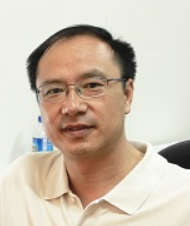 Lin Wang (王林)合作论文数School of Chemical Science and Technology, Yunnan University1
 Tianhao Wang (王天皓)合作论文数College of Instrumentation & Electrical Engineering, Jilin University1
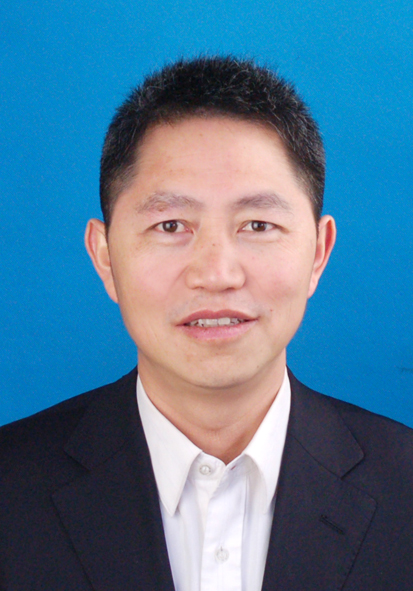 Hualin Wang (汪华林)合作论文数School of Resources and Environmental Engineering, East China University of Science and Technology1Lin Si (司林)合作论文数College of Science, Beijing Forestry University1Yan Huang (黄彦)合作论文数黑龙江省水利科学研究院1
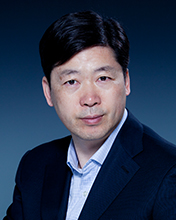 Yu Zhu (朱煜)合作论文数Institute of Mechatronics Engineering, Department of Mechanical Engineering, Tsinghua University1
 Jingjie Feng (冯镜洁)合作论文数College of Water Resources & Hydropower, Sichuan University1Junfeng Luo合作论文数1Zitong Wang合作论文数1
 Guoyong Song (宋国勇)合作论文数College of Materials Science and Technology, Beijing Forestry University1




