espanolEl uso potencial de la espectroscopia XAES para la identificacion de estados quimicos en la superficie ha sido demostrado una vez mas en este trabajo. Para este proposito, la informacion contenida en el parametro Auger modificado, junto con sus corrimientos y su relacion directa con la energia de correlacion hueco-hueco ha sido explotada exitosamente. El analisis detallado de la region del Auger KLL del oxigeno nos ha permitido caracterizar las muestras SLB1, VL1 and ULA1 al comparar esta region con la del Fe2O3, Al2O3, SiO2 y una mezcla mecanica de estos oxidos. Tambien hemos establecido claramente que las superficies de SLB1 y VL1 no son mezclas de oxidos, en acuerdo con nuestros trabajos previos de XPS EnglishThe potential use of XAES (X-ray excited Auger Electron Spectroscopy) for surface chemical states identification has been shown once more in this work. For this purpose, the information contained in the modified Auger parameter, together with its shifts and its direct relationship to the hole-hole correlation energy has been exploited successfully. The detailed analysis of the oxygen Auger KVV region has allowed us to characterize three natural aluminosilicate samples SLB1, VL1 and ULA1 by comparing this region to that of Fe2O3, Al2O3 and SiO2 and a mechanical mixture of these oxides. We have also clearly established that the surfaces of two of the aluminosilicates studied are not oxide mixtures, in agreement with our previous XPS works.
Here we report a study of the absorption spectrum of Mn-doped bulk crystal samples of Cu2SnSe3 which are also characterized by X-ray diffraction (XRD), electrical properties, and Raman spectroscopy. From the electrical data it is found that above 145K the electrical conduction is mainly due to activation in the valence band and below this temperature due to variable-range-hopping of Efros-Shklovskii type in the impurity band. Our XRD and Raman data show the presence of SnSe and SnSe2 binary secondary phases in this compound. From the absorption coefficient data at room temperature the fundamental absorption edge is determined to be direct with a band gap energy of E-G=(0.41 +/- 0.01)eV. An additional indirect band-to-band transition above 0.9eV, probably related to the band gap of SnSe, is observed.
In order to resolve the crystal structure and the corresponding space group of the tetrahedrally coordinated II–III2–V I4 defective semiconductor ZnGa2Se4, a study of the magnetic susceptibility of the alloy system Zn1−zMnzGa2Se4 is performed. The analysis of the Curie–Weiss temperature confirms, consistently with the phase diagram previously reported, that the room temperature crystal structure of the alloy system Zn1−zMnzGa2Se4 in all the composition ranges (0≤z≤1) is of defect chalcopyrite type with space group I4̄ while samples obtained at temperatures higher than about 500°C, which are rapidly cooled to room temperature, crystallizes in the partially disordered stannite-type structure I4̄2m. Hence, a careful process of crystal growth of this system, including a study of the phase diagram, annealing at adequate temperature, and slow cooling of the samples is necessary in order to obtain specimens in the ordered phase.
Los catalizadores a base de nanoparticulas de Fe en una matriz de silice de 200 m2/g fueron preparados para ser utilizados en la sintesis de alcoholes superiores a partir de la hidrogenacion del monoxido de carbono. En este trabajo se estudiaron por microgravimetria, XPS y Auger de alta resolucion dos catalizadores con contenido de Fe de 10% y 20% en condiciones de temperatura variable en atmosfera reductora y oxidante. Dada la alta relacion entre el area superficial y el volumen en estos catalizadores se realizo una comparacion entre su comportamiento microgravimetrico (tecnica de volumen) y su comportamiento en XPS y Auger (tecnicas de superficie). Se encontraron algunas diferencias entre las muestras con 10% de Fe y las que contienen 20% de Fe, que sugieren diferencias estructurales entre ambas muestras. Asi mismo se encontro que los estados de oxidacion del hierro no parecen modificarse sustancialmente con los distintos tratamientos, mientras que si se observan cambios notables en los estados de las bandas de valencia, indicando esto cambios en el entorno quimico del Fe.
This work addresses the effect of catalyst preparation method and the carrier compositions (MgO–La2O3) over the NiO-support interaction, which affect the reducibility, textural properties and the different oxygen species chemisorbed at different temperatures over MgO–La2O3 supported NiO catalysts. The materials were prepared by wet sequential impregnation and wet co-impregnation with different Mg molar fractions [Mg/(La+Mg)]. The samples were characterized by X-ray diffraction (XRD), temperature-programmed reduction (TPR), infrared (IR) spectroscopy, scanning electron microscopy (SEM), changes of surface potential and BET surface area measurements. The total oxidation of methane was use as model reaction. It has been found that the catalyst formulations (i.e. NiO/MgO–La2O3) and the preparation methods not only affect the interaction among the catalyst components, but also the texture and material morphology as a result of different degrees of particle aggregation. The wet sequential impregnation-prepared catalysts showed a stronger MgO–La2O3 interaction than wet co-impregnation-prepared samples. A marked tendency of NiO to react with MgO rather than La2O3 following a mechanism of lattice substitution is observed. Mg-free catalyst showed LaNiO3 and NiO as major crystalline Ni-containing phases. The ternary Ni–Mg–La–O system, on the other hand, facilitates the formation of poorly reducible Ni phase, whereas the La-free catalyst (i.e. NiO/MgO) displayed the lowest content of Ni-reducible phase, owing to the formation of Ni1−xMgxO solid solution. Measurements of surface potential changes together with catalytic studies suggest that La-containing catalysts present oxygen vacancies, which markedly affect the chemical nature of the surface oxygen species and hence their catalytic behaviour.
In this work we present the results of the oxygen adsorption on the NiO/MgO-La2O3 catalysts studied by the Kelvin probe technique. We have found that oxygen was adsorbed, for temperatures less than 423 K, as O- species over all the solid, while for the temperature range between 623 and 698 K was adsorbed as the O-= species on 100La-20Ni, and as O-2(-) species on 100Ma-20Ni.
A. Rodr´iguez, R. Casanova, F. Rueda y J. MendialduaLaboratorio de F´isica de Superficies, Departamento de F´isica, Facultad de Ciencias,Universidad de Los Andes, Merida 5101A-Venezuela´O. Delgado, I. Aray y S.L. Gonz´alez-Cort ´esLaboratorio de Cinetica y Cat´ ´alisis, Departamento de Qu ´imica, Facultad de Ciencias,Universidad de Los Andes, Merida 5101A-Venezuela´
In this work, Pt-Fe and Fe-Cu bi-metallic catalysts supported on monolithic structures composed of a clay mixture with alumina and zeolite FMI (3% Fe), were prepared separately. The incorporation of the metals was carried out using the simultaneous impregnation method in an approximate time of 30 min. then dried in air and calcinated for 4 h at 500°C. The catalysts obtained were used for VOC oxidation. For all catalysts studied, toluene completely oxidized to CO 2 and H 2 O. In the case of ethyl acetate, at relatively low temperatures, partial oxidation products such as ethanol, ethers, acetic acid and acetaldehyde were formed. While oxidation was complete above 280°C. For Pt-Fe catalysts, the influence of the catalytic bed size in the activity was studied. The monolith with the greatest length (6 cm) was the most efficient, reaching toluene conversion > 90%, at elevated flow rate and lower temperatures than those of the remaining catalysts: Pd-Fe and Pt-Cu. The existence of extensive surface zones was determined by the SEM (mapping) technique, where the Pt-Fe and Pd-Fe bi-metallic pair separately, are associated. Iron improves dispersion of Pt microcrystals. XPS results obtained for the Pt-Fe catalyst, indicate an electronic promoter effect between Pt and Fe.
X-ray photoelectron spectroscopy is used to characterize two natural samples of laterite standard reference materials (certified geologically), a mechanical mixture of Fe2O3, SiO2, and Al2O3 in a 4:2:1 proportion. Fe2O3, SiO2, and Al2O3 samples were also analyzed for comparison purposes. Special attention was paid to peak shape, FWHM, comparison of the same XPS peaks of different samples, and peak shifts. The XPS results reveal the presence of some kind of iron aluminate prevailing on the surface of the laterite standard reference materials. It is also observed that the mechanical mixture exhibits a differential charging effect. Our report provides important information for the researchers doing XPS on these materials when they are used in catalytic reactions.
Photoelectron spectroscopy (XPS) is used to characterize mainly two estandard latarite samples. Samples of Fe 2 O 3 , SiO 2 , and Al 2 O 3 were also analysed for comparison purposes. A detailed study of the O1s band of oxygenpresent in these samples allowed us to obtain information which was used to distinguish clearly the samples.
Photoelectron spectroscopy (XPS) is used to characterize mainly two estandard latarite samples. Samples of Fe2O3, SiO2, and Al2O3 were also analysed for comparison purposes. A detailed study of the O1s band of oxygen present in these samples allowed us to obtain information which was used to distinguish clearly the samples.
During carbon monoxide hydrogenation on a natural iron catalyst, two different behaviors were observed when the operating pressure was changed from 3.5 to 20.4 bar at 513 K and inlet H-2/CO of 2.0. A gradual increase in the catalyst activity to a maximum followed by a gradual loss in activity was observed at lower operating pressure. The surface composition (XPS) for the used catalyst is mainly alpha-Fe, alpha-SiO2, and a great amount of surface carbon (mainly graphitic carbon). After hydrogen reduction treatment or Ar ion etching iron carbide species appears on the surface. Aliphatic and polyaromatic species were observed by fourier transform infrared. On increasing the operating pressure up to 20.4 bar, a dramatic increase in carbon monoxide conversion (four times higher) under steady state conditions was observed. The bulk composition of the catalyst as determined by Mossbauer spectroscopy is Fe3O4, (50.0%), alpha-Fe (31.1%) and chi-Fe5C2 (18.9%) in correspondence to a gas phase constituted mainly by alkanes, Thus, alpha-Fe and Fe3O4 appears to be correlated with the catalytic activity whereas the deactivation process appears to be caused mainly by the formation of graphitic carbon on the catalyst surface. The formation of such deposit is inhibited at higher operating pressure, (C) 1999 Elsevier Science B.V. All rights reserved.
The potential of XPS as analytical tool has been used in this work to obtain important physical information relative to some vanadium oxides such as: V2O5, V6O13, VO2 and V2O3. Respect to the shake-up satellite associated with the oxygen Ols peak has been studied with some attention. We have presented some arguments that support the existence of a shake-up structure associated with the vanadium peak V2p(3/2) in V2O5. It isalso shown that the N-O/N-V ratio can not be used reliably to differentiate between different vanadium oxidation states.
The adsorption and polymerisation of benzene on TiO2(100)1×1 and 1×3 surfaces has been investigated using AES, UPS and XPS. Benzene was found to adopt a tilted configuration on the 1×3 surface, and a near parallel orientation on the 1×1 surface at sub-monolayer coverages. Polymerisation is observed on benzene-dosed surfaces after X-ray irradiation. In addition, polymerisation or dissociation is also observed after exposure of the benzene overlayer to an electron beam.
 J. Mendialdua合作论文数20F. Rueda合作论文数17
 Geoff Thornton合作论文数Dept of Chemistry, Faculty of Maths & Physical Sciences, University College London10
 Tien T. Tsong (鄭天佐)合作论文数Institute of Physics, Academia Sinica10A. Rodríguez合作论文数9P.L. Wincott合作论文数6L JALOWIECKI合作论文数6Yolande Barbaux合作论文数5alfonso rodriguez合作论文数4O. Delgado合作论文数4
 Sergio L. Gonzalez-Cortes合作论文数Laboratorio de Cinética y Catálisis, Universidad de Los Andes4Alfonso Loaiza-Gil合作论文数Laboratorio de Cinética y Catálisis, Universidad de Los Andes4Ismael Aray合作论文数3
 Alfonso Rodriguez合作论文数3K. Prabhakaran合作论文数3Leon Gengembre合作论文数3
 Christopher A. Muryn合作论文数School of Chemistry, University of Manchester3H. Raza合作论文数3
 Carlos Rincon合作论文数2P.J. Hardman合作论文数2D. Bouqueniaux合作论文数2I Colera合作论文数2Freddy Imbert合作论文数2
 Serbia M. A. Rodulfo-Baechler合作论文数2Pedro Hoffmann合作论文数2S.P. Harte合作论文数1Jl Desegovia合作论文数1
 Hector Del Castillo合作论文数1Humberto Figueroa合作论文数1Wilfredo Pernía合作论文数1alfonzo loaiza合作论文数1
 Gerzon E. Delgado合作论文数1
 H. Rojas合作论文数Centro de Microscopia Electronica “Mitzuo Ogura”,, Universidad Central de Venezuela1
 Claudio Lugo合作论文数1D. Purdie合作论文数1
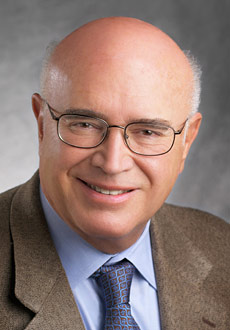 Gabor A. Somorjai合作论文数Somorjai Lab, College of Chemistry, University of California Berkeley;Lawrence Berkeley National Laboratory, College of Chemistry, University of California, Berkeley1
 P. Grima Gallardo合作论文数1Güoli Shen合作论文数1
 Manuel Morocoima合作论文数Centro de Estudios de Semiconductores, Universidad de Los Andes1
 Giovanni Marin合作论文数Centro de Estudios de Semiconductores, Universidad de los Andes1
 Heinz Heinemann合作论文数E. O. Lawrence Berkeley National Laboratory1G. Sánchez Pérez合作论文数1
 Gustavo Marcano合作论文数Centro de Estudios de Semiconductores, Universidad de Los Andes1Juan Mendialdua合作论文数1Bernardo Fontal合作论文数Laboratorio de Organometálicos, Universidad de Los Andes1
 A.L. Cabrera合作论文数Facultad de Fisica, Pontificia Universidad Catolica de Chile1Daniela Caldera合作论文数1
 Francis Delannay合作论文数Université Catholique de Louvain1Marcos Rosa-Brussin合作论文数1




