The physics motivation and the conceptual design of the PIONEER experiment, a next-generation rare pion decay experiment testing lepton flavor universality and CKM unitarity, are described. Phase I of the PIONEER experiment, which was proposed and approved at Paul Scherrer Institut, aims at measuring the charged-pion branching ratio to electrons vs.\ muons, $R_{e/\mu}$, 15 times more precisely than the current experimental result, reaching the precision of the Standard Model (SM) prediction at 1 part in $10^4$. Considering several inconsistencies between the SM predictions and data pointing towards the potential violation of lepton flavor universality, the PIONEER experiment will probe non-SM explanations of these anomalies through sensitivity to quantum effects of new particles up to the PeV mass scale. The later phases of the PIONEER experiment aim at improving the experimental precision of the branching ratio of pion beta decay (BRPB), $\pi^+\to \pi^0 e^+ \nu (\gamma)$, currently at $1.036(6)\times10^{-8}$, by a factor of three (Phase II) and an order of magnitude (Phase III). Such precise measurements of BRPB will allow for tests of CKM unitarity in light of the Cabibbo Angle Anomaly and the theoretically cleanest extraction of $|V_{ud}|$ at the 0.02\% level, comparable to the deduction from superallowed beta decays.
A next-generation rare pion decay experiment, PIONEER, is strongly motivated by several inconsistencies between Standard Model (SM) predictions and data pointing towards the potential violation of lepton flavor universality. It will probe non-SM explanations of these anomalies through sensitivity to quantum effects of new particles even if their masses are at very high scales. Measurement of the charged-pion branching ratio to electrons vs. muons Re/μ is extremely sensitive to a wide variety of new physics effects. At present, the SM prediction for Re/μ is known to 1 part in 104, which is 15 times more precise than the current experimental result. An experiment reaching the theoretical accuracy will test lepton flavor universality at an unprecedented level, probing mass scales up to the PeV range. Measurement of the rare process of pion beta decay, π+ → π0e+ν(γ), with 3 to 10-fold improvement in sensitivity, will determine |Vud| in a theoretically pristine manner and test CKM unitarity, which is very important in light of the recently emerged tensions. In addition, various exotic rare decays involving sterile neutrinos and axions will be searched for with unprecedented sensitivity. The experiment design benefits from experience
In the present work of the PIENU experiment, heavy neutrinos were sought in pion decays π + →µ + ν.No evidence for extra peak was found in the muon kinetic energy spectrum and 90% confidence level upper limits were set on the neutrino mixing matrix |U µi | 2 in the mass range of 15.7 to 33.8 MeV/c 2 , improving an order of magnitude over previous experiments.Current status of lepton universality test is also reported.
(PIENU Collaboration) Instituto de Ciencias Nucleares, Universidad Nacional Autónoma de México, CDMX 04510, México Department of Physics, Graduate School of Science, Osaka University, Toyonaka, Osaka, 560-0043, Japan Virginia Tech., Blacksburg, Virginia 24061, USA SUPA School of Physics and Astronomy, University of Glasgow, Glasgow, G12-8QQ, United Kingdom Department of Physics and Astronomy, University of British Columbia, Vancouver, British Columbia V6T 1Z1, Canada TRIUMF, 4004 Wesbrook Mall, Vancouver, British Columbia V6T 2A3, Canada Department of Engineering Physics, Tsinghua University, Beijing, 100084, China Physics Department, Arizona State University, Tempe, AZ 85287, USA Universidad Autónoma de Sinaloa, Culiacán, México PRISMA Cluster of Excellence and Institut für Kernphysik, Johannes Gutenberg-Universität Mainz, Johann-Joachim-Becher-Weg 45, D 55128 Mainz, Germany University of Northern British Columbia, Prince George, British Columbia V2N 4Z9, Canada KEK, 1-1 Oho, Tsukuba-shi, Ibaraki, 300-3256, Japan Physics Department, Osaka University, Toyonaka, Osaka, 560-0043, Japan Brookhaven National Laboratory, Upton, NY, 11973-5000, USA (Dated: February 10, 2021)
Published data on the emission of charged particles following nuclear muon capture are extremely limited. In addition to its interest as a probe of the nuclear response, these data are important for the design of some current searches for lepton flavor violation. This work presents momentum spectra of protons and deuterons following mu(-) capture in aluminum. It is the first measurement of a muon capture process performed with a tracking spectrometer. A precision of better than 10% over the momentum range of 100-190 MeV/c for protons is obtained; for deuterons of 145-250 MeV/c the precision is better than 20%. The observed partial yield of protons with emission momenta above 80 MeV/c (kinetic energy 3.4 MeV) is 0.0322 +/- 0.0007(stat) +/- 0.0022(syst) per capture, and for deuterons above 130 MeV/c (4.5 MeV) it is 0.0122 +/- 0.0009(stat) +/- 0.0006(syst). Extrapolating to total yields gives 0.045 +/- 0.001(stat) +/- 0.003 (syst) +/- 0.001(extrapolation) per capture for protons and 0.018 +/- 0.001(stat) +/- 0.001(syst) +/- 0.002(extrapolation) for deuterons, which are the most precise measurements of these quantities to date.
The rare pion decays π^+→μ^+ν_μνν̅ and π^+→e^+ν_eνν̅ are allowed in the Standard Model but highly suppressed. These decays were searched for using data from the PIENU experiment. A first result for Γ(π^+→μ^+ν_μνν̅)/Γ(π^+→μ^+ν_μ)<8.6×10^-6, and an improved measurement Γ(π^+→e^+ν_eνν̅)/Γ(π^+→μ^+ν_μ)<1.6×10^-7 were obtained.
(The PIENU Collaboration) Instituto de Ciencias Nucleares, Universidad Nacional Autónoma de México, CDMX 04510, México Physics Department, Osaka University, Toyonaka, Osaka, 560-0043, Japan Virginia Tech., Blacksburg, VA, 24061, USA SUPA School of Physics and Astronomy, University of Glasgow, Glasgow, United Kingdom Department of Physics and Astronomy, University of British Columbia, Vancouver, B.C., V6T 1Z1, Canada TRIUMF, 4004 Wesbrook Mall, Vancouver, B.C., V6T 2A3, Canada Department of Engineering Physics, Tsinghua University, Beijing, 100084, China Physics Department, Arizona State University, Tempe, AZ 85287, USA Universidad Autónoma de Sinaloa, Culiacán, México PRISMA Cluster of Excellence and Institut für Kernphysik, Johannes Gutenberg-Universität Mainz, Johann-Joachim-Becher-Weg 45, D 55128 Mainz, Germany University of Northern British Columbia, Prince George, B.C., V2N 4Z9, Canada KEK, 1-1 Oho, Tsukuba-shi, Ibaraki, Japan Brookhaven National Laboratory, Upton, NY, 11973-5000, USA (Dated: February 24, 2020)
The rare pion decays pi(+)->mu(+)nu(mu)nu(nu) over bar and pi(+)-> e(+)nu(e)nu(nu) over bar are allowed in the Standard Model but highly suppressed. These decays were searched for using data from the PIENU experiment. A first result for Gamma( pi(+)->mu(+)nu(mu)nu(nu) over bar)/Gamma(pi(+)->mu(+)nu(mu)) < 8.6 x 10(-6) and an improved measurement Gamma ( pi(+)-> e(+)nu(e)nu(nu) over bar)/Gamma(pi(+)->mu(+)nu(mu) ) < 1.6 x 10(-7) were obtained.
Charged lepton flavor violating muon decay ${\mu}^+{\rightarrow}e^+X_H$, where $X_H$ is a massive neutral boson, was sought by searching for extra peaks in the muon decay ${\mu}^+{\rightarrow}e^+{\nu}\bar{\nu}$ energy spectrum in the $m_{X_H}$ mass region $47.8-95.1$ MeV/$c^2$. No signal was found and 90% confidence level upper limits were set on the branching ratio ${\Gamma}({\mu}^+{\rightarrow}e^+X_H)/{\Gamma}({\mu}^+{\rightarrow}e^+{\nu}\bar{\nu})$ at the level of $10^{-5}$ for this region.
The rare pion decays ${\pi}^+{\rightarrow}{\mu}^+{\nu}_{\mu}{\nu}\bar{\nu}$ and ${\pi}^+{\rightarrow}e^+{\nu}_{e}{\nu}\bar{\nu}$ are allowed in the Standard Model but highly suppressed. These decays were searched for using data from the PIENU experiment. A first result for ${\Gamma}({\pi}^+{\rightarrow}{\mu}^+{\nu}_{\mu}{\nu}\bar{\nu})/{\Gamma}({\pi}^+{\rightarrow}{\mu}^+{\nu}_{\mu})<8.6{\times}10^{-6}$, and an improved measurement ${\Gamma}({\pi}^+{\rightarrow}{e}^+{\nu}_{e}{\nu}\bar{\nu})/{\Gamma}({\pi}^+{\rightarrow}{\mu}^+{\nu}_{\mu})<1.6{\times}10^{-7}$ were obtained.
The rare pion decays ${\pi}^+{\rightarrow}{\mu}^+{\nu}_{\mu}{\nu}\bar{\nu}$ and ${\pi}^+{\rightarrow}e^+{\nu}_{e}{\nu}\bar{\nu}$ are allowed in the Standard Model but highly suppressed. These decays were searched for using data from the PIENU experiment. A first result for ${\Gamma}({\pi}^+{\rightarrow}{\mu}^+{\nu}_{\mu}{\nu}\bar{\nu})/{\Gamma}({\pi}^+{\rightarrow}{\mu}^+{\nu}_{\mu})<8.6{\times}10^{-6}$, and an improved measurement ${\Gamma}({\pi}^+{\rightarrow}{e}^+{\nu}_{e}{\nu}\bar{\nu})/{\Gamma}({\pi}^+{\rightarrow}{\mu}^+{\nu}_{\mu})<1.6{\times}10^{-7}$ were obtained.
The rare pion decays ${\ensuremath{\pi}}^{+}\ensuremath{\rightarrow}{\ensuremath{\mu}}^{+}{\ensuremath{\nu}}_{\ensuremath{\mu}}\ensuremath{\nu}\overline{\ensuremath{\nu}}$ and ${\ensuremath{\pi}}^{+}\ensuremath{\rightarrow}{e}^{+}{\ensuremath{\nu}}_{e}\ensuremath{\nu}\overline{\ensuremath{\nu}}$ are allowed in the Standard Model but highly suppressed. These decays were searched for using data from the PIENU experiment. A first result for $\mathrm{\ensuremath{\Gamma}}({\ensuremath{\pi}}^{+}\ensuremath{\rightarrow}{\ensuremath{\mu}}^{+}{\ensuremath{\nu}}_{\ensuremath{\mu}}\ensuremath{\nu}\overline{\ensuremath{\nu}})/\mathrm{\ensuremath{\Gamma}}({\ensuremath{\pi}}^{+}\ensuremath{\rightarrow}{\ensuremath{\mu}}^{+}{\ensuremath{\nu}}_{\ensuremath{\mu}})<8.6\ifmmode\times\else\texttimes\fi{}{10}^{\ensuremath{-}6}$ and an improved measurement $\mathrm{\ensuremath{\Gamma}}({\ensuremath{\pi}}^{+}\ensuremath{\rightarrow}{e}^{+}{\ensuremath{\nu}}_{e}\ensuremath{\nu}\overline{\ensuremath{\nu}})/\mathrm{\ensuremath{\Gamma}}({\ensuremath{\pi}}^{+}\ensuremath{\rightarrow}{\ensuremath{\mu}}^{+}{\ensuremath{\nu}}_{\ensuremath{\mu}})<1.6\ifmmode\times\else\texttimes\fi{}{10}^{\ensuremath{-}7}$ were obtained.
Heavy neutrinos were sought in pion decays $pi^+ rightarrow mu^+ nu$ by examining the observed muon energy spectrum for extra peaks in addition to the expected peak for a massless neutrino. No evidence for heavy neutrinos was observed. Upper limits were set on the neutrino mixing matrix $|U_{mu i}|^2$ in the neutrino mass region of 15.7--33.8 MeV/c$^2$, improving on previous results by an order of magnitude.
A search for massive neutrinos has been made in the decay pi(+) -> e(+)v. No evidence was found for extra peaks in the positron energy spectrum indicative of pion decays involving massive neutrinos (pi -> e(+)v(h)). Upper limits (90% C.L.) on the neutrino mixing matrix element vertical bar U-ei vertical bar(2) in the neutrino mass region 60-135 MeV/c(2) were set and are an order of magnitude improvement over previous results.
TRIUMF, 4004 Wesbrook Mall, Vancouver, B.C., V6T 2A3, Canada Inst. de Ciencias Nucl., Univ. Nacional Autónoma de México, CDMX 04510, México Physics Department, Osaka University, Toyonaka, Osaka, 560-0043, Japan Virginia Tech., Blacksburg, VA, 24061, USA SUPA School of Physics and Astronomy, Univ. of Glasgow, Glasgow, United Kingdom Dept. of Phys. and Astronomy, Univ. of British Columbia, Vancouver, V6T 1Z1, Canada Department of Engineering Physics, Tsinghua University, Beijing, 100084, China Physics Department, Arizona State University, Tempe, AZ 85287, USA Institut für Kernphysik, Johannes Gutenberg-Universität Mainz,
The PIENU experiment at TRIUMF aims to measure the branching ratio of the pion decay modes $R^{\pi}=[{\pi}^+{\rightarrow}e^+{\nu}_e({\gamma})]/[{\pi}^+{\rightarrow}{\mu}^+{\nu}_{\mu}({\gamma})]$ with precision of $<0.1\%$. Precise measurement of $R^{\pi}$ provides a stringent test of electron-muon universality in weak interactions. The current status of the PIENU experiment and future prospects are presented.
The PIENU experiment aims to measure the branching ratio of the charged pion decay with precision of < 0.1 %. This measurement is much sensitive to search for massive neutrinos coupled to electrons in \({\pi }^{+}{\rightarrow }e^{+}{\nu }_{e}\) decay. The initial analysis was completed and the upper limit on the neutrino mixing parameter |U e i |2 in the neutrino mass range of 0 to 55 MeV/c 2 was improved by a factor of 1.5, and the sensitivity for the mass range of 68 to 129 MeV/c 2 was improve by a factor of up to 4.
The PIENU experiment at TRIUMF aims to measure the branching ratio of the pion decay modes Rπ=[π+→e+νe(γ)]/[π+→μ+νμ(γ)] with precision of <0.1%. Precise measurement of Rπ provides a stringent test of electron-muon universality in weak interactions. The current status of the PIENU experiment and future prospects are presented.
The PIENU experiment aims to measure the branching ratio of the charged pion decay with precision of < 0.1
 Melvin L. Brooks合作论文数Los Alamos National Laboratory57
 S. H. Aronson合作论文数55F. Matathias合作论文数54H. Delagrange合作论文数54V. Bumazhnov合作论文数54E. J. Desmond合作论文数54
 Artur Durum合作论文数54A. Hoover合作论文数54Abhay Deshpande合作论文数Brookhaven National Laboratory54
 Mickey Chiu合作论文数Physics Department, Brookhaven National Laboratory;NEXO;PHENIX54V. Papavassiliou合作论文数54P. L. McGaughey合作论文数Los Alamos National Laboratory54W. C. Chang合作论文数54Junsei Chiba (千葉順成)合作论文数Faculty of Science and Technology, Physics, Tokyo University of Science54
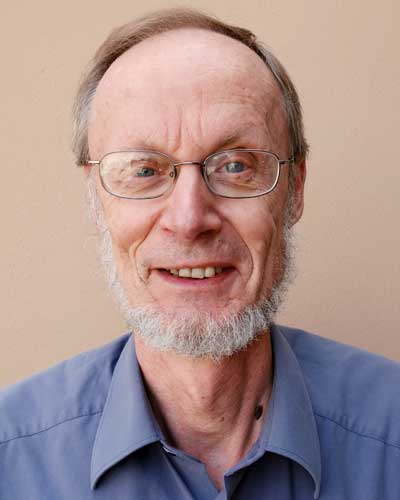 Bernd Bassalleck合作论文数Department of Physics and Astronomy, The University of New Mexico54Nichelle Lee Bruner合作论文数Voss Scientific LLC54B. Khachaturov合作论文数54Pieter J Kroon合作论文数54Dj Bucher合作论文数54R. K. Choudhury合作论文数Bhabha Atomic Research Centre, Mumbai, India54
 Yasuyuki Akiba合作论文数RHIC Physics Research Laboratory, Nishina Center for Accelerator-Based Science, RIKEN54Vv Baublis合作论文数54I. D. Ojha合作论文数54O. Dietzsch合作论文数54
 Alexei Denisov合作论文数Department of Experimental Physics, Institute for High Energy Physics54D. S. Brown合作论文数54Tk Ghosh合作论文数53S. Bathe合作论文数53
 John Haggerty合作论文数Physics Department, Brookhaven National Laboratory53S. F. Pate合作论文数53R. P. Pisani合作论文数53S. Kametani合作论文数53
 Yaroslav A. Berdnikov合作论文数Department of Experimental Nuclear Physics, Peter the Great St. Petersburg Polytechnic University;High Energy Physics Division, Petersburg Nuclear Physics Institute53
 Tatsuya Chujo合作论文数Institute of Physics, University of Tsukuba;Division of Physics, Faculty of Pure and Applied Sciences, University of Tsukuba53M. Grosse Perdekamp合作论文数Department of Physics, University of California53
 Michael Sivertz合作论文数University of California53T. Ichihara合作论文数53G. Mishra合作论文数53Wlodzimierz Guryn合作论文数Department of Physics, Brookhaven National Laboratory53J. T. Mitchell合作论文数53A. Kiyomichi合作论文数53F. K. Wohn合作论文数53W. Y. Jang合作论文数52Ks Sim合作论文数52Walter Sondheim合作论文数Los Alamos National Laboratory52W. A. Zajc合作论文数52S. K. Tuli合作论文数52A. D. Frawley合作论文数52
 Michael J. Tannenbaum合作论文数Physics Department, Brookhaven National Laboratory52




