The choice of an appropriate structure coding scheme is the secret to success in QSAR studies. Depending on the problem at hand, 2D or 3D descriptors have to be chosen; the consideration of electronic effects might be crucial, conformational flexibility has to be of special concern. Artificial neural networks, both with unsupervised and with supervised learning schemes, are powerful tools for establishing relationships between structure and physical, chemical, or biological properties. The EROS system for the simulation of chemical reactions is briefly presented and its application to the degradation of s-triazine herbicides is shown. It is further shown how the simulation of chemical reactions can be combined with the simulation of infrared spectra for the efficient identification of the structure of degradation products.
In combinatorial chemistry, hundreds of thousands of reactions are run in parallel, on beads, or simultaneously in solution. A careful planning of these reactions is therefore of paramount importance in order to influence the products obtained in these experiments. We present here three software systems that should assist the chemist in solving problems metin combinatorial chemistry: WODCA can be used for the planning of the synthesis of combinatorial libraries. EROS is designed to model the course of chemical reactions to predict their products. CORA is a tool to analyze series of reactions such as those contained in reaction databases to derive knowledge that can be used in designing and simulating chemical reactions.
A comprehensive approach to exposure assessment of chemicals must include metabolites of the initial compounds. We present here an approach that combines a knowledge-based system for the prediction of degradation pathways with an analytical soil transport model. The performance of this combination of systems is illustrated with an analysis of seven s-triazine herbicides and their 35 degradation products. In a ranking procedure using the Hasse diagram technique, the relationships between chemical structure and the hazard potential in a loam soil scenario is analyzed. Sequences of chemical structures with comparable and non-comparable hazard potentials are identified.
A system has been developed that can derive from the structure and the mass spectrumof an organic compound the fragmentation and rearrangement reactions occurring in the mass spectrometer. Peak intensities are used to calculate conversion probabilities for the individual reaction steps of the fragmentations scheme. These analyses can be performed for all classes of organic compounds except saturated hydrocarbons and explain between 70 and 100% of the intensity of quality mass spectra. A study on a series of C4-amines illustrates the approach and its results.
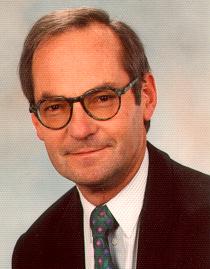 Johann Gasteiger合作论文数Computer-Chemie-Centrum, University of Erlangen-Nürnberg;Institute for Organic Chemistry, University of Erlangen-Nürnberg5
 T Kostka合作论文数2Susanne Bauerschmidt合作论文数2J Altschuh合作论文数1T Kleinoder合作论文数1Alexander von Homeyer合作论文数1K.‐P. Schulz合作论文数1Thomas Kostka合作论文数1Wd Ihlenfeldt合作论文数1MC Hemmer合作论文数1Herwart Behrendt合作论文数1Markus Sitzmann合作论文数National Institutes of Health, National Cancer Institute1Wolfgang Hanebeck合作论文数1
 Paul Selzer合作论文数Novartis Institutes for BioMedical Research1Oliver Sacher合作论文数1Christof Schwab合作论文数1Stefan Sixt合作论文数1




