Real time radiation dose measurements are challenging in high dose rate environments such as those used for testing electronic devices or biological agents. Dosimetry needs in pulsed reactor fields and particle accelerator facilities require development of dosimeters with fast (10s of picoseconds) response to pulsed radiation, linear response over a wide range of dose rates (up to 10(11) Gy/s), high resistance to radiation damage, and successful operation in mixed gamma and neutron environments. Gallium arsenide photoconductive detectors (GaAs PCD) have been shown to exhibit many of these desirable characteristics, especially fast time response. Less than 50 ps time resolution has been demonstrated when previously irradiated by fission neutrons. We have conducted a study of the response-time dependence on neutron fluence, starting with fluences at similar to 10(14)n/cm(2). A 23-MeV electron beam was used to produce photoneutrons in a tungsten target for irradiation of a GaAs wafer from which PCDs were made. The process was modeled using MCNPX computer code and the simulation results were compared to the experimental measurements. GaAs PCDs were fabricated from both neutron-irradiated and non-irradiated GaAs samples. The results of the preliminary tests of these devices in accelerator-produced pulses of electron and bremsstrahlung radiation of various energies (13 to 35 MeV) and pulse lengths (100 ps to 4 mu s) are presented together with an overview of the future plans of continuing GaAs PCD research at Idaho State University.
At the Idaho Accelerator Center, we employed a pulsed bremsstrahlung photon beam generated from the 44-MeV, 1300MHz L-band electron Linac which was then directed onto a 99.9% natural magnesium target (isotopically 10% 25Mg). We investigated a method of measuring the 20.2ms half life of the photoproduced 24mNa isomer created in the process: γ+25Mg→p+24mNa. The telltale 472-keV gamma line was measured between the photon pulses with an HPGe detector shielded within a lead cave. We used an ion chamber for monitoring the photon beam and used a novel arrangement of Zr/Ni foils for ascertaining the angular distribution of the beam profile. We discuss our preliminary results and future plans for extracting photonuclear cross sections.
The method presented herein uses the MCNPX Monte Carlo particle transport code to track individual positrons and other particles through geometry that accounts for the detectors, backing foils, samples and sources with their actual sizes, positions and material characteristics. Polymer material, polydimethylsiloxane (PDMS), with different thickness of films served as samples. The excellent agreement between the experimental results and the MCNPX simulation of source correction effects for varied positron sources and different film thicknesses validates the applicability of the MCNPX code.
An S-band 20 MeV electron linear accelerator formerly used for medical applications has been recommissioned to provide a wide range of photonuclear activation studies as well as various radiation effects on biological and microelectronic systems. Four radiation effect applications involving the electron/photon beams are described. Photonuclear activation of a stable isotope of oxygen provides an active means of characterizing polymer degradation. Biological irradiations of microorganisms including bacteria were used to study total dose and dose-rate effects on survivability and the adaptation of these organisms to repeated exposures. Microelectronic devices including bipolar junction transistors (BJTs) and diodes were irradiated to study photocurrent from these devices as a function of peak dose rate with comparisons to computer modeling results. In addition, the 20 MeV linac may easily be converted to a medium energy neutron source which has been used to study neutron damage effects on transistors.
Quality control testing of ultrasound scanners is gaining importance as the use of diagnostic ultrasound become more quantitative in nature and the systems and probes more complex in design. As evidenced by the rise in popularity of the American College of Radiology's ultrasound accreditation program, the need for comprehensive quality control programs is clear. This workshop is designed to provide attendees an opportunity to learn the impact of scanners and probes on various aspects of image quality and to refresh their skills in ultrasound QA/QC testing. The essential physics of ultrasound imaging and instrumentation will be reviewed. QA/QC testing procedures required by accreditation programs and advisory organizations will be presented. The impact of scanner and probe deficiencies on both B‐mode and Doppler performance will be demonstrated. Tools for analyzing probes will also be demonstrated. Finally, a discussion of quality control of prostate brachytherapy ultrasound will be presented. In the second half of the workshop, attendees will be given the opportunity to use the various tools and phantoms in a hands‐on environment. Experienced instructors will be at the ultrasound scanners to guide the exercises. Two identical sessions will be conducted, one in the morning and the second in the afternoon. Educational Objectives: 1. To learn the effect of parameter settings and probes on various aspects of ultrasound imaging. 2. To observe the impact of system and probe deficiencies on ultrasound performance and image quality. 3. To become acquainted with various ultrasound QC phantoms and test tools and learn their proper use.
Two techniques have recently been developed to quickly and easily apply positron annihilation spectroscopies to large structural components found in civil engineering, aviation, etc. In this paper, the authors discuss how to extend imaging capabilities to these new techniques, which will enable defect imaging similar to that obtained with positron micro-beams but at much larger sample sizes. Preliminary two-dimensional defect imaging results are presented from a highly damaged 30.5×30.5cm copper plate.
The first system to measure Doppler broadening of positron annihilation based on during electron-pulse bremsstrahlung radiation has been constructed and demonstrated. No photon-induced activation or positron emitters are involved in the process. The collimated bremsstrahlung radiation from a small electron accelerator, which exhibits excellent penetrability, is used to generate positrons inside the sample via pair production. The annihilation photons are recorded by a HPGe detector. The line-shape parameters of Doppler broadening can be used to identify defects in pure metals and alloys. The dependence of these parameters on different elements has been measured and shows promise as a probe of momentum of electronic wave-functions in pure and composite materials. This method also shows promise as an additional tool for measuring elemental composition, when used in conjunction with accelerator-based X-ray fluorescence.
Nondestructive assay and defect analysis probes based on bremsstrahlung-induced processes have been developed to identify elements and probe defects in large volume samples. Bremsstrahlung beams from (electron accelerators) with end-point energies both above and below neutron emission threshold have been used. Below neutron emission threshold these beams (from 6MeV small pulsed linacs), which exhibit high penetration, create positrons via pair production inside the material and produce X-ray fluorescence (XRF) radiation. Chemical assays of heavy elements in thick samples up to 10g/cm2 thick are provided by energy dispersive XRF measurements. The pair-produced positrons annihilate within the material, thereby emitting 511keV gamma radiation. Doppler broadening spectroscopy of the 511keV radiation can be performed to characterize the material and measure defects in samples of any desired thickness. This technique has successfully measured induced strain due to tensile stress in steel samples of 0.64cm thick. Bremsstrahlung beams above neutron emission threshold, from a 20MeV pulsed electron linac, have also been used to produce residual nuclei in excited states via photonuclear reactions allowing the detection of heavy elements via their characteristic γ-rays. This can be developed into a technique to trace some heavy metals in large rocks and soils for environmental applications.
Modern tests of grand unification theories and the standard model spend considerable experimental effort in pursuit of rare decays. A common feature of these experiments is that they involve extremely rare decay processes and probe regions of the systems' decay curves which are very short compared to their mean lifetimes. A potential complication to interpretations of such experiments is the approximate nature of the exponential decay law for quasistationary states. We use the decay of the isomeric nuclear states Zr-90(gamma, n)Zr-90m (t(1/2) = 0.8 s) and Ba-137(gamma, n)Ba-136m (t(1/2) = 0.3 s) in the short time limit to search for predicted deviations from the exponential decay law. These experiments address the short-time electromagnetic decays of nuclei with half-lives of order a few seconds, and explore the as-yet untapped electromagnetic sector for short-time (t(min)/t(1/2) approximate to 10(-8)) violations of the exponential decay law: Isomeric states are photo-populated with bremsstrahlung beams from ISU's 30 MeV pulsed electron linac.
A new nondestructive accelerator based x-ray fluorescence (AXRF) approach has been developed to identify heavy metals in large-volume samples. Such samples are an important part of the process and waste streams of U.S Department of Energy sites, as well as other industries such as mining and milling. Distributions of heavy metal impurities in these process and waste samples can range from homogeneous to highly inhomogeneous, and non-destructive assays that can address both are urgently needed. Our approach is based on using high-energy, pulsed bremsstrahlung beams (3-6.5 MeV) from small electron accelerators to produce K-shell atomic fluorescence x-rays. This photon beam exhibits excellent penetration, which allows assays for soil-like samples up to 15 g/cm thick, with elemental impurities of atomic number greater than approximately 50. Fluorescence yield of a variety of targets was measured as a function of impurity atomic number, impurity homogeneity, and sample thickness. We report on actual and potential detection limits of heavy metal impurities in a soil matrix for a variety of samples using AXRF.
A series of fire tests was conducted under a smooth ceiling to investigate the ceiling gas flow as affected by ceiling slope, convective heat release rate of the fire and clearance between the fuel top surface and the ceiling. Besides a horizontal ceiling reference, three ceiling slopes were investigated: lo0, 20' and 30'. Pool fires were used as f i r e sources. Two pool diameters, two different fuels (heptane and methanol) and three ceiling clearances were used. In each test, measurements were made of ceiling gas temperatures, ceiling gas velocities, and fuel mass loss. Empirical correlations for the near-maximum gas velocity and excess temperature of the ceiling flow along the steepest run were established in terms of ceiling slope, radius from the point of intersection of the ceiling with the pool centerline, and characteristics of the undeflected plume at the ceiling level. The ceiling slope had a more pronounced effect on velocity variation along the steepest run than on temperature variation. In the upward direction, the rate of velocity decrease with radius was reduced significantly as the ceiling slope increased. In the downward direction, at a certain distance from the pool centerline, the flow separated from the ceiling and turned upward. The larger the ceiling slope, the sooner the turning occurred. Furthermore, the rate a t which gas temperature approached ambient i n the downward direction increased with ceiling slope, while the temperature decrease in the upward direction was not much affected by change of ceiling slope.
Experiments have been conducted to determine critical Froude numbers associated with required inflow of air to a fire space through wall and ceiling apertures to prevent escape of smoke. The experiments were conducted mostly on reduced, model scale, with verification i n a 2.4 m high test room. Critical Froude numbers, as formulated, were insensitive to aperture geometry. Those for wall apertures varied slowly and predictably with the vertical temperature distribution i n the room, consistent with a discharge coefficient of 0.64 for the inflow. Those for ceiling apertures exhibited a dependence on an aperture Grashof number, with both a high- Grashof number asymptote and an aperture low-Grashof number asymptote. While discharge coefficients for wall apertures can be considered constant near 0.64 for aperture Froude numbers larger than critical , the discharge coefficient for ceiling apertures increased from 0.19 near the critical Froude number, toward the familiar isothermal value for sharp-edged orifices of 0.61 near a Froude number seven times larger than the critical.
 Joseph F Harmon合作论文数6D. P. Wells合作论文数6J. Kwofie合作论文数3Tim J Roney合作论文数3F. A. Selim合作论文数2J Frank Harmon合作论文数2W. Scates合作论文数2Hsiang Kung合作论文数1JL Jones合作论文数1Jodie Corbridge合作论文数1
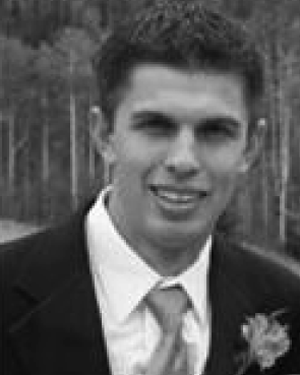 Joshua Hodges合作论文数1WW Scates合作论文数1wayne wingert合作论文数1george kharashvili合作论文数1jonathan abbott合作论文数1T. White合作论文数1
 Jagoda Urban-Klaehn合作论文数1Tf Gesell合作论文数1d pfeiffer合作论文数1
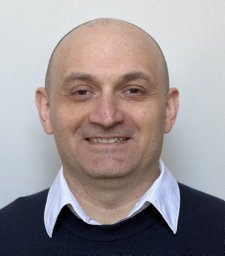 vakhtang makarashvili合作论文数Argonne Argonne National Laboratory1
 Hoffmann, R.C.合作论文数1
 Michael Smith合作论文数1
 Philip L Cole合作论文数1G Erickson合作论文数1J.L. Jones合作论文数1Gunnar Heskestad合作论文数1P. Stavrianidis合作论文数1S.P. Duttagupta合作论文数1Eric S Peterson合作论文数1J.L. Farley合作论文数1
 Farida Selim合作论文数Department of Physics & Astronomy, College of Arts and Sciences, Bowling Green State University1E.T.E. Reedy合作论文数1J. Petrisko合作论文数1Wendland Beezhold合作论文数1
 Subhasri Duttagupta合作论文数Indian Institute of Technology1J. Urban-Klaehn合作论文数1A. W. Hunt合作论文数1T. Webb合作论文数1




