<p>We present simultaneous Juno and Hubble Space Telescope of Jupiter's far-ultraviolet auroras obtained as part of a programme of observations covering 3 years of Juno's Extended Mission.&#160; We show that bright, expanded dusk-side southern main emission is associated with large-scale convection dynamics, dusk-side main emission arcs are associated with field-aligned currents, and equatorward diffuse emission and patches are associated with plasma injections in the middle magnetosphere occurring within intervals of enhanced plasma density, ongoing interchange motion and magnetospheric convection.&#160; These results shed light on the relation between the main auroral emission and magnetosphere-ionosphere coupling currents, and radial force balance in the magnetosphere. We also report on unusually bright and expanded southern auroral emissions observed during PJ 43.</p>
Juno flew within 1053 km of the surface of Ganymede on June 7, 2021. A unique data set of the interaction of its magnetosphere with the magnetosphere of Jupiter was obtained during the flyby. Auroral imaging was carried out by the UVS experiment simultaneous with the in-situ sampling of the polar cap ionosphere by the Waves, MAG, JEDI, and JADE experiments onboard Juno. Significant outflow of Ganymede’s polar cap ionosphere was observed as well as an in-situ sampling of reconnection processes near the magnetospheric boundary on the flank of the trailing side of the magnetospheric interaction region. Assuming that the electrons measured in the reconnection/interaction region are representative of the electrons producing the aurora, we use the UVS auroral vertical profiles obtained from the flyby and modeling to dramatically improve our understanding of the Ganymede atmosphere. The results of the relevant flyby measurements and the modeling of the atmosphere and aurora will be presented in this talk.
We present a discrete observation of diverse plasma populations and evidence of closed magnetic topology at Jupiter’s polar cap. Two distinct populations of protons are observed over Jupiter’s southern polar cap: a ~1 keV core population and ~1-300 keV dispersive conic population at 6-7 Jovian radii planetocentric distance. We find the 1 keV core protons are likely the seed population for the higher-energy dispersive conics. Transient wave-particle heating in a “pressure-cooker” process is likely responsible for this proton acceleration. The plasma characteristics and composition during this period show Jupiter's polar-most field lines can be topologically closed, with conjugate magnetic footpoints connected to both hemispheres. Finally, these observations demonstrate energetic protons can be accelerated into Jupiter's magnetotail via wave-particle coupling.
<p class="Nominal">We present a discrete observation of diverse plasma populations and evidence of closed magnetic topology at Jupiter&#8217;s polar cap. Two distinct populations of protons are observed over Jupiter&#8217;s southern polar cap: a ~1 keV core population and ~1-300 keV dispersive conic population at 6-7 Jovian radii&#160;planetocentric distance. We find the 1 keV core protons are likely the seed population for the higher-energy dispersive conics. Transient wave-particle heating in a &#8220;pressure-cooker&#8221; process is likely responsible for this proton acceleration. The plasma characteristics and composition during this period show Jupiter's polar-most field lines can be topologically closed, with conjugate magnetic footpoints connected to both hemispheres. Finally, these observations demonstrate energetic protons can be accelerated into Jupiter's magnetotail via wave-particle coupling.</p>
Jupiter’s ultraviolet (UV) aurora, the most powerful and intense in the solar system, is caused by energetic electrons precipitating from the magnetosphere into the atmosphere where they excite the molecular hydrogen. Electrons from ~50 eV to ~100 keV are characterized over the auroral regions by the Jovian Auroral Distributions Experiment (JADE) on Juno. Investigating the characteristics of electron distributions at these energies is critical for understanding the source population for the electrons that produce Jupiter’s UV aurora and the mechanisms that accelerated them to keV and MeV energies. In this study, we present a survey of electron distributions and moments derived from JADE in Jupiter’s polar magnetosphere. We quantify the electron properties (e.g. density and temperature) and explore similarities and differences in their distributions over several Juno perijove passes, focusing on regions near the main emission.
In large SEP events, ions can be accelerated at CME-driven shocks to very high energies. Spectra of heavy ions in many large SEP events show features such as roll-overs or spectral breaks. In some events when the spectra are plotted in energy/nucleon they can be shifted relative to each other to make the spectral breaks align. The amount of shift is charge-to-mass ratio (Q/A) dependent and varies from event to event. This can be understood if the spectra of heavy ions are organized by the diffusion coefficients (Cohen et al., 2005). In the work of Li et al. (2009), the Q/A dependences of the scaling is related to shock geometry when the CME-driven shock is close to the Sun. For events where multiple in-situ spacecraft observations exist, one may expect that different spacecraft are connected to different portions of the CME-driven shock that have different shock geometries, therefore yielding different Q/A dependence. In this work, we examine one SEP event which occurred on 2013 November 4. We study the Q/A dependence of the energy scaling for heavy ion spectra using Helium, oxygen, and iron ions. Observations from STEREO-A, STEREO-B and ACE are examined. We find that the scalings are different for different spacecraft. We suggest that this is because ACE, STEREO-A and STEREO- B are connected to different parts of the shock that have different shock geometries. Our analysis indicates that studying the Q/A scaling of in-situ particle spectra can serve as a powerful tool to remotely examine the shock geometry for large SEP events.
 Frederic Allegrini合作论文数Southwest Research Institute;Department of Physics and Astronomy, College of Sciences, The University of Texas at San Antonio7
 Clark G合作论文数Department of Physics and Astronomy, University of Texas at San Antonio5
 Scott Bolton合作论文数Space Science and Engineering Division, Southwest Research Institute;Artistic Sciences, Inc;Jet Propulsion Laboratory, NASA5
 Fran Bagenal合作论文数Laboratory for Atmospheric and Space Physics, University of Colorado Boulder;College of Arts and Sciences, University of Colorado Boulder4
 Jamey R. Szalay合作论文数Department of Astrophysical Sciences, Princeton University4
 R. J. Wilson合作论文数4
 B. H. Mauk合作论文数4
 William S. Kurth合作论文数Department of Physics and Astronomy, College of Liberal Arts and Sciences, The University of Iowa3
 Philip Valek合作论文数Southwest Research Institute;The University of Texas at San Antonio3
 jack connerney合作论文数Space Research Corporation, Goddard Space Flight Center3maher aldayeh合作论文数2Ali Sulaiman合作论文数2Joachim Saur合作论文数2J. S. Rankin合作论文数2
 Richard Mewaldt合作论文数Aspen Global Change Institute;Space Radiation Laboratory, California Institute of Technology2
 C. M. S. Cohen合作论文数CALTECH, Pasadena, CA 91125 USA2
 David J. McComas合作论文数Department of Astrophysical Sciences, Princeton University2
 Vincent Hue合作论文数hôpital Jeanne-de-Flandre, Clinique de pédiatrie et université de Lille-II2
 Masafumi Imai合作论文数2G. M. Mason合作论文数Johns Hopkins University2
 Thomas Greathouse合作论文数Space Science Department, Southwest Research Institute2
 George Livadiotis合作论文数Department of Astrophysical Sciences, Princeton University2Candice Hansen-Koharcheck合作论文数1Ali H. Sulaiman合作论文数1J. Hunter Waite合作论文数1
 Shane R. Carberry Mogan合作论文数Space Sci Lab, Univ Calif Berkeley1
 Nikita Aseev合作论文数GFZ German Res Ctr Geosci, Helmoltz Ctr Potsdam1
 Thomas K. Kim合作论文数Los Alamos National Laboratory1
 Lulu Zhao (赵璐璐)合作论文数1
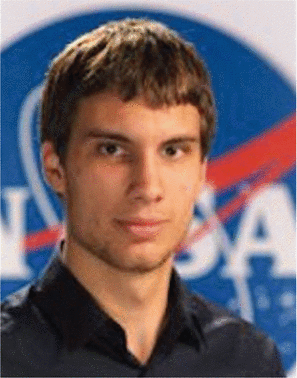 Q. Nénon合作论文数Inst Rech Astron & Planetol, CNRS UPS CNES1
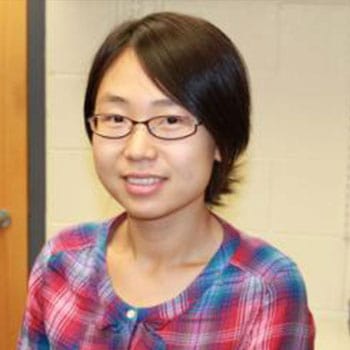 Liang Zhao合作论文数Department of Climate and Space Sciences and Engineering, College of Engineering, University of Michigan-Ann Arbor1
 Michelle F. Thomsen合作论文数Planetary Science Institute1
 Gang Li (李刚)合作论文数Department of Engineering Mechanics, School of Mechanics and Aerospace Engineering, Dalian University of Technology1
 Rob Wilson合作论文数School of Geography and Geosciences, University of St Andrews1
 Steven Levin合作论文数Jet Propulsion Laboratory, California Institute of Technology1
 Stanley Cowley合作论文数Department of Physics & Astronomy, University of Leicester1
 John Clarke合作论文数Department of Astronomy, Boston University1
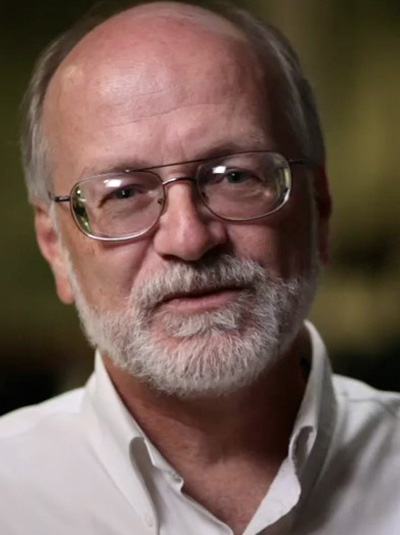 Randy Gladstone合作论文数Southwest Research Institute1
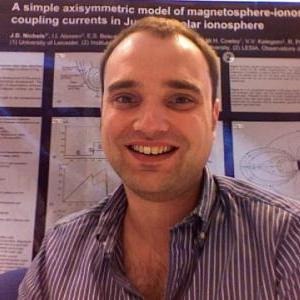 Jonathan Nichols合作论文数School of Physics & Astronomy, University of Leicester1
 Mihir Desai合作论文数Southwest Research Institute1
 Donald Mitchell合作论文数Division of Magnetic Resonance Imaging, Department of Radiology, Sidney Kimmel Medical College, Thomas Jefferson University1
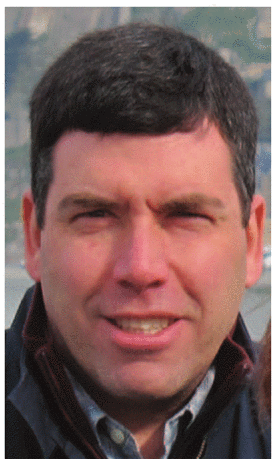 Dennis K Haggerty合作论文数1
 Bertrand Bonfond合作论文数Institute of Geophysics and Planetary Physics, Université de Liège1Angélica Sicard合作论文数1
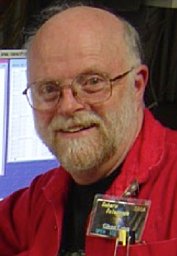 Glenn Orton合作论文数Jet Propulsion Laboratory, California Institute of Technology1
 George Hospodarsky合作论文数College of Liberal Arts and Sciences, University of Iowa1




