Coral reefs are biodiverse and productive ecosystems that are found in typically oligotrophic environments. Many studies have attempted to explain this paradox by demonstrating that microbial symbionts expand metabolic capabilities of host animals. However, few studies have determined if and how coexisting organisms and their symbiotic microbial communities partition available dissolved organic matter. To address this question, we built an artificial reef near the Florida Keys using dominant emergent sponges found in the Caribbean. Fluorescent dissolved organic matter (fDOM) components were measured in incurrent and excurrent water samples of 5-7 biological replicates for each of 10 sponge species. Sponges generally consumed more fDOM as incurrent concentrations increased, but there were also species-level differences in their responses. We found that microbial abundance (i.e., high and low microbial abundance HMA/LMA classification) explained less variation in fDOM processing than sponge species. Additionally, fDOM analysis revealed both a separation of sponges into two groups based on whether they were net producers or consumers of fDOM, as well as their responses to fDOM concentrations in ambient seawater across species. Differential consumption of fDOM components also yielded species-specific fluxes of fDOM. This observation contrasts with broad uptake of all fDOM components, which would be expected if net consumption of fDOM was simply concentration dependent and the same for all species. These results provide the first support for species-level resource partitioning of fluorescent dissolved organic matter across coexisting sponge species and provide additional support for the evolutionary importance of microbial communities in sponges.
IntroductionCoral reefs are essential ecosystems facing severe global decline due to various environmental stressors. Understanding coral resilience and adaptability is critical for their conservation.MethodsWe examined the microbial communities associated with the scleractinian coral Favia fragum in both mangrove and adjacent reef habitats in the Panamanian Caribbean.ResultsOur results reveal that F. fragum colonies in mangrove habitats at different sites share similar microbial communities, distinct from those in adjacent reef habitats. Notably, certain bacterial lineages, including Cyanobacteria and Hyphomicrobiales, are enriched in mangrove-associated corals, suggesting potential roles in carbon and nitrogen cycling. Conversely, the family Vibrionaceae, which includes known coral pathogens, is more abundant in reef habitats.DiscussionThese findings emphasize the significance of microbial communities in coral resilience and highlight the complex interplay between corals and microbial symbionts across different habitats. Protecting mangroves, which serve as nurseries for coral biodiversity, is crucial for overall reef health in the face of global coral decline.
Sponges (phylum Porifera) possess biochemical, cellular, and physiological traits with valuable biotechnical applications. However, our ability to harness these natural innovations is limited by a classification system that does not fully reflect their evolutionary history. In this study, we uncover numerous cryptic species within the genus Halichondria that are morphologically indistinguishable from the well-known H. panicea. Many of these species have habitat preferences and geographic distributions that strongly suggest they have been dispersed by human activity. Most of these species are broadly sympatric with their closest relatives, and these overlapping distributions allow us to use patterns of DNA variation to infer reproductive isolation between clades in nature. With reproductively isolated species thus delineated, we can use DNA states as taxonomic characters to formally describe them. Though much remains to be learned about these newly discovered species, the natural "common gardens" of introduced sponges in California, New York, and other locations provide opportunities to test hypotheses about their diversification in future work. ### Competing Interest Statement The authors have declared no competing interest.
Photosymbionts expand the metabolic capabilities of host sponges, but their potential role in mediating niche partitioning on crowded and oligotrophic coral reefs is unknown. To address this question, we conducted 2 ex situ isotope tracer experiments with 10 of the most abundant sponge species in the Caribbean. To target autotrophic and heterotrophic nutrient acquisition by microbial symbionts, we incubated sponges in seawater laced with the inorganic compounds NaH13CO3 and Na15NO3 under both light and dark conditions. We also measured host sponge heterotrophic feeding rates by incubating the same species with 13C- and 15N-labeled bacterial cells. In all experiments, 7 replicates of each sponge species were used. Following incubations with inorganic sources, the delta 13C and delta 15N values of sponge cells isolated from photosymbiont-hosting sponge species increased more than those of species lacking photosymbionts. In addition, 72% of the variation in delta 13C and delta 15N values across experimental samples was explained by sponge species identity. Sponges rapidly consumed bacterial cells, but there was substantial variation in heterotrophic feeding rates among sponge species. When considering all 3 resource pools (symbiont autotrophy, symbiont heterotrophy, and sponge heterotrophy) and both elements, sponge species identity accounted for over 80% of variation among specimens. In addition, we observed a clear separation of sponge species along a continuum of heterotrophic feeding on particulate organic matter to autotrophic metabolism via photosymbionts. These data demonstrate that the combined influence of sponge and photosymbiont metabolism enables coexisting sponge species to exploit unique resource pools on Caribbean reefs.
This study presents a comprehensive taxonomic revision of the family Suberitidae (Porifera: Demospongiae) for California, USA. We include the three species previously known from the region, document two additional species previously known from other regions, and formally describe four new species as Pseudosuberites latke sp. nov., Suberites californiana sp. nov., Suberites kumeyaay sp. nov., and Suberites agaricus sp. nov. Multi-locus DNA sequence data is presented for seven of the nine species, and was combined with all publicly available data to produce the most comprehensive global phylogeny for the family to date. By integrating morphological and genetic data, we show that morphological characters may be sufficient for regional species identification but are likely inadequate for global classification into genera that reflect the evolutionary history of the family. We therefore propose that DNA sequencing is a critical component to support future taxonomic revisions.
Invasive marine invertebrates are increasingly recognized as a potential disturbance to coastal ecosystems. We sought to better document the taxonomic composition of subtidal communities around Long Island to obtain a baseline that can be used to monitor current and future invasions of non-indigenous species. We placed settlement blocks at 18 sites along the coast of Long Island, New York, for three months. After recovering blocks at 12 sites, we analyzed the taxonomic composition of fouling communities on the blocks. We observed 64 invertebrate and 3 algal taxa, with large variation in taxon richness among sites. Multivariate analyses revealed that although taxon composition was significantly dissimilar between north and south shores, variation in dissimilarity did not differ significantly between shores. The high variability in taxon composition observed among sites indicates that additional research is needed to expand our knowledge of invertebrate diversity in the waters surrounding Long Island. Adding more sites and replicate blocks within sites could improve future sampling designs. This research will benefit continuing efforts to monitor, manage, and prevent the establishment of marine invasive species.
Class Demospongiae is the largest in the phylum Porifera (Sponges) and encompasses nearly 8,000 accepted species in three subclasses: Keratosa, Verongimorpha, and Heteroscleromorpha. Subclass Heteroscleromorpha contains ∼90% of demosponge species and is subdivided into 17 orders. The higher level classification of demosponges underwent major revision as the result of nearly three decades of molecular studies. However, because most of the previous molecular work only utilized partial data from a small number of nuclear and mitochondrial (mt) genes, this classification scheme needs to be tested by larger datasets. Here we compiled a mt dataset for 136 demosponge species-including 64 complete or nearly complete and six partial mt-genome sequences determined or assembled for this study-and used it to test phylogenetic relationships among Demospongiae in general and Heteroscleromorpha in particular. We also investigated the phylogenetic position of Myceliospongia araneosa, a highly unusual demosponge without spicules and spongin fibers, currently classified as Demospongiae incertae sedis, for which molecular data were not available. Our results support the previously inferred sister-group relationship between Heteroscleromorpha and Keratosa + Verongimorpha and suggest five main clades within Heteroscleromorpha: Clade C0 composed of order Haplosclerida; Clade C1 composed of Scopalinida, Sphaerocladina, and Spongillida; Clade C2 composed of Axinellida, Biemnida, Bubarida; Clade C3 composed of Tetractinellida; and Clade C4 composed of Agelasida, Clionaida, Desmacellida, Merliida, Suberitida, Poecilosclerida, Polymastiida, and Tethyida. The inferred relationships among these clades were (C0(C1(C2(C3+C4)))). Analysis of molecular data from M. araneosa placed it in the C3 clade as a sister taxon to the highly skeletonized tetractinellids Microscleroderma sp. and Leiodermatium sp. Molecular clock analysis dated divergences among the major clades in Heteroscleromorpha from the Cambrian to the Early Silurian, the origins of most heteroscleromorph orders in the middle Paleozoic, and the most basal splits within these orders around the Paleozoic to Mesozoic transition. Overall, the results of this study are mostly congruent with the accepted classification of Heteroscleromorpha, but add temporal perspective and new resolution to phylogenetic relationships within this subclass.
Tropical members of the sponge genus Ircinia possess highly complex microbiomes that perform a broad spectrum of chemical processes that influence host fitness. Despite the pervasive role of microbiomes in Ircinia biology, it is still unknown how they remain in stable association across tropical species. To address this question, we performed a comparative analysis of the microbiomes of 11 Ircinia species using whole-metagenomic shotgun sequencing data to investigate three aspects of bacterial symbiont genomes—the redundancy in metabolic pathways across taxa, the evolution of genes involved in pathogenesis, and the nature of selection acting on genes relevant to secondary metabolism. A total of 424 new, high-quality bacterial metagenome-assembled genomes (MAGs) were produced for 10 Caribbean Ircinia species, which were evaluated alongside 113 publicly available MAGs sourced from the Pacific species Ircinia ramosa. Evidence of redundancy was discovered in that the core genes of several primary metabolic pathways could be found in the genomes of multiple bacterial taxa. Across hosts, the metagenomes were depleted in genes relevant to pathogenicity and enriched in eukaryotic-like proteins (ELPs) that likely mimic the hosts’ molecular patterning. Finally, clusters of steroid biosynthesis genes (CSGs), which appear to be under purifying selection and undergo horizontal gene transfer, were found to be a defining feature of Ircinia metagenomes. These results illustrate patterns of genome evolution within highly complex microbiomes that illuminate how associations with hosts are maintained. The metabolic redundancy within the microbiomes could help buffer the hosts from changes in the ambient chemical and physical regimes and from fluctuations in the population sizes of the individual microbial strains that make up the microbiome. Additionally, the enrichment of ELPs and depletion of LPS and cellular motility genes provide a model for how alternative strategies to virulence can evolve in microbiomes undergoing mixed-mode transmission that do not ultimately result in higher levels of damage (i.e., pathogenicity) to the host. Our last set of results provides evidence that sterol biosynthesis in Ircinia-associated bacteria is widespread and that these molecules are important for the survival of bacteria in highly complex Ircinia microbiomes.
Sponges are often densely populated by microbes that benefit their hosts through nutrition and bioactive secondary metabolites; however, sponges must simultaneously contend with the toxicity of microbes and thwart microbial overgrowth. Despite these fundamental tenets of sponge biology, the patterns of selection in the host sponges’ genomes that underlie tolerance and control of their microbiomes are still poorly understood. To elucidate these patterns of selection, we performed a population genetic analysis on multiple species of Ircinia from Belize, Florida, and Panama using an F ST -outlier approach on transcriptome-annotated RADseq loci. As part of the analysis, we delimited species boundaries among seven growth forms of Ircinia . Our analyses identified balancing selection in immunity genes that have implications for the hosts’ tolerance of high densities of microbes. Additionally, our results support the hypothesis that each of the seven growth forms constitutes a distinct Ircinia species that is characterized by a unique microbiome. These results illuminate the evolutionary pathways that promote stable associations between host sponges and their microbiomes, and that potentially facilitate ecological divergence among Ircinia species.
Marine sponges have been successful in their expansion across diverse ecological niches around the globe. Pioneering work attributed this success to both a well-developed aquiferous system that allowed for efficient filter feeding on suspended organic matter and the presence of microbial symbionts that can supplement host heterotrophic feeding with photosynthate or dissolved organic carbon. We now know that sponge-microbe interactions are host-specific, highly nuanced, and provide diverse nutritional benefits to the host sponge. Despite these advances in the field, many current hypotheses pertaining to the evolution of these interactions are overly generalized; these over-simplifications limit our understanding of the evolutionary processes shaping these symbioses and how they contribute to the ecological success of sponges on modern coral reefs. To highlight the current state of knowledge in this field, we start with seminal papers and review how contemporary work using higher resolution techniques has both complemented and challenged their early hypotheses. We outline different schools of thought by discussing evidence of symbiont contribution to both host ecological divergence and convergence, nutritional specificity and plasticity, and allopatric and sympatric speciation. Based on this synthesis, we conclude that the evolutionary pressures shaping these interactions are complex, with influences from both external (nutrient limitation and competition) and internal (fitness trade-offs and evolutionary constraints) factors. We outline recent controversies pertaining to these evolutionary pressures and place our current understanding of these interactions into a broader ecological and evolutionary framework. Finally, we propose areas for future research that we believe will lead to important new developments in the field.
Seven Ircinia morphospecies were collected from three sites in the Caribbean (Bocas del Toro, Panama; the Mesoamerican Barrier Reef, Belize; and the Florida Keys, United States of America). Previous research used an integrative taxonomic framework (genome-wide SNP sampling and microbiome profiling) to delimit species boundaries among these Ircinia. Here, we present morphological descriptions for these species, six of which are new to science (Ircinia lowi sp. nov., Ircinia bocatorensis sp. nov., Ircinia radix sp. nov., Ircinia laeviconulosa sp. nov., Ircinia vansoesti sp. nov., Ircinia ruetzleri sp. nov.) in addition to one species conferre (Ircinia cf. reteplana Topsent, 1923).
Prokaryotic associations with sponges are among the oldest host-microbiome relationships on Earth. In this study, we investigated how bacteria from several phyla have independently adapted to the sponge interior by comparing metagenome-assembled genomes of sponge-dwelling and pelagic bacteria sourced from broad phylogenetic and geographic samplings. We discovered that sponge-dwelling bacteria have more energetically expensive genomes and share patterns of depletion and enrichment for functional categories of genes that evidence evolution towards lower pathogenicity. We also identified a new defining genomic characteristic of sponge-dwelling bacteria that is virtually absent from pelagic bacteria, the presence of cassettes that contain eukaryotic steroid biosynthesis genes. Collectively, these results illuminate the trends in genome evolution that are associated with a sponge-dwelling life history strategy and have implications for furthering our understanding of how sponge-microbial symbioses have persisted through deep evolutionary time. Importance Much attention has recently been devoted to investigating the evolution of microbes that live in symbiosis with sponge hosts using microbial metagenomic data. However, several biological questions regarding this symbiosis remain unanswered. Two questions that we address here are: 1) what are the long-term consequences of the symbiosis on the evolution of microbial symbiont genome size, protein content, and nucleotide content, and 2) how is the evolution of virulence in sponge-dwelling microbial symbionts, which generally undergo a mixed transmission modes (e.g. horizontal and vertical), related to long-term stability of the symbiosis? By employing the largest comparative metagenomic analysis to date in terms of host sponge species and geographic representation, we address these questions and provide further resolution into the evolutionary processes that are involved in mediating the crosstalk between sponge hosts and their microbial symbionts.
Abstract Sponges occur across diverse marine biomes and host internal microbial communities that can provide critical ecological functions. While strong patterns of host specificity have been observed consistently in sponge microbiomes, the precise ecological relationships between hosts and their symbiotic microbial communities remain to be fully delineated. In the current study, we investigate the relative roles of host population genetics and biogeography in structuring the microbial communities hosted by the excavating sponge Cliona delitrix. A total of 53 samples, previously used to demarcate the population genetic structure of C. delitrix, were selected from two locations in the Caribbean Sea and from eight locations across the reefs of Florida and the Bahamas. Microbial community diversity and composition were measured using Illumina‐based high‐throughput sequencing of the 16S rRNA V4 region and related to host population structure and geographic distribution. Most operational taxonomic units (OTUs) specific to Cliona delitrix microbiomes were rare, while other OTUs were shared with congeneric hosts. Across a large regional scale (>1,000 km), geographic distance was associated with considerable variability of the sponge microbiome, suggesting a distance–decay relationship, but little impact over smaller spatial scales (<300 km) was observed. Host population structure had a moderate effect on the structure of these microbial communities, regardless of geographic distance. These results support the interplay between geographic, environmental, and host factors as forces determining the community structure of microbiomes associated with C. delitrix. Moreover, these data suggest that the mechanisms of host regulation can be observed at the population genetic scale, prior to the onset of speciation.
Marine sponges host diverse communities of microbial symbionts that expand the metabolic capabilities of their host, but the abundance and structure of these communities is highly variable across sponge species. Specificity in these interactions may fuel host niche partitioning on crowded coral reefs by allowing individual sponge species to exploit unique sources of carbon and nitrogen, but this hypothesis is yet to be tested. Given the presence of high sponge biomass and the coexistence of diverse sponge species, the Caribbean Sea provides a unique system in which to investigate this hypothesis. To test for ecological divergence among sympatric Caribbean sponges and investigate whether these trends are mediated by microbial symbionts, we measured stable isotope (δ13C and δ15N) ratios and characterized the microbial community structure of sponge species at sites within four regions spanning a 1700 km latitudinal gradient. There was a low (median of 8.2 %) overlap in the isotopic niches of sympatric species; in addition, host identity accounted for over 75% of the dissimilarity in both δ13C and δ15N values and microbiome community structure among individual samples within a site. There was also a strong phylogenetic signal in both δ15N values and microbial community diversity across host phylogeny, as well as a correlation between microbial community structure and variation in δ13C and δ15N values across samples. Together, this evidence supports a hypothesis of strong evolutionary selection for ecological divergence across sponge lineages and suggests that this divergence is at least partially mediated by associations with microbial symbionts.
Sponges live in symbioses with microbes that allow the hosts to exploit otherwise inaccessible resources. Given the potential of microbiomes to unlock new niche axes for the hosts, microbiomes may facilitate evolutionary innovation in the ecology of sponges. However, the hypothesis that ecological diversification evolves via the microbiome among multiple, closely related sponge species living in sympatry is yet untested. Here, we provide the first test of this hypothesis within Ircinia , a genus possessing diverse and abundant microbiomes that engage their hosts in nutritional symbioses. We used genome-wide SNP data (2bRAD) to delimit genetic species boundaries using BFD* among four Ircinia growth forms that putatively constitute distinct species and two nominal species, I. campana and I. strobilina . We also evaluated the performance of two single-locus genetic barcodes, CO1 and ITS, in resolving Ircinia species boundaries. We then used 16S rRNA metabarcoding to test whether the genetic species units uncovered by BFD* harbor microbiomes that are compositionally unique within each host lineage and distinct relative to seawater microbial communities. BFD* recovered genetic species boundaries that are generally reflected in the morphological differences of the growth forms and upheld the species designations of I. campana and I. strobilina , whereas CO1 and ITS provided comparatively little species-level phylogenetic resolution. The microbiomes were found to be compositionally distinct relative to seawater microbial communities, conserved within host lineages, and non-overlapping relative to the microbiomes of other host lineages. These results support a model by which microbiomes underly ecological divergence in resource use among closely related sponge species. This research provides insights into the roles of microbiomes in ecological speciation of sponges and sets the groundwork for further investigation of adaptive radiations in sponges.
The significance of mutualisms between eukaryotic hosts and microbes extends from the organismal to the ecosystem level, and mutualistic symbioses underpin the health of Earth’s most threatened marine ecosystems. Despite rapid growth in research on host-associated microbes (microbiomes), very little is known about their interactions for the vast majority of marine host species. We outline research priorities to broaden our current knowledge of host-microbiome interactions and how they shape marine ecosystems. We argue that this research frontier will allow us to predict responses of species, communities, and ecosystems to stressors driven by human activity, and inform future management and mitigation.
The significance of symbioses between eukaryotic hosts and microbes extends from the organismal to the ecosystem level and underpins the health of Earth's most threatened marine ecosystems. Despite rapid growth in research on host-associated microbes, from individual microbial symbionts to host-associated consortia of significantly relevant taxa, little is known about their interactions with the vast majority of marine host species. We outline research priorities to strengthen our current knowledge of host-microbiome interactions and how they shape marine ecosystems. We argue that such advances in research will help predict responses of species, communities, and ecosystems to stressors driven by human activity and inform future management strategies.
The sponge microbiome project Lucas Moitinho-Silva et al. GigaScience, 6, 2017; doi: 10.1093/gigascience/gix077. A formula was incorrect upon initial publication. The formula p-value = binomial cdf (T(v)-Kv(s), T(v), PNull (s)) should instead be p-value = binomial cdf (T(v)-Kv(s), T(v), 1-PNull (s)). This has now been corrected.
 Easson Cole G合作论文数Department of Biology, University of Alabama at Birmingham17
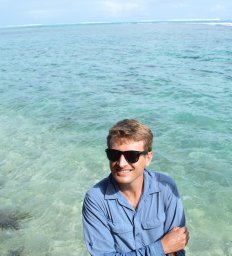 Freeman Christopher J合作论文数Smithsonian Marine Station14
 M. C. Diaz合作论文数12
 Julie B Olson合作论文数Department of Biological Sciences, University of Alabama12
 Allen G. Collins合作论文数National Systematics Lab of NOAA's Fisheries11Deborah J. Gochfeld合作论文数9
 Patrick M. Erwin合作论文数Center for Marine Science, University of North Carolina Wilmington9
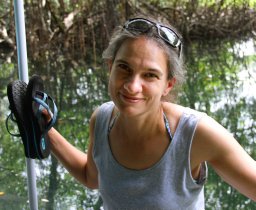 Rachel Collin合作论文数Smithsonian Tropical Research Institute8
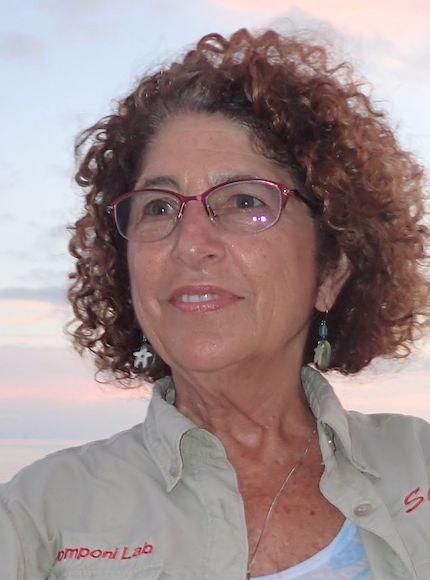 Shirley A. Pomponi合作论文数Harbor Branch Oceanographic Institute, Florida Atlantic University7
 Valerie J Paul (Valerie Paul)合作论文数Smithsonian National Museum of Natural History7K. O. Matterson合作论文数Natl Museum Nat Hist6Pm Erwin合作论文数6
 Joseph Barrack Kelly合作论文数Limnological Institute, University of Konstanz6
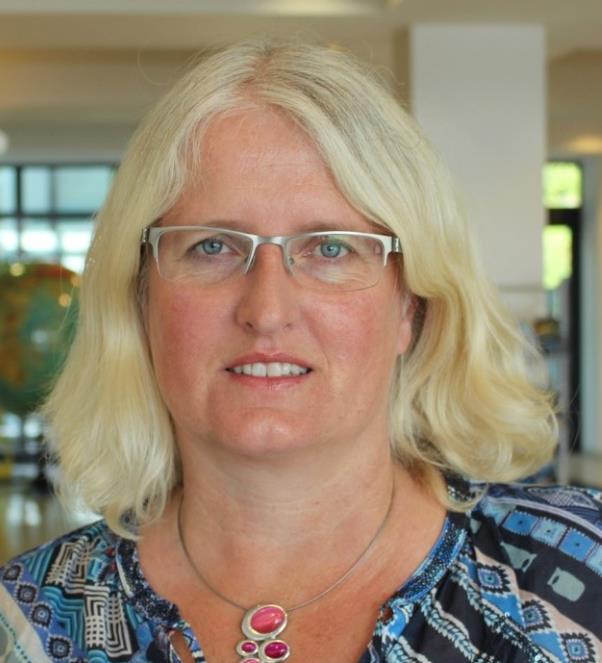 Ute Hentschel合作论文数GEOMAR Helmholtz Centre for Ocean Research Kiel6
 Mike Taylor合作论文数School of Biological Sciences, Faculty of Science, The University of Auckland6
 Christine Morrow合作论文数School of Biological Sciences, Queen's University5
 David M. Baker合作论文数School of Biological Sciences, Faculty of Science, The University of Hong Kong5
 Valerie J. Paul合作论文数Smithsonian Institution5
 G. Lobo-Hajdu合作论文数E.C. Slater Institute, University of Amsterdam5
 Eduardo Hajdu合作论文数Museu Nacional, Universidade Federal do Rio de Janeiro5N. E. Redmond合作论文数4Maria Cristina Diaz合作论文数4Redmond Niamh E合作论文数4
 Bernard Picton合作论文数4
 Stephan Pflugmacher合作论文数University of Helsinki;Water Research Unit, Korean Institute of Science and Technology4
 Brett Neilan合作论文数Neilan Laboratory of Microbial and Molecular Diversity, University of Newcastle;College of Engineering, Science and Environment, University of Newcastle;School of Environmental and Life Sciences, University of Newcastle4
 Maria Pia Miglietta合作论文数Laboratory of Zoology and Marine Biology;Department of Biological and Environmental Sciences and Technology;University of Lecce;Laboratory of Zoology and Marine Biology, University of Lecce4Marc Slattery合作论文数4
 Paco Cardenas合作论文数UMR 7208 “BOrEA”,, Muséum National d’Histoire Naturelle4
 April Hill合作论文数Department of Biology, University of Richmond4
 Torsten Thomas合作论文数School of Biological, Earth & Environmental Sciences, Faculty of Science, The University of New South Wales4Andrew S. Mobley合作论文数3Gail Ackermann合作论文数3
 Carmen Astudillo-Garcia合作论文数School of Biological Sciences, University of Auckland3N. Redmond合作论文数3Koty H. Sharp合作论文数3
 Bik Holly M合作论文数Univ Calif Davis, UC Davis Genome Ctr3
 Jun Siong Low合作论文数Wohl Virion Centre and;Medical Research Council Centre for Medical Molecular Virology, University College London;Wohl Virion Centre and;Medical Research Council Centre for Medical Molecular Virology, University College London3
 Nicole Webster合作论文数Institute of Marine and Antarctic Studies, University of Tasmania;Australian Centre for Ecogenomics, University of Queensland;School of Chemistry and Molecular Biosciences, University of Queensland;Australian Institute of Marine Science3
 Moitinho-Silva Lucas合作论文数Ctr Marine Bioinnovat, Univ New South Wales3Rodríguez Estefanía合作论文数Division of Invertebrate Zoology, American Museum of Natural History3
 Johannes R Bjork合作论文数Instituto de Ciencias del Mar, Agencia Estatal Consejo Superior de Investigaciones Científicas3Nichols Tonya合作论文数3
 Marilyn Fogel合作论文数University of California, Riverside;Carnegie Institution for Science3
 Ramona L. Walls合作论文数Data Collaboration Center, Critical Path Institute3
 Klaus Rutzler合作论文数Department of Invertebrate;Smithsonian Institution;Department of Invertebrate, Smithsonian Institution3Andrew R. Humpage合作论文数3
 Russell T. Hill合作论文数Center of Marine Biotechnology, University of Maryland Biotechnology Institute3
 Susanna Lopez-Legentil合作论文数Dept Biol & Marine Biol, Univ North Carolina Wilmington3




