We report high-resolution inelastic neutron scattering measurements of the excitation spectrum in large single crystals of the spin-1/2 triangular lattice Ising-like antiferromagnet Na2BaCo(PO4)2 in magnetic fields applied transverse to the Ising axis. In the high-field polarized phase above a critical field $B_{C}$ we observe sharp magnons, as expected in the case of no exchange disorder. Through simultaneous fits to the dispersions including data in polarizing field along the Ising axis, we obtain an excellent match to an Ising-like XXZ Hamiltonian and rule out previously proposed Kitaev exchanges. In the intermediate-field phase below $B_{C}$, we observe three dispersive modes, out of which only the lowest energy one is sharp and the others are broad and overlap with continuum scattering. We propose that the broadening effects are due to magnon decays into two-magnon excitations and confirm that such processes are kinematically allowed. The continuum scattering becomes progressively stronger upon lowering field and, at 0.25 T and zero field, it dominates the complete spectrum with no clear evidence for even broadened magnon modes. We discuss the relevance of the continuous manifold of mean-field degenerate ground states of the refined Hamiltonian for capturing the observed spectrum in zero field, and compare the data with the one- and two-magnon spectrum averaged over this manifold. We also propose a model of the interlayer couplings to explain the observed finite interlayer magnetic propagation vector of the zero-field magnetic order; this requires the breaking of the mirror symmetry in the nominal P-3m1 space group and through refinement of x-ray diffraction data on an untwinned single crystal, we indeed confirm a rotation of the CoO6 octahedra around the c-axis, which lowers the symmetry to P-3.
We report high-resolution inelastic neutron scattering measurements of the excitation spectrum in large single crystals of the spin-1/2 triangular-lattice Ising-like antiferromagnet Na2BaCo(PO4)2 in magnetic fields applied transverse to the Ising axis. In the high-field polarized phase above a critical field BC, we observe sharp magnons, as expected in the case of no exchange disorder. Through simultaneous fits to the dispersions including data in a polarizing field along the Ising axis, we obtain an excellent match to an Ising-like XXZ Hamiltonian and rule out previously proposed Kitaev exchanges. In the intermediate-field phase below BC, we observe three dispersive modes, out of which only the lowest energy one is sharp and the others are broad and overlap with continuum scattering. We propose that the broadening effects are due to magnon decays into two-magnon excitations and confirm that such processes are kinematically allowed. The continuum scattering becomes progressively stronger upon lowering the field and, at 0.25 T and zero field, it dominates the entire spectrum with no clear evidence for even broadened magnon modes. We discuss the relevance of the continuous manifold of mean-field degenerate ground states of the refined Hamiltonian for capturing the observed spectrum in zero field, and compare the data with the one-and two-magnon spectrum averaged over this manifold. We also propose a model of the interlayer couplings to explain the observed finite interlayer magnetic propagation vector of the zero-field magnetic order; this requires the breaking of the mirror symmetry in the nominal P3m1 space group and through refinement of x-ray diffraction data on an untwinned single crystal, we indeed confirm a rotation of the CoO6 octahedra around the c axis, which lowers the symmetry to P3.
Through a combination of crystal symmetry analysis and density functional theory calculations we unveil a possible microscopic origin of the unexpected insulating behavior reported in the honeycomb Kitaev material Cu2IrO3. Our study suggests that this material hosts an instability towards charge ordering of the Ir ions, with alternating magnetic Ir4+ and nonmagnetic Ir3+ ions arranged on the honeycomb lattice. In this case, the next-nearest-neighbor interactions that couple magnetic Ir4+ ions form an enlarged triangular lattice, instead of the expected honeycomb lattice. The magnetic Cu2+ ions located at the center of the iridium honeycomb voids also form a triangular lattice, and additionally contribute to the magnetization of the system. Together, the interpenetrated Ir4+ and Cu2+ triangular lattices present a novel type of honeycomb Kitaev lattice composed of two types of magnetic ion.
AbstractThe physics of spin-orbit entangled magnetic moments of 4d and 5d transition metal ions on a honeycomb lattice has been much explored in the search for unconventional magnetic orders or quantum spin liquids expected for compass spin models, where different bonds in the lattice favour different orientations for the magnetic moments. Realising such physics with rare-earth ions is a promising route to achieve exotic ground states in the extreme spin-orbit limit; however, this regime has remained experimentally largely unexplored due to major challenges in materials synthesis. Here we report the successful synthesis of powders and single crystals of β-Na2PrO3, with 4f1 Pr4+ jeff = 1/2 magnetic moments arranged on a hyperhoneycomb lattice with the same threefold coordination as the planar honeycomb. We find a strongly non-collinear magnetic order with highly dispersive gapped excitations that we argue arise from frustration between bond-dependent, anisotropic off-diagonal exchanges, a compass quantum spin model not explored experimentally so far. Our results show that rare-earth ions on threefold coordinated lattices offer a platform for the exploration of quantum compass spin models in the extreme spin-orbit regime, with qualitatively distinct physics from that of 4d and 5d Kitaev materials.
Through a combination of crystal symmetry analysis and density functional theory calculations we unveil a possible microscopic origin of the unexpected insulating behavior reported in the honeycomb Kitaev material Cu_2IrO_3. Our study suggests that this material hosts an instability towards charge ordering of the Ir ions, with alternating magnetic Ir^4+ and non-magnetic Ir^3+ ions arranged on the honeycomb lattice. In this case, the next-nearest-neighbor interactions that couple magnetic Ir^4+ ions form an enlarged triangular lattice, instead of the expected honeycomb lattice. The magnetic Cu^2+ ions located at the centre of the iridium honeycomb voids also form a triangular lattice, and additionally contribute to the magnetization of the system. Together, the interpenetrated Ir^4+ and Cu^2+ triangular lattices present a novel type of honeycomb Kitaev lattice composed of two types of magnetic ions.
Kitaev materials often order magnetically at low temperatures due to the presence of non-Kitaev interactions. Torque magnetometry is a very sensitive technique for probing the magnetic anisotropy, which is critical in understanding the magnetic ground state. In this paper, we report detailed single-crystal torque measurements in the proposed Kitaev candidate honeycomb magnet alpha-RuBr3, which displays zigzag order below 34 K. Based on angular-dependent torque studies in magnetic fields up to 16 T rotated in the plane normal to the honeycomb layers, we find an easy-plane anisotropy with a temperature dependence of the torque amplitude following closely the behavior of the powder magnetic susceptibility. The torque for the field rotated in the honeycomb plane has a clear sixfold periodicity with a sawtooth shape, reflecting the threefold symmetry of the crystal structure and stabilization of different zigzag domains depending on the field orientation, with a torque amplitude that follows an order parameter form inside the zigzag phase. By comparing experimental data with theoretical calculations we highlight the importance of relevant anisotropic interactions and the role of the competition between different zigzag domains in this candidate Kitaev magnet.
Rare-earth oxides have attracted interest as a platform for studying frustrated magnetism arising from bond-dependent anisotropic interactions. Ordered rock salt compounds Na2PrO3 crystallize in two polymorphs (α and β) comprising honeycomb and hyperhoneycomb lattices of octahedrally coordinated Pr4+ (4f1). Although possible realization of antiferromagnetic Kitaev interactions is anticipated for these phases on the basis of ab initio models, the air sensitivity of the two polymorphs has hampered reliable crystal growth and physical property measurements. Here, we have succeeded in preparing powder and single crystals of both α- and β-Na2PrO3 using modified synthetic procedures. Revised crystal structures for both polymorphs are obtained from refinement of untwinned single-crystal X-ray diffraction data.
In the Kitaev honeycomb model, spins coupled by strongly-frustrated anisotropic interactions do not order at low temperature but instead form a quantum spin liquid with spin fractionalisation into Majorana fermions and static fluxes. The realization of such a model in crystalline materials could lead to major breakthroughs in understanding entangled quantum states, however achieving this in practice is a very challenging task. The recently synthesized honeycomb material RuI3 shows no long-range magnetic order down to the lowest probed temperatures and has been theoretically proposed as a quantum spin liquid candidate material on the verge of an insulator to metal transition. Here we report a comprehensive study of the magnetic anisotropy in un-twinned single crystals via torque magnetometry and detect clear signatures of strongly anisotropic and frustrated magnetic interactions. We attribute the development of sawtooth and six-fold torque signal to strongly anisotropic, bond-dependent magnetic interactions by comparing to theoretical calculations. As a function of magnetic field strength at low temperatures, torque shows an unusual non-parabolic dependence suggestive of a proximity to a field-induced transition. Thus, RuI3, without signatures of long-range magnetic order, displays key hallmarks of an exciting candidate for extended Kitaev magnetism with enhanced quantum fluctuations. Quantum spin liquids are materials predicted to be absent of magnetic ordering at low temperature, giving rise to fractionalised electronic states, but conclusive experimental evidence is still absent. Here, the authors conduct angular dependent torque measurements on the candidate spin liquid material RuI3 and, through a comparison of experimental and theoretical results, provide evidence indicating the presence of frustrated magnetic interactions in the system.
This corrects the article DOI: 10.1103/PhysRevLett.127.037201.
The Ising chain realizes the fundamental paradigm of spin fractionalization, where locally flipping a spin creates two domain walls (spinons) that can separate apart at no energy cost. In a quasi-one-dimensional system, the mean-field effects of the weak three-dimensional couplings confine the spinons into a Zeeman ladder of two-spinon bound states. Here, we experimentally tune the confinement potential between spinons in the quasi-one-dimensional Ising ferromagnet CoNb2O6 by means of an applied magnetic field with a large component along the Ising direction. Using high-resolution single crystal inelastic neutron scattering, we directly observe how the spectrum evolves from the limit of very weak confinement at low field (with many closely-spaced bound states with energies scaling as the field strength to the power 2/3) to very strong confinement at high field (where it consists of a magnon and a dispersive two-magnon bound state, with a linear field dependence). At intermediate fields, we explore how the higher-order bound states disappear from the spectrum as they move to higher energies and overlap with the two-particle continuum. By performing a global fit to the observed spectrum in zero field and high field applied along two orthogonal directions, combined with a quantitative parameterization of the interchain couplings, we propose a refined single chain and interchain Hamiltonian that quantitatively reproduces all observed dispersions and their field dependence.
Inelastic neutron scattering is used to study the magnetic excitations of the $S=1$ square-lattice antiferromagnet La$_2$NiO$_4$. We find that the spin waves cannot be described by a simple classical (harmonic) Heisenberg model with only nearest-neighbor interactions. The spin-wave dispersion measured along the antiferromagnetic Brillouin-zone boundary shows a minimum energy at the $(1/2,0)$ position as is observed in some $S=1/2$ square-lattice antiferromagnets. Thus, our results suggest that the quantum dispersion renormalization effects or longer-range exchange interactions observed in cuprates and other $S=1/2$ square-lattice antiferromagnets are also present in La$_2$NiO$_4$. We also find that the overall intensity of the spin-wave excitations is suppressed relative to linear spin-wave theory indicating that covalency is important. Two-magnon scattering is also observed.
We present experimental and theoretical evidence of novel bound state formation in the low transverse field ordered phase of the quasi-one-dimensional Ising-like material CoNb_2O_6. High resolution single crystal inelastic neutron scattering measurements observe that small transverse fields lead to a breakup of the spectrum into three parts, each evolving very differently upon increasing field. This can be naturally understood starting from the excitations of the ordered phase of the transverse field Ising model, domain wall quasiparticles (solitons). Here, the transverse field and a staggered off-diagonal exchange create one-soliton hopping terms with opposite signs. We show that this leads to a rich spectrum and a special field, when the strengths of the off-diagonal exchange and transverse field match, at which solitons become localized; the highest field investigated is very close to this special regime. We solve this case analytically and find three two-soliton continua, along with three novel bound states. Perturbing away from this novel localized limit, we find very good qualitative agreement with the experimental data. We also present calculations using exact diagonalization of a recently refined Hamiltonian model for CoNb_2O_6 and using diagonalization of the two-soliton subspace, both of which provide a quantitative agreement with the observed spectrum. The theoretical models qualitatively and quantitatively capture a variety of non-trivial features in the observed spectrum, providing insight into the underlying physics of bound state formation.
The lack of methods to experimentally detect and quantify entanglement in quantum matter impedes our ability to identify materials hosting highly entangled phases, such as quantum spin liquids. We thus investigate the feasibility of using inelastic neutron scattering (INS) to implement a model-independent measurement protocol for entanglement based on three entanglement witnesses: one-tangle, two-tangle, and quantum Fisher information (QFI). We perform high-resolution INS measurements on Cs2CoCl4, a close realization of the S = 1/2 transverse-field XXZ spin chain, where we can control entanglement using the magnetic field, and compare with density-matrix renormalization group calculations for validation. The three witnesses allow us to infer entanglement properties and make deductions about the quantum state in the material. We find QFI to be a particularly robust experimental probe of entanglement, whereas the one and two-tangles require more careful analysis. Our results lay the foundation for a general entanglement detection protocol for quantum spin systems.
The lack of methods to experimentally detect and quantify entanglement in quantum matter impedes our ability to identify materials hosting highly entangled phases, such as quantum spin liquid states. We thus investigate the feasibility of using inelastic neutron scattering (INS) experiments to evaluate three entanglement witnesses: one-tangle, two-tangle, and quantum Fisher information (QFI). We report high-resolution INS data on Cs$_2$CoCl$_4$ and comparisons with zero-temperature density-matrix renormalization group (DMRG) results for the $S=1/2$ XXZ spin chain with a transverse magnetic field. As the field strength increases, this system passes through two quantum critical points of different universality classes, as well as a classical point. Consequently, the entanglement can be tuned by simply changing the magnetic field. Using DMRG we calculate properties of the ground state and the first two excited states, as well as the dynamical spin structure factor as functions of the field strength. The entanglement entropy serves as a theoretical, wave-function based measure of entanglement. We contrast its behavior with that of the tangles and QFI. We show that QFI represents a viable route to experimental entanglement quantification for weak to intermediate fields.
Complementary to studies of symmetry-protected band-touching points for electron bands in metallic systems, we explore analogous physics for propagating bosonic quasiparticles, magnons and spin-orbit excitons, in the insulating easy-plane honeycomb quantum magnet CoTiO3. We probe directly the winding of the isospin texture of the quasiparticle wavefunction in momentum space near a nodal point through its characteristic fingerprint in the dynamical structure factor probed by inelastic neutron scattering. In addition, our high-resolution measurements reveal a finite spectral gap at low energies, which cannot be explained by a semiclassical treatment for the ground state pseudospins-1/2. As possible mechanisms for the spectral gap generation we propose quantum-order-by-disorder induced by bond-dependent anisotropic couplings such as Kitaev exchange, and higher-order spin-orbital exchanges. We provide a spin-orbital flavor-wave model that captures both the gapped magnons and dispersive excitons within the same Hamiltonian.
Recent theoretical proposals have argued that cobaltates with edge-sharing octahedral coordination can have significant bond-dependent exchange couplings thus offering a platform in 3 d ions for such physics beyond the much-explored realisations in 4 d and 5 d materials. Here we present high-resolution inelastic neutron scattering data within the magnetically ordered phase of the stacked honeycomb magnet CoTiO 3 revealing the presence of a finite energy gap and demonstrate that this implies the presence of bond-dependent anisotropic couplings. We also show through an extensive theoretical analysis that the gap further implies the existence of a quantum order-by-disorder mechanism that, in this material, crucially involves virtual crystal field fluctuations. Our data also provide an experimental observation of a universal winding of the scattering intensity in angular scans around linear band-touching points for both magnons and dispersive spin-orbit excitons, which is directly related to the non-trivial topology of the quasiparticle wavefunction in momentum space near nodal points.
Yb-based triangular magnets have recently attracted attention as promising candidates to explore frustrated quantum magnetism. However, some candidates have turned out to have significant amounts of site disorder, which significantly affects the low-temperature magnetic behavior. To overcome this issue, Yb-based frustrated systems without structural disorder are required. In this paper, we report physical properties of two Yb-based triangular magnets Ba3YbB3O9 and Ba3YbB9O18, without structural disorder. Via magnetic susceptibility, magnetization, and muon spin rotation measurements, we verified that both Ba3YbB3O9 and, particularly studied for the first time, Ba3YbB9O18 do not show long range magnetic order or glass-like spin freezing down to 0.28 K, but show typical paramagnetic behavior.
A. I. Coldea, A. Carrington, R. Coldea, L. Malone, A.F. Bangura, M. D. Johannes , I. I. Mazin, E.A. Yelland, J. G. Analytis, J.A.A.J. Perenboom , C. Jaudet , D. Vignolles, T. Sorgel , M. Jansen H. H. Wills Physics Laboratory, Bristol University, Tyndall Avenue, BS8 1TL, United Kingdom Code 6393, Naval Research Laboratory, Washington, D.C. 20375, USA Max-Planck-Institut fur Festkorperforschung, Heisenbergstr. 1, 70569 Stuttgart, Germany High Field Magnet Laboratory, IMM, Radboud University, 6525 ED Nijmegen, The Netherlands and Laboratoire National des Champs Magnetiques Pulses, 31400 Toulouse, France (Dated: June 15, 2021)
 D. A. Tennant合作论文数Rutherford Appleton Laboratory29Zbigniew Tylczynski合作论文数25
 Desmond McMorrow合作论文数Department of Physics and Astronomy, University College London;London Centre for Nanotechnology, University College London21Roger Cowley合作论文数17D. Prabhakaran合作论文数Coimbatore Institute of Technology14
 Toby Perring合作论文数Rutherford Appleton Laboratory;London Centre for Nanotechnology, University College London14
 Roger Johnson合作论文数Department of Physics and Astronomy, University College London12
 Itamar Kimchi合作论文数School of Physics, College of Sciences, Georgia Institute of Technology11
 Dharmalingam Prabhakaran合作论文数Department of Physics, University of Oxford10
 Philipp Gegenwart合作论文数Max-Planck Institute for Chemical Physics of Solids10
 Christopher Frost合作论文数Rutherford Appleton Laboratory, ISIS10Gabriel Aeppli合作论文数10Mechthild Enderle合作论文数9
 Michel Kenzelmann合作论文数Laboratory for Neutron Scattering and Imaging, Paul Scherrer Institute9
 Roser Valentí合作论文数Institut für Theoretische Physik, Goethe Universitat Frankfurt Am Main9
 Martin Jansen合作论文数Max Planck Institute for Solid State Research9
 Ashvin Vishwanath合作论文数Department of Physics, Harvard University9
 Sungkyun Choi合作论文数8
 James Analytis合作论文数Department of Physics, University of California, Berkeley8
 Vesna Mitrovic合作论文数Department of Physics, Brown University8
 Arneil P Reyes合作论文数National High Magnetic Field Laboratory, Florida State University;Department of Physics, College of Arts and Sciences, Florida State University8
 Andrew Boothroyd合作论文数Sub-Department of Condensed Matter Physics, Department of Physics, University of Oxford;Oriel College, University of Oxford8A. Harrison合作论文数7Ivelisse Cabrera合作论文数7
 Henrik M. Rønnow合作论文数Institute of Physics, School of Basic Sciences, Federal Institute of Technology in Lausanne7
 Pascal Manuel合作论文数Science and Technology Facilities Council, ISIS Neutron & Muon Facility, UK Research and Innovation7
 Rajiv Singh合作论文数Department of Physics and Astronomy, University of California, Davis7
 Ross McKenzie合作论文数School of Mathematics and Physics, Faculty of Science, The University of Queensland7
 Michael Marek Koza合作论文数Institut Laue Langevin6Christopher Stock合作论文数Institute for Condensed Matter and Complex Systems, School of Physics and Astronomy, University of Edinburgh6
 Georgios Koutroulakis合作论文数Department of Physics, Brown University6Peter Smeibidl合作论文数6Philip L. Kuhns合作论文数6
 Stephen Hayden合作论文数School of Physics, University of Bristol6s manni合作论文数5alun biffin合作论文数5
 Ying Li (李颖)合作论文数Department of Applied Physics, School of Physics, Xi'an Jiaotong University5robert bewley合作论文数5
 Paolo G. Radaelli合作论文数Department of Physics, University of Oxford5
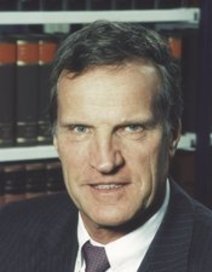 Frank Steglich合作论文数TU Dresden;Center for Correlated Matter, Zhejiang University;Max-Planck-Institute for Chemical Physics of Solids5Michelle Johannes合作论文数5
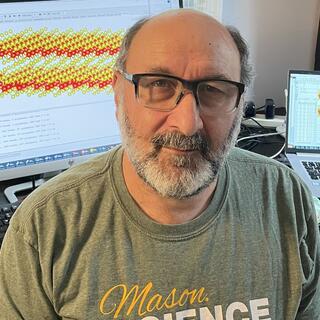 Igor Mazin合作论文数Physics & Astronomy Department, College of Science, George Mason University;Quantum Science and Engineering Center, College of Science, George Mason University5
 William Buyers合作论文数5
 Nic Shannon合作论文数Max-Planck-Institut fur Physik komplexer Systeme5Elisa M. Wheeler合作论文数Helmholtz-Zentrum Berlin fur Materialien und Energie5W. Buyers合作论文数5
 Alessandro Bombardi合作论文数5E. Wawrzynska合作论文数5
 Brad Marston合作论文数Department of Physics, Brown University5




