The dynamic behavior of two n-hexyl fluorenyl phases (fluorene-6A [3a(Tn)(Qm)y], fluorene-6B [3b(Tn)(Qm)y]) and three n-decyl fluorenyl phases (fluorene-10A [4a(Tn)(Qm)y], fluorene-10B [4b(Tn)(Qm)y], and fluorene-10C [4c(M1)(Qm)y]) is investigated by solid-state nuclear magnetic resonance (NMR) spectroscopy using the dipolar filter technique with both 13C and 1H detection. These results are compared with those from other dynamic measurements, like the relaxation times in the rotating frame (T1pH) and the variation of the contact time (T(CH)). Additionally, another type of a fluorenyl phase [5a(Tn)(Qm)y], which has an aromatic moiety connected to the silica gel by amido couplings, was also investigated by the dipolar filter method. The solid-state NMR dynamic measurements indicate an increased mobility of the n-alkyl fluorenyl phases compared to the amido coupled fluorenyl phase. The lower the ligand density of the studied n-alkyl fluorenyl phases, the higher their mobility. The separation behavior of the respective phases in high-performance liquid chromatography was investigated with samples containing polycyclic aromatic hydrocarbons and nitro explosives. Depending on the amount of the chemically bound aromatic moiety and the length of their n-alkyl spacer groups, pi-pi interactions with the solute molecules are involved in the separation process and cause it to proceed at a different rate. Therefore, n-alkyl fluorenyl phases can be classified as mixed-mode phases.
The thorough study on physico-chemical properties of carbon sorbents belonging to different groups of sorbents-activated charcoal, molecular sieves-Carbosieve S-III, Carboxen 1000; porous carbons-Carb I, Carb II; graphitized carbon blacks-Carbopack B, Carbotrap, Carbotrap C is presented in this paper. Measurements of the surface area, pore size and volume on the base of adsorption isotherms and pore distribution measurements, measurement of particle size and evaluation of particle shape by microscopy, searching the sorbent morphology by scanning electron microscopy, evaluation of the quality of surface by H-1 MAS- and C-13 MAS solid-state NMR spectroscopy and elemental analysis were employed as means for the sorbent materials characterisation.Gas-solid chromatography (GSC) has been utilised to determine the specific retention volumes at 20 degrees C, Vg(20 degrees C), and isosteric heat of adsorption, q(st), for organic compounds belonging to various groups-n-alkanes, aromatics, halocarbons, oxygenated compounds. On the base of Vg(20 degrees C) and q(st) the advantages and drawbacks of porous carbon sorbents in contrary to commercial kinds of sorbents for preconcentration purposes of volatile organic compounds in environmental analysis are discussed.
For the separation of π-electron-containing solutes by high-performance liquid chromatography (HPLC), a new stationary phase with a fluorene ligand chemically bonded to a silica gel surface was developed following a two-stage modification of silica gels with different pore sizes. This new phase was characterized by solid-state nuclear magnetic resonance (NMR) spectroscopy and HPLC. Chromatographic properties were determined by the separation of three test mixtures, two containing polycyclic aromatic hydrocarbons (PAHs) and the third containing nitro explosives. The elution order of the PAHs is the same as in case of usual reversed-phases, while the elution of the nitro explosives is inverted because of strong π-π interactions between the electron-poor solutes and the electron-rich stationary phase. Solid-state NMR relaxation time measurements were used to study the dynamic behaviour of the bonded fluorene ligands. The results of solid-state NMR investigations are discussed in the context of various HPLC separations. Both chromatographic and spectroscopic properties show a dependence on the pore size of the starting silica gel matrix.
Four new stationary phases for HPLC were prepared by modifying silica gel with a trifunctional aminoalkyl silane. A conjugated pi-electron system was linked to the amino group either directly or with a carboxylic anhydride as a spacer in between. Characterization and dynamic measurements of the new stationary phases were performed by solid state NMR spectroscopy. The results of the Si-29 and C-13 CP/MAS techniques were compared with the recently developed H-1 MAS-only technique. Despite strong homonuclear dipole-dipole interactions it was possible to obtain well resolved H-1 MAS spectra of those stationary phases with a high degree of crosslinking. Limited mobility of the aromatic ligand fragments is common for all examined stationary phases.The chromatographic properties of the new phases were tested by their ability to separate a mixture of eight PAHs. It could be shown that the pi-pi interaction mechanism is responsible for the separation of the eight PAHs, because the elution order of the PAHs did not change, despite the use of both a nonpolar mobile phase (n-heptane) and a polar mobile phase (methanol/water mixture).
Stationary interphases with long n-alkyl chains (n = 18, 22, 30, 34) have been examined by solid-state NMR spectroscopy. The determination of the silane functionality and the degree of cross-linking of silane ligands on the silica surface was performed by 29Si CP/MAS NMR spectroscopy. High-speed 1H MAS and 13C CP/MAS NMR spectroscopy were utilized to assess alkyl chain order and mobility of the different bonded phases. For this purpose, 1H NMR line widths and 13C chemical shifts have been evaluated. It is shown that stationary phase order and rigidity increase with alkyl chain length. In addition, the temperature-dependent trans/gauche conformational change occurs at higher temperatures for a polymeric C34 phase compared with a C30 sorbent. This behaviour is discussed in the context of previously reported Chromatographic (HPLC) shape selectivity differences.
Two different reaction schemes have been used to synthesize silica-bonded calixarene phases. Specifically, a triethoxysilyl calix[4]arene is reacted with silica to produce a bonded calix[4]arene tetraamide phase, and a hydridederivatized silica undergoes a hydrosilylation reaction with p-allylcalix[6]arene hexaester to give a calix[6]arene hexaester phase. The resulting products were characterized by 13C and 29Si cross polarization/magic angle spinning NMR spectroscopy. The spectra clearly show calixarene bonding to the silica surface and are invaluable in determining the nature and extent of chemical modification of the surface with these macrocyclic compounds.
The sol-gel method offers a new approach for the synthesis of reversed-phase materials used in chromatography. Co-condensation of different amounts of tetraethoxysilane (Q(0)) and trifunctional alkylsilanes (T-0) leads to novel polymer networks with new properties, for example, high degrees of cross-linking and high ligand densities. Two different steps in synthesis, the sol-gel transition and the precipitation of homogeneous sols, are discussed. These new materials were studied by C-13 and Si-29 solid-state NMR spectroscopy. Further characterization was performed by BET measurements and scanning electron microscopy.
Chemically modified silica gels used as stationary phases in chromatography have been investigated by means of solid-state 1H magic angle spinning (MAS) NMR spectroscopy. Since the organosilanes are bonded to the surface of the silica gel, their protons are diluted and possess a higher mobility in comparison to protons in pure organic solids. Thereby the usually strong homonuclear dipole-dipole interactions among the protons are reduced and it is possible to obtain well-resolved 1H NMR spectra of the organic interphases with MAS-only techniques. Effects of temperature and magnetic field strength on the resolution of the spectra are examined as well as the dependence of T1, and T1ϱH relaxation times on temperature and spinning speed.
The solid phase extraction (SPE) and elution of [14C]-propranolol from aqueous buffer has been studied for a range of phenyl-bonded SPE materials. Differences were noted in the recovery of the analyte using methanol-water eluents depending upon the manufacturer and whether or not phase had been endcapped. Efficient recoveries of [14C]-propranolol were only achieved when triethylamine was added to the eluting solvent as a competing base. Solid state cross polarisation/magic angle spinning (CP/MAS) NMR spectroscopy was used to characterise the phases further, which revealed differences in endcapping between materials as well as differences in the type and extent of cross-linking.
29Si and 13C cross-polarisation magic-angle-spinning (CP-MAS) NMR spectroscopy have been used to characterise a total of seven C18-bonded silicas used for solid-phase extraction. Wide variations were observed in the extraction properties of these silicas for basic analytes such as the drug propranolol. These differences depended upon the degree of carbon loading of the phases and whether or not endcapping had been performed. The different properties of the phases appear to correlate well with the differences observed using CP-MAS NMR. This demonstrates the utility of such techniques as a means of further understanding the underlying mechanisms responsible for the observed extraction properties of the phases.
Aminopropyl chemically bonded phases for high performance liquid chromatography (HPLC) have been prepared using mono- and trifunctional methoxyor ethoxysilanes. Three types of silica gel with different surface characteristics were used as support for the chemically bonded phases (CBPs). Surface characteristics of the packings before and after chemical modification were determined by porosity parameters, elemental analysis and CP/MAS NMR spectroscopy.29Si and13C CP/MAS NMR investigations gave informations about different interactions between aminosilyl ligands and/or these ligands and/or water molecules condensed in the pores of the silica gel surface. With decreasing pore diameter of the silica gel the proportion of protonated aminopropyl ligand increases.
The structure of (5H)-2-Amino-3-hydroxy-5-phenyl-furan-4-one (1b) was determined by NMR-spectroscopy in solution and in the solid state. The structure of its oxidation product, 3,4-Dihydro-3,3,4,4-tetrahydroxy-5-phenyl-furan-2(5H)-one (7), given in the literature as 5-Phenyl-2,3,4-(5H)-furan-trione, was determined by NMR spectroscopy and crystal structure analysis. The solid state NMR spectrum of 7 was compared to the spectrum of dehydroascorbic acid.
The structure of (5H)-2-amino-3-hydroxy-5-phenyl-furan-4-one (1b) was determined by NMR-spectroscopy in solution and in the solid state. The structure of its oxidation product, 3,4-dihydro-3,3,4,4-tetrahydroxy-5-phenyl-furan-2(5H)-one (7), given in the literature as 5-phenyl-2,3,4-(5H)-furan-trione, was determined by NMR spectroscopy and crystal structure analysis. The solid state NMR spectrum of 7 was compared to the spectrum of dehydroascorbic acid
The structure of (5H)-2-Amino-3-hydroxy-5-phenyl-furan-4-one (lb) was determined by NMR-spectroscopy in solution and in the solid state. The structure of its oxidation product, 3,4-Dihydro-3,3,4,4-tetrahydroxy-5-phenyl-furan-2(5H)-one (7), given in the literature as 5-Phenyl-2,3,4-(5H)-furan-trione, was determined by NMR spectroscopy and crystal structure analysis. The solid state NMR spectrum of 7 was compared to the spectrum of dehydroascorbic acid
 Klaus Albert合作论文数Institut für Organische Chemie, Mathematisch-Naturwissenschaftliche Fakultät, Universität Tübingen11
 Arndt Ellwanger合作论文数3Kurt Eger合作论文数3Matthias Pursch合作论文数Institut für Organische Chemie, Universität Tübingen3P. Martin合作论文数2
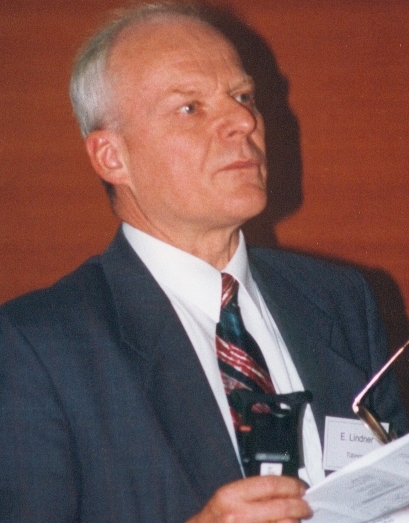 Ekkehard Lindner合作论文数Institut für Anorganische Chemie, Universität Tübingen2K ALBERT合作论文数1Svetlana Hrouzková合作论文数1Wolfram Wielandt合作论文数1E. Bayer合作论文数1H Händel合作论文数1
 Jeremy D. Glennon合作论文数School of Chemistry Scoil na Ceimic, University College Cork1
 David Morgan合作论文数Chemistry Department, School of Chemical and Physical Sciences, Keele University1J. Schmid合作论文数1
 Stephen J. Harris合作论文数Materials Science Division, Lawrence Berkeley Lab1
 Lane C. Sander合作论文数National Institute of Standards and Technology, United States Department of Commerce1
 Ian Wilson合作论文数Department of Metabolism, Digestion and Reproduction, Faculty of Medicine, Imperial College London1Andreas Jäger合作论文数1Manfred Kaiser合作论文数1Eva Matisová合作论文数1
 Bogusław Buszewski合作论文数Faculty of Chemistry, Nicolaus Copernicus University1Elizabeth Horne合作论文数1Ivan Novak合作论文数1Jana Kozánková合作论文数1
 Theodor Schneller合作论文数1




