Deep-depletion charge-coupled device (CCD) cameras can be used as x-ray spectrometers if the flux is limited to significantly less than one photon per pixel. The charge that is created by the absorbed photon is proportional to the x-ray energy, and consequently, the histogram of the CCD-sensor readout (in the limit of no noise and large pixel size) is a strictly linear spectrum. If the quantum efficiency of the detector, the attenuation of x-rays from the source to the detector, and the overall geometry of the setup are known, one can also calculate the absolute flux for a given photon energy from the source. We describe the efficient use of a commercial deep-depletion CCD camera as an absolutely calibrated x-ray spectrometer for the determination of laser-to-x-ray conversion efficiencies with the Z-Petawatt and Z-Beamlet lasers [P. Rambo et al., Proc. SPIE 10014, 100140Z (2016)] at Sandia National Laboratories. We explain procedures to reverse intrinsic degradations of x-ray induced pixel brightness and to mitigate external noise, and we identify spectral artifacts that are generated inside the detector.
We report on a series of Magnetized Liner Inertial Fusion (MagLIF) experiments conducted on the Z pulsed power facility that utilized high aspect ratio (ratio of outer radius to wall thickness) liners with dielectric coatings and low-mix laser preheat configurations. The liners consisted of an aspect ratio of 10.6 beryllium tube coated with 75 μm of epoxy on the outside that have been shown to maintain a better implosion stability than uncoated beryllium and have demonstrated consistent stagnation performances in previous experiments [Ampleford et al., Phys. Plasmas 31, 022703 (2024)]. Two-dimensional HYDRA simulations were used to design three different “co-injection” laser configurations, whereby a second laser is used to provide an early prepulse before the main pulse, to reduce LEH foil mix while increasing the fuel density and coupled energy. The laser preheat energy for each configuration was constrained using dedicated laser experiments before being applied to the integrated MagLIF experiments on Z. The DD neutron yield for experiments using co-injection preheat configurations is found to increase with the specific preheat energy in line with simulations. The highest neutron yield achieved in this study of 1.1 × 10¹³ matches the highest reported in a MagLIF experiment to date and is a factor 3.5 times higher than similar experiments using preheat with no phase plate smoothing. We attempt to assess the effects of mix and morphology to explain the improved performance; however, neither factor is found to be conclusive within the uncertainty of the measurements.
Helium or neopentane can be used as surrogate gas fill for deuterium (D2) or deuterium-tritium (DT) in laser-plasma interaction studies. Surrogates are convenient to avoid flammability hazards or the integration of cryogenics in an experiment. To test the degree of equivalency between deuterium and helium, experiments were conducted in the Pecos target chamber at Sandia National Laboratories. Observables such as laser propagation and signatures of laser-plasma instabilities (LPI) were recorded for multiple laser and target configurations. It was found that some observables can differ significantly despite the apparent similarity of the gases with respect to molecular charge and weight. While a qualitative behaviour of the interaction may very well be studied by finding a suitable compromise of laser absorption, electron density, and LPI cross sections, a quantitative investigation of expected values for deuterium fills at high laser intensities is not likely to succeed with surrogate gases.
We report on progress implementing and testing cryogenically cooled platforms for Magnetized Liner Inertial Fusion (MagLIF) experiments. Two cryogenically cooled experimental platforms were developed: an integrated platform fielded on the Z pulsed power generator that combines magnetization, laser preheat, and pulsed-power-driven fuel compression and a laser-only platform in a separate chamber that enables measurements of the laser preheat energy using shadowgraphy measurements. The laser-only experiments suggest that ∼89% ± 10% of the incident energy is coupled to the fuel in cooled targets across the energy range tested, significantly higher than previous warm experiments that achieved at most 67% coupling and in line with simulation predictions. The laser preheat configuration was applied to a cryogenically cooled integrated experiment that used a novel cryostat configuration that cooled the MagLIF liner from both ends. The integrated experiment, z3576, coupled 2.32 ± 0.25 kJ preheat energy to the fuel, the highest to-date, demonstrated excellent temperature control and nominal current delivery, and produced one of the highest pressure stagnations as determined by a Bayesian analysis of the data.
Diagnostics in high energy density physics, shock physics, and related fields are primarily driven by a need to record rapidly time-evolving signals in single-shot events. These measurements are often limited by channel count and signal degradation issues on cable links between the detector and digitizer. We present the Ultrafast Pixel Array Camera (UPAC), a compact and flexible detector readout system with 32 waveform-recording channels at up to 10 Gsample/s and 1.8 GHz analog bandwidth. The compact footprint allows the UPAC to be directly embedded in the detector environment. A key enabling technology is the PSEC4A chip, an eight-channel switch-capacitor array sampling device with up to 1056 samples/channel. The UPAC system includes a high-density input connector that can plug directly into an application-specific detector board, programmable control, and serial readout, with less than 5 W of power consumption in full operation. We present the UPAC design and characterization, including a measured timing resolution of ∼20 ps or better on acquisitions of sub-nanosecond pulses with minimal system calibrations. Example applications of the UPAC are also shown to demonstrate operation of a solid-state streak camera, an ultrafast imaging array, and a neutron time-of-flight spectrometer.
We present an overview of the magneto-inertial fusion (MIF) concept Magnetized Liner Inertial Fusion (MagLIF) pursued at Sandia National Laboratories and review some of the most prominent results since the initial experiments in 2013. In MagLIF, a centimeter-scale beryllium tube or ‘liner’ is filled with a fusion fuel, axially pre-magnetized, laser pre-heated, and finally imploded using up to 20 MA from the Z machine. All of these elements are necessary to generate a thermonuclear plasma: laser preheating raises the initial temperature of the fuel, the electrical current implodes the liner and quasi-adiabatically compresses the fuel via the Lorentz force, and the axial magnetic field limits thermal conduction from the hot plasma to the cold liner walls during the implosion. MagLIF is the first MIF concept to demonstrate fusion relevant temperatures, significant fusion production (>1013 primary DD neutron yield), and magnetic trapping of charged fusion particles. On a 60 MA next-generation pulsed-power machine, two-dimensional simulations suggest that MagLIF has the potential to generate multi-MJ yields with significant self-heating, a long-term goal of the US Stockpile Stewardship Program. At currents exceeding 65 MA, the high gains required for fusion energy could be achievable.
Many experiments at Sandia?s Z Pulsed Power Facility require x - ray backlighting diagnostics to understand experiment performance. Due to limitations in present - day source/detection modalities, most x - ray diagnostics at Z are restricted to photon energies < 20 keV, ultimately limiting the density, amount, and atomic number of targets diagnosable in experiments. These limitations force the use of low - Z materials like Beryllium, and they prevent acquisition of important backlighting data for materials/densities that are opaque to soft x - rays and where background emission from the Z load and transmission lines overwhelm diagnostics. In this LDRD project, we have investigated the design and development of a laser wakefield acceleration platform driven by the Z - Petawatt laser ? a platform that would enable the generation of a pulsed, collimated beam of high energ y x - rays up to 100 keV. Geometrical considerations for implementation on the Z Machine require the use of sacrificial mirrors , which have been tested in offline experiments in the Chama target chamber in building 983. Our results suggest the use of sacrifi cial mirrors would not necessarily inhibit the laser wakefield x - ray process , particularly with the benefits stemming from planned laser upgrades. These conclusions s upport the continuation of laser wakefield source research and the development of the nece ssary infrastructure to deliver the Z - Petawatt laser to the Z center section along the appropriate lines of sight. Ultimately, this new capability will provid e unprecedented view s through dense states of matter , enabling the use of previously incompatible target m aterials/designs, and uncover ing a new set of observables accessible through diffraction and spectroscopy in the hard x - ray regime. These will amplify the data return on precious Z shots and enhanc e Sandia?s ability to investigate fundamental physi cs in support of national security .
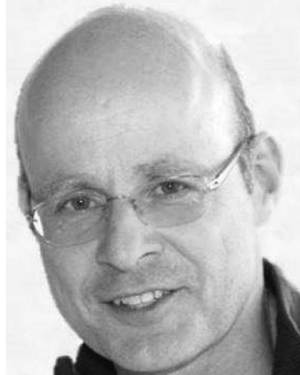 Matthias Geissel合作论文数Institut für Angewandte Physik, Technishe Universität Darmstadt89
 Jens Schwarz合作论文数79Mark Kimmel合作论文数73JL Porter合作论文数58Ian C. Smith合作论文数55Briggs W. Atherton合作论文数53J. Schwarz合作论文数37
 Marius Schollmeier合作论文数Institut fur Kernphysik;Technische Universit;Institut fur Kernphysik, Technische Universit36Adams, R.G.合作论文数29Me Cuneo合作论文数24
 Daniel B. Sinars合作论文数Pulsed Power Sciences Center, Sandia National Laboratories23John L. Porter合作论文数22a edens合作论文数20guy r bennett合作论文数20
 Benjamin R. Galloway合作论文数20R. A. Vesey合作论文数18Jonathon Shores合作论文数17Weis M R合作论文数17
 Todd Ditmire合作论文数Department of Physics, College of Natural Sciences, The University of Texas at Austin;Institute for Fusion Studies, The University of Texas at Austin;Center for High Energy Density Physics, The University of Texas at Austin;National Energetics17
 Matthew Gomez合作论文数Sandia National Laboratories15
 Ella Field合作论文数Sandia National Laboratories15Simpson, W.W.合作论文数15Kletecka Damon合作论文数15
 John Curtis Bellum合作论文数Departments of Physics and Chemistry, University of Florida15C. S. Speas合作论文数14john thompson合作论文数14Quinn Looker合作论文数14Ao T合作论文数14
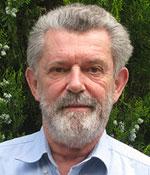 Jean Claude Diels合作论文数Department of Physics and Astronomy, University of New Mexico14
 David J. Ampleford合作论文数Radiation & Fusion Experiments Department, Sandia National Laboratories14G Robertson合作论文数13Fein, J.R.合作论文数Center for Radiative Shock Hydrodynamics (CRASH),, Univ. of Michigan;c13Aaron Edens合作论文数13
 Adam Sefkow合作论文数Department of Mechanical Engineering, Hajim School of Engineering & Applied Sciences, University of Rochester;Laboratory for Laser Energetics, University of Rochester;Department of Physics, University of Rochester;Department of Computer Science, University of Rochester13d f wenger合作论文数12
 Sa Slutz合作论文数12
 Eric Harding合作论文数Sandia National Laboratories12Laurence E Ruggles合作论文数12Gordon Andrew Chandler合作论文数12
 Peterson, K.J.合作论文数11
 Daniel Ignacio Headley合作论文数11G. R. Bennett合作论文数11Dean C. Rovang合作论文数10C. A. Jennings合作论文数10j e shores合作论文数9
 Stephanie B Hansen合作论文数Sandia National Laboratories9Bernstein Aaron合作论文数9




