Although insects are fundamental to understanding and conserving global biodiversity, they are vastly understudied. Here, we present a national inventory of Costa Rican insects based upon 3.78 million DNA barcodes representing 152 891 Barcode Index Numbers (BINs, proxies for species) from 28 localities sampled from 2017 to 2023 through the national BioAlfa program of Costa Rica. Although only 3.6% of BINs are linked to Linnean species, barcode-based community analyses revealed strong, consistent ecogeographic structure. Clustering of BIN data using bootstrapped Jaccard distances revealed seven distinct mainland assemblages and a distinct island cluster, shaped primarily by Costa Rica’s mountain ranges, elevation, and slope orientation. Separate analyses for Coleoptera, Diptera, Hemiptera, Hymenoptera, and Lepidoptera coupled with analyses focused on some of their largest families (e.g., Braconidae, Cecidomyiidae, Cicadellidae, Erebidae, and Staphylinidae) confirmed these patterns and further revealed extremely high species turnover with most BINs being exclusive to a single region or locality. Our results reveal limited overlap of insect communities across ecosystems, implying that each life zone harbors unique taxonomic assemblages. Large-scale DNA barcoding has detected fine-grained spatial structure, providing a genomic framework for biodiversity monitoring and conservation in diverse tropical regions undergoing rapid environmental change.
Caterpillar–food plant records collected over approximately 38 years in the Area de Conservación Guanacaste (ACG) in northwestern Costa Rica are described and summarized. The data comprise 431,212 individual rearing records, 197,366 of which represent unique plant–herbivore associations, i.e., same species pair found on separate dates and at different plants of the same species. These represent 29,187 different caterpillar–food plant associations between 2,489 plant and 7,160 Lepidoptera species. We evaluate changes in the taxonomic composition of the food plant flora and Lepidoptera fauna between 1990 and 2020 and across habitat/community types. Food plant and caterpillar community species richness in the rain forest changed considerably over the first 10 years but remained more stable since. Dry forest communities were more consistent than in rain forest. The cloud forest biota was the most consistent between 1995 and 2010, but as in dry forest, the caterpillar fauna changed considerably during 2015–2020. Plant species composition was more constant than caterpillar composition. The taxonomic distributions of diet specialists and generalists are explored. Most of the species-rich Lepidoptera families contain many specialists, variously concentrated throughout each family, though highly polyphagous collectively. The exceptions include Sphingidae, which show preference for Rubiaceae, Hesperiinae for monocotyledons, and non-Hesperiinae skippers for Fabaceae. Among plant families for which there are over 1,000 independent rearings, Acanthaceae, Apocynaceae, Arecaceae, Costaceae, Melastomataceae, Moraceae, Piperaceae, Poaceae, Rubiaceae, Rutaceae, and Solanaceae hosted the greatest proportion of specialists. However, the level at which dietary specialization corresponds to taxonomic rank varies with both caterpillar and plant taxon. Most fern-feeders are polyphagous with respect to fern families but still specialists on Polypodiopsida. A selection of plant families with conspicuous allelochemical and/or structural defenses and a selection of caterpillars and caterpillar families with equally conspicuous counter-defenses were examined. We determined that (1) unpalatable, aposematic herbivores tend to be specialists and (2) families of plants predominantly consumed by highly defended caterpillars host fewer polyphagous herbivores than families with less conspicuously defended plants. Highly toxic plant families with the fewest rearings, such as Aristolochiaceae and Zamiaceae, hosted many monophagous caterpillars. Biochemical and structural plant defenses appear to mediate herbivore diet breadth for many plant families.
We describe the trophic relationships of tachinid parasitoid flies that attack exophagous, leaf-eating Lepidoptera caterpillars in Área de Conservación Guanacaste (ACG), northwestern Costa Rica over approximately forty years beginning in 1984. The dataset contains more than 34,000 individual tachinid rearings from individual wild-caught caterpillars. Identification of parasitoids and caterpillars up until 2004 was based entirely on morphology. From 2004 onwards most reared specimens were DNA-barcoded and some retroactive barcoding was also carried out with varying degrees of success. Generally, for older specimens, generating good quality-barcodes requires more expensive protocols. Barcoding of reared specimens led to the recognition that many morpho-species were made up of multiple species of flies but those reared from an individual caterpillar were 99.95% a single species. Consequently, estimates of diet breadth of caterpillars and tachinids changed considerably after 2003. The data analysed here were pruned to include only rearings with complete host and food plant data and excluded potentially duplicated rearings and ones whose identification could not be confidently assigned. The cleaned dataset includes 13,735 independent rearings. Chao1 estimates of numbers of tachinid, caterpillar and food plant species suggest that species sampling is 86, 70 and 91 percent complete, respectively. However, this was not the case for bi- and tritrophic interactions which increased linearly with effort. We show that while the tachinids of ACG are more host-specialised than was expected prior to the combined efforts of rearing and barcoding, they have broader host ranges and higher host Shannon diversity indices than either Braconidae or Ichneumonidae. This may be attributable to the effects of the induced host-derived sac enclosing the larvae and their posterior spiracles.
Global biodiversity gradients are generally expected to reflect greater species replacement closer to the equator. However, empirical validation of global biodiversity gradients largely relies on vertebrates, plants, and other less diverse taxa. Here we assess the temporal and spatial dynamics of global arthropod biodiversity dynamics using a beta-diversity framework. Sampling includes 129 sampling sites whereby malaise traps are deployed to monitor temporal changes in arthropod communities. Overall, we encountered more than 150,000 unique barcode index numbers (BINs) (i.e. species proxies). We assess between site differences in community diversity using beta-diversity and the partitioned components of species replacement and richness difference. Global total beta-diversity (dissimilarity) increases with decreasing latitude, greater spatial distance and greater temporal distance. Species replacement and richness difference patterns vary across biogeographic regions. Our findings support long-standing, general expectations of global biodiversity patterns. However, we also show that the underlying processes driving patterns may be regionally linked.
BOLD, the Barcode of Life Data System, supports the acquisition, storage, validation, analysis, and publication of DNA barcodes, activities requiring the integration of molecular, morphological, and distributional data. Its pivotal role in curating the reference library of DNA barcodes, coupled with its data management and analysis capabilities, make it a central resource for biodiversity science. It enables rapid, accurate identification of specimens and also reveals patterns of genetic diversity and evolutionary relationships among taxa. Launched in 2005, BOLD has become an increasingly powerful tool for advancing understanding of planetary biodiversity. It currently hosts 17 million specimen records and 14 million barcodes that provide coverage for more than a million species from every continent and ocean. The platform has the long-term goal of providing a consistent, accurate system for identifying all species of eukaryotes. BOLD's integrated analytical tools, full data lifecycle support, and secure collaboration framework distinguish it from other biodiversity platforms. BOLD v4 brought enhanced data management and analysis capabilities as well as novel functionality for data dissemination and publication. Its next version will include features to strengthen its utility to the research community, governments, industry, and society-at-large.
Generic relationships within the parasitoid wasp subfamily Braconinae are assessed based on a molecular phylogenetic analysis of four gene fragments: mitochondrial cytochrome c oxidase subunit I, 16S rDNA, nuclear 28S D2‐D3 rDNA and elongation factor 1‐alpha. Our results support the recognition of Aphrastobraconini, Braconini and Coeloidini plus three new tribes: Compsobraconini tribus nov ., Tropobraconini tribus nov . and Virgulibraconini tribus nov . The first of these new tribes is restricted to the New World; the second includes the Old World genera Tropobracon Cameron, Trispinaria Quicke and Grangerbracon Samartsev and Belokobylskij and possibly others, whereas the third comprises the Australian genus Virgulibracon Quicke, plus several other described and undescribed Australian genera. Consistent placement of Amyosoma Viereck with members of the Virgulibraconini tribus nov . is discussed, whereas Amyosoma is left currently unplaced. A preliminary key to tribes is presented, and the characters used to differentiate between Aphrastobraconini and Braconini are revised. Megacoeloides Quicke was never recovered with Coeloides , the type genus of Coeloidini, so it is treated as Braconinae incertae sedis . By combining molecular and morphological traits, nearly all valid genera are assigned to tribes, and the possible relationships of the remainder are discussed. Alienoclypeus Shenefelt, 1978 is synonymised with Atanycolus Förster, 1862 ( Atanycolus insolitus (Shenefelt) comb. nov .). Several new genera have been revealed and will be described elsewhere.
The parasitoid wasp genusAlphomelonMason, 1981 is revised, based on a combination of basic morphology (dichotomous key and brief diagnostic descriptions), DNA barcoding, biology (host data and wasp cocoons), and distribution data. A total of 49 species is considered; the genus is almost entirely Neotropical (48 species recorded from that region), but three species reach the Nearctic, with one of them extending as far north as 45° N in Canada.Alphomelonparasitizes exclusively Hesperiinae caterpillars (Lepidoptera: Hesperiidae), mostly feeding on monocots in the families Arecaceae, Bromeliaceae, Cannaceae, Commelinaceae, Heliconiaceae, and Poaceae. Most wasp species parasitize either on one or very few (2–4) host species, usually within one or two hesperiine genera; but some species can parasitize several hosts from up to nine different hesperiine genera. Among species with available data for their cocoons, roughly half weave solitary cocoons (16) and half are gregarious (17); cocoons tend to be surrounded by a rather distinctive, coarse silk (especially in solitary species, but also distinguishable in some gregarious species). Neither morphology nor DNA barcoding alone was sufficient on its own to delimit all species properly; by integrating all available evidence (even if incomplete, as available data for every species is different) a foundation is provided for future studies incorporating more specimens, especially from South America. The following 30new speciesare described:cruzi,itatiaiensis, andpalomae, authored by Shimbori & Fernandez-Triana; andadrianguadamuzi,amazonas,andydeansi,calixtomoragai,carolinacanoae,christerhanssoni,diniamartinezae,duvalierbricenoi,eldaarayae,eliethcantillanoae,gloriasihezarae,guillermopereirai,hazelcambroneroae,josecortesi,keineraragoni,luciarosae,manuelriosi,mikesharkeyi,osvaldoespinozai,paramelanoscelis,paranigriceps,petronariosae,ricardocaleroi,rigoi,rostermoragai,sergioriosi, andyanayacu, authored by Fernandez-Triana & Shimbori.
Introduction: Species of Mesochorus are found worldwide and members of this genus are primarily hyperparasitoids of Ichneumonoidea and Tachinidae. Objectives: To describe species of Costa Rican Mesochorus reared from caterpillars and to a lesser extent Malaise-trapped. Methods: The species are diagnosed by COI mtDNA barcodes, morphological inspection, and host data. A suite of images and host data (plant, caterpillar, and primary parasitoid) are provided for each species. Results: A total of 158 new species of Mesochorus. Sharkey is the taxonomic authority for all. Conclusions: This demonstrates a practical application of DNA barcoding that can be applied to the masses of undescribed neotropical insect species in hyperdiverse groups.
 Paul Hebert合作论文数Department of Integrative Biology, College of Biological Science, University of Guelph;Centre for Biodiversity Genomics, University of Guelph375
 Daniel Janzen合作论文数Department of Biology, College of Arts & Sciences, University of Pennsylvania367
 Perez Kate合作论文数366
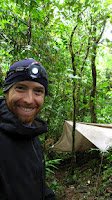 M. Alex Smith合作论文数Biodiversity Institute of Ontario;University of Guelph;Biodiversity Institute of Ontario, University of Guelph366
 john burns合作论文数Department of Entomology, Smithsonian Institution354Allison Brown合作论文数353
 Sujeevan Ratnasingham合作论文数Canadian Centre for DNA Barcoding;Institute of Ontario;University of Guelph;Institute of Ontario, University of Guelph353
 Suresh V Naik合作论文数Dept Aquaculture, Coll Fisheries352
 Scott R Shaw合作论文数351
 Michael J Sharkey合作论文数Department of Entomology;University of Kentucky;Department of Entomology, University of Kentucky349Winnie Hallwachs合作论文数349
 Megan A Milton合作论文数Centre for Biodiversity Genomics, University of Guelph341
 Donald Quicke合作论文数Department of Biology, Chulalongkorn University338C. Van Achterberg合作论文数335
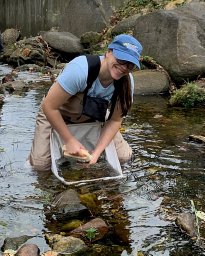 Tanya Dapkey合作论文数335M. Alma Solis合作论文数334
 Kittel Rebecca N合作论文数Centre for Evolutionary Biology and Biodiversity, Australian;School of Earth and Environmental Sciences, The University of Adelaide;Email: Rebecca.Kittel@adelaide.edu.au.;School of Earth and Environmental Sciences, The University of Adelaide334
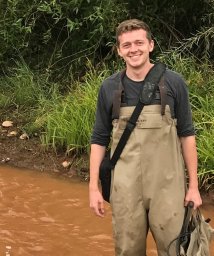 Brian V. Brown合作论文数Natural History;Museum of Los Angeles County;Museum of Los Angeles County334
 Eric G Chapman合作论文数334Paul Goldstein合作论文数333Brown John W合作论文数333Mark A. Metz合作论文数333
 Jayme E. Sones合作论文数31
 James Whitfield合作论文数Department of Entomology, School of Integrative Biology, College of Liberal Arts and Sciences, University of Illinois Urbana-Champaign18José Fernández-Triana合作论文数Canadian National Collection of Insects Arachnids and Nematodes;Biodiversity Institute of Ontario, University of Guelph;Ottawa Research and Development Centre, Agriculture and Agri-Food Canada18Winnifred Hallwachs合作论文数17Boudreault Caroline合作论文数17
 Angelica Maria Penteado-Dias合作论文数17
 Eduardo Mitio Shimbori合作论文数17
 Austin Baker合作论文数Dept Entomol, Univ Calif Riverside12Brianne St Jacques合作论文数9
 Michelle D'Souza合作论文数Ctr Biodivers Genom, Univ Guelph9Kathryn McCluskey合作论文数8
 Jeremy R. Dewaard合作论文数Forestry Sciences Centre, University of British Columbia6Evgeny V. Zakharov合作论文数Biodiversity Institute of Ontario;University of Guelph;Biodiversity Institute of Ontario, University of Guelph6Renee Miskie合作论文数5Claudia Steinke合作论文数5Stephanie deWaard合作论文数Centre for Biodiversity Genomics, University of Guelph5Jaclyn McKeown合作论文数Ctr Biodivers Genom, Univ Guelph5Chris Ho合作论文数5
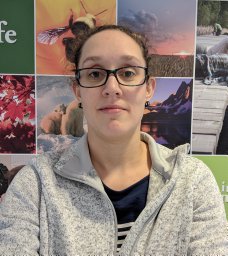 Valerie Levesque-Beaudin合作论文数Centre for Biodiversity Genomics, University of Guelph5
 Angela Telfer合作论文数University of Guelph5
 Mehrdad Hajibabaei合作论文数Department of Integrative Biology, College of Biological Science, University of Guelph;Centre for Biodiversity Genomics, University of Guelph5
 Gergin Blagoev合作论文数Institute of Zoology, Bulgarian Academy of Sciences5
 Mikko Pentinsaari合作论文数Department of Biology, University of Oulu5Liuqiong Lu合作论文数4
 Connor P. K. Warne合作论文数Univ Guelph4
 Crystal N Sobel合作论文数4
 Young Monica R合作论文数Biodiversity Institute of Ontario and Department of Integrative Biology, University of Guelph4




