L'UMR GEAU propose depuis pres de 10 ans des modules de formation a la decision collective sur la gestion de l'eau bases notamment sur la construction collective de jeux de role avec le dispositif Wat-A-Game (WAG). Ce dispositif, qui se place dans la lignee de la modelisation d'accompagnement (voir http://commod.org ), fournit des briques materielles et des elements methodologiques associes et a pour but de faciliter l'autonomisation de groupes d'acteurs et de reduire l'intervention des specialistes (chercheurs ou bureau d'etude) dans la maitrise et l'utilisation de l'outil jeu de roles dans des processus de gestion de l'eau. WAG fait partie d'un ensemble plus large d'outils dedie a l'autonomisation de groupes d'acteurs locaux dans l'accompagnement et la mise en oeuvre de processus de decision participatifs pour la gestion des ressources naturelles, et de l'eau en particulier (voir http://cooplaage.watagame.info).Les modules de formation, d'une demi-journee a une semaine guident les participants a deployer en petits groupes de 4 a 6 personnes les outils sur des etudes de cas concretes (les leurs en formation continue, avec si possible tests en directs avec des groupes d'acteurs locaux, des etudes de cas issues de projets en cours en formation initiale). Nous disposons aujourd'hui d'une importante experience d'utilisation de ce dispositif dans des modules de formation initiale (niveau master le plus souvent) ou continue (professionnels ou grand public, le plus souvent dans le cadre de projet). Ainsi en 2019, plus de 1000 personnes ont suivi un module de formation incluant le dispositif Wat-A-Game. L'hypothese est que via la mise en capacite de groupes d'acteurs locaux a maitriser ce type d'outils, du changement puisse etre produit via la dissemination de protocoles de modelisation participative produisant des jeux de roles permettant a d'autres groupes d'explorer et de structurer leur futur. Dans un objectif d'evaluation et d'amelioration de nos outils et de nos modules de formation, nous avons mene une etude sur les apprentissages generes par ces formations, sur la base des formulaires d'evaluation que nous faisons remplir systematiquement en fin de formation, d'une enquete quantitative a froid des anciens participants aux modules, et d'entretiens avec quelques anciens participants choisis. Nous presenterons les resultats de cette etude portant sur differents types d'apprentissages : - Apprentissage experientiel des outils et approches de modelisation participative reutilisables de maniere autonome . - Apprentissages substantifs relatifs au systeme socio-ecologique traite (enjeux, dynamiques, options technique, etats possibles et desires...) et a la gestion de l'eau en general (enjeux, solutions, acteurs). - Effets relationnels au sein et a l'exterieur du groupe de travail - Effets normatifs sur les valeurs des participants. Nous discuterons des resultats de cette etude au regard de nos objectifs de transfert et de dissemination d'outils et de postures visant a produire du changement dans la gestion de l'environnement et des limites que nous rencontrons dans cette demarche. Nous aborderons notamment en discussion la strategie de developpement de ressources en ligne que nous poursuivons depuis 2015 afin d'ameliorer et consolider la dissemination de nos outils, avec notamment le MOOC Terr'Eau and Co est en ligne depuis 2018 sur la plate-forme Agreenium (https://lms.agreenium.fr/enrol/index.php?id=12). Ce MOOC est concu pour permettre a des groupes de suivre ensemble a distance les enseignements que nous dispensions jusqu'a present en presentiel, et pour les accompagner dans la conception de leur propre dispositif participatif. Ce MOOC s'accompagnera a terme d'outils en ligne, dont certains sont en cours de developpement, permettant aux apprenants de structurer la conception de leur jeu. Le MOOC constitue un support de transmission stabilise nous permettant d'alleger nos charges d'enseignement en presentiel, et d'accompagner des enseignants ou des facilitateurs deja sensibilises a la demarche dans l'animation d'atelier de developpement de jeux de role. Son utilisation en support autonome d'enseignement a distance n'a aujourd'hui pas encore ete experimente, mais elle pose de nombreuses questions : comment l'utilisation du numerique pourrait-elle faciliter la comprehension de consignes sur des taches collectives complexes comme la modelisation ou la conception de jeux ? Comment le numerique peut-il s'adapter aux modes de pedagogie active bases sur l'experience et l'accompagnement ? Comment faire evoluer nos methodes d'evaluation a ces nouvelles pratiques d'enseignement ?
The assessment of the effects of companion modelling is currently still a theoretical and methodological field under investigation. However, neighbouring fields of research provide relevant elements of reflection. For example, research on integrated assessments aims to provide public policy decision-makers with relevant information for decision-making.
In natural resources governance, it is now largely accepted that scales are social and political constructs that are constantly evolving. Such a conceptualization of resources governance based on fluid cross-scale interactions raises therefore the question of how to integrate socio-economic and ecosystem dynamics in a coherent framework for adaptive management and decision making process. We propose to use a participatory and simulation approach based on social and biophysical simulation to improve the understanding of the interaction dynamics of the complex environmental and social system of catchment management in Africa. The models developped include both a simplified representation of relevant ecosystem dynamics and of social interactions with the resources. By facilitating interactions between different levels of stakeholders and policy-makers, we want to strengthen the collective decision-making process of stakeholders dealing with risk and uncertainty. The approach will be tested both in the Volta and Limpopo basins with emphasis on the multilevel interactions to manage the water resources between different users and stakeholders. A comparative analysis in both basins will allow for understanding the role of small scale infrastructure management in semi arid system resilience. The challenges will be to account for the management of small scale infrastructure within the territorial management unit of the resources. It is expected that the approach will contribute to the building and/or consolidation of the related discussion/consultation bodies through social and transformative learning. (Texte integral)
The development of water policies based on integrated water management principles promotes the development of multistakeholder platforms to manage water resources at catchment level. This is the case of the Alto-Tietê watershed, the urban catchment encompassing the São Paulo metropolis in Brazil. The dynamic pattern of peri-urban areas characterised by rapid major changes has led to complex management issues in which the quantity and quality dimensions of water are intertwined. Effective participation of a broad spectrum of stakeholders supposes that actors from different technical backgrounds have a better understanding of the social and biophysical interactions of the system concerned. This paper describes the role of participatory modelling and simulation as a way to provide a meaningful framework to enable actors to understand the interdependencies in peri-urban catchment management. A role-playing game, connecting the quantitative and qualitative dynamics of the resources with social interactions at catchment level, was developed and tested with members of the catchment committee. Monitoring of the sessions underlined the role of such a tool in learning about collective water management.Keywords: peri-urban catchment, eutrophication, companion modelling, participatory modelling, water allocation
Through examples of interactions among urban and rural areas we have built the concept of urban water socio-footprint, on the basis of concepts of water and urban footprints. This urban water socio-footprint entails making explicit the socio-technical network which disseminates the impact of urban activities on water system or due to their specific needs towards water system. Animating this footprint with people, their dynamics and migration, their concerns about various places leads to couple the dynamics of water system and land use in the whole urban systems, including built and non built, cultivated and non cultivated areas. This raises the issue of the existence of institutions to take in charger the links which are emerging through these multiple sources of interdependences.
Much of São Paulo’s urban expansion is driven by the development of informal settlements on its periphery, which includes the catchment areas that provide important environmental services such as open space and catchments for drinking water reservoirs. In such areas, governance of land, water services and water resources, traditionally administered separately, are in fact interdependent. A role-playing game was built to explore the interactions between different actors (mayor, water company, district representatives and landowners of different types) in land tenure insecurity, water and sanitation infrastructure and pollution in the periphery of São Paulo. An assessment of the game sessions revealed the different points of view of local and institutional actors about the main issues and the possible negotiation arrangements. Institutional actors misunderstood the hierarchy and diversity of community actors’ preoccupations, which were related more to land tenure, access to public transport and other aspects such as health and education rather than to water and sanitation infrastructure. Institutional actors also failed to recognize how access to infrastructure and land tenure is shaped by power-based relationships. While community actors appreciated the game and felt that they had learned from the experiment, institutional actors were more critical. These discrepancies call into question the potential effectiveness of the legal, technical and institutional solutions that the institutional actors are promoting to address the pollution issue.
 Pedro Roberto Jacobi合作论文数Universidade de São Paulo14
 Yara Maria de Carvalho合作论文数Departamento de Pedagogia do Movimento do Corpo Humano;Universidade de São Paulo;Departamento de Pedagogia do Movimento do Corpo Humano, Universidade de São Paulo14
 Vilma Barban合作论文数13
 William’S Daré合作论文数Centre de Coopération Internationale en Recherche Agronomique pour le Développement (CIRAD) Montpellier10
 Guy Trebuil合作论文数CIRAD, UPR GREEN, Montpellier, F-34398 France and CIRAD, UPR GREEN, Bangkok, 10330 Thailand10
 Jerome Queste合作论文数8Anne Chohin-Kuper合作论文数8
 Erwann Lagabrielle合作论文数UMR 53 PVBMT, Cirad & Université de La Réunion8
 Annemarie van Paassen合作论文数Communication and Innovation Studies, Wageningen University and Research Centre8Lucie Clavel合作论文数7
 Pascal Perez合作论文数CSIRO Marine and Atmospheric Research7
 Wanda Maria Risso Gunther合作论文数7
 Pierre Bommel合作论文数Departamento de engenharia mecanica, UnB7Aurélie Botta合作论文数6mya bouzid合作论文数6
 Sigrid Aubert合作论文数6
 Stefano Farolfi合作论文数University of Pretoria6
 Pierre-Yves Le Gal合作论文数Katholieke Universiteit6
 Martine Antona合作论文数CIRAD-TERA6
 Christophe Le Page合作论文数The French Agricultural Research Centre for International Development6
 Raphaël Mathevet合作论文数Centre d´Ecologie Fonctionelle & Evolutive5Suzana Sendacz合作论文数5terezinha joyce fernandes franca合作论文数5Géraldine Abrami合作论文数5
 Erwin De Nys合作论文数5
 Nils Ferrand合作论文数5magalie bourblanc合作论文数4maria eugenia camargo合作论文数4carlos alberto pereira mouco合作论文数4nicolas faysse合作论文数4
 Natalie Jones合作论文数School of the Environment, Faculty of Science, The University of Queensland4
 Jaime Simão Sichman合作论文数Laboratório de Técnicas Inteligentes, Depto. Eng. Computação e Sistemas Digitais, Escola Politécnica, Universidade de São Paulo4
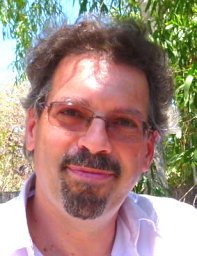 Jean-Pierre Muller合作论文数Université de Neuchâtel4
 Rosely Aparecida Liguori Imbernon合作论文数Instituto de Geociências São Paulo, Universidade de São Paulo4Maria Eugenia Carmargo合作论文数4
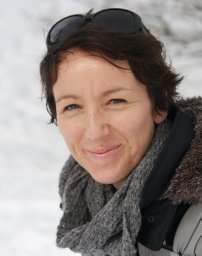 Cecile Barnaud合作论文数institut national de la recherche agronomique4
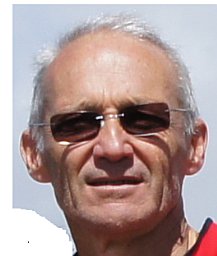 Patrice Garin合作论文数magref, Ce4
 Jose Galizia Tundisi合作论文数Centro de Ciências Biológicas e da Saúde, Universidade Federal de São Carlos3s janakarajan合作论文数3
 Fernando Jorge Monteiro合作论文数3Sylvie Morardet合作论文数3Olivier Barreteau合作论文数Cemagref, UR Irrigation
361, rue J.-F. Breton
BP 50353Vilma Braban合作论文数3Jean-Philippe Tonneau合作论文数3Bastiaan Philip Reydon合作论文数3patrick daquino合作论文数2claude dancette合作论文数2
Fernando Jorge Monteiro合作论文数3Sylvie Morardet合作论文数3Olivier Barreteau合作论文数Cemagref, UR Irrigation
361, rue J.-F. Breton
BP 50353Vilma Braban合作论文数3Jean-Philippe Tonneau合作论文数3Bastiaan Philip Reydon合作论文数3patrick daquino合作论文数2claude dancette合作论文数2 Tayan Raj Gurung合作论文数2eldonice rochabarros合作论文数2




