The Fifth Generation (5G) cellular network requires new solutions to new network requirements, for example, support for high-speed mobility. This paper presents a handover decision solution for connected vehicles to 5G Ultra-Dense Networks (5G-UDN). Its main goal is to treat high vehicular mobility and provide performance gains in handover for vehicles, since the densification of the cellular network causes, despite the expected capacity gain, difficulties in the cells selection, a greater number of failed and unnecessary handovers (ping-pong effect), longer delays and energy consumption, and high packet losses. The solution is based on Virtual Cells (V-Cells). The selection of the best cells is made based on complex network metrics to compose a V-Cell, as well as other criteria such as signal strength, distance, and speed. The solution relies on the Software-Defined Network (SDN) controller which has centralized network information. Simulations were conducted in Network Simulator, ns-3. The results show that the solution is effective in the treatment of vehicle handover.
Acute Respiratory Tract Infections are among the leading causes of child mortality worldwide. Specifically, community-acquired pneumonia has different causes, such as: passive smoking, air pollution, poor hygiene, cardiac insufficiency, oropharyngeal colonization, nutritional deficiency, immunosuppression, and environmental, economic and social factors. Due to the variation of these causes, knowledge discovery in this area of health has been a great challenge for researchers. Thus, this paper presents the steps for the construction of a database and evaluation results applied to the analysis and prediction of potential deaths caused by childhood pneumonia using the Pictorea method. For this, the Random Forest and Artificial Neural Network algorithms were used, and after comparison, the Neural Network algorithm showed higher accuracy by up to 87.57%. This algorithm was used to analyze and predict the number of deaths from pneumonia in children up to 5 years old, and the results were presented using Root Mean Square Error and scatter plots. A domain specialist validated the results and defined that the pattern found is relevant for future studies in the medical field, helping to analyze the behavior of countries and predict future scenarios.
A utilização massiva de IoT torna-se problemática na medida em que é empregada em sistemas críticos, pois expõe esses sistemas a ataques diversos. Este artigo propõe uma arquitetura baseada em Fog Computing para prover segurança em sistemas IoT. A arquitetura proposta insere camadas de criptografia e autenticação entre todas as comunicações na rede do sistema, aliando protocolos de criptografia como AES e TLS, a mecanismos como OAuth2, provendo segurança de ponta a ponta. Os resultados obtidos evidenciam a eficácia da proposta que fornece segurança, sendo implementada em um Raspberry Pi 3, obtendo latência até 85 vezes mais rápida, utilizando até 5,5 vezes menos CPU em comparação com uma proposta da literatura.
A rede de celular de quinta geração (5G) requer novas soluções para novos requisitos de rede, como o suporte à mobilidade para altas velocidades. Este trabalho apresenta uma solução de decisão de handover para veı́culos conectados em redes 5G ultradensas. Ele tem como objetivo principal tratar a alta mobilidade veicular e proporcionar ganhos de desempenho em handover para veı́culos, uma vez que a densificação da rede celular causa, apesar do ganho de capacidade esperado, dificuldades na seleção de células, maior número de handovers falhos e desnecessários (efeito ping-pong), maiores atrasos e consumo de energia, e altas perdas de pacotes. A solução tem como base a formação de células virtuais (V-Cells). A seleção de melhores células é feita com o auxı́lio de métricas de redes complexas para compor uma célula virtual, assim como critérios como potência de sinal, distância e velocidade. A solução se apoia em um controlador de rede definida por software (SDN) para tomada de decisão, que possui informação centralizada da rede. Simulações foram conduzidas no simulador de rede, ns-3. Os resultados obtidos mostram que a solução é eficaz no tratamento de handover para veı́culos.
The Internet of Things (IoT) is an increasingly evident reality in everyday life. IoT makes possible to interconnect physical objects through a heterogeneous computer network, creating new ways to manage infrastructures. In the IoT systems, smartphones have a fundamental role due to their computational capacity and resources. Nowadays, the major mobile devices have several types of sensors that can be used to monitor and collect data from the physical world, such as GPS, accelerometer, barometer, among others. Thus, IoT developers have used different cross-platform frameworks to improve their productivity and to make the software maintainability easily and fast. In this context, the goal of this work is to understand the performance impacts of some cross-platform frameworks for IoT application development. To do this, we built three versions of the same Android application of an IoT system using (1) Ionic, (2) React Native, and (3) Java, which uses some smartphone's sensors commonly used in IoT applications, such as GPS, WiFi, and BLE. For each resource and performance evaluation metric for each version of our application, we created a specific test-case to measure and to compare the analyzed cross-platform framework. Our results showed slight differences between the three versions of our IoT application in some analyzed metrics.
Large cities seek to incorporate intelligent systems into their infrastructure, industrial, educational, and social activities to improve the quality of service provided to citizens and make all processes more efficient. To this end, these cities use technologies that involve the areas of the Internet of Things, Big Data, and Governance to make decisions by governments and authorities. In the field of Urban Computing, it is possible to use open data in the GTFS format to solve the problems of the urban transport system using complex network metrics that make it possible to model complex interactions between objects in high dimensionality. Stops and routes are modeled as a graph, characterized by complex network metrics. According to the literature, if there is an interruption of the urban transport system, we make an evaluation of the degree of vulnerability of the system in the search for solutions. The main goal of this paper is to propose an approach to analyze the vulnerability of the urban transport system using complex network metrics along with GTFS data in scenarios targeted failures. As a contribution, the proposed approach uses the concept of skewness in the methodology established in the literature. The skewness enables a better understanding and differential the failure conditions from the evaluation of the vulnerability the urban transport system, through a quantitative indication of which local metrics most influence the decay of network metrics. The analysis of the results obtained in the proposed approach serves as a subsidy for studies in the search for solutions to the problems of the urban transport system, providing a tool to the set of technological options for the planning of urban transport systems of smart cities available to governments and authorities. The proposed approach can be applied in different cities, regardless of their size and location, as long as you have access to open geographic data in the GTFS format.
A teoria de redes complexas tem sido usada para modelar o tráfego de sistemas viários urbanos. O tráfego pode ser modelado como um grafo, caracterizado por métricas de redes complexas. Segundo a literatura, se há um problema de congestionamento ou interrupção do tráfego, é feita uma avaliação do grau de vulnerabilidade ou resiliência do sistema na busca de soluções. O artigo propõe uma abordagem para avaliação da vulnerabilidade do tráfego urbano através das métricas das redes complexas geradas a partir de dados abertos obtidas pelo aplicativo de Ridesharing Uber, utilizando falhas direcionadas. Como diferencial, em relação a literatura, esta abordagem utiliza o conceito de assimetria para a avaliação da vulnerabilidade do tráfego urbano.
Vehicular ad-hoc networks are a promising type of networks that allows the communication between vehicles with the goal to promote safe and efficient traffic. During the trips, vehicles can communicate with each other and with other networks by interacting with them and with the cell phone network. In VANETs, data dissemination is a general task required by many services, which consists of the delivery of data messages to a group of vehicles. In this type of communication, the knowledge of the interactions among vehicles can help to improve the performance of data dissemination. Thus, in this work, we propose the TBD (Trajectory Based Dissemination), a solution that transmits the information on the network according to the density of vehicles in the path from the source to the region of interest. Simulation results evaluated in scenarios of various densities have shown that it is possible to reduce the number of messages transmitted with a high delivery ratio.
Redes Veiculares são um tipo promissor de rede ad-hoc que permite a comunicação entre veículos, com o objetivo de promover um trafego seguro e mais eficiente. Durante suas viagens, os veículos podem se comunicar uns com os outros e com outras redes, por meio das interações entre eles e a rede celular. Desta forma, para efetuar a disseminação de dados para um grupo de veículos é interessante conhecer melhor o comportamento global do cenário. Assim, neste trabalho é proposto um protocolo ciente de contexto para disseminar os dados, que seleciona veículos para retransmitir a informação de acordo com suas posições em relação ao destino da mensagem. Resultados de simulação avaliados em cenários de diferentes densidades mostraram que é possível reduzir o número de mensagens transmitidas mantendo uma boa taxa de entrega.
A tempestade de broadcast é caracterizada pela retransmissão indesejada de pacotes, ocasionando inundações, contenções e colisões frequentes que comprometem o desempenho da rede. Este artigo apresenta um protocolo para a disseminação de mensagens em redes veiculares através da observação e da análise baseada em métricas de redes complexas, intitulado CN-vP (Complex Network-vehicular Protocol). Com o objetivo de mitigar o envio de mensagens desnecessárias, o presente trabalho combinou abordagens probabilı́sticas juntamente com maior conhecimento da rede, em particular, os veı́culos vizinhos de um determinado transmissor. Uma vez escolhidos os três melhores retransmissores, através do cálculo probabilı́stico, sao estimados intervalos de espera, para cada retransmissão, de maneira a evitar inundações de pacotes. A análise dos resultados mostra que a solução desenvolvida permite uma tomada de decisão mais assertiva para a disseminação de mensagens em redes veiculares, mitigando, assim, o problema de tempestade de broadcast.
The broadcast storm problem is characterized by unwanted packet retransmission, causing frequent flooding, contention, and collisions that compromise network performance. This paper presents a new vehicular message dissemination protocol named CN-vP (Complex Network- vehicular Protocol). It is based on the observation and analysis of complex network metrics. In order to mitigate the sending of unnecessary messages, the present work combines probabilistic and delay approaches together with a better knowledge of the network, in particular, the neighboring vehicles of a certain transmitter. Once the three best relays have been chosen by probabilistic calculation, the waiting intervals are estimated, for each retransmission, in order to avoid packet flooding. The analysis of the simulation results shows that the solution developed allows a more assertive decision, thus mitigating the problem of broadcast storm.
This paper investigates the precise identification of physical phenomena in the Internet of Things (IoT) context, which is one of the main challenges when dealing with the massive scale of IoT data. For this, we use information theory quantifiers in the characterization and classification of physical phenomena to minimize the effects of the lack of proper descriptions and the high heterogeneity of IoT sensors. Thus, by understanding the dynamics behind physical phenomena, we perform the classification of sensor data based on their expected behavior, not their data points. By using a simple classification algorithm, we show that the behavioral dynamics of some physical phenomena are more affected by different geographical regions than others. This gives a classification accuracy of 75% when all phenomena are considered and of 93% when considering only the invariant ones, with a worst case of false positives of 12%. This result indicates the high potential of our technique to correctly identify physical phenomena from sensor data, a fundamental issue for several applications, even in an unreliable IoT environment.
Strategies based on the extraction of measures from ordinal patterns transformation, such as probability distributions and transition graphs, have reached relevant advancements in distinguishing different time series dynamics. However, the reliability of such measures depends on the appropriate selection of parameters and the need for large time series. In this paper we present a method for the characterization of distinct time series behaviors based on the probability of self-transitions, a measure extracted from their transformation onto ordinal patterns transition graphs. We validate our method by investigating the main characteristics of periodic, random, and chaotic time series. By the application of learning strategies, we precisely classify different randomness levels in time series, reaching 100% in accuracy, and advances in performing the hard task of distinguishing random noises from chaotic time series, correctly distinguishing 96.61% of the cases. Furthermore, we show that this strategy is well suitable to be used by many applications, even for short time series, and does not depend on the selection of parameters.
Vehicular ad hoc networks are a special type of mobile ad hoc networks in which vehicles have processing and wireless communication capabilities. The idea is that vehicles are able to establish communication under different environments, such as urban centers and highways, in order to cooperatively increase road safety and efficiency and provide entertainment to passengers. The study to look at computer networks as social networks has been increased, because these are networks that link people, organizations, and knowledge. The use of social metrics to improve the performance of protocols and services in ad hoc networks has received much attention by the research community. Under dense road traffic conditions, when a vehicle receives a data message, it must carefully decide whether to rebroadcast it, and when to rebroadcast it in order to avoid redundant retransmissions and, consequently, the broadcast storm problem.
In D2D opportunistic networks, nodes need to cooperate acting as relays for transmitting messages to other nodes according to an opportunistic routing algorithm. To store these messages until they are propagated, each node uses a buffer with limited capacity. However, when multiple messages are forwarded in the network, the number of incoming messages may exceed the nodes' capacity, causing a buffer overflow. In this scenario, message dropping policies are very important to this problem, because when a message is dropped, there is a chance that other copies of this message still exist in the network. In this work, we propose a new buffer management algorithm for opportunistic routing in D2D networks named ST-Drop (Space-Time-Drop). We have evaluated our solution in three different types of opportunistic routing algorithms: epidemic-based, probabilistic, and social-aware. We have conducted simulations using two different publicly available data sources and considered different network traffic loads. Compared to other message drop policies, ST-Drop obtained the highest message delivery ratio in all considered scenarios and the lowest overhead when applied to the state-of-art social-aware and probabilistic routing algorithms, namely, Bubble Rap and Prophet.
Avanços nas áreas de sistemas embarcados, computação e redes têem criado milhares de dispositivos heterogêneos. Os medidores eletrônicos de energia elétrica são exemplos desses dispositivos que interconectados podem fazer parte de uma rede maior chamada de redes elétricas inteligentes. A partir da aplicação de internet das coisas nessas redes, os medidores passam a disponibilizar as informações coletadas a todos os usuários do sistema através de servidores na nuvem. Este trabalho especifica e implementa uma rede de medidores inteligentes brasileiros além de propor uma técnica para cálculo do ciclo de trabalho da rede de forma dinâmica com o objetivo de maximizar o tempo de vida. Resultados experimentais mostram que a proposta de utilização de ciclo de trabalho dinâmico aumenta em 17 vezes o tempo de vida da rede.
A computação ubíqua possui como objetivo principal a presença uniforme e imperceptível na vida cotidiana do ser humano. A partir disso, é possível, além de outros recursos, identificar indivíduos em um ambiente, permitindo servic¸os personalizados e sensíveis ao contexto. Tecnologias como essa podem auxiliar o controle da demanda de recursos hídricos, afetados diretamente pelo desperdício contínuo domiciliar e industrial. Este trabalho propõe uma solução para o controle do consumo de água residencial, baseado em reconhecimento facial. Utilizando uma rede de sensores sem fio (RSSF) interligada a um dispositivo móvel, um usuário é identificado por meio da face para regular a vazão e monitorar a quantidade de água utilizada por ele. Desenvolveu-se um protótipo para monitorar e controlar esse consumo, que é ajustado em tempo real de acordo com a face do usuário identificado. Os resultados mostram que é possível economizar até 50% do consumo de água com a utilização do sistema proposto.
Avanços nas áreas de sistemas embarcados, computação e redes têm criado milhares de dispositivos heterogêneos. Os medidores eletrônicos de energia elétrica são exemplos desses dispositivos que interconectados podem fazer parte de uma rede maior chamada de redes elétricas inteligentes. A partir da aplicação de internet das coisas nessas redes, os medidores passam a disponibilizar as informações coletadas a todos os usuários do sistema através de servidores na nuvem. Este trabalho especifica e implementa uma rede de medidores inteligentes brasileiros, considerando as limitações impostas pelas normas brasileira, além de propor uma técnica para cálculo do ciclo de trabalho da rede de forma dinâmica com o objetivo de maximizar o tempo de vida. Resultados experimentais mostram que a proposta de utilização de ciclo de trabalho dinâmico aumenta significativamente o tempo de vida da rede.
 Antonio Alfredo Ferreira Loureiro合作论文数Department of Computer Science;Federal University of Minas Gerais48
 Felipe Domingos Da Cunha合作论文数Pontificia Universidade Catolica de Minas Gerais15
 Daniel L. Guidoni合作论文数Federal University of Minas Gerais13
 Aline Carneiro Viana合作论文数Inria Saclay10
 Azzedine Boukerche合作论文数School of Information Technology and Engineering, University of Ottawa7
 Guilherme Maia合作论文数Federal University of Minas Gerais7Efrem E. O. Lousada合作论文数6
 Badri Nath合作论文数Department of Computer Science, Rutgers University6
 Humberto T. Marques-Neto合作论文数Pontifícia Universidade Católica de Minas Gerais6
 Andre L L Aquino合作论文数Federal University of Minas6Max Do Val Machado合作论文数5
 Fatima De L. P. Duarte-Figueiredo合作论文数Institute of Informatics, Pontifical Catholic University of Minas Gerais5
 Carlos R. Storck合作论文数Institute of Informatics, Pontifical Catholic University of Minas Gerais4
 Leandro Aparecido Villas合作论文数Institute of Computing, University of Campinas;Universidade Estadual de Campinas4
 Jussara M. Almeida合作论文数Department of Computer Science, Federal University of Minas Gerais;Instituto de Ciências Exatas, Universidade Federal de Minas Gerais4
 Orlando Silva Junior合作论文数3
 João B. Borges Neto合作论文数3
 Ivan De Oliveira Nunes合作论文数University of Zurich3
 Pedro O. S. Vaz De Melo合作论文数Computer Science Department (DCC) of Federal University of Minas Gerais (UFMG)3
 Pedro O.S Vaz-de-Melo合作论文数Universidade Federal de Minas Gerais3
 Horacio A. B. F. De Oliveira合作论文数Federal University of Minas Gerais3
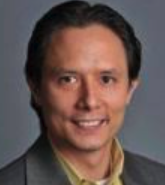 Eduardo Nakamura合作论文数Instituto de Computação, Universidade Federal do Amazonas3
 Linnyer Beatrys Ruiz合作论文数Federal University of Minas Gerais3Davidysson A. Alvarenga合作论文数2Michael D. Silva合作论文数2
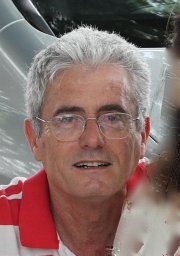 José Marcos S. Nogueira合作论文数Federal University of Minas Gerais2
 Alejandro Frery合作论文数School of Mathematics and Statistics, Victoria University of Wellington;Universidade Federal de Alagoas;Xidian University2
 Fernanda Sumika Hojo Souza合作论文数Department of Computer Science, Federal University of Minas Gerais2
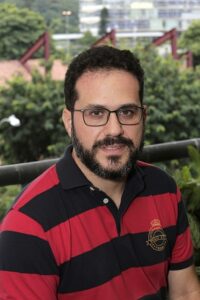 Heitor Ramos合作论文数Federal University of Minas Gerais2Rodrigo M. Passos合作论文数2
 Carlos Mauricio S. Figueiredo合作论文数UFMG, Federal University of Minas Gerais2Max Do V. Machado合作论文数2
 Claudionor José Nunes Coelho Jr.合作论文数Department of Computer Science, Federal University of Minas Gerais – UFMG2Guilherme G. de O. Silva合作论文数1
 Cesar Eduardo Fernandes合作论文数1Agripino Damasceno合作论文数pontificia universidade catolica de minas gerais1
 Tiago Santos Silveira合作论文数State University of Pará1
 Felipe Soares合作论文数Universidade Federal do Rio Grande do Sul1
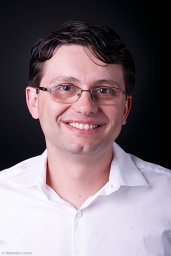 José Augusto M. Nacif合作论文数Universidade Federal de Viçosa, Florestal, MG, Brazil1Thiago Silva合作论文数Universidade Federal de1
 Rossana Maria de Castro Andrade合作论文数Departamento de Computação, Centro de Ciências, Universidade Federal do Ceará1
 Mario Fernando Montenegro Campos合作论文数Department of Computer Science, Federal University of Minas Gerais1
 Édler Lins De Albuquerque合作论文数1
 Sérgio Vale Aguiar Campos合作论文数Departamento de Ciência da Computação, Universidade Federal de Minas Gerais;Instituto de Ciências Exatas, Universidade Federal de Minas Gerais1
 Luis Enrique Zarate Galvez合作论文数Instituto de Informática, Pontifícia Universidade Católica de Minas Gerais1
 Fernando A. F. Braz合作论文数1Geraldo R. Mateus合作论文数Department of Computer Science, Federal University of Minas Gerais1
 Henrique Cota Freitas合作论文数Instituto de Informática;Programa de Pós-graduação em;Instituto de Informática|Programa de Pós-graduação em1Felipe Domingos合作论文数1




