The early and accurate diagnosis of kidney disease has several benefits of reducing the risk of its further progression and effective clinical management. Computed tomography (CT) imaging is a widely utilized approach by clinical experts for kidney stone detection (KSD). However, stone detection through CT images is a medically significant task as well as technically a challenging problem. In recent decades, deep learning (DL) models have occupied a distinctive place in handling such image data. However, these models are too complex in terms of number of layers and parameters, thus increases the computational cost. To overcome these limitations, this study suggests a custom six layer light weight sequential convolutional neural network (LSCNN) model for KSD with reduced computational requirements. The performance of the proposed model is compared with ten popular pre-trained models for detecting kidney stones from axial CT images by experimenting on a publicly available axial CT Imaging dataset. Experimental results conducted on 3364 CT images demonstrate that with a compact size of 10.61 MB, the proposed LSCNN model achieves superior performance, recording a classification accuracy of 96.7
The categorizing of Land Use and Land Cover (LULC) is pivotal to resource regulation, nonrural organization, and green moderation. Accurately identifying appropriate land areas that optimize sunlight exposure as minimizing environmental impact is essential to efficient solar farm planning. Convolutional Neural Networks (CNNs) along with other techniques utilizing deep learning have demonstrated tremendous potential in automated LULC classification tasks. Employing an AID (Aerial Image Dataset) and pre-processing methods, this study uses models of transfer learning to classify LULC. The model employing transfer learning is previously trained with large dataset and refined for the categorization of LULC images. Later on, it is adopted for the classification of high-resolution images of AID dataset including 30 classes. For this study, a few transfer learning prototypes accompanied by pre-processing approaches are selected for the classification of LULC images. The effectiveness of these models is determined in terms of recall, precision, f1-score, and accuracy. The fine-tuned ResNet50 model after the pre-processing techniques demonstrates 92 % of accuracy as compare to other models such as InceptionV3 and DenseNet121 models in obtaining structural and spatial properties from LULC images. In conjunction with acquiring knowledge of applications of remote sensing and mapping for constructive solar planning, this analysis focuses the potential of deep learning-based transfer learning paradigms in developing self-operating classification tasks.
Oral Squamous Cell Carcinoma (OSCC) remains a significant global health burden due to its aggressive progression and poor prognosis when diagnosis is delayed. Although histopathological examination is the gold standard for OSCC diagnosis, it is time-intensive and highly dependent on specialist expertise, which can lead to diagnostic variability, especially in high-workload clinical settings. To address these challenges, this study proposes machine learning (ML) and deep learning (DL) based diagnostic models for automated classification of histopathological images to support early OSCC detection. The proposed framework integrates clinically relevant image preprocessing and feature enhancement strategies to improve diagnostic robustness. A Random Forest (RF)-based ML model achieves a test accuracy of 98.57
In recent years, lung cancer diagnosis in computer tomography has come to prominence as an emergent study topic in the domain of medical imaging systems. Lung diseases are diseases that hinder breathing and weaken the lungs. It has been highlighted as one of the leading causes of mortality worldwide. Early identification of the lung diseases can improve human survival chances and advance detection of it increases the typical survival rate from 14% to 49%. In this study, lung CT (Computer Tomography) scan pictures from patients are used to identify, categorize, and assess the degree of malignancy in lung nodules. A series of techniques were implemented on the lung cancer dataset to compare detection performance, incorporating both classical machine-learning approaches and pre-trained models, along with some essential pre-processing procedures. The findings show that, even using a balanced dataset, advanced machine learning models like AlexNet and ResNet50 fail to perform well. The small quantity of the initial training dataset and the inadequate computational resources continue to limit its efficacy. On the other hand, even when taught on fewer data than those usually needed for deep learning, conventional machine-learning techniques perform relatively better. By lowering bias and improving the dependability and generalizability of traditional algorithms, the application of balanced data continues to be crucial in promoting more reliable and accurate diagnostic results.
Cancer has recently become a prevalent global health issue, according to research conducted by the WHO. Timely detection is crucial in preventing its spread, and treatment methods vary depending on the specific type of tumor present. Accurately classifying these tumors is essential for maximizing survival rates, which poses a significant challenge for researchers. Clinical data may sometimes be insufficient, and many tumors lack the morphological features necessary for classification. To obtain these features, a process known as feature selection is indispensable, particularly in the context of machine learning preprocessing. Feature selection involves choosing a subset of distinctive features that optimally reduces the feature space based on certain evaluation criteria. Utilizing an appropriate feature selection process can eliminate irrelevant data, enhance learning accuracy, and improve comprehensibility. This study introduces a rapid correlation-based filtering method for feature selection in conjunction with a linear Support Vector Machine (SVM). Furthermore, minor adjustments have been made to this approach to enhance its accuracy. A comparison is made between two different classifiers: back propagation as an artificial neural network and linear Support Vector Machine (SVM).
Agriculture plays a vital role in global economic growth, but unsustainable practices are degrading soil health and threatening food security. Soil nutrient depletion adversely affects crop yields, underscoring the need for reliable predictions of crop types and soil fertility. This study addresses uncertainty in agricultural predictions by applying Bayesian Model Averaging (BMA), which combines the outputs of multiple Machine Learning (ML) models to improve prediction accuracy. In agricultural environments, uncertainty arises from complex data and varying soil conditions. Rather than relying on a single model, BMA integrates predictions from multiple models, weighting them by performance for more robust results. BMA accounts for model uncertainty by assigning posterior probabilities, reflecting each model’s reliability. This offers probabilistic predictions that quantify uncertainty and improve decision-making. In this work, environmental parameters like nitrogen, phosphorus, potassium, temperature, humidity, pH, and rainfall were used, employing advanced models such as Extra Trees Classifier (ETC), K-Nearest Neighbors (KNN), and Nu Support Vector Classification (NuSVC) for crop prediction (ETC achieving the highest performance: mean precision, recall, and F1 score of 0.994). For soil fertility prediction, Logistic Regression(LR) outperformed other models (mean precision, recall, and F1 score of 0.99). By incorporating uncertainty, BMA enhances predictions for crop selection and soil management, contributing to Sustainable Development Goal (SDG) 2: Zero Hunger.
Globally, cancer stands as the second leading cause of mortality. Various strategies have been proposed to address this issue, with a strong emphasis on utilizing gene expression data to enhance cancer detection methods. However, challenges arise due to the high dimensionality, limited sample size relative to its dimensions, and the inherent redundancy and noise in many genes. Consequently, it is advisable to employ a subset of genes rather than the entire set for classifying gene expression data. This research introduces a model that incorporates Ranked-based Filter (RF) techniques for extracting significant features and employs Extreme Learning Machine (ELM) for data classification. The computational cost of using RF technique over high dimensional data is low. However extraction of significant genes using one or two stage of reduction is not effective. Thus, a 4-stage feature reduction strategy is applied. The reduced data is then utilized for classification using few variants of ELM model and activation function. Subsequently, a two-stage grading approach is implemented to determine the most suitable classifier for data classification. This analysis is conducted over four microarray gene expression data using four activation function with seven learning based classifiers, from which it is shown that II-ELM classifier outperforms in terms of performance matrix and ROC graph.
Environmental hazards are materials, states, or situations that threaten the natural environment or human health, such as pollution and natural catastrophes like hurricanes and earthquakes. In recent decades, natural hazards have become more dangerous due to developments affecting climate and land use/land cover (LULC), primarily driven by anthropic pressures such as urbanization, forest management methods, and agricultural activities. Advancements in Remote Sensing (RS) technology enable rapid, accurate terrain data collection, significantly aiding in mapping, monitoring, and assessing hazards. This research proposes a deep classification model combining hierarchical feature extraction and classification units to categorize LULC from remotely sensed images. Four filters of equal size (3 × 3) simultaneously extract features from the input image, which are then concatenated and classified into different LULC categories. Experiments on two datasets independently verify the model, demonstrating improved resilience compared to other state-of-the-art approaches. To ensure the generalizability and robustness of the model, 5-fold cross-validation is conducted, yielding consistently high AUC scores. Additionally, an independent T-test is performed to statistically validate the performance improvements over comparative models. This proposed model helps predict future impacts and manage risks through accurate and efficient LULC classification.
In the modern world, with increasing cases of cancer diseases pose a huge problem to society. Conventional clinical method of cancer detection highly dependents on medical professionals, their devices and their clinical experience. With increasing cases of cancer, it's high time to find out different ways to train different models so that computer-aided systems can be built that can detect cancerous cells faster which can help in curing the disease faster and also help in decreasing the mortality rate. However, in the current era automation techniques implementing image analysis methods play a vital role for cancer detection. This study works on machine learning (ML) for automatic detection of oral cancer through histopathological oral cell dataset. To understand the images accurately, few preprocessing techniques such as Data augmentation, Color normalization, Image resizing, Pixel normalization, Edge detection and Wavelet transformation techniques are followed, which serves as the critical part of this research work. For classification purpose, specifically the machine learning classifiers such as Random Forest, KNN and SVM are considered and the superior one is evaluated.
Dash, Rasmita M.Pharma; Sahoo, Rudra N. PhDb; Pattnaik, Gurudutta PhDb; Sarangi, Ashish K. PhDc; Kandi, Venkataramana PhDd; Mishra, Snehasish PhDe; Verma, Sarika PhDf,g; Mohapatra, Ranjan K. PhDh, Author Information
Green environmental security refers to the state of human-environment interactions that include reducing resource shortages, pollution, and biological dangers that can cause societal disorder. In IoT-enabled smart cities, due to the advancement of technologies, sensors and actuators collect vast quantities of data that are analyzed to extract potentially useful information. However, due to the noise and diversity of the data generated, only a small portion of the massive data collected from smart cities is used. In sustainable Land Use and Land Cover (LULC) management, environmental deterioration resulting from improper land usage in the digital ecosystem is a global issue that has garnered attention. The deep learning techniques of AI are recognized for their capacity to manage vast amounts of erroneous and unstructured data. In this paper, we propose a morphologically augmented fine-tuned DenseNet-121(MAFDN) LULC classification model to automate the categorization of high spatial resolution scene images for environmental conservation. This work includes an augmentation process (i.e. erosion, dilation, blurring, and contrast enhancement operations) to extract spatial patterns and enlarge the training size of the dataset. A few state-of-the-art techniques are incorporated for contrasting the efficacy of the proposed approach. This facilitates green resource management and personalized provision of services.
On a worldwide scale, the second leading cause of death is cancer. To combat cancer, a variety of approaches have been proposed. It is strongly predicted that gene expression data would be used to help in the development of better cancer detection. On the other hand, gene expression data is dimensionally high, has a small sample size in comparison to the data dimension, and many genes are redundant and also noisy by nature. As a result, rather than using all genes to classify gene expression data, it would be wiser to use a subset of genes. Thus, in this research work, the proposed model is designed considering ranked-based filter sequence (FS) approaches for significant feature extraction and Extreme Learning Machine (ELM) for data classification. This analysis is carried out over four gene expression data. As FS approaches are highly successful for high dimension data, significant features are extracted using 4-stage feature reduction strategy applying RF approach. Thereafter the reduced data is applied for classification. ELM is a learning algorithm for a Single-Layer Feed-Forward Network (SLFN) that converges much faster than traditional methods and produces promising results. Thus, due to its superior approximation capability and generalization, ELM has equipped the interest of numerous researchers in recent years. In this analysis, considering different types of activation functions and considering a collection of network architecture, four numbers of ELM models are designed and used for classification purposes with four different activation functions. From all the experimental results it is found that IIELM (CM4) outperforms over all the model.
In many application domains, remotely sensed (RS) data are essential for disaster monitoring, climate forecasting, and remote surveillance. It perceives and gathers environmental, sociological, and transitional data on its own, from a distance, in increasing amounts of spatial and temporal details. While urbanization has been continued to be a worldwide phenomenon, the urban management and planning are needed to satisfy the needs of the Earth system. The operations associated with land management, urban planning, and transportation on Earth have been connected to digital maps and geographic databases. Knowledge of land cover is also significant for managing, conserving, and formulating environmental and urban development policies. Therefore, highly accurate Land Use Land Cover (LULC) assessment and monitoring are of the utmost significance for empirical studies and organizational accomplishment. In this study, we leverage remotely sensed data to formulate a sophisticated deep learning system for comprehensive Earth observation. The core of our approach involves the development of a three-layered Convolution-Convolution-Maxpooling Convolutional Neural Network (CCMCNN) model, preceded by a meticulous pre-processing stage. In the pre-processing stage, images extracted from the NWPU-RESISC dataset undergo resizing, division, and augmentation procedures before being fed into the three-layered CCMCNN architecture for the purpose of classifying them into five different LULC categories. The effectiveness of our proposed model undergoes thorough validation through a comparative examination against various pre-trained deep learning models outlined in existing literature. Presenting performance metrics, our model attains a remarkable accuracy rate of 98.4%. This advancement holds significant promise in the realm of Earth surveillance, offering a valuable tool for enhancing situational awareness and environmental monitoring.
Deep learning approaches for medical image analysis are widely applied for the recognition and classification of different kinds of cancer. In this study, histopathological images of oral cells are analyzed for the programmed recognition of Oral squamous cell carcinoma (OSCC) using the proposed framework. The suggested model applies transfer learning and ensemble learning in two phases. In the 1st phase, a few Convolutional neural network (CNN) models are considered through transfer learning applications for OSCC detection. In the 2nd phase, the ensemble model is constructed considering the best two pre-trained CNN from the 1st phase. The proposed classifier is compared with leading-edge models like Alexnet, Resnet50, Resnet101, Inception net, Xception net, and InceptionresnetV2. Results are analyzed to demonstrate the effectiveness of the suggested framework. A three-phase comparative analysis is considered. Firstly, various metrics including accuracy, recall, F-score, and precision are evaluated. Secondly, a graphical analysis using a loss and accuracy graph is performed. Lastly, the accuracy of the proposed classifier is compared with that of other models from existing literature. Following the three-stage performance evaluation, the proposed ensemble classifier exhibits enhanced performance with an accuracy of 97.88%.
This paper introduces the design and prototype of a new home automation system that utilizes GSM technology as the network infrastructure to connect its components. The proposed system is composed of two primary parts: the first is the GSM module, which acts as the core of the system, managing, controlling, and monitoring the user's home. Users and system administrators can connect to the GSM locally to access devices and manage system functions. The second part is the hardware interface module, which provides the necessary interface for relays and actuators within the home automation system. The mobile phone, originally designed for making calls and sending text messages, has evolved into a versatile device, especially with the advent of smartphones. In this study, the researcher develops a home automation system using GSM and Arduino, allowing users to control household appliances by simply sending SMS commands through their GSM-based phones. This paper states that a smartphone is not necessary; but an old GSM phone can effectively be used to turn home electronic appliances on and off from any location. The proposed system offers greater scalability and flexibility compared to commercially available home automation systems.
Globally, cancer is the second largest cause of mortality. For the improvement of cancer diagnosis, gene expression data plays a significant role. Cancer detection using traditional approaches is too complex and time-consuming. As an alternative, machine learning techniques are the better option in terms of computational cost for this critical task. However, the analysis of these data is too complex as the raw data is huge, noisy, and contains redundant genes. Thus, effective preprocessing and a robust data classification strategy are required to be designed for cancer data analysis. This research is based on designing a novel feature selection and data classification technique. The proposed technique begins by removing noisy genes from the data using gene selection techniques. For this, a combinational approach is followed, in which a pool of ordered four gene ranking approaches are adopted, ordered pipelines are built, and significant genes are extracted. Furthermore, not to bias with single classifier performance, a classifier ensemble is prepared considering five simple and improved extreme learning machine (ELM) models with the soft voting scheme for efficient data classification purposes. This experiment is conducted over seven microarray datasets. After feature selection, ten frequently appearing features out of 16 pipelines are extracted for each dataset separately. Then, the proposed ensemble is compared with each individual classifier and the outcome is presented using four performance metrics. Overall, for all datasets, the performance of the ensemble is better over more than 74
Based on various sources of inspiration, there are different metaheuristic algorithms, such as swarm intelligence, evolutionary computation, and bio-inspired algorithms, available in the literature. Among these algorithms, few approaches have been proven representative of each category for their excellence in solving a critical real-world problem in various application areas. However, some approaches are inadequately interpreted. A comprehensive general survey of these algorithms is rarely seen in the literature. Therefore, this study aims at a comprehensive view of metaheuristic approaches, performing a survey on existing literature. It explores all the different dimensions of metaheuristic approaches, their representations, improvement and hybridization, successful application, research gaps, and future direction.
Eutectics of pioglitazone were developed using citric acid (CA) as the co-former, and the effect on crystallite properties and dissolution has correspondingly been studied. Pioglitazone-citric acid eutectics (PC1, PC2, PC3, and PC4) in different molar ratios (3:1, 3:2, 1:1, and 3:4 respectively) were prepared by simple solvent evaporation method. Difference in dislocation density and strain value of the eutectics were observed, and the maximum strain value of PC1 might be due to the highest deformation activity compared to PC2, PC3, and PC4. Carbonyl-thiazolidine or carboxyl-pyridine weak bond formation might be the reason of producing eutectics of PGZ-CA rather than cocrystal with a docking score of - 2.2 Kcal/M. Likewise, lowest particle size was found with PC1 rather than that of pure PGZ and other eutectics. PC1 demonstrated highest dissolution of drug (68 %) rather than other eutectics (54 to 61 %) and PGZ (44 %) after 360 min.
The world has seen a definite increase in the number of Cancer cases which also indicates that there is requirement of techniques for diagnosis of this disease with every possible information available. This study works on deciding upon how to implement feature selection methods on high dimensional cancer data so as to make them suitable for classification. Use of Machine Learning in medical field can be utilized to resolve the diagnosis process with the only available numeric data that can lead to faster detection and treatment. A comparative study of various normalization and feature selection techniques are included to select the most appropriate methods. Datasets are considered of various variety that includes both binary and multiclass classification datasets, so as to make the model acceptable for diverse situations in cancer field that is whether detecting presence of cancer cells, stages of cancer or it's subtypes. Finalized with four normalization and four feature selection techniques. And for classification purpose three machine learning algorithms, which are Logistic Regression, Random Forest and Support Vector Machine (SVM) are used to evaluate four genomic datasets. Multiple combinations of these are used to find the best performing algorithm to train the model prepared for classification.
 Rajashree Dash合作论文数27
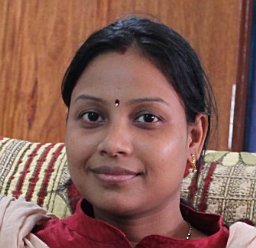 Rasmita Rautray合作论文数Dept Comp Sci & Engn, Siksha O Anusandhan Univ24
 Madhusmita Sahu合作论文数15
 Madhusmita Das合作论文数10
 Jogeswar Tripathy合作论文数Department of Computer Science and Engineering, S’O’A (Deemed to be) University9
 Binod Kumar Pattanayak合作论文数Anusandhan University9
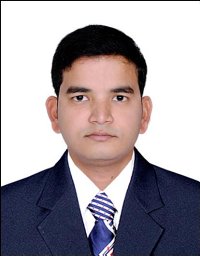 Sambit Kumar Mishra合作论文数8
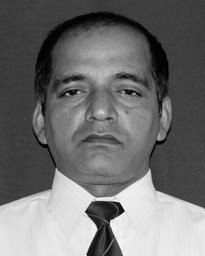 Bijan Bihari Misra合作论文数7
 Rudra Narayan Sahoo合作论文数School of Pharmaceutical Sciences, Siksha O Anusandhan (Deemed to be University),6Sujata Mohapatra合作论文数5
 Subrata Mallick合作论文数School of Pharmaceutical Sciences, SOA University5
 Tripti Sharma合作论文数School of Pharmaceutical Sciences, Siksha 'O' Anusandhan (Deemed to be University),4Jyotirmaya Biswal合作论文数3
 Souvik Nandi合作论文数School of Pharmaceutical Sciences, Siksha O Anusandhan (Deemed to be University),3
 Nrusingha Tripathy合作论文数2Mitali Madhusmita Sahoo合作论文数2Anuradha Routray合作论文数2Shreyasi Biswas合作论文数2Debaniranjan Mohapatra合作论文数2
 Rakesh Swain合作论文数School of Pharmaceutical Sciences, Siksha O Anusandhan (Deemed to be University),2
 Sidharth Samal合作论文数Comp Sci & Engn Dept, Siksha O Anusandhan Deemed Univ2
 Shakti Prusty合作论文数School of Pharmaceutical Sciences, Siksha O Anusandhan University2
 Subrat Kumar Nayak合作论文数Siksha O Anusandhan Univ, Dept Comp Sci, Bhubaneswar 30, Odisha, India2Ranjan K. Mohapatra合作论文数2
 Chandra Rakesh合作论文数2
 Deepak Puthal合作论文数Dept. of Comput. Sci. & Eng., Nat. Inst. of Technol.;c;Dept. of Comput. Sci. & Eng., Nat. Inst. of Technol.2
 Venkataramana Kandi合作论文数Department of Microbiology, Prathima Institute of Medical Sciences2
 Pattnaik Gurudutta合作论文数Department of Pharmaceutical Technology, Jadavpur University2Sudam Chandra Si合作论文数2
 Snehasish Mishra合作论文数Kader Exports Pvt. Ltd.2
 Asish Kumar Dalai合作论文数National Institute of Technology Rourkela2Tanisha Das合作论文数1
 Ali Rabaan合作论文数1Lopamudra Swain合作论文数1
 Anindya Bose合作论文数1
 Devang Srivastava合作论文数1
 B.S. Satapathy合作论文数ICAR Natl Rice Res Inst1Biswabhusan Rath合作论文数1
 L V Simhachalam Kutikuppala合作论文数Dept Gen Surg, Dr NTR Univ Hlth Sci1
 Sk Habibullah合作论文数1Sarika Verma合作论文数1Manaswini Jena合作论文数1
 Anshuman Chandra合作论文数Jawaharlal Nehru University1
 Dhruv Desai合作论文数School of Veterinary Medicine, University of Pennsylvania1
 Majed Alfayad合作论文数Coll Comp & Informat Sci, Jouf Univ1Ashish K. Sarangi合作论文数1
 Md Kudrat Ezahan合作论文数Chemistry, Yamagata University1
 Chita Ranjan Sahoo合作论文数Institute of Medical Sciences and Sum Hospital, Siksha 'O' Anusandhan Deemed to Be University1




