Probabilistic maturation reaction norms (PMRNs) with up to 3 explanatory dimensions were estimated for female North Sea plaice Pleuronectes platessa. The 3-dimensional PMRNs reported here (1) are the first to be obtained for any organism, (2) reveal the differential capacity of alternative life-history state variables to predict the onset of reproduction, (3) document consistent temporal trends in maturation, and (4) help disentangle the contributions of genetic and plastic effects to these trends. We first show that PMRNs based on age and weight provide slightly more accurate approximations of maturation probabilities than PMRNs based on age and length. At the same time, weight-based PMRNs imply a much wider spread of maturation probabilities than length- based PMRNs. We then demonstrate that including condition as a third explanatory variable improves predictions of maturation probability. The resultant 3-dimensional PMRNs for age-length- condition or age-weight-condition not only show how, at given size and age, maturation probability increases with condition, but also expose how this impact of condition decreases with age and has changed over time. Our analysis reveals several interesting temporal trends. First, it is demonstrated that even after removing plastic effects on maturation captured by age, length, weight and condition, residual trends towards maturation at younger ages and smaller lengths remain. Second, we find that the width of both length- and weight-based PMRNs decreased significantly over time. Third, age and condition are nowadays affecting maturation probabilities less than they did decades ago. We con- clude that plaice are currently maturing at a very low age, size and body condition, and that the nar- row and steep reaction norms do not allow a strong continuation of the observed trends. The findings obtained are in good agreement with predictions from life-history theory based on the hypothesis of evolutionary change caused by heavy exploitation.
Recovery of the fish community of the river Rhine focussed mainly on the return of migratory species, in particular the Atlantic Salmon, Salmo salar, and to a lesser extent on rheophilic fish species. Several limnophilic species that characterize remote parts of the floodplains are, however, also endangered. The status of the fish communities in the floodplains is little known and has been neglected so far. To fill this gap, the present study investigated fish communities in floodplain lakes along the lower River Rhine. To assess how these lakes contribute to fish species richness in the river-floodplain system, the community structure is compared to that in the main channel and to connected backwaters, e.g. side channels, which had been investigated more intensively in recent years. Floodplain lakes with abundant vegetation may have low fish species richness, but they are the only sites with suitable habitats for the reproduction of limnophilic species such as tench Tinea tinca, rudd Scardinius erythrophthalmus and crucian carp Carassius carassius. Limnophilic species in most of these lakes are, however, outnumbered by eurytopic species such as bream Abramis brama, which indicates that the original lateral gradient is truncated with an almost complete loss of 'black fish' habitats in the present active floodplains along the lower Rhine. Floodplain lakes with abundant vegetation should be carefully preserved because they represent original aquatic components that have declined markedly, and they need decades to develop. Preservation of these lakes would enhance the conservation of characteristic limnophilic species. Retention areas outside the present active floodplain - retained as a component of flood risk management - may provide the opportunity to rehabilitate or create floodplain lakes with the suitable spawning and nursery habitats for limnophilic fish. In this way, improved safety may be combined with rehabilitation of floodplain water bodies.
To protect the main nursery area of plaice, an area called the 'Plaice Box' was closed to trawl fisheries with large vessels in 1989, with the expectation that recruitment, yield and spawning stock biomass would increase. However, since then the plaice population has declined and the rate of discarding outside the Plaice Box has increased, suggesting an offshore shift in spatial distribution of juvenile plaice. Using research vessel survey data collected since 1970, the change in distribution of juvenile age groups was analysed in relation to the distance to the coast. Further, a comparison of the distribution of different length classes of plaice between three historic periods was made (1902-1909; 1983-1987; 1999-2003). A shift towards deeper water of larger-sized plaice (20-39 cm) is apparent already before the 1980s and may be related to the decrease in the number of competitors or predators. An offshore shift in the distribution of young plaice occurred in the 1990s most likely in response to higher water temperatures that may have exceeded the maximum tolerance range or increased the food requirements above the available food resources. A decrease in competition with larger plaice offshore, possibly in combination with increased inshore predation by cormorants and seals, may also have played a role. The offshore shift in distribution has reduced the effectiveness of the Plaice Box as a technical measure to protect the under-sized plaice from discarding, since an increased proportion of the population of undersized plaice is moving to the more heavily exploited offshore areas. (c) 2006 Elsevier B.V. All rights reserved.
De paaibiomassa (SSB) van schol is sinds eind jaren ’80 gestaag afgenomen en uit het assessment van 2004 blijkt dat de paaibiomassa zich sinds 1994 onder het voorzorgsniveau van 230.000 ton bevindt. In 2003 heeft de Europese Commissie om een herstelplan voor schol gevraagd en in een reactie daarop heeft de Nederlandse visserijsector in 2004 een voorstel geschreven voor een duurzaam beheer van het scholbestand. Het RIVO is gevraagd om de voorstellen uit dit initiatief te evalueren om de effecten op het scholbestand in te kunnen schatten. Naast de concrete maatregelen is er een aantal onderzoeksvoorstellen dat verder moet worden uitgewerkt. Dit rapport presenteert de resultaten van die evaluatie. De voorstellen die geevalueerd zijn, zijn hiervoor gegroepeerd in vier thema’s: 1) discards; 2) ruimtelijke verspreiding en groei; 3) maaswijdte en 4) evaluatie van managementscenario’s. Deze vier thema’s worden in de hoofdtekst besproken, in de bijlagen worden de vragen afzonderlijk beantwoord en worden meer details over gebruikte methodes gegeven
Life history theory predicts that fishing may select for increased reproductive investment. A model of the reaction norm for reproductive investment in a capital breeder was developed to disentangle changes in reproductive investment from changes in growth rate in North Sea plaice (Pleuronectes platessa). Trends in reproductive investment since 1960 were estimated as (i) the decrease in body weight of mature males and females between the start and end of the spawning period, (ii) the difference in weight of ripe and spent females, and (iii) the ovary weight of prespawning females. These estimates were related to somatic growth estimated by back-calculation of otoliths and temperature. The ovary weight and weight loss of females that had just started and just finished spawning did not reveal any trends. There was a significant increase in weight loss over the spawning season in both sexes, but much of this increase was likely due to changes in environmental conditions. Evidence for a fisheries-induced change in reproductive investment from our analyses thus remained inconclusive. However, fecundity and ovary-weight data from previous studies tentatively suggest that an increase in reproductive investment occurred between the late 1940s and the 1960s. Such an increase is consistent with a fisheries-induced evolutionary change.
Dit onderzoek beoogt een objectieve en kwantitatieve beschrijving van de twinrigvisserij in Nederland te geven en omvat drie delen die in afzonderlijke rapporten gepresenteerd worden: 1) een technische en visserijbiologische beschrijving, 2) een onderzoek naar de hoeveelheid discards en de overleving ervan en 3) een integrale beschrijving van de twinrigvisserij en een vergelijking met de boomkor- en bordentrawlvisserij. De rapporten over deel 1 en 2 zijn afgerond en in dit rapport over deel 3 worden de resultaten geintegreerd en aangevuld met nieuwe analyses.This research aims at giving an objective and quantitative description of the twin trawl fishery in the Netherlands and comprises three parts that are presented in three separate reports: 1) a technical and fisheries biological description, 2) an investigation of discard production and survival and 3) an integral description of the twin trawl fishery and a comparison with the beam trawl and otter trawl fishery. Both reports about part 1) and 2) were delivered and the current report integrates all results and presents additional analyses.
Uit de evaluatie van de scholbox, zo weinig mogelijk visserij in de kinderkamers van de schol, die op verzoek van de Europese Commissie is uitgevoerd door een internationaal team van onderzoekers, blijkt dat het positieve effect van de scholbox minder groot is geworden door veranderingen in het milieu. Een negatief effect van de box op de voedselproductie als gevolg van een verminderde bodemomwoeling is niet aantoonbaar
 Mark Ybema合作论文数11
 a s couperus合作论文数10
 Adriaan D. Rijnsdorp (Adriaan Rijnsdorp)合作论文数Institute for Marine Resources and Ecosystem Studies, Wageningen University and Research Centre9
 Ingrid Tulp合作论文数Zoological Laboratory, University of Groningen9Olvin A. Van Keeken合作论文数8
 Anthonie Dirk Buijse合作论文数7
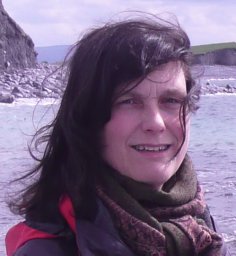 Sarah B M Kraak合作论文数Zoological Laboratory;University of Groningen;Zoologisches Institut;Zoologisches Institut, University of Groningen7
 Floor Quirijns合作论文数Wageningen IMARES, Institute for Marine Resources and Ecosystem Studies, P.O. Box 68, 1970 AB IJmuiden, the Netherlands6N.S.H. Tien合作论文数5
 B. van Marlen合作论文数5W. L. T. Van Densen合作论文数5J. G. P. Klein Breteler合作论文数5
 Mark Dickey-Collas合作论文数Agricultural and Environmental Sciences Division, Department of Agriculture and Rural Development, Newforge Lane, Belfast BT9 5PX, Northern Ireland, UK4n daan合作论文数3
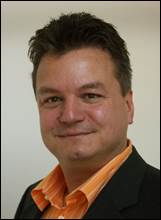 Ulf Dieckmann合作论文数Evolution and Ecology Program, International Institute for Applied Systems Analysis3
 Martin Pastoors合作论文数3
 Jan Jaap Poos合作论文数Department of Biological Oceanography;Netherlands Institute for Sea Research;Department of Biological Oceanography, Netherlands Institute for Sea Research3
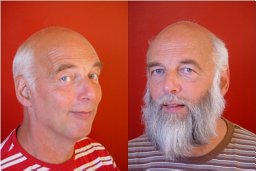 Willem Dekker合作论文数Inst Freshwater Res, Swedish Univ Agr Sci3j asjes合作论文数2l j bolle合作论文数2M. Heino合作论文数2h j l heessen合作论文数2wilde de j w合作论文数2i de boois合作论文数2
 Erik Buisman合作论文数2M.A.M. Machiels合作论文数2Gerben Van Geest合作论文数and Research Centre, Wageningen University2J. J. G. M. Backx合作论文数2w oosterberg合作论文数1s w verver合作论文数1
 Sebastien Barot合作论文数1F. C. J. M. Roozen合作论文数1M. Staras合作论文数1
 Joep De Leeuw合作论文数1L H Jans合作论文数1
 Hendrik Volken Winter合作论文数1
 Mikko Heino合作论文数Institute of Marine Research;International Institute for Applied Systems Analysis;University of Bergen1
 Joel Vigneau合作论文数1
 Stuart A. Reeves合作论文数Lowestoft Laboratory;H. C. Andersens Boulevard;Lowestoft Laboratory, H. C. Andersens Boulevard1
 Bas W Ibelings合作论文数Netherlands Institute of Ecology (, NIOO-KNAW)1Uwe Damm合作论文数1M. Van Hoppe合作论文数1Loes J. Bolle合作论文数1Hugo Coops合作论文数Institute for Inland Water Management and Waste Water Treatment1J. G. P. Smit合作论文数1
 J. Kranenbarg合作论文数1
 Ralf Van Hal合作论文数Institute for Marine Resources and Ecosystem Studies1




