What are the consequences of encountering blatant falsehoods and “fake news”? Here we show that exposure to a high prevalence of very implausible claims can increase belief in other, more ambiguous false claims, as they seem more believable in comparison. Participants in five preregistered experiments (N=5,476) were exposed to lower or higher rates of news headlines that seemed blatantly false, as well as some more plausible true and false headlines. Being exposed to a higher prevalence of extremely implausible headlines increased belief in unrelated headlines which were more ambiguous (or even plausible), regardless of whether they were true or false. The effect persisted for headlines describing hypothetical events, as well as actual true and false news headlines. It occurred whether people actively evaluated the headlines or read them passively, among liberals and conservatives, and among those high or low in cognitive reflection. We observed this effect in environments where the plausibility of a claim was a reliable and useful cue to whether it was true or false, and in environments where plausibility and truth were unrelated. We argue that a high prevalence of blatantly implausible claims lowers the threshold of plausibility for other claims to seem believable. Such relative comparisons are a hallmark of the brain’s tendency towards efficient computations in perception and judgment. Even when consumers can reliably identify and disregard blatantly false news content, encountering such content may make subtler falsehoods more likely to be believed.
Despite overwhelming scientific consensus on the existence of human-caused climate change, public opinion among Americans remains split. Directly informing people of scientific consensus is among the most prominent strategies for climate communication, yet the reasons for its effectiveness and its limitations are not fully understood. Here, we propose that consensus messaging provides information not only about the existence of climate change but also traits of climate scientists themselves. In a large ( n = 2 , 545 ) nationally representative survey experiment, we examine how consensus information affects belief in human-caused climate change by shaping perceptions of climate scientist credibility. In the control group ( n = 847 ), we first show that people learn both from and about climate scientists when presented with consensus and that perceived scientist credibility (especially skill) mediates up to about 40% of the total effect of consensus information on climate belief. We demonstrate that perceptions of climate scientists are malleable with two novel interventions that increase belief in climate change above and beyond consensus information.
Despite the overwhelming scientific consensus that human activities contribute significantly to climate change, public opinion remains divided. To bridge this gap, informative messaging about the consensus has been widely proposed as a persuasive tool. However, it remains challenging to understand how people interpret this information and how it interacts with their wider belief system. Using survey experiments that vary the level of scientific consensus, we find that consensus information not only influences climate change beliefs but also shapes perceptions of climate scientists themselves, consistent with normative principles of Bayesian belief updating. Notably, climate beliefs are strongly linked to perceptions of scientist skill which highlights a potential avenue for communication. By unpacking the belief system underlying one of the most prominent climate communication strategies, our research provides a deeper understanding of public response to consensus messaging, offering guidance for developing more targeted and effective science communication.
Belief in misinformation has been linked in part to digital media environments promoting reliance on intuition -- which in turn has been shown to increase belief in falsehoods. Here we propose that this apparently irrational behavior may actually result from ecologically rational adaptations to complex environments. In a large survey experiment, we test whether intuitive belief in misinformation may result from these rational adaptations by randomizing participants to be shown either a largely true or largely false news feed. We show that individuals make more frequent and quicker errors on the less common headline type, and less frequent errors on the more common headline type. After seeing many true headlines, a participant is more likely to misidentify a subsequent false headline as true, and vice versa after seeing many false headlines. This pattern is consistent with adaptation to the proportion of true and false content (the veracity base rate). We use computational modeling to show that these differences are driven by intuitions, which correspond to Bayesian priors, about the veracity of the content -- intuitions which then spill over into new environments. Our results, when paired with the observation that the news consumed by most Americans is overwhelmingly true, suggest that belief in misinformation and the intuitions that underlie it are not necessarily a failing of humans in digital environments but can be a byproduct of rational adaptations to them.
Addressing human-caused climate change is of paramount importance but a large minority of Americans either do not believe that human-caused climate change is occurring or do not think it is a policy priority. Resistance to addressing climate change is particularly concentrated on the American political right, a group that is difficult to persuade. Leveraging technologist Elon Musk's embrace of the right, we design and test an intervention that shows Republicans the pro-environmental stances that Musk has taken. We find that the treatment significantly increases Republicans' climate beliefs and intended actions. The predicted treatment effect is positive for almost all participants and there is no impact on participants attitudes towards Musk, suggesting that this is a low-cost and scalable intervention with minimal risk.
Although people typically prefer simpler explanations to complex ones, there are cases where complex explanations have strong appeal (e.g., conspiracy theories). Here we consider two aspects of complex explanations: descriptiveness (the likelihood of the individual data points) and co-explanation (the likelihood of the specific subset of data under consideration). We consider whether people prefer explanations that are high in descriptiveness vs. co-explanation. Moreover, we consider whether people who endorse conspiracy theories prefer explanations for either quality. In a medical diagnosis task, participants make binary choices between two fictional disease variants: one higher in descriptiveness versus another higher in co-explanation. Overall, participants displayed a weak preference for descriptiveness. This preference, however, did not vary across increasing levels of descriptiveness. Moreover, such preferences were unrelated to conspiracy mentality. Thus, both explanatory virtues may play a role in the appeal of complex explanations.
 Rahul Bhui合作论文数Harvard Univ, Dept Psychol, 52 Oxford St, Cambridge, MA 02138 USA8
 Rachit Dubey合作论文数Nanyang Technological University5
 Samuel J. Gershman合作论文数Department of Psychology, Harvard University;Center for Brain Science, Harvard University3
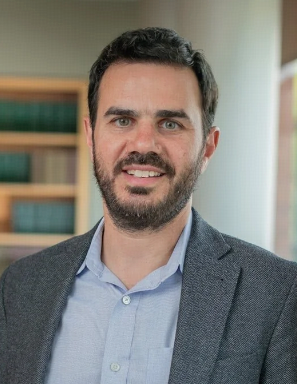 David G. Rand合作论文数Department of Information Science, Bowers College of Computing and Information Science, Cornell University3
 Cameron Martel合作论文数MIT Sloan School of Management2
 Michael Hattersley合作论文数Department of Psychology, University of Warwick1
 Paul Seli合作论文数Department of Psychology and Neuroscience, Trinity College of Arts & Sciences, Duke University1
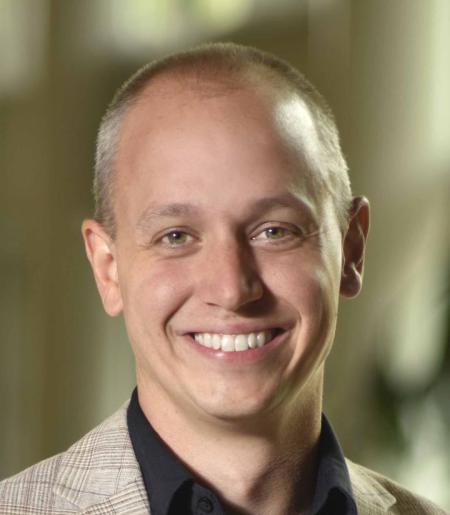 Gordon Pennycook合作论文数Department of Psychology, College of Arts & Sciences, Cornell University1
 Elliot A. Ludvig合作论文数Department of Psychology, University of Warwick1




