Neltuma juliflora (syn. Prosopis juliflora) is the dominant woody species in Cabo Verde, introduced through extensive reforestation efforts to combat land degradation. Despite its ecological and socio-economic relevance, little is known about its growth dynamics and climatic sensitivity in this region. This study investigates growth ring formation and climate-growth relationships of N. juliflora on Santiago Island. We sampled 165 trees across 11 blocks, grouped into four bioclimatic zones. Tree-ring widths were measured using standard dendrochronological techniques. Generalised Linear Models (GLMs) were applied to assess the influence of climatic variables, with multicollinearity controlled using the Variance Inflation Factor (VIF). Although false rings were present, distinct growth boundaries were observed. Mean radial growth varied from 1.53 to 2.11 mm/year across bioclimatic zones. The best GLMs suggest that higher precipitation outside of the usual rainy season could negatively affect growth, while mean annual temperature could have a marginally positive effect. Significant differences in tree-ring growth rate were observed between trees sampled at the four bioclimatic areas, likely reflecting the influence of climate and elevation, and of other factors such as soil and tree density. These results highlight the ecological plasticity of N. juliflora and support its potential use in dendroclimatic research in semiarid tropical regions. These findings have significant implications for ecosystem-based adaptation strategies and sustainable land management practices in Cabo Verde, particularly in the context of climate change and land degradation mitigation. The study underscores the need for longer chronologies and expanded geographic sampling across the archipelago in future work.
Arid and semi-arid ecosystems constitute important carbon reservoirs, yet their contribution to climate regulation remains insufficiently documented, particularly in Small Island Developing States (SIDS). In this context, invasive or introduced woody species may contribute substantially to biomass accumulation in degraded drylands, although quantitative evidence for Neltuma juliflora remains limited. This study provides the first block-scale assessment of carbon stocks in N. juliflora stands on Santiago Island, Cabo Verde, using validated allometric equations and topsoil analyses across 11 sampling blocks. A total of 463 individuals were measured. Aboveground carbon stocks varied markedly among blocks, ranging from 27.4 to 85.3 Mg C ha⁻1, and were strongly associated with variation in stand structure, particularly equivalent diameter, tree height and stand density. In contrast, soil organic carbon in the 0-20 cm layer remained comparatively low, averaging 7.1 Mg C ha⁻1, and showed no significant radial trend with increasing distance from the tree. Instead, variation in soil carbon was more closely associated with block-level edaphic heterogeneity than with local canopy effects. Belowground carbon, estimated using a fixed root-to-shoot ratio, followed the same spatial pattern as aboveground biomass and should therefore be interpreted as a derived rather than independently measured pool. Overall, the results demonstrate that N. juliflora can support substantial woody carbon storage under semi-arid insular conditions, whereas shallow soil carbon remains limited. These findings provide an important baseline for dryland carbon assessment in Cabo Verde and support a cautious, site-specific evaluation of the species in restoration and climate-mitigation strategies given its recognised invasive potential.
Relevant habitats occurring outside protected areas act as buffers for nearby reserves and provide valuable ecosystem services. In the Azores, 24% of the land is protected, but important biodiversity areas remain outside these boundaries. In this study, we assessed an area adjacent to S & atilde;o Miguel Island Natural Park, classified as natural vegetation. Plant and bird species were listed, 5 & times; 5 m plots used to characterise the plant communities and indicator species. Dendrometry approaches were used to study the invasive dynamics of Clethra arborea. Results exhibited two different plant communities: a Laurus azorica forest invaded by C. arborea; and a Calluna vulgaris scrubland with a rich herbaceous layer. Both communities reflected past human disturbances, possibly linked with collection of top-soil as substrate for pineapple cultivation. The results also confirmed that relevant areas for biodiversity exist outside protected areas in the Azores, and if restored, can potentially support biodiversity conservation.
In this paper, we integrate in situ conservation strategies with population genetic analyses to improve future prospects for preserving the endangered species Lotus azoricus P.W.Ball (Fabaceae), currently found on three islands of the Azores: Santa Maria, Pico, and São Jorge. The two largest populations are in Ponta do Castelo (Santa Maria) and Calheta de Nesquim (Pico). Project LIFE VIDALIA recently implemented a comprehensive conservation plan, which included seed propagation, population reinforcement for four populations on Pico and São Jorge, and control of invasive plant species and rats. To assess genetic diversity and population structure, we analysed L. azoricus populations using retrotransposons. An increase in population size was observed at Calheta de Nesquim following the implementation of these actions, despite the negative impact of Hurricane Lorenzo in 2019. Genetic analysis revealed some admixture, with translocated plants used in reinforcements on Pico showing a distinct founder effect and differing genetic patterns compared to original individuals. Overall genetic differentiation was low, however Saint Lourenço population (Santa Maria) presented significant genetic differentiation. Gene flow between populations was high, likely due to natural or human-mediated seed dispersal. The highest genetic diversity was found at Calheta de Nesquim, likely influenced by gene flow and population growth. Some populations are prioritised for conservation based on high allelic richness and unique genetic markers. To prevent potential loss of genetic diversity, translocation between genetically distinct populations should be avoided. Collaboration between conservation stakeholders and researchers is essential for creating holistic conservation plans, and prior knowledge of population genetics will enable more effective planning.
The Azorean carrot, Daucus carota subsp. azoricus Franco, has long been considered an endemic subspecies, yet its distinctiveness from other members of the D. carota complex remains debated. Diagnostic traits proposed by Franco (1971) are often inconsistent in the field, and molecular evidence has questioned whether the taxon represents a true native or a more recent introduction. Our integrative analyses combining molecular (ITS, COS), cytogenetic, morphological, and ecological data revealed no clear phylogenetic, morphological or cytogenetic differentiation between Azorean accessions. The convergence of umbel diameters when grown in identical environments and the variation as a continuum observed in the morphometric analyses when the subspecific identification was imposed suggests that at least some morphological variation observed in the field is environmentally induced rather than genetically fixed. Molecular analyses placed Azorean accessions within the broader D. carota complex. Nonetheless, the presence of 12 exclusive haplotypes to archipelago, of which one seems to be an ancestral haplotype, suggests long-term persistence and local diversification rather than a solely recent introduction, even in the context of centuries of reproduction with the cultivated carrot. Azorean Daucus is best interpreted as part of the D. carota complex, showing signals of gene flow and plasticity, but the gaps in our study did not enable us to distinguish it at the subspecific level. Moreover, the lack of morphological data from islands beyond São Miguel limits broader comparisons, underscoring the need for more comprehensive morphological, genomic, and comparative sampling across Mediterranean and Macaronesian populations. Until such data are available, it is perhaps most appropriate to regard Azorean Daucus carota as a native lineage, whose precise taxonomic circumscription remains to be clarified.
This study investigates the seasonal and floral phenology, breeding strategies, and floral morphology of Azorina vidalii, an Azorean endemic Campanulaceae with hermaphroditic, protandrous flowers, dichogamy and secondary pollen presentation. Seasonal phenology was recorded in four field populations and floral phenology in a garden population. Reproductive strategies were assessed via controlled hand pollinations in one field population. Floral morphometrics were analysed using 23 floral and five pollen traits from 121 flowers across fourteen populations throughout the Azores archipelago. Non-parametric and parametric tests, discriminant analysis, and reproductive indices were used to infer answers to this study's goals. Results showed that temperature and humidity influenced vegetative and reproductive phenophases. The male phase was shorter than the female, likely due to pollen dynamics, and some functional overlap suggested incomplete dichogamy. Geographic variation in floral traits indicated morphological differentiation across subarchipelagos, presumably linked to environmental factors or isolation. Reproductive indices suggested a mixed mating system, partial self-incompatibility and signs of inbreeding depression. Fertilisation was absent without pollinators, and spontaneous selfing was excluded due to an absence of pollen-pistil contact during stigma retraction. These findings contribute to understanding the reproductive biology and morphologic variation in A. vidalii. The implications of these findings for the conservation of this insular plant are discussed.
Youngia japonica (L.) DC. was recently discovered on the Azorean island of Sao Miguel. This species is a cosmopolitan herb that has been reported to be invasive in several regions of the world. It is unclear when and how this plant arrived in Sao Miguel, Azores. Nevertheless, we hypothesize that this is an unintentional and recent introduction. The populations are expanding in Sao Miguel, and action is needed to mitigate potential damage to native ecosystems.
A genomic database of all Earth's eukaryotic species could contribute to many scientific discoveries; however, only a tiny fraction of species have genomic information available. In 2018, scientists across the world united under the Earth BioGenome Project (EBP), aiming to produce a database of high-quality reference genomes containing all ~1.5 million recognized eukaryotic species. As the European node of the EBP, the European Reference Genome Atlas (ERGA) sought to implement a new decentralised, equitable and inclusive model for producing reference genomes. For this, ERGA launched a Pilot Project establishing the first distributed reference genome production infrastructure and testing it on 98 eukaryotic species from 33 European countries. Here we outline the infrastructure and explore its effectiveness for scaling high-quality reference genome production, whilst considering equity and inclusion. The outcomes and lessons learned provide a solid foundation for ERGA while offering key learnings to other transnational, national genomic resource projects and the EBP.
BACKGROUND:Anthropogenic threats are causing alteration of coastal areas worldwide. Most of the coastal biodiversity is endangered, taking a particular toll on island ecosystems, like the Azores. To better understand the biotic and abiotic factors constraining the distribution and conservation status of two endemic plants, Azorina vidalii (Campanulaceae) and Lotus azoricus (Fabaceae), we performed a global survey of coastal plant communities in the archipelago, also covering environmental descriptors, natural and anthropogenic threats. Moreover, we revised their IUCN conservation status and estimated the population fractions within protected areas. RESULTS:Non-indigenous plants were commonly found in plots with or without the target endemics, contributing to the absence of well-defined coastal plant communities. Nonetheless, indigenous taxa commonly occurred at the plots with L. azoricus. With a larger area of occurrence, A. vidalii ecological niche differed from that of L. azoricus, the latter being restricted to dry and rocky sea cliffs, mostly in Santa Maria Island. Besides the presence of invasive plants, signs of habitat destruction, trampling and grazing, and of natural threats, such as coastal erosion, were commonly observed. CONCLUSIONS:Occurrence data indicated an endangered status for both species, although this would change to critically endangered for L. azoricus when using smaller-sized occurrence cells. Both species are threatened since their habitat is restricted to a very narrow vegetation belt, strongly limited by sea influence and human pressure, and with the frequent presence of invasive plants. While focusing on two endemic plants, our study allowed a broader view of the impact of anthropogenic disturbance on Azorean coastal plant communities.
A comprehensive checklist of the marine flora from Faial Island, mid-north Atlantic, is still unavailable, despite the numerous works that gathered data around its coasts for over 150 years. This study brings together and harmonises all macroalgae collections and taxonomical records from multiple projects and teams over the last thirty years. The result is a list of taxonomic records and georeferenced species occurrence data that substantially increases our knowledge of the coastal Azorean marine biodiversity while providing key information for future ecological studies and to support local, marine management and conservation. A total of 2283 specimens belonging to 118 taxa of macroalgae are registered here, comprising 61 Rhodophyta, 26 Chlorophyta, 30 Ochrophyta (Phaeophyceae) and one Cyanophyta (Cyanobacteria). From these, 26 taxa are identified only at the genus level and 92 to species level (47 Rhodophyta, 21 Chlorophyta and 24 Ochrophyta). The list comprises 75 native species, 12 records of uncertain origin and five introductions ( Caulerpa prolifera (Forsskål) J.V.Lamouroux, Caulerpa webbiana Montagne, Hydroclathrus tilesii (Endlicher) Santiañez & M.J.Wynne, Asparagopsis armata Harvey and Symphyocladia marchantioides (Harvey) Falkenberg). Codium elisabethiae O.C.Schmidt represents the only Macaronesian endemism known on the Island. Twenty-three species are newly recorded to the algal flora of the Island.
Laurus (Lauraceae) species are currently restricted to isolated refugia in the southern Black Sea, Mediterranean Basin, southern Morocco, and Macaronesian archipelagos. One to three species of Laurus has been recognized: the Azorean endemic Laurus azorica , L. nobilis from the Mediterranean, and L. novocanariensis from Madeira and the Canary Islands. This study aims to determine the population structure, genetic diversity, and associated patterns of gene flow within and between Azorean populations, using eight existing SSR markers. We also included plant material from L. nobilis populations found in the Azores, for comparison. Amplification was performed in 212 samples of L. azorica and in 30 samples of L. nobilis . For L. azorica , 78 alleles were amplified (average 9.75 alleles per loci). Bayesian analysis with STRUCTURE unveiled five genetic groups for the Azorean accessions, with high level of genetic admixture. Genetic diversity was generally high, with moderate levels of genetic differentiation among L. azorica populations. Moreover, high gene flow levels, likely mediated by past human translocations and naturally, by birds, might have contributed to the high level of genetic admixture observed possibly reflecting hybridization events between L. nobilis and L. azorica . Conservation measures should be applied to some populations of São Miguel, Santa Maria, and Flores Islands, based on the number of private alleles, and further, ad hoc translocation events should be avoided. Conservation in situ and the preservation of laurel forest remains are recommended. The study of this species’ taxonomy, genetics, and population dynamics in the Macaronesian region should be continued.
Arceuthobium azoricum Wiens & Hawksw. is a rare Azorean endemic epiphytic hemiparasite (mistletoe), which typically parasitizes branches of the gymnosperm Juniperus brevifolia (Hochst. ex Seub.) Antoine (Cupressaceae), which is also an Azorean endemic. Here, we describe a population of A. azoricum, on Pico Island, parasitizing Erica azorica Hochst. ex Seub. (Ericaceae), which is also an Azorean endemic. Our molecular analysis (using nuclear ribosomal internal transcribed spacer) showed no differences between individuals parasitizing Erica and Juniperus species. Moreover, a preliminary analysis showed no differences in morphological characteristics between accessions sampled from different hosts. Given that this is the first bona fide record of Arceuthobium sp. parasitizing an angiosperm, this population represents a unique host-shifting event, and its conservation is important because it may allow new insights into host recognition mechanisms in mistletoes. Immediate attention should be given to characterizing this Pico Island population using appropriate molecular methods and additional morphological analyses.
The diverse physiography of the Portuguese land and marine territory, spanning from continental Europe to the Atlantic archipelagos, has made it an important repository of biodiversity throughout the Pleistocene glacial cycles, leading to a remarkable diversity of species and ecosystems. This rich biodiversity is under threat from anthropogenic drivers, such as climate change, invasive species, land use changes, overexploitation, or pathogen (re)emergence. The inventory, characterisation, and study of biodiversity at inter- and intra-specific levels using genomics is crucial to promote its preservation and recovery by informing biodiversity conservation policies, management measures, and research. The participation of researchers from Portuguese institutions in the European Reference Genome Atlas (ERGA) initiative and its pilot effort to generate reference genomes for European biodiversity has reinforced the establishment of Biogenome Portugal. This nascent institutional network will connect the national community of researchers in genomics. Here, we describe the Portuguese contribution to ERGA’s pilot effort, which will generate high-quality reference genomes of six species from Portugal that are endemic, iconic, and/or endangered and include plants, insects, and vertebrates (fish, birds, and mammals) from mainland Portugal or the Azores islands. In addition, we outline the objectives of Biogenome Portugal, which aims to (i) promote scientific collaboration, (ii) contribute to advanced training, (iii) stimulate the participation of institutions and researchers based in Portugal in international biodiversity genomics initiatives, and (iv) contribute to the transfer of knowledge to stakeholders and engaging the public to preserve biodiversity. This initiative will strengthen biodiversity genomics research in Portugal and fuel the genomic inventory of Portuguese eukaryotic species. Such efforts will be critical to the conservation of the country’s rich biodiversity and will contribute to ERGA’s goal of generating reference genomes for European species.
Dataset for manuscript "Arceuthobium M.Bieb. (Viscaceae) parasitizing an angiosperm: the unique case of Arceuthobium azoricum Hawksw. & Wiens in the Azores islands".
The macroalgal flora of the Island of São Miguel (eastern group of the Azores Archipelago) has attracted the interest of many researchers in the past, the first publications going back to the nineteenth century. Initial studies were mainly taxonomic, resulting in the publication of a checklist of the Azorean benthic marine algae. Later, the establishment of the University of the Azores on the Island permitted the logistic conditions to develop both temporal studies and long-term research and this resulted in a significant increase on research directed at the benthic marine algae and littoral communities of the Island and consequent publications. Prior to the present paper, the known macroalgal flora of São Miguel Island comprised around 260 species. Despite this richness, a significant amount of the research was never made public, notably Masters and PhD theses encompassing information regarding presence data recorded at littoral and sublittoral levels down to a depth of approximately 40 m around the Island and the many collections made, which resulted in vouchers deposited in the AZB Herbarium Ruy Telles Palhinha and the LSM- Molecular Systematics Laboratory at the Faculty of Sciences and Technology of the University of the Azores. The present publication lists the macroalgal taxonomic records, together with information on their ecology and occurrence around São Miguel Island, improving the knowledge of the Azorean macroalgal flora at local and regional scales. A total of 12,781 specimens (including some identified only to genus) belonging to 431 taxa of macroalgae are registered, comprising 284 Rhodophyta, 59 Chlorophyta and 88 Ochrophyta (Phaeophyceae). Of these, 323 were identified to species level (212 Rhodophyta, 48 Chlorophyta and 63 Ochrophyta), of which 61 are new records for the Island (42 Rhodophyta, 9 Chlorophyta and 10 Ochrophyta), one an Azorean endemic (Predaea feldmannii subsp. azorica Gabriel), five are Macaronesian endemisms (the red algae Botryocladia macaronesica Afonso-Carrillo, Sobrino, Tittley & Neto, Laurencia viridis Gil-Rodríguez & Haroun, Millerella tinerfensis (Seoane-Camba) S.M.Boo & J.M.Rico, Phyllophora gelidioides P.Crouan & H.Crouan ex Karsakoff and the green alga Codium elisabethiae O.C.Schmidt), 19 are introduced species (15 Rhodophyta, two Chlorophyta and two Ochrophyta) and 32 are of uncertain status (21 Rhodophyta, five Chlorophyta and six Ochrophyta).
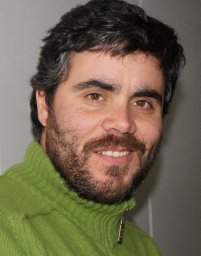 Afonso L Prestes合作论文数CIIMAR/CIMAR - Centro Interdisciplinar de Investigação Marinha e Ambiental, Universidade do Porto;Grupo de Biologia Marinha, CIRN &Departamento de Biologia, Universidade dos Açores;Universidade do Porto, Universidade dos Açores35
 Ignacio Moreu合作论文数28
 Nuno V. Alvaro合作论文数Instituto de Investigação e Tecnologias Agrárias e do Ambiente, Universidade dos Açores;Faculdade de Ciências Agrárias e Engenharia do Ambiente, Universidade dos Açores;Department of Biology, University of the Azores27
 Ana Isabel Neto合作论文数25
 David Milla-Figueras合作论文数18
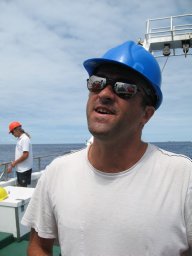 Pedro Afonso合作论文数IMAR/DOP – University of the Azores18
 Andrea Botelho合作论文数17
 Manuela Parente合作论文数17Ian Tittley合作论文数16Raul M A Neto合作论文数15Sandra Monteiro合作论文数15
 Ana Cristina Costa合作论文数14Monica Moura合作论文数13José Azevedo合作论文数11Raul Neto合作论文数11
 Guilherme Roxo合作论文数Centro de Investigação em Biodiversidade e Recursos Genéticos, CIBIO11Patarra Rita Ferreira合作论文数Centro de Investigação de Recursos Naturais (CIRN),, Universidade dos Açores;Departamento de Biologia, Universidade dos Açores;Centro Interdisciplinar de Investigação Marinha e Ambiental (CIIMAR/CIMAR),, Universidade do Porto;Universidade dos Açores, Universidade do Porto11
 Enrique Ballesteros Sagarra (Enric Ballesteros Sagarra)合作论文数Department of Marine Ecology, Centre d'Estudis Avancats de Blanes11
 Eva Cacabelos合作论文数Facultad de Ciencias del Mar, Universidad de Vigo11Pedro Rodrigues合作论文数10William Farnham合作论文数9r tristao da cunha合作论文数9
 Joana Micael合作论文数Centre of Marine and Environmental Research, Rua dos Bragas 289, 4050-123 Porto, Portugal9R. M. A. Neto合作论文数7I. Moreu合作论文数7N. Álvaro合作论文数7Robert L. Fletcher合作论文数7
 Ricardo Jorge Lopes合作论文数Centre for Ecology, Evolution and Environmental Changes, University of Lisbon;Departamento de Biologia Animal, Faculdade de Ciências, University of Lisbon;Natural History and Science Museum, University of Porto7
 Jose Manuel Viegas De Oliveira Neto Azevedo合作论文数Department of Biology, University of the Azores7
 Maria A. Ventura合作论文数Dept Biol, CIBIO Univ Azores6
 Karla León-Cisneros合作论文数CIIMAR (Centro Interdisciplinar de Investigação Marinha e Ambiental),, Universidade do Porto6Rúben M C Rego合作论文数5Edgar Rosas Alquicira合作论文数5
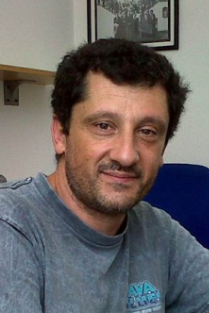 Luís Filipe Dias e Silva合作论文数Centro de Investigação em Biodiversidade e Recursos Genéticos, Universidade dos Açores;Departamento de Biologia, Universidade dos Açores5
 Jaime Ramos合作论文数Departamento de Ciencias da Vida, Universidade de Coimbra;Marine and Environmental Sciences Centre, Faculdade de Ciencias e Tecnologia, Universidade de Coimbra5
 Lurdes Borges Silva合作论文数4Ivan Literak合作论文数4Rui B. Elias合作论文数4
 Oldrich Sychra合作论文数4
 Fernando Pereira合作论文数3Leila Nunes Morgado合作论文数3Joao Pimenta合作论文数2Carlos Rodriguez Fernandes合作论文数2
 Helena Trindade合作论文数2
 Manuela Sim-Sim合作论文数2
 Ann Mc Cartney合作论文数2
 Paulo Alves合作论文数2Sylke Winkler合作论文数2
 Diogo C. Pavao合作论文数UNESCO Chair Land Sea Biodivers & Sustainabil Atl2




