Rural India grapples with significant struggles in providing clean and safe access to water, sanitation and hygiene measures which have a higher impact on women and children. Inadequate access and lack of proper house-holds water treatment and storage practices often leads to contamination and deteriorated health conditions. This study explores the intersection of WASH and women's empower-ment focussing on a intervention in rural Karnataka, India where women were trained to be Water Ambassadors(WA) in Point of use water quality monitoring using low cost sensors and mobile application. Through a qualitative methodology using in depth interviews and focus group discussion with the women, the study intended to examine the impact on women's sense of agency, well-being, decision making and community engagement. The themes reveal that training had a significant impact on WA's knowledge and confidence, equipping them to influence both household and community water practices, despite being affected by behavioural and cultural resistance. The study highlights the importance of integrating women's empowerment in WASH initiative to bring out gender equality and women's empowerment. With women's involvement, the intervention provided community resilience in water practices and underscored the potential of a technology driven solution to improve WASH outcomes in rural areas.
The United Nations Sustainable Development Goal (SDG) 6.1 seeks to ensure safe and affordable drinking water for all by 2030. Critical to this goal are access to improved water sources on-site and the adoption of house-hold safe storage and treatment practices (HWTS). In rural India, various barriers and facilitators impact the adoption of HWTS and improved water source choices among communities. This study employed qualitative methods, engaging rural women in Karnataka, India through semi-structured interviews and focus group discussions to explore these factors. Additionally, eight women were trained to use low-cost sensors and a mobile application to monitor household water quality. The study identified barriers, including lack of knowledge and awareness, traditional beliefs, financial constraints, and preference for unsafe water sources due to convenience, proximity, and established habits. Despite these challenges, the training provided to women facilitated improvements in monitoring water quality and promoting safe water practices. The findings underscore the need for strategies that enhance the role of women in water management through ongoing support, better access to information, and tailored community awareness initiatives. Effective awareness, affordable water treatment technologies, safe storage techniques, and reliable feedback mechanisms are recommended to improve water quality, promote HWTS adoption, and contribute to sustainable development and public health in rural settings.
Regular monitoring of drinking water quality is crucial for achieving Sustainable Development Goal 6, but conventional methods are costly and challenging to implement in low-resource settings. Community-based monitoring, facilitated by sensor technology and information and communication tools, offers a more efficient and affordable approach, yet data reliability is uncertain. This study investigated whether minimally trained nonexpert rural women could reliably monitor drinking water quality, household water treatment and safe storage practices in low-resource settings using an integrated water quality testing kit. The kit combined a mobile app with sensors for detecting chemical (hardness, pH, alkalinity, chlorine, total dissolved solids, conductivity, dissolved oxygen, oxidation-reduction potential, turbidity) and biological (Escherichia coli) contamination. The AquaGenX P/A kit was used to measured E. coli. We examined the interrater reliability and agreement between data collected by 27 rural women and our research team in 1673 rural households in Tanzania and two Indian states. Results showed robust, moderate to high levels of agreement and interrater reliability between the nonexperts and experts, suggesting the method delivers valuable water quality data. Rural women's involvement also led to empowerment, accountability, and ownership through technology. Our results indicate community-based initiatives' potential to improve water quality management in resource-constrained contexts.
Community water quality monitoring is crucial for informed decision-making, timely identification of challenges, and prompt action. This paper thoroughly examines the potential benefits, limitations, and considerations associated with adopting low-cost water quality monitoring technologies in resource-constrained settings. These technologies, such as portable water testing kits, smartphone applications for capturing safe practices, and water quality sensors, offer affordable and accessible solutions for households. The research sheds light on the challenges faced by rural women serving as Water Ambassadors in their communities, as they strive to monitor and ensure access to clean water. Factors including access to information and education, technology adaptation and affordability, and community context and perspectives influence the effectiveness of water quality monitoring and advocacy efforts. The study provides valuable insights to develop innovative and affordable approaches using low-cost technologies to address water quality issues, enhance community engagement, and contribute to the overall well-being of vulnerable communities
A hybrid methodology for assessing water quality, attitudes, and practice in low-income settings, which we call the AmriTau Water Quality Survey (AmriTAU WQS), is presented. An easy-to-use survey, operated through a lightweight smartphone application, is combined with standardized tests for assessing water quality and households’ perceptions and practices, producing a research methodology capable of characterizing the multifaceted nature of drinking-water use and quality in a sample community. This multifaceted approach allows generating meaningful insights, which can inform effective sustainable development projects. To validate the efficacy of this approach, a sample community in Kerala, South India, was assessed, and the results analyzed.
Women’s participation in water quality monitoring could contribute to the long-term provision of safe drinking water in rural India. Through participatory rural appraisal techniques, the study explores how women manage water resources and assess water quality in a rural setting. Findings reveal significant challenges related to water contamination and scarcity, impacting health, agriculture, and overall livelihoods. The results also provide insight into aspects that will facilitate the adoption of technological interventions for water quality monitoring in rural areas. More long-lasting solutions may result from empowering women through capacity building, gender equality advocacy, and utilising their skills and knowledge. Effective water quality control is possible of technology-driven strategies, such as continuous and centralized data management. For low-income resource communities to solve water quality challenges and secure long-term improvements in their well-being, a comprehensive strategy incorporating community participation, women’s involvement, technological solutions, and supportive policies is required.
Value-added phytochemicals from food by-products and waste materials have gained much interest and among them, dietary polyphenolic compounds with potential biological properties extend a promising sustainable approach. Oxyresveratrol (Oxy), a stilbenoid polyphenol, possesses great therapeutic potential, though its pharmacokinetic issues need attention. A good source of oxyresveratrol was found in underutilized coconut shells and the synbiotic applications of the compound in combination with a potential probiotic isolate Limosilactobacillus fermentum ASBT-2 was investigated. The compound showed lower inhibitory effects on the strain with minimum inhibitory concentration (MIC) of 1000 µg/mL. Oxyresveratrol at sub-MIC concentrations (500 µg/mL and 250 µg/mL) enhanced the probiotic properties without exerting any inhibitory effects on the strain. The combination at sub- MIC concentration of the compound inhibited Salmonella enterica and in silico approaches were employed to elucidate the possible mode of action of oxy on the pathogen. Thus, the combination could target pathogens in the gut without exerting negative impacts on growth of beneficial strains. This approach could be a novel perspective to address the poor pharmacokinetic properties of the compound.
Polycystic ovary syndrome (PCOS) is a hormonal disorder found in reproductive age women without a finite cause of existence. While clinical aspects of the study attribute itself to a more significant part of the research, there is also a need to understand patients' perception of better design interventions. The purpose of this study was to perform a preliminary qualitative study to analyse and apprehend the feelings, expressions, perceptions, and experiences expressed by patients associated with the PCOS. The study exercised in-depth interviews with women between 18 to 35 years in Kollam district, Kerala, India. The study results reveal that psychosocial aspects such as lifestyle changes, coping mechanisms, attitudes and beliefs, awareness levels, and physician-patient relations are affecting women among this population. The study concluded that for any behavioural intervention to work for women affected by PCOS, it is essential to take into account the aforementioned psychosocial aspects.
 Bhavani Rao合作论文数6
 Johanna Sophie von Lieres合作论文数3
 Arya Mohan合作论文数2
 Asaf Pras合作论文数2Ram Fishman合作论文数Tel Aviv University2
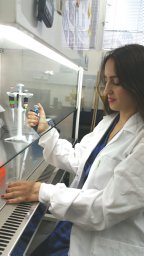 Hadas Mamane合作论文数School of Mechanical Engineering, Tel Aviv University2Reshma Alookaran Suresh合作论文数1Swati Dinesh合作论文数1Girinath G Pillai合作论文数1
 Dana Pousty合作论文数1Vineeth Ajith合作论文数Amrita Vishwa Vidyapeetham, Amrita School for Sustainable Development1
 Vidhya Prakash合作论文数1
 P. Aswathi合作论文数Amrita Vishwa Vidyapeetham, Center for Women's Empowerment and Gender Equality1
 Chinchu Bose合作论文数1
 Maneesha Vinodini Ramesh合作论文数Amrita Center for Wireless Networks and Applications, Amrita Vishwa Vidyapeetham1
 Sanjay Pal合作论文数1
 Bipin G Nair合作论文数Amrita Vishwa Vidyapeetham, Amrita University1




